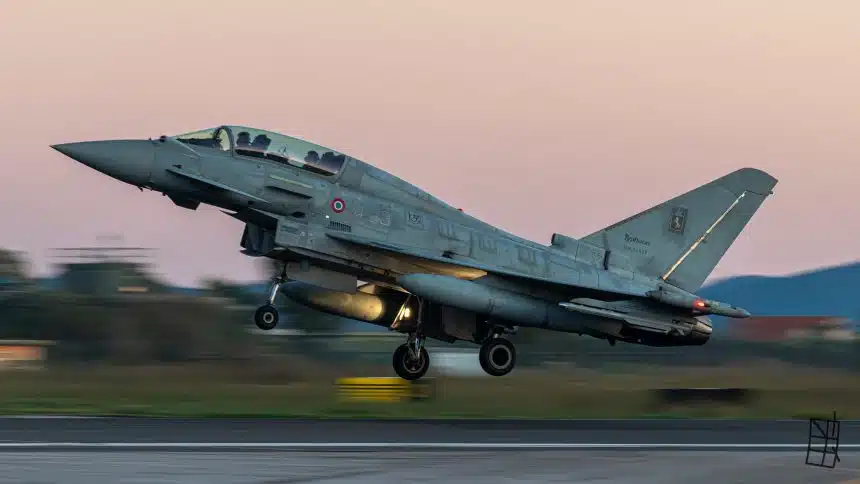
An exclusive look inside the Italian Air Force’s Typhoon Operational Conversion Unit, where pilots are trained through advanced simulation, live flying and progressive tactical training.
Grosseto Air Base has been the home of the Italian Air Force’s 4th Wing for more than 60 years, serving as one of the service’s most prestigious and operationally demanding fighter units. From this strategic base, located about 94 miles (151 km) to the northwest of Rome, the Italian Eurofighter Typhoons maintain round-the-clock Quick Reaction Alert (QRA) duties, ensuring the round-the-clock protection of both Italian and NATO airspace.
The base is also home to the 20th Squadron – Operational Conversion Unit (20° Gruppo OCU), where pilots complete the final phase of their training before joining frontline Eurofighter Typhoon squadrons. Equipped with advanced simulators and cutting-edge training technologies, the unit plays a fundamental role in preparing aircrews for the complex operational environment they will encounter.
We had the opportunity to visit both the 4th Wing and the 20th OCU, gaining first-hand insight into their daily activities and talk with instructors, pilots and support personnel. Our visit revealed how the M-346 Master (T-346 according to the ItAF designation) has fundamentally transformed the Italian Air Force’s fighter training system: rather than simply introducing a new advanced trainer, the aircraft has reshaped the entire training pipeline, allowing many tactical and operational skills to be acquired earlier in a pilot’s career.
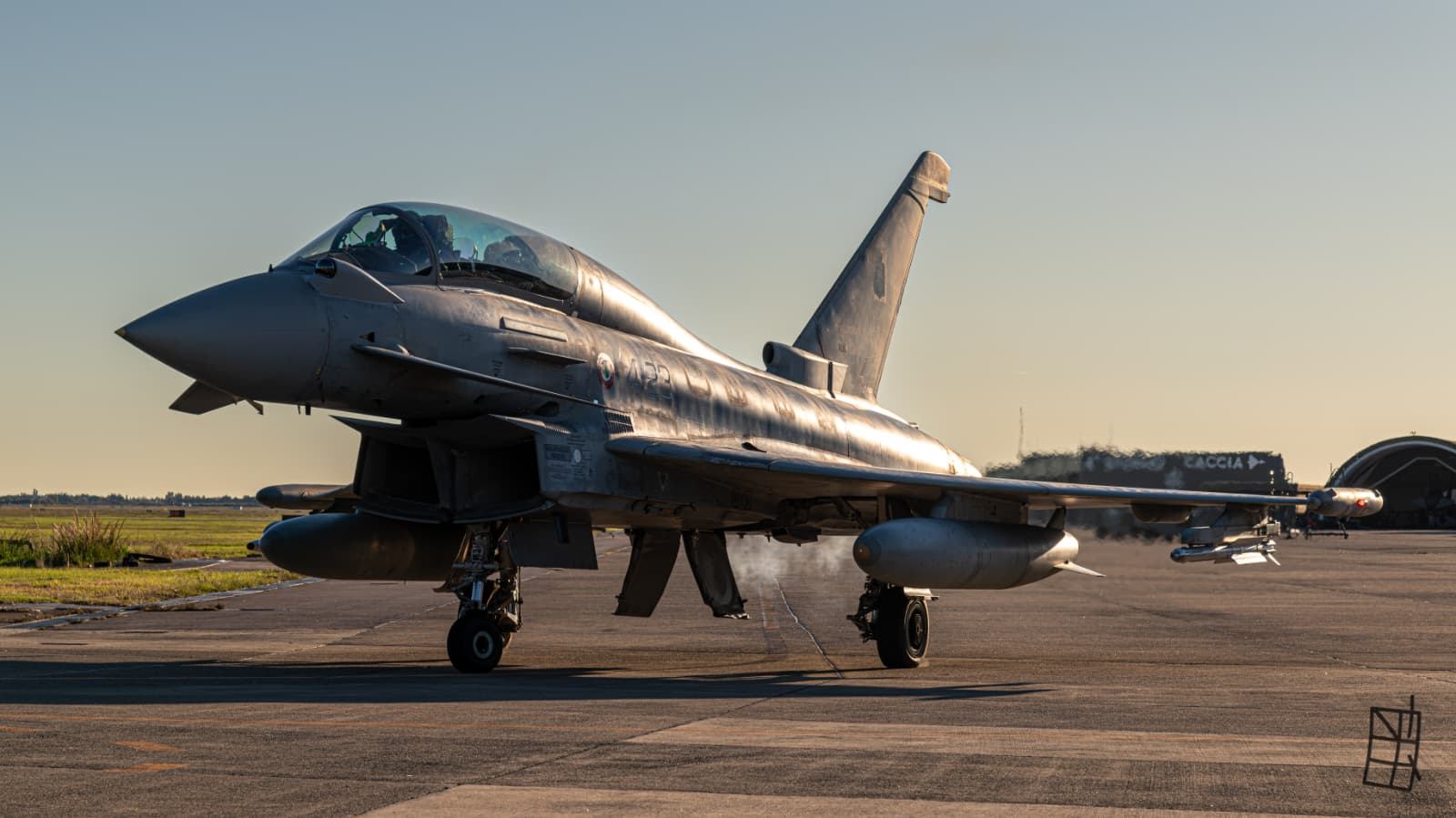
During our discussions with instructors and trainee pilots of the 20th OCU, we explored how this evolution has streamlined the transition to the Eurofighter Typhoon (F-2000A in accordance to Italy’s MoD Mission Design Series). By integrating advanced simulation, embedded training systems and a more progressive syllabus, today’s conversion course enables pilots to arrive on the frontline better prepared, making the transition to one of Europe’s most capable multirole fighters more effective than ever before.
Before the M-346: A Leap into the Unknown
Before the introduction of the M-346, pilots arrived at the 20th Squadron after completing advanced training on the MB-339CD or through international NATO programs such as the Euro NATO Joint Jet Pilot Training (ENJJPT).
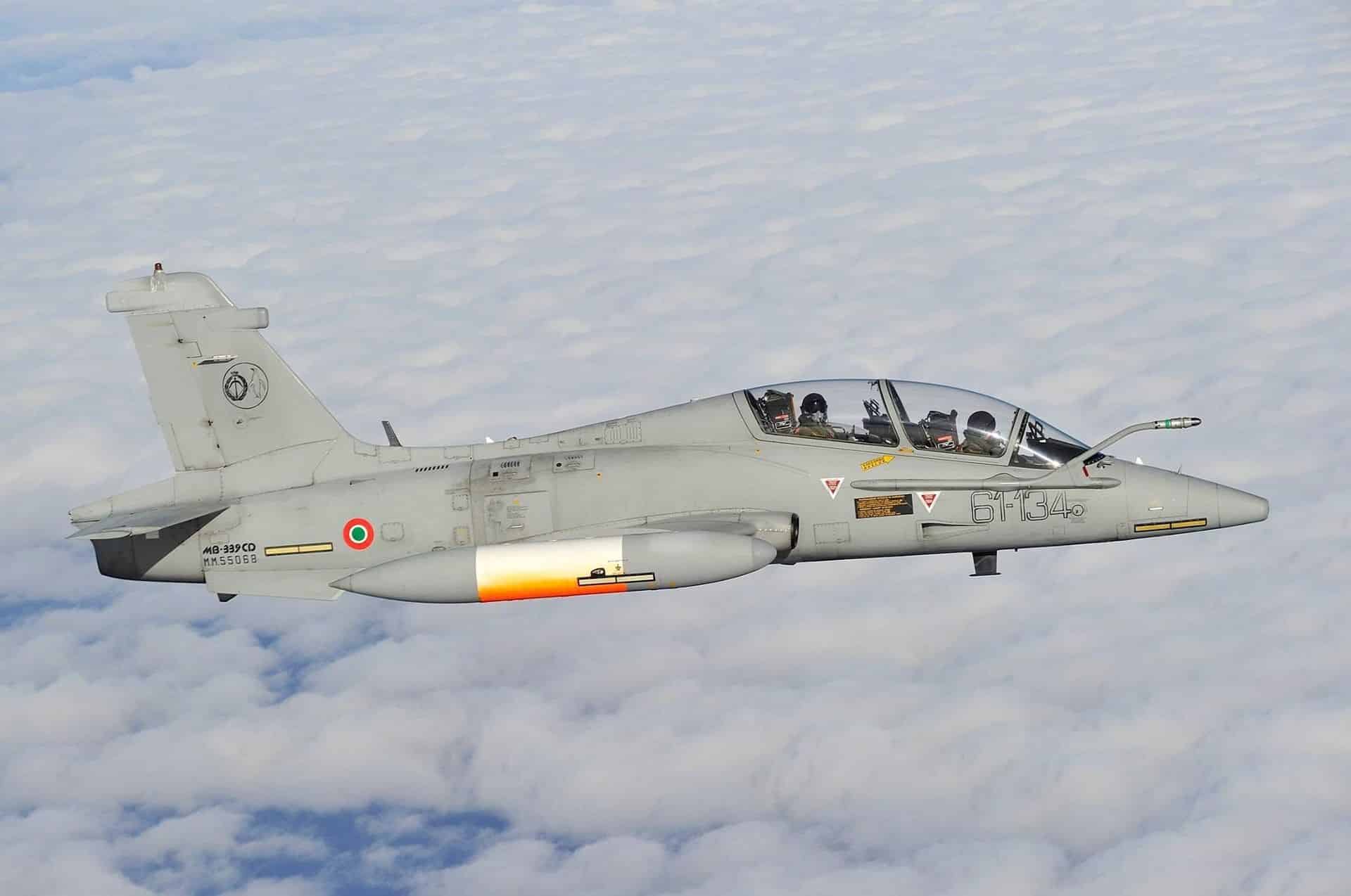
The greatest challenge was entering the world of modern combat systems. Radar operations, sensor management, tactical data fusion, and the interpretation of multifunction displays were entirely new concepts that had to be learned directly during operational conversion on the Eurofighter.
“Once pilots had mastered takeoffs and landings, the real challenge was learning to operate systems they had never encountered before,” explained an instructor.
As a result, numerous sorties were dedicated solely to learning procedures and familiarizing students with the aircraft’s onboard sensors, inevitably slowing progression toward more advanced tactical employment.
The LIFT Revolution
The introduction of the M-346 and the Leading to Fighter Training (LIFT) concept has allowed the Italian Air Force to completely redesign its fighter training pipeline. Thanks to the aircraft’s capabilities and the seamless integration of advanced simulation with live flying, students now experience training events during their course at the 212th Squadron of the 61st Wing at Decimomannu Air Base that were once reserved exclusively for Eurofighter operational conversion.
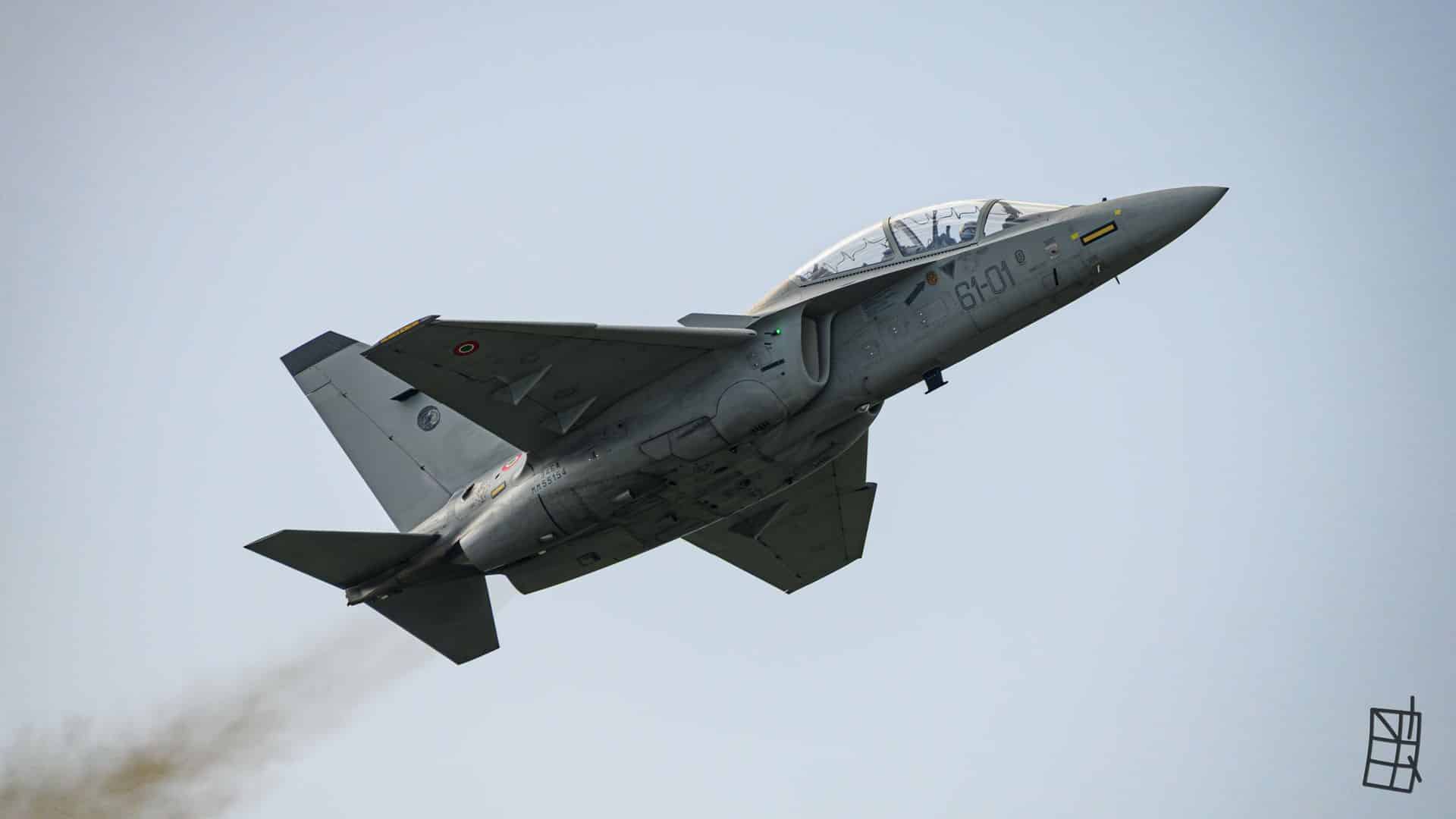
Radar intercepts, Beyond Visual Range (BVR) engagements, air-to-air combat, sensor management, simulated weapons employment, and tactical mission execution are now mastered well before pilots arrive at the OCU. The result has been a substantial shift of the training workload to earlier phases of pilot development.
“Today’s students arrive with a much stronger foundation than in the past,” the instructor explained. “This allows us to devote more time to advanced operational skills and the multirole capabilities that define today’s Typhoon.”
From Flight School to the Eurofighter: A Progressive Learning Curve
From the students’ perspective, arriving at the 20th Squadron is no longer the dramatic leap it once was. By the time they begin OCU training, pilots already possess years of experience, hundreds of flight hours, and a solid aviation culture developed throughout their training career.
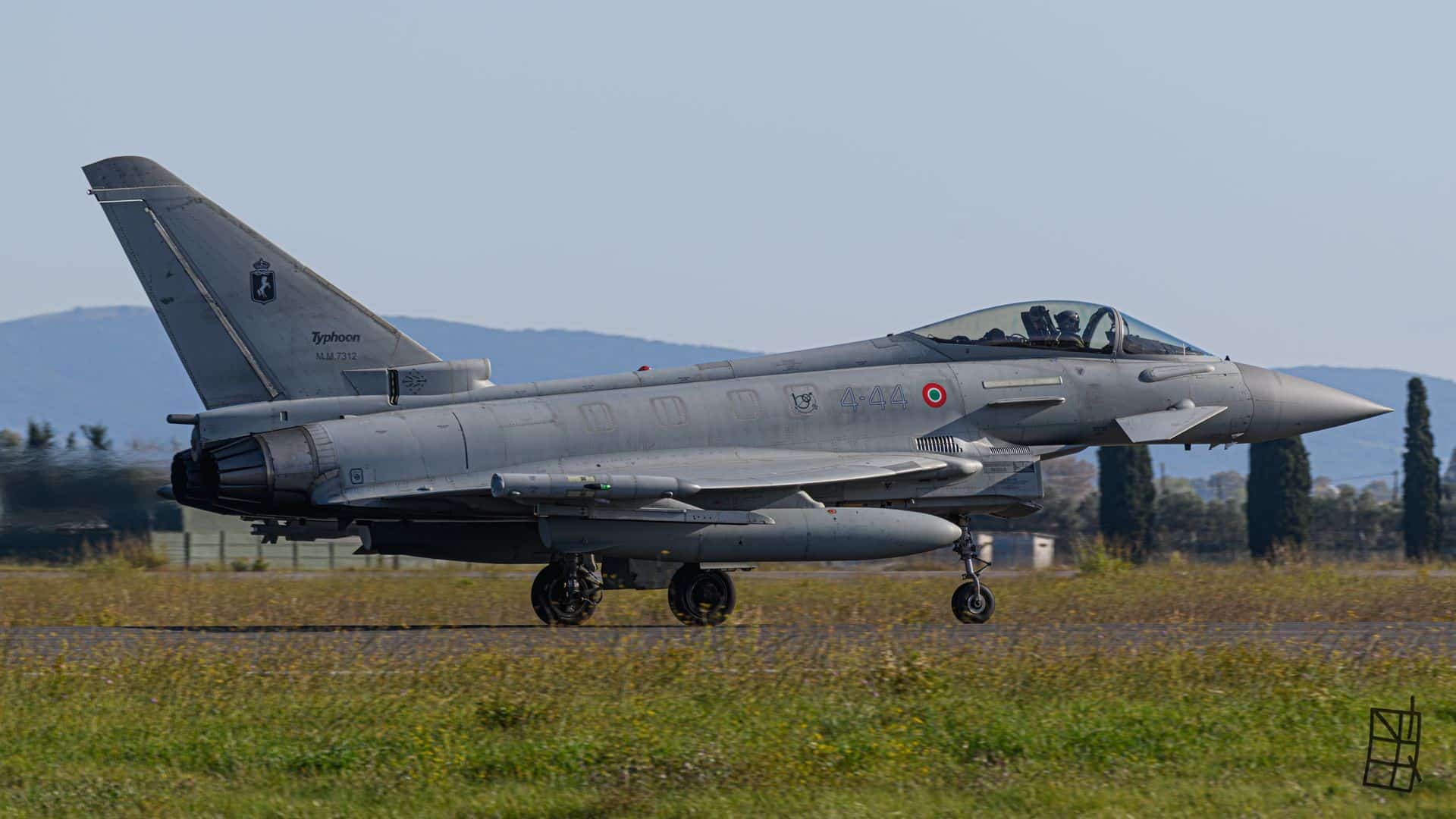
“The impact is certainly significant, but it’s no longer a leap into the unknown,” one trainee told us. “The fundamentals of airmanship and mission management have already been built over the previous years.”
The Eurofighter introduces higher levels of performance, more sophisticated systems, and greater responsibility, but many of the underlying concepts have already been assimilated during training on the M-346.
The Eurofighter Typhoon: From Air Superiority to Swing Role Operations
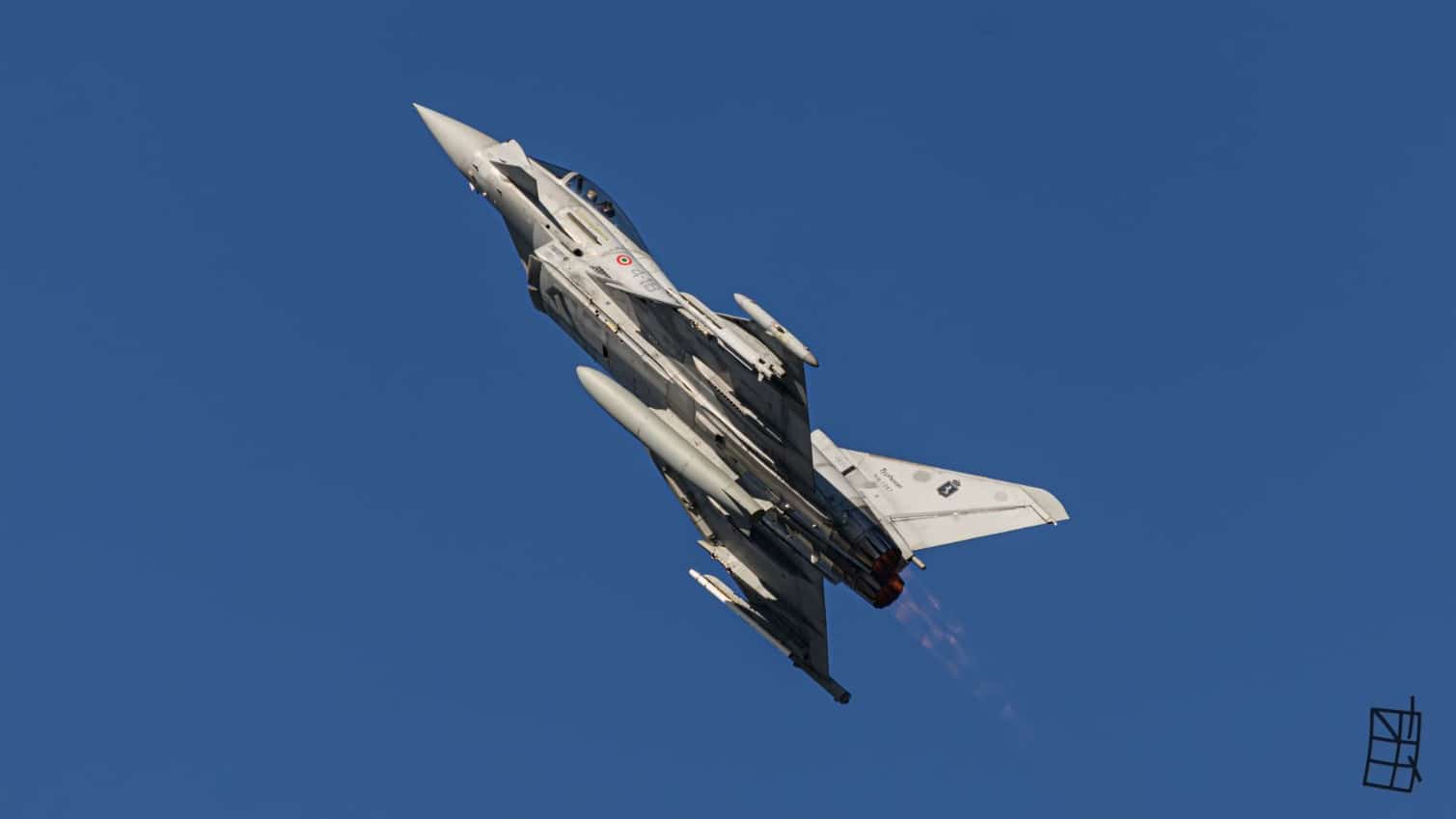
Originally conceived as an air superiority fighter designed to defend national airspace, the Eurofighter Typhoon has progressively evolved into a swing role platform capable of switching between air-to-air and air-to-ground missions within the same sortie.
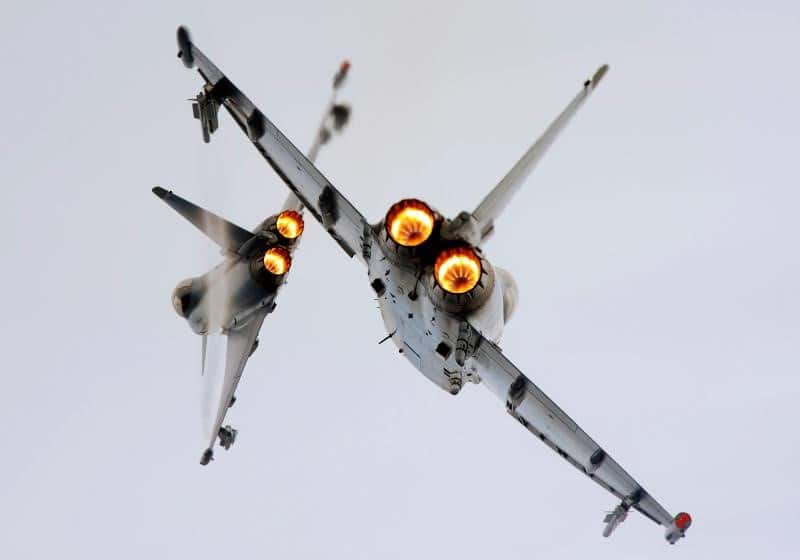
Powered by two Eurojet EJ200 afterburning engines, it can reach Mach 2 and sustain supersonic flight without afterburner in supercruise conditions. Its delta wing with canard foreplanes, combined with a fully digital fly-by-wire control system, provides exceptional agility and high-performance handling across the entire flight envelope.
With a length of 15.96 metres, a wingspan of 10.95 metres and a maximum take-off weight of 23,500 kilograms, the aircraft carries its weapon load on thirteen hardpoints, in addition to a 27 mm Mauser BK-27 internal cannon. Continuous upgrades in software, sensors and precision weapons have transformed the Typhoon into a true multirole combat system, capable of conducting air policing, strike missions and tactical reconnaissance with high effectiveness.
The twin-seat “Twin Stick” variant complements the operational fleet, playing a key role in training and conversion while retaining the majority of combat capabilities of the single-seat version.
Ground School: Building the Foundation
The course begins with an intensive Ground School phase. Days are filled with classroom instruction, individual study, and in-depth analysis of the aircraft’s technical documentation. Students spend countless hours learning the aircraft’s systems, procedures, and operational philosophy.
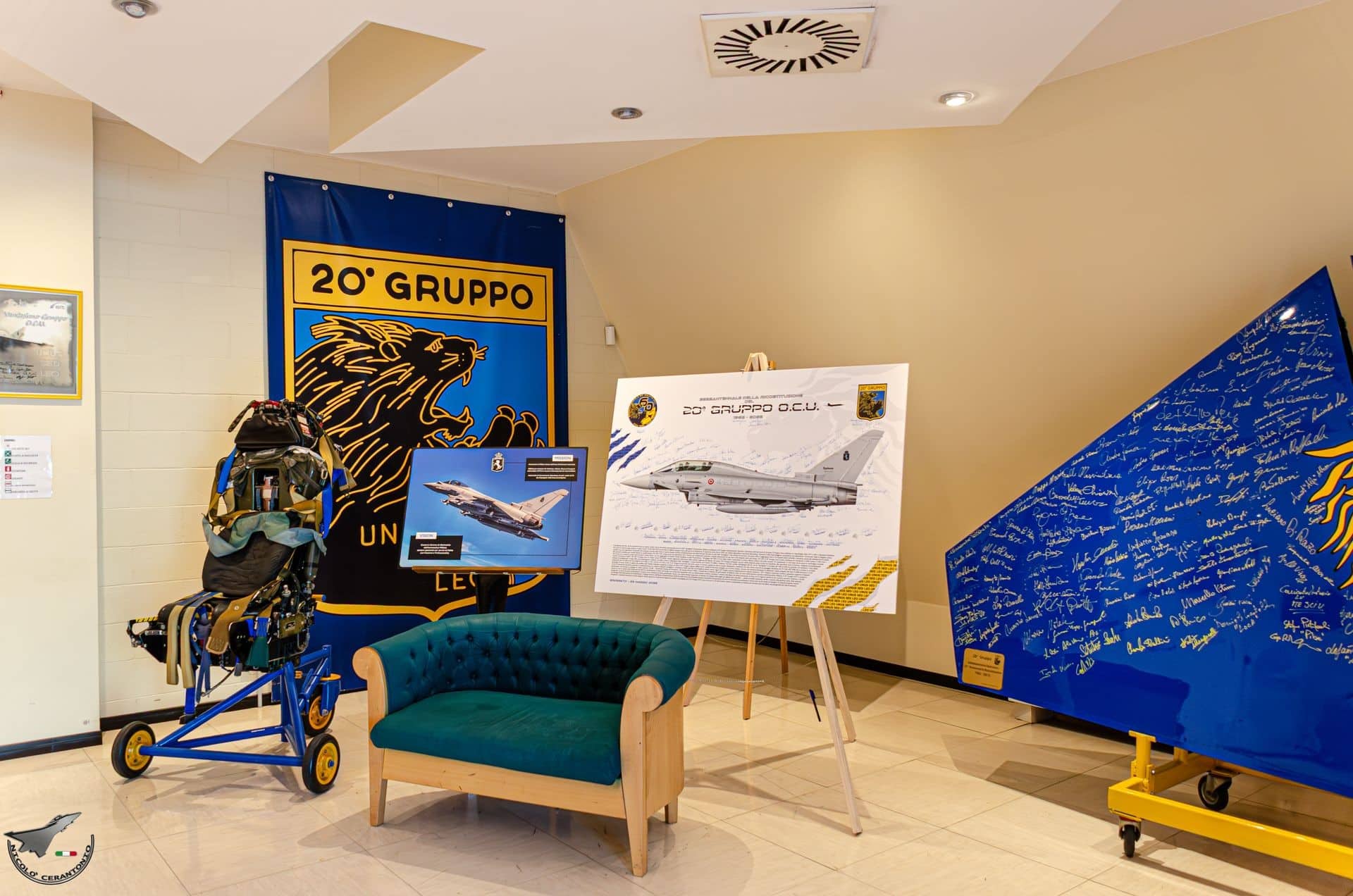
Throughout the academics, trainees are also supported by Leonardo’s instructor pilots and training personnel, who contribute to the Italian Air Force’s Eurofighter pilot programme. Working alongside the military instructional staff, they provide operational expertise and continuous guidance at every stage of the academic phase.
During this phase, instructors assess far more than technical knowledge. Professional attitude, discipline, commitment, motivation, and the ability to apply knowledge are considered just as important as technical competence.
According to the instructors, attitude is often every bit as important as technical ability.
Simulation and Live Flying: An Essential Partnership
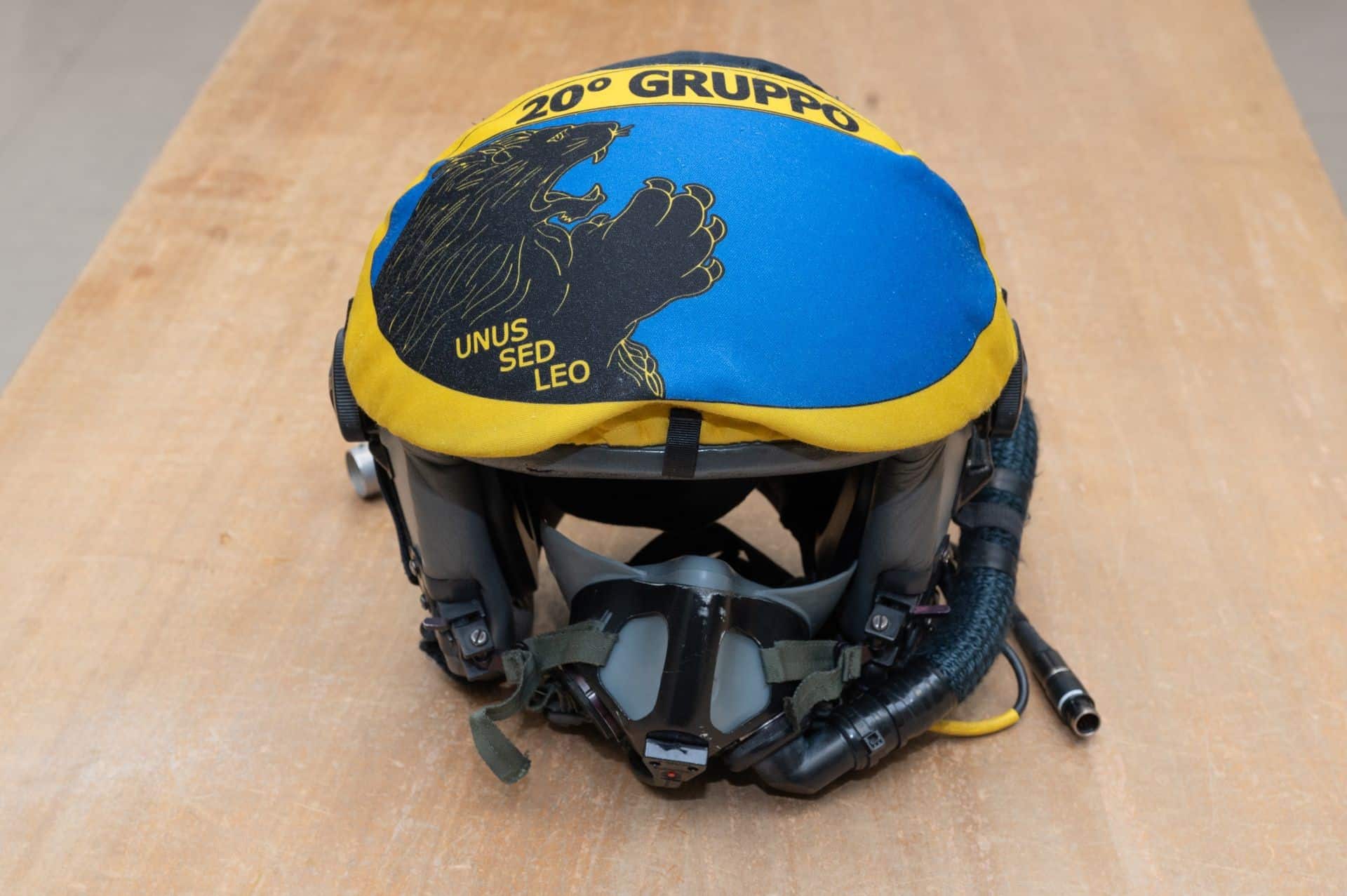
One of the cornerstones of modern fighter training is the simulator. Before ever flying the Eurofighter, students spend many hours in the Aircrew Synthetic Training Aids (ASTA) building at Grosseto Air Base, an integrated simulation environment that supports the Italian Air Force’s Eurofighter training programme.
The ASTA facility is co-located within the same building that also houses the 20th Operational Conversion Unit, ensuring full integration between simulator-based training and the operational conversion syllabus. The system employs three complementary simulator categories: the Cockpit Trainer (CT), the Full Mission Simulator (FMS), and the Enhanced Aircrew Cockpit Procedures Trainer (EACPT), each designed to progressively develop procedural knowledge, systems management, tactical awareness, and mission execution.
The importance of simulation within the training environment is also reflected in the motto displayed on the ASTA building at Grosseto Air Base: “Simulatione siderum tenus”, inspired by the traditional Air Force motto “Virtute siderum tenus”. The phrase encapsulates the role of simulation as a bridge between classroom learning and real-world operational readiness.
By the time they step into the real aircraft, the cockpit environment, procedures, and aircraft systems already feel familiar. However, even the most advanced simulator cannot fully reproduce every variable encountered in the real world.
Technical malfunctions, civilian air traffic, changing weather conditions, and the complexity of the operational environment demand decision-making skills that extend beyond simply following procedures. It is during this phase that a pilot’s professional maturity truly begins to emerge.
From Conventional Controls to Fly-by-Wire
Another major evolution in training concerns digital flight control systems. The M-346 introduces students to fly-by-wire logic and Flight Control Computer management long before they transition to the Eurofighter.
“Students now arrive with a level of sensitivity that previous generations had to develop directly on the Typhoon,” said an instructor.
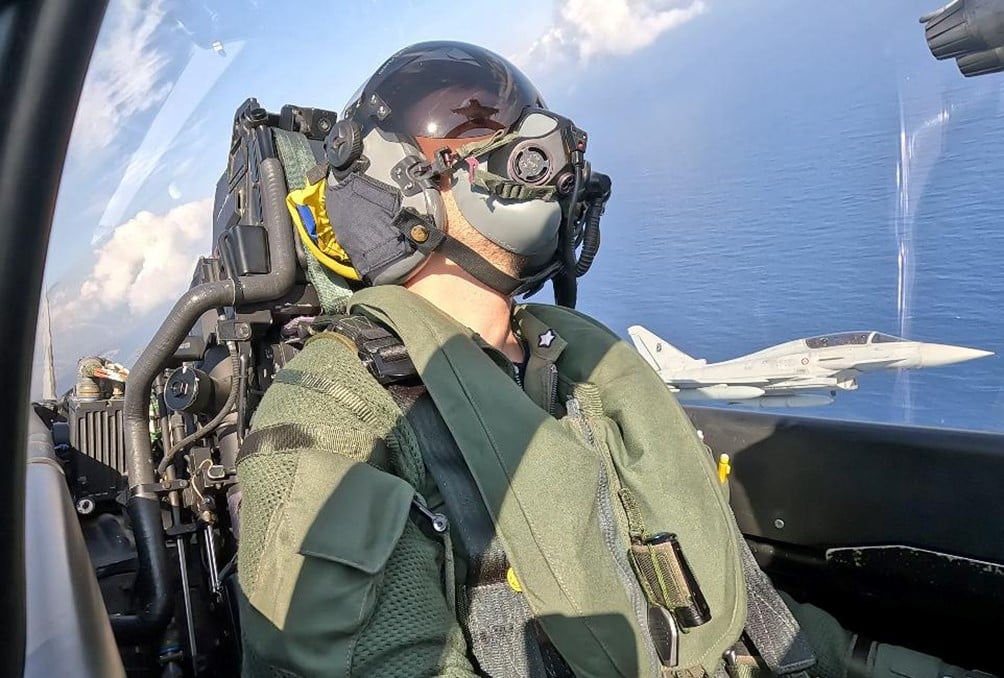
The advanced trainer’s performance also exposes students to high G-loads, rapid acceleration, and flight dynamics that closely resemble those of a modern frontline fighter.
The Real Radar Remains One of the Greatest Challenges
Despite remarkable advances in simulation, transitioning from a simulated radar to the real system remains one of the most demanding aspects of operational conversion.
Synthetic scenarios are carefully controlled and predictable. In the real operational environment, pilots must deal with a much larger volume of information and with phenomena that cannot be perfectly replicated.
Correctly interpreting radar returns, identifying contacts, and maintaining high levels of situational awareness remain among the most challenging elements of fighter conversion training.
[Read also: First hand account: Flying the Eurofighter Typhoon in the Aggressor role during supersonic air combat training]
From Instruction to Independence
As training progresses, the instructors’ role gradually evolves. Initially, they guide students step by step through every procedure.
Later, the emphasis shifts toward developing independent decision-making. Rather than simply evaluating whether a decision was correct, instructors seek to understand the student’s reasoning process, even when the outcome is less than perfect.
The objective is not to produce pilots who merely execute procedures, but professionals capable of analysing complex situations, accepting responsibility, and making sound decisions under pressure. Throughout this journey, the instructor-student relationship gradually develops into one of genuine professional mentorship.
The Emotion of the First Solo Flight
One of the defining moments of the entire training program is the first solo flight. After weeks of flying alongside instructors, students suddenly find themselves alone in the cockpit.
The initial tension is inevitable, but it quickly gives way to confidence. Everything that has been studied, rehearsed, and practiced in the simulator begins to feel natural.
Pilots gradually develop trust in their own abilities and build the confidence required for operational independence. For many, it becomes one of the most memorable and rewarding moments of their entire career.
Close Air Support and Joint Operations
Among the most significant additions to the modern syllabus is Close Air Support (CAS) training. These missions are conducted in close cooperation with Joint Terminal Attack Controllers (JTACs) from both the Italian Army and the Italian Air Force.
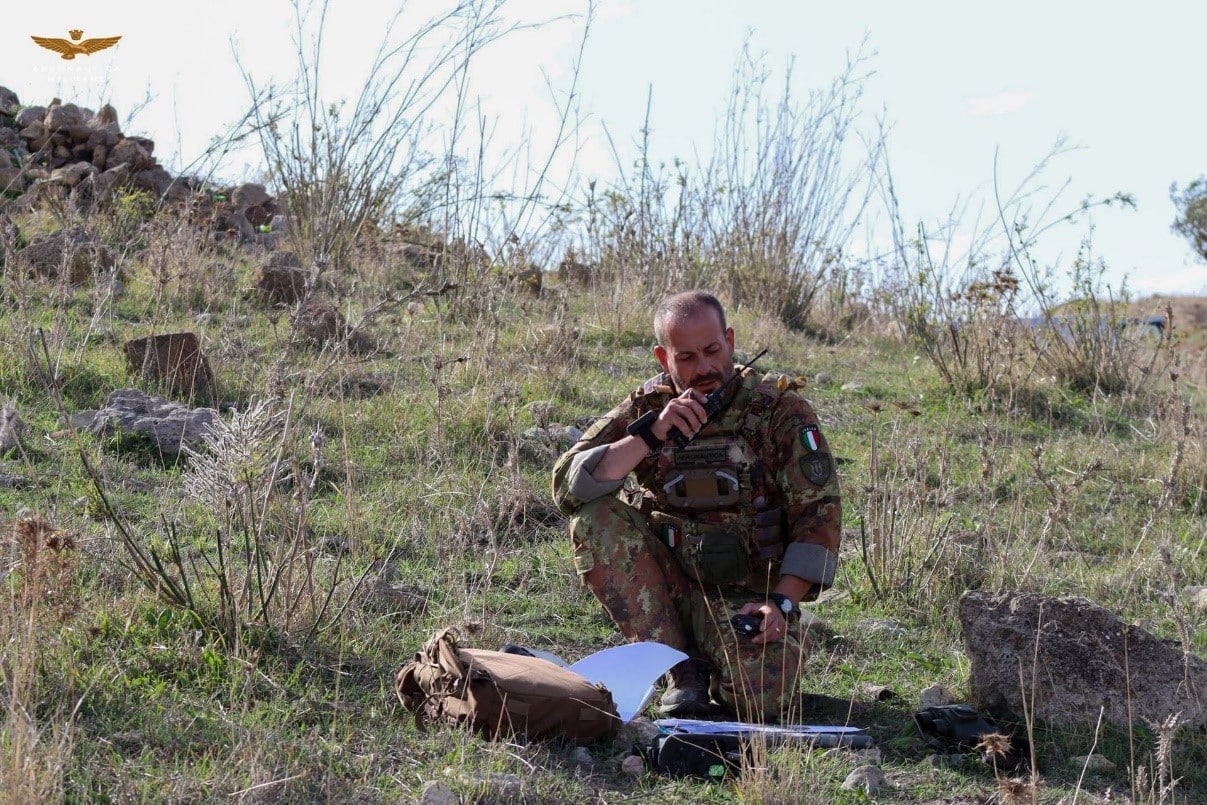
This allows future fighter pilots to better understand the needs of ground forces while developing a broader perspective of the modern battlefield. “It’s essential to understand what the personnel on the ground see, while also helping them understand how we interpret the situation from the air,” said an instructor.
This approach strengthens interoperability among the different services and enhances overall operational effectiveness.
Learning from Mistakes
Not every challenge encountered during training is technical. Many young fighter pilots are highly self-critical after a mission that falls short of perfection.
For this reason, learning how to deal constructively with mistakes forms an essential part of the training process. Mission debriefings analyse every detail of the sortie, allowing students to understand what happened and identify opportunities for improvement.
“The ability to move forward after making a mistake is one of the most important qualities a military pilot can develop,” said an instructor. It is a lesson that proves invaluable not only in flight, but throughout an entire professional career.
The Fulfilment of a Dream
The ultimate goal of the course is achieving Limited Combat Readiness (LCR) qualification before joining an operational squadron. For every student, this represents the culmination of a journey that began many years earlier—a path built on study, sacrifice, determination, and continuous professional growth.
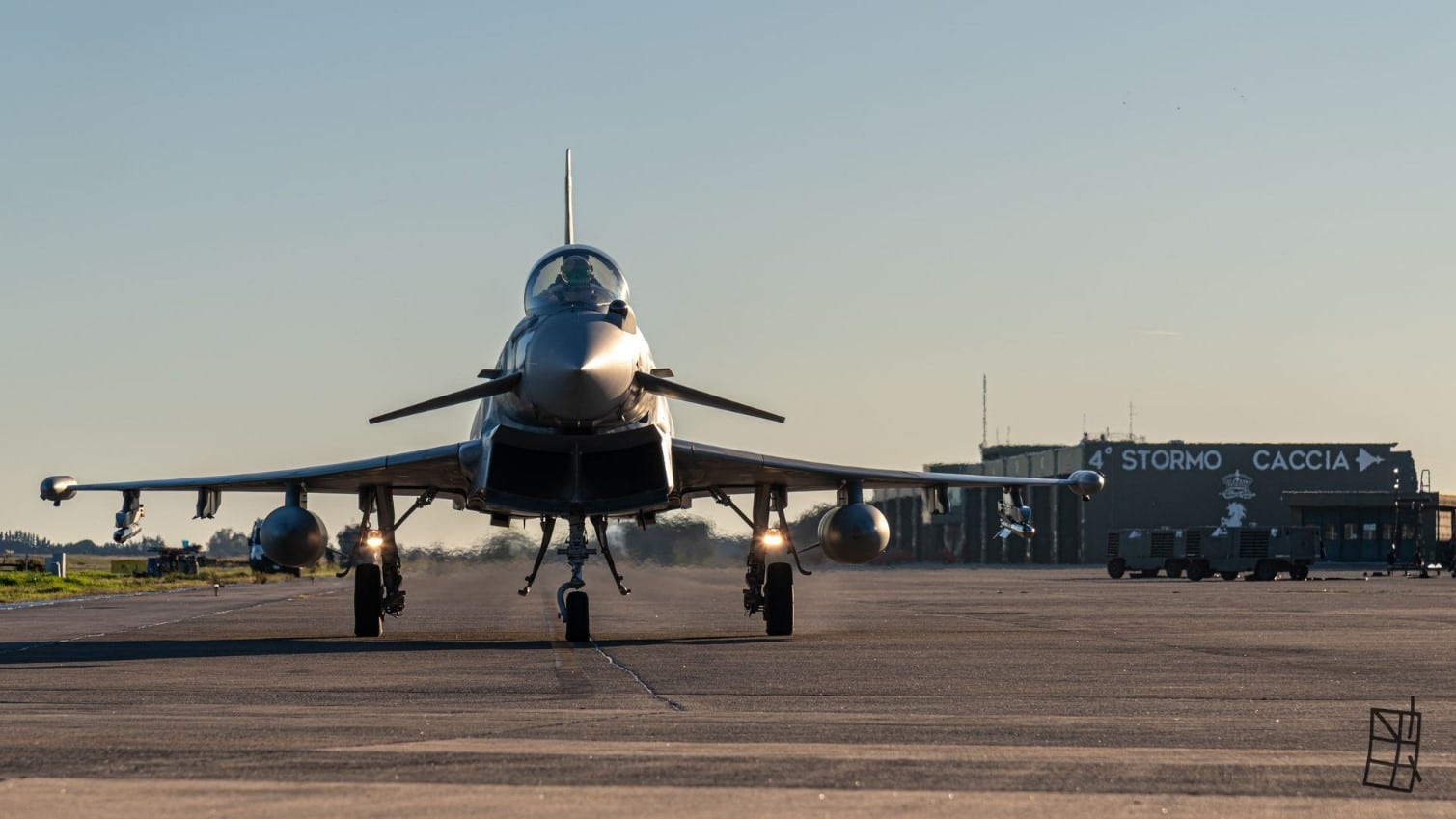
Looking back, many recognize that the course has transformed them not only as aviators but also as individuals. The Eurofighter represents the pinnacle of their training, yet it also marks the beginning of a new chapter.
Because becoming a fighter pilot is about far more than learning to fly a high-performance aircraft. It means joining a professional community entrusted every day with safeguarding national airspace through competence, responsibility, and a deep sense of service.
In an era where technology continues to evolve at an extraordinary pace, one element remains unchanged: the value of people. It is through the combination of innovation, the experience of instructors, and the determination of students that the next generation of Italian Air Force fighter pilots is being forged.