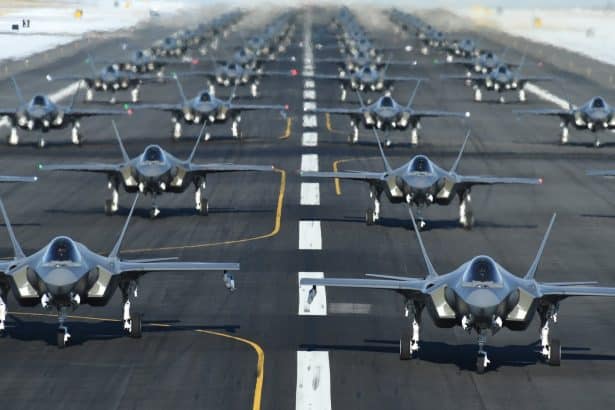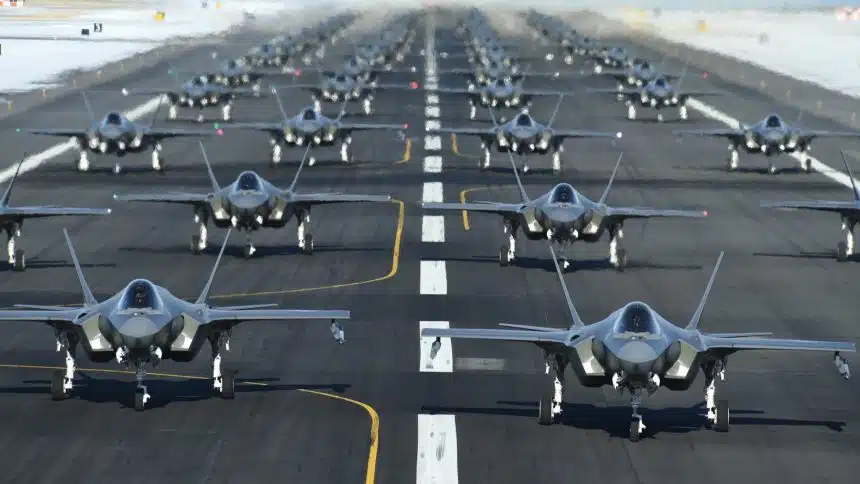
A service report sent to Congress proposes a combat capable force of 1,509 fighters by 2035, which is more than the USAF has available today, posing serious questions about funding and aircraft delivery.
The report, which was delivered to the U.S. Congress on Oct. 16, 2026, was seen by Breaking Defense, but was not available to most other media outlets. This was followed by a roundtable event with the media on Oct. 20 with Lieutenant General David Tabor, Deputy Chief of Staff for Plans and Programs, United States Air Force, explaining what was included.
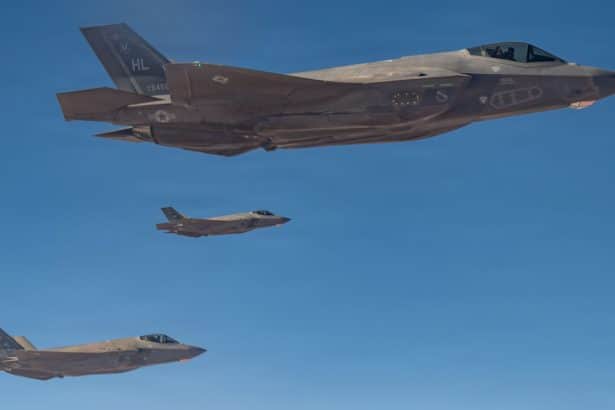
Reportedly, the U.S. Air Force now predicts that it needs 1,509 combat-ready jets to cover a ‘moderate risk’ operational profile, an increase of the 1,369 fighters it was aiming for in last year’s report. According to Tabor, the additional 140 jets would be a mixture of F-35A Lightning II, F-15EX Eagle II, and F-47 Next Generation Air Dominance (NGAD) aircraft, suggesting an expansion of the required orders across these three fleets.
This new figure rests on what regional combatant commanders have said is needed to achieve their goals at “medium risk,” the second rung of a four-step scale of High, Medium, Low, or Negligible. Tabor said that these changes in aircraft figures were not driven by the conflict in Iran, instead suggesting that the old figure was based on outdated information.
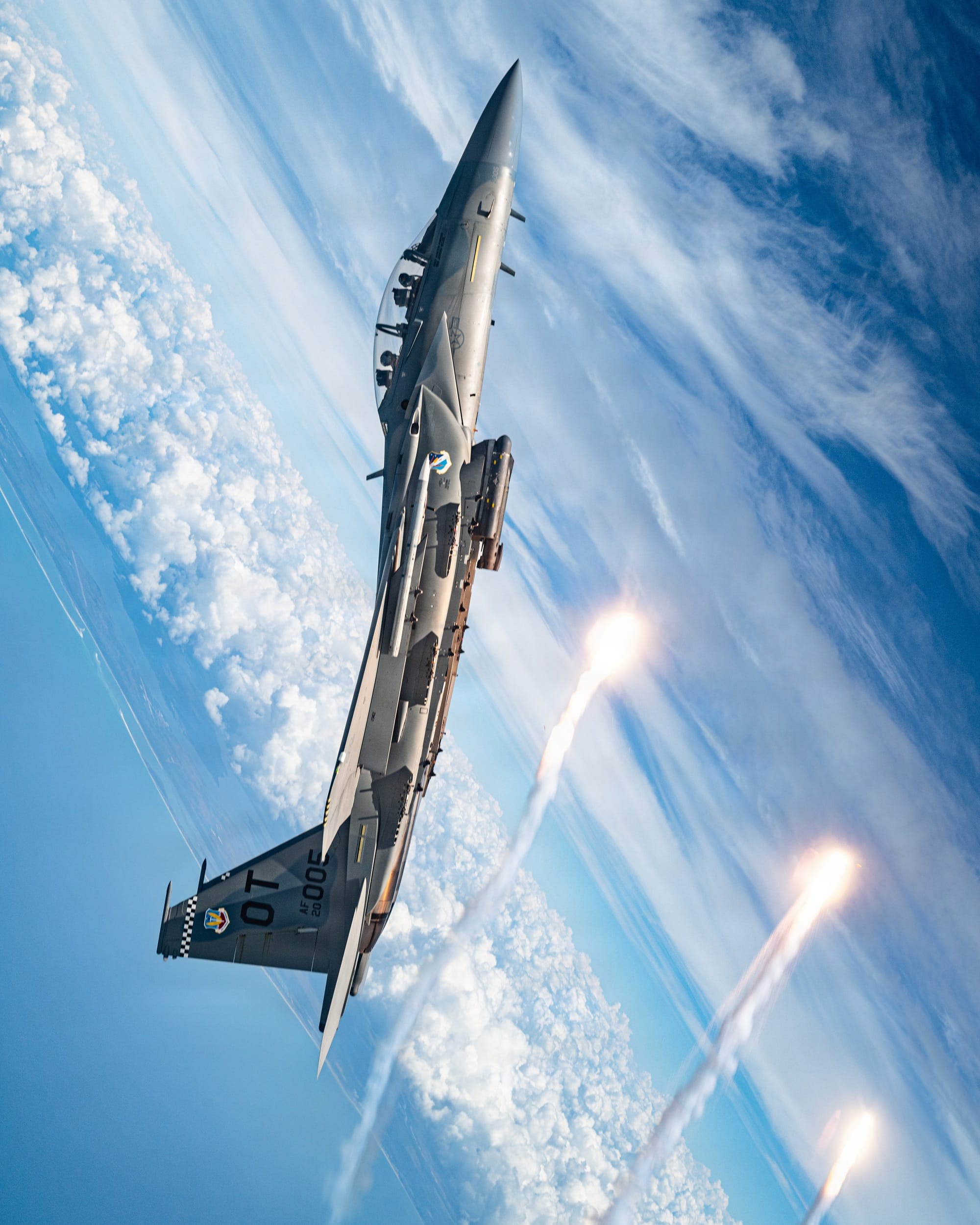
This year’s report also explains that 1,723 combat-ready aircraft are needed to reach a ‘low-risk’ operational profile by 2035. However, the general emphasized that officials “generally don’t plan to low risk,” likely due to the costs associated amid competing requirements across the USAF as well as the wider U.S. defence ecosystem.
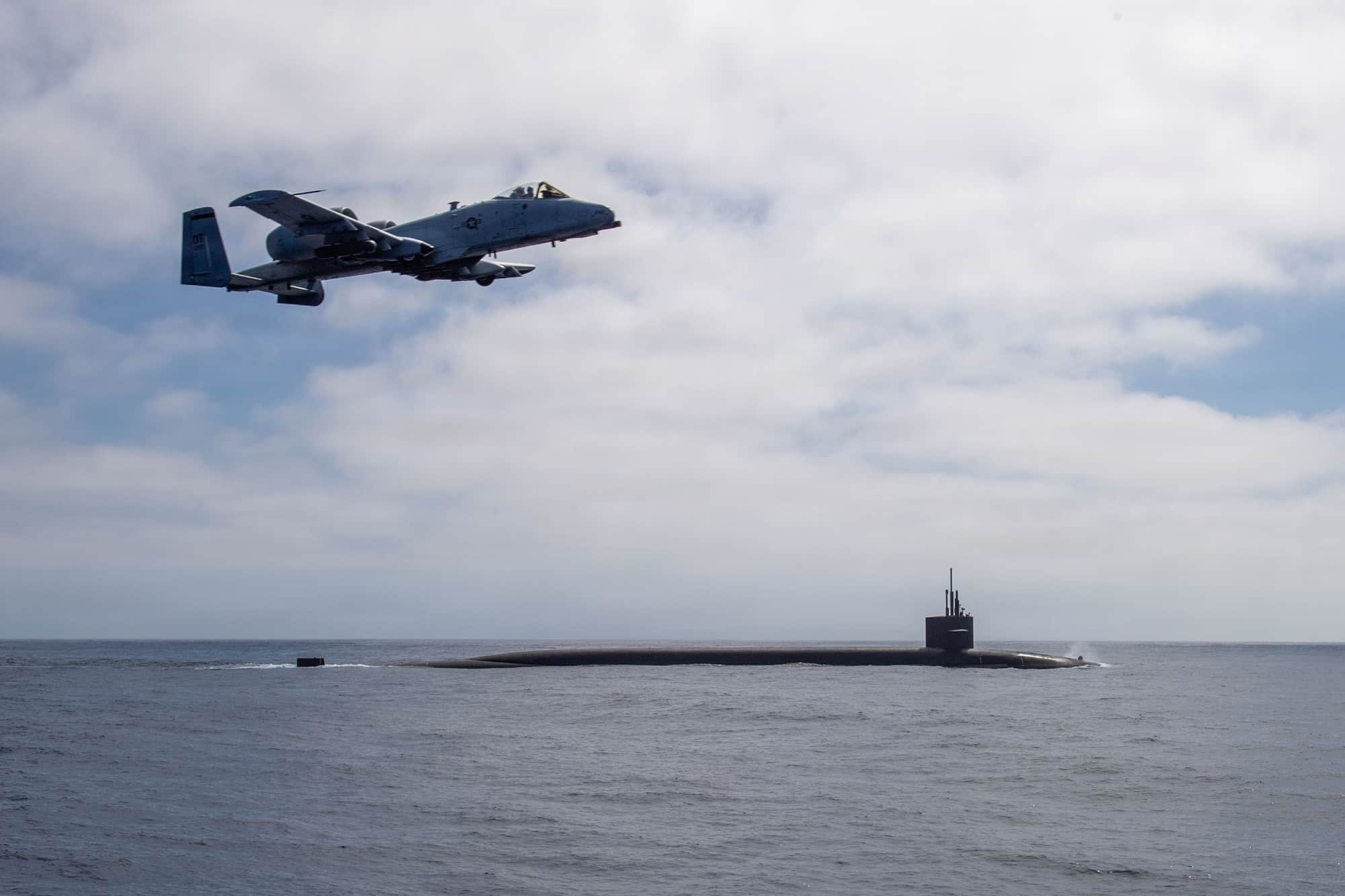
The current USAF fighter force, at the start of fiscal 2026, reached about 1,168 core combat-coded fighters, alongside 103 A-10 Thunderbolt IIs that are in the process of being divested. This number has fluctuated due to additional deliveries of F-35s and F-15EXs and the divestment of some aircraft due to old age.
This figure also doesn’t take into account the combat and accident losses sustained by the USAF this year during the U.S.-Iran War, which saw four F-15Es and two A-10s lost in action. Either way, getting the fighter force to the 1,509 figure would represent a substantial increase in the number of front line fighters meaning that aircraft orders and associated costs would have to increase significantly.
The USAF has told Congress it needs 1,509 combat-coded fighters by 2035 vs 1,271 the service has in inventory today. As I’ve noted previously, getting there would essentially require the Air Force to buy F-35s at the maximum rate, claiming every available CTOL delivery slot available to it, while continuing to ramp F-15EX production to 36 per year. With the DAF’s other priorities competing for dollars, that likely means DAF budget growth would have to outpace overall defense spending growth through this period.
— Air-Power | NatSec Ledger (@NatSecLedger) October 21, 2026
Tabor later added that the report’s detailed fighter projections “give the public and the media and Congress confidence that we’re not making this up.” The idea is that Congress can mark the USAF’s homework and ensure that the desired frontline force structure is proportional to U.S. defence requirements.
General Tabor told the press that the exact figures in the report are somewhat “debatable,” as analysis is constantly being refreshed and updated based on new information. However, the intent behind them is to give the USAF a combat ready force that is sustainable against the enemies that the U.S. has to face around the world.
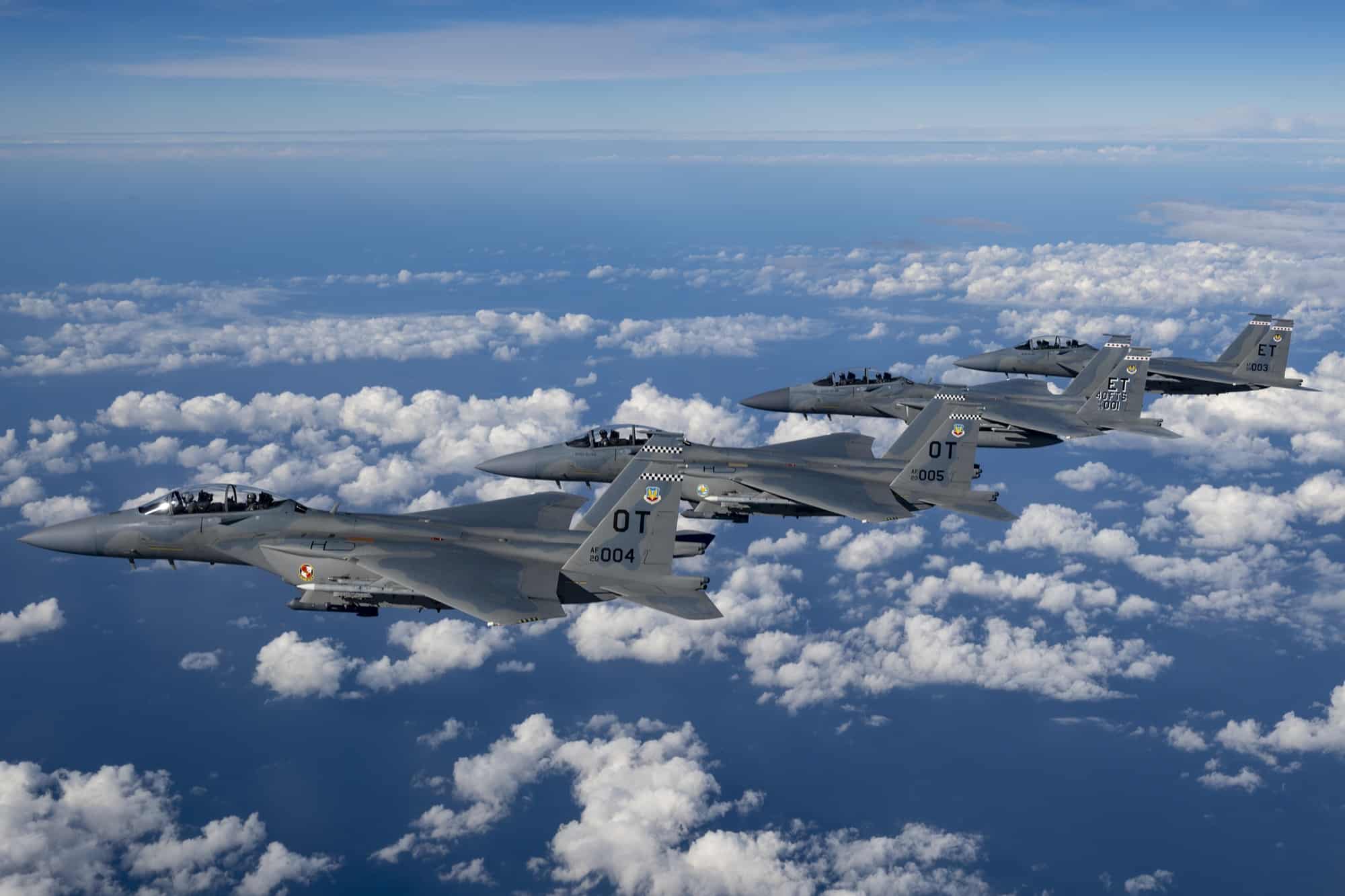
The problem remains that, even to approach the ‘moderate risk’ force structure, the USAF will need to procure almost 350 extra fighter aircraft at a time when a large number of its older jets are reaching their end of service life. The F-15C was retired from active duty last year, the A-10 fleet is slated for total removal by 2030, whilst the USAF’s oldest F-16s and F-15E Strike Eagles are beginning to age out.
Replacing all these aircraft as they leave service whilst also expanding the force is a hard bargain in terms of cost.
Bipartisan ‘BRRRRT Act’ Introduced in U.S. Congress to Keep the A-10 Warthog in Service
A bipartisan group of U.S. lawmakers has introduced legislation aimed at halting the retirement of the A-10 Thunderbolt II until a fully certified replacement is operational.
Story: https://t.co/KbMvUF84Fn
— The Aviationist (@TheAviationist) July 23, 2026
According to several USAF officials, 72 new fighters each year are needed to replace the retiring jets and modernize the fleet, but the FY27 budget only has room for 24 F-15EXs and 24 F-35As. The USAF also wanted to buy an extra 14 F-35s at a cost of $2.34 billion, which would have to be funded either through a Congress Reconciliation Bill or by taking money out of other programmes.
If necessary, the order could be pushed back to 2028, which would only increase the aircraft backlog for the USAF and worsen the aircraft replacement issue.
Industry Woes
Achieving a fleet of this size relies on the industry’s ability to deliver the aircraft to specification and on time, which is not fully guaranteed. The report notes that modernization setbacks for the F-35 programme have driven delays in getting combat capable aircraft to the front line.
This issue stems from the Block 4 Modernization programme, which has been delayed due to issues with the Technology Refresh 3 (TR3). Without the necessary systems update provided by the TR3, missile, radar and sensor upgrades to the aircraft could not be utilised.
This meant that a number of delivered F-35s to the U.S. and its allies were restricted to training sorties and not combat. TR3 upgraded F-35s that are combat capable only started to be delivered in 2026, a three year delay that has cast some serious doubt on Lockheed Martin’s abilities to keep up with the demand.
“The question is, can industry produce at those levels?” said Tabor. “They’ve assured us that they can, and we believe them, but we also actually need to see it manifest.”
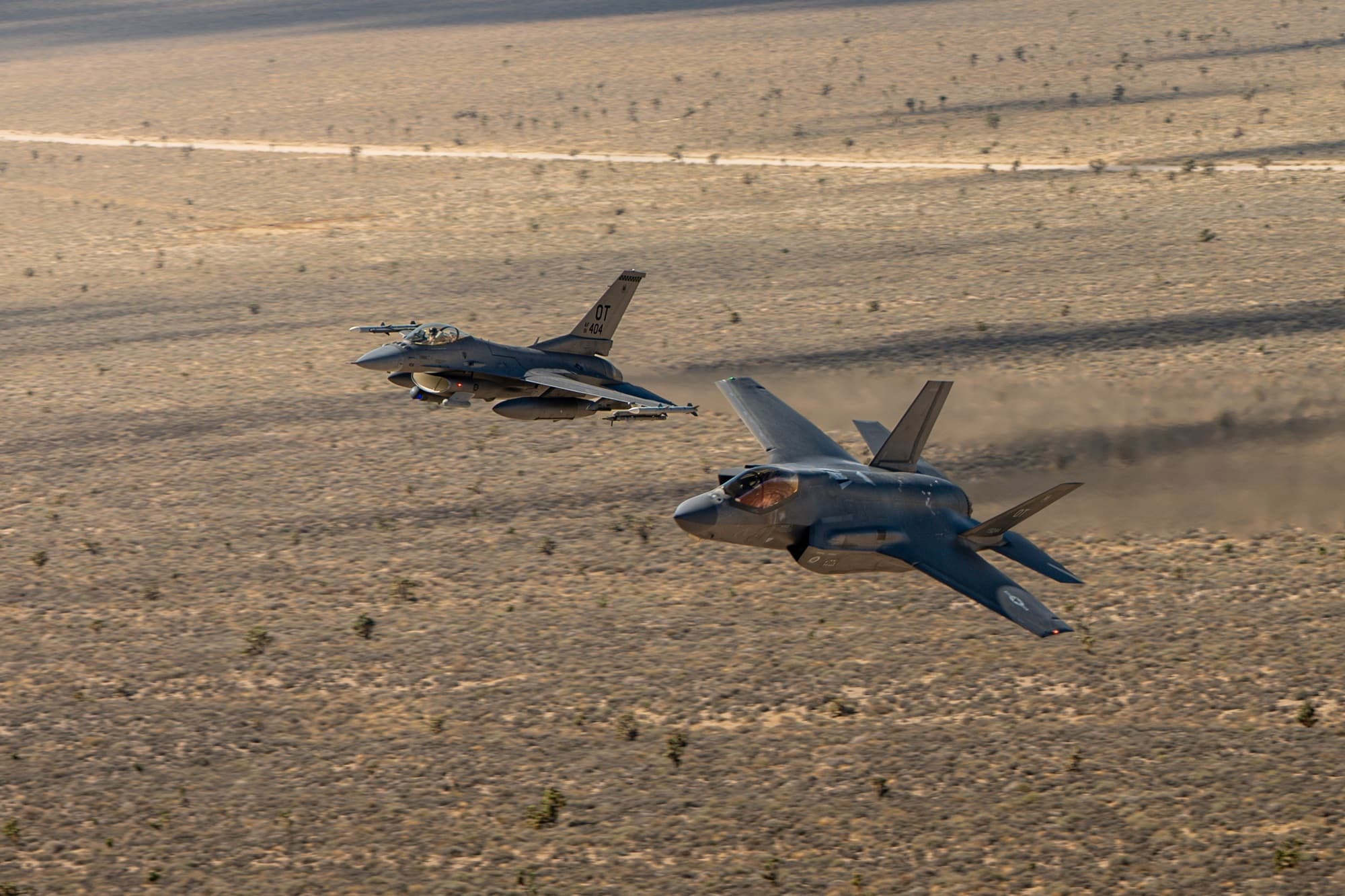
On Oct. 22, the Pentagon and Lockheed Martin agreed to a framework for multi-year F-35 Lightning II production and sustainment, with 850 aircraft over 10 years, at a production rate of 156 aircraft per year. If Lockheed can pull this off, it should help to narrow the gap between the USAF’s current fleet, and their required minimum.
F-16G, A Solution?
According to General Tabor, the USAF is considering a new order of cheaper F-16 block 70/72 aircraft to aid in the recapitalization of the fighter fleet specifically to replace older life-expired F-16Cs. These aircraft are currently being produced at a facility in Greenville, South Carolina, for export to allies. These aircraft have been delivered as upgrade packages (F-16V) and as new builds (F16C/D) to countries such as Bulgaria and Slovakia, with Ukraine now also interested in their long term acquisition.
Any Decision To Buy New-Build F-16s Not An “Urgent” Priority: USAF
A top USAF general said new F-16s are “maybe the lazy” route, but are an option as the service strives for 1,509 combat-coded fighters by 2035.
https://t.co/Mp5gU73mDh
— TWZ (@thewarzonewire) October 21, 2026
These aircraft use an advanced APG-83 AESA radar which leverages hardware and software commonality with F-22 and F-35 AESA radars, giving it some of the benefits of a 5th generation aircraft. The aircraft utilises a modernized cockpit to allow for better systems integration, and has vastly improved avionics. Some versions come with conformal fuel tanks to improve the aircraft’s baseline range as well.
The F-16 replacement for the U.S. could be called the F-16G in USAF service after a recent proposal made by Lockheed Martin, though they would most likely be off the shelf F-16 Block 70/72s to save costs. These aircraft could allow the USAF to maintain a light fighter force for roles that do not require more expensive stealth aircraft, reducing the requirements for the F-15EX which can be considered overkill for homeland defence.
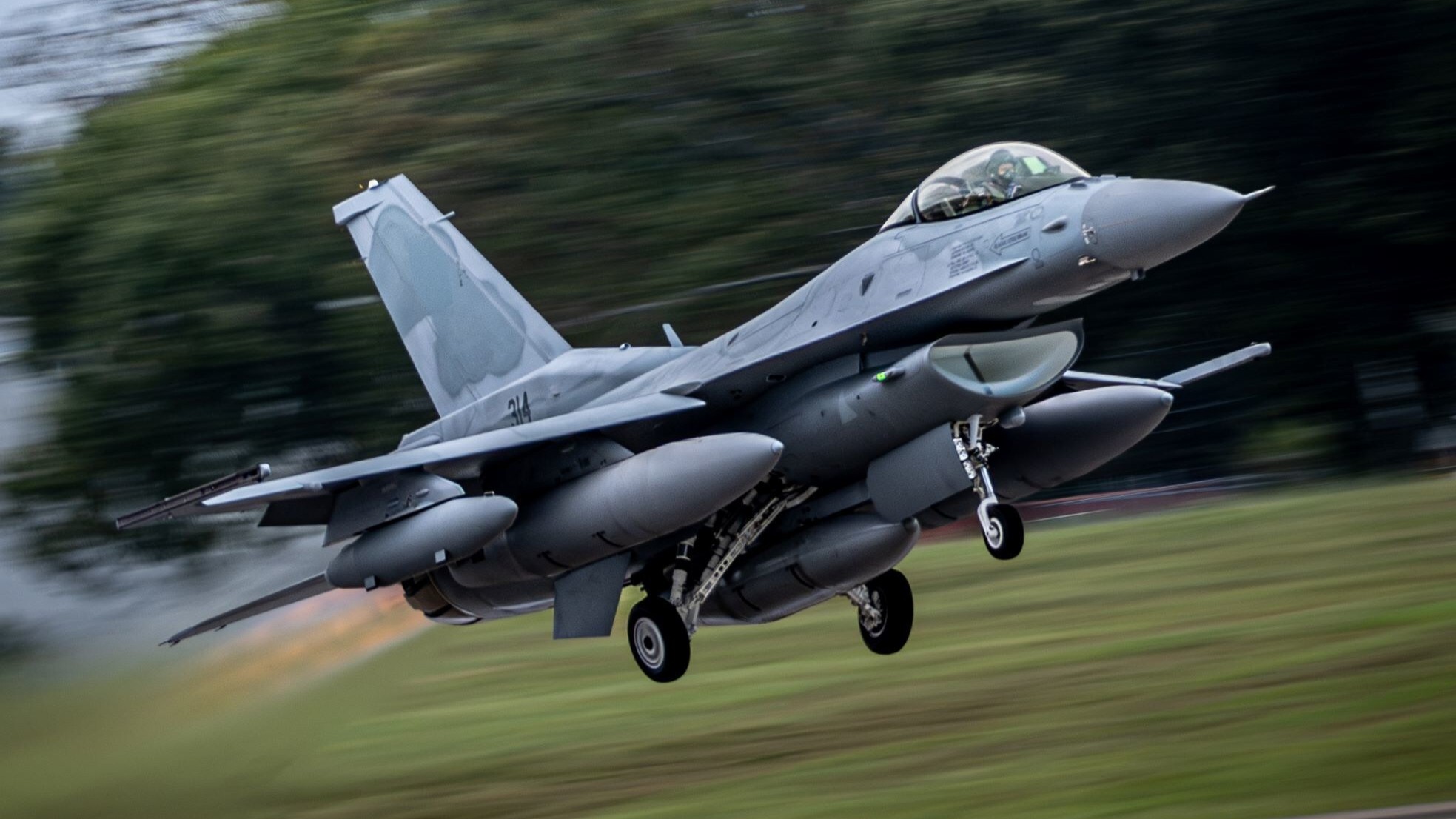
General Tabor described a new F-16G as “something that we’re talking about,” but also a “lazy” answer to reaching the desired aircraft number, though he conceded that it is “practically a ready-made aircraft”. This could suggest that the USAF is somewhat overselling its budgetary problems, choosing not to buy the cheaper, but still capable aircraft for second line roles, so that it can spend more money on the high end gear represented by the F-35A, F-15EX and the F-47.
He later went on to say that “there is a spectrum of capability that we might want to replace the F-16s with. It’s not urgent, frankly. What we don’t want to get to is a point where it is urgent, and we haven’t done the homework and decided ‘hey, this is really the right place to be.”
Collaborative Combat Aircraft, An Alternative?
Those 2035 life-expired F-16s could also be replaced by Collaborative Combat Aircraft (CCA) such as the FQ-44A Fury built by Anduril Industries or the FQ-42A Vengeance built by General Atomics. Whilst they wouldn’t be able to fly on their own due to the requirement of being controlled by a manned aircraft, these CCA could help to fill the gap in the existing fighter force structure.
CCA development has moved fast, with a recent in-flight trial of a FQ-44A Fury flying in formation with an F-22 Raptor demonstrating the capabilities of manned-unmanned teaming. The USAF announced its intention to have 500 combat-ready, semi-autonomous systems by 2032, with an overall fleet size of 1,000 which would more than make up for any shortfall in manned combat aircraft in the service.
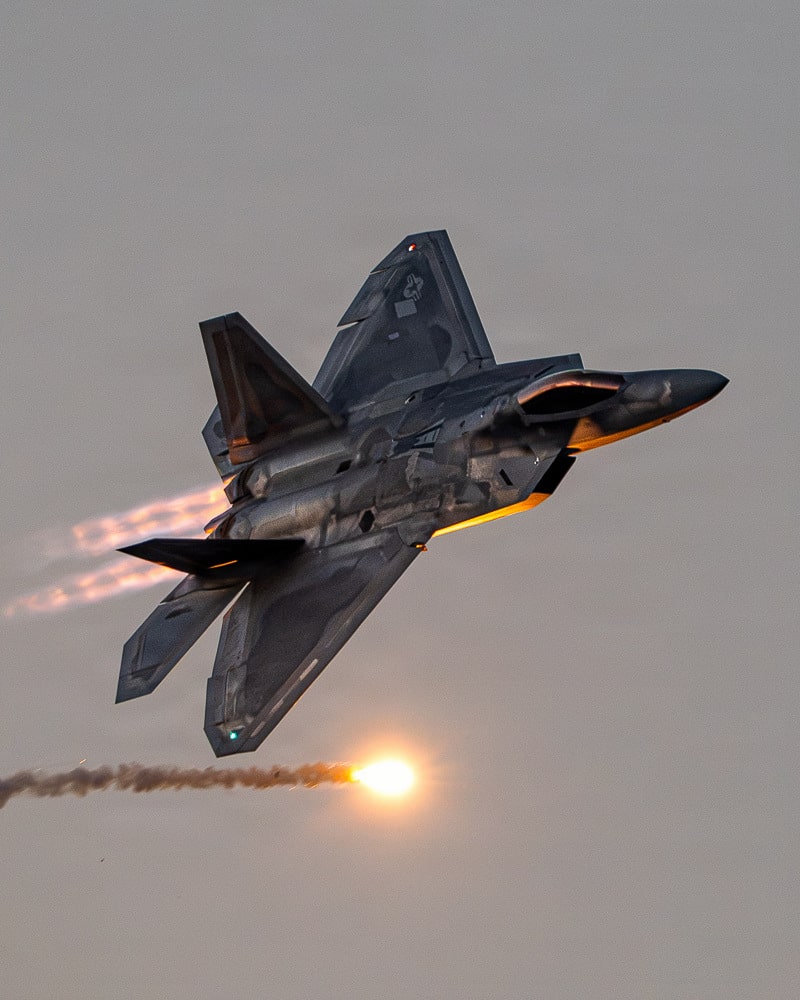
“CCA is very much a reality,” Tabor said. “It is going to be a part of our future, and there is absolutely a world in which the incorporation of CCAs into the force will mitigate the requirement for the number of fighters. That’s not the CCA that we have right now, but it is advancing very, very rapidly. We’re confident that it will play a major role in future versions of the fighter force structure report.”
For other monetarily restricted air forces such as the United Kingdom’s Royal Air Force, CCA are the perfect opportunity to add mass back into the fleet, leading to possible changes in the composition of aircraft squadrons featuring a mix of manned and unmanned aircraft. This can make up the numbers of a reduced manned fleet size or expand the force from its current baseline, the only major factor in this being the cost to do so.
USAF Fleet Compositional Changes
By 2035, the USAF is aiming for a fleet to consist of 40% F-35As, 20% F-22 Raptors and the new F-47, as the Raptor is retired on a one for one basis with its successor, whilst the remaining 40% would be split roughly evenly between F-15E and EX aircraft alongside ageing F-16 Fighting Falcons. The A-10 will be gone by this point so is not included in the overall aircraft composition.
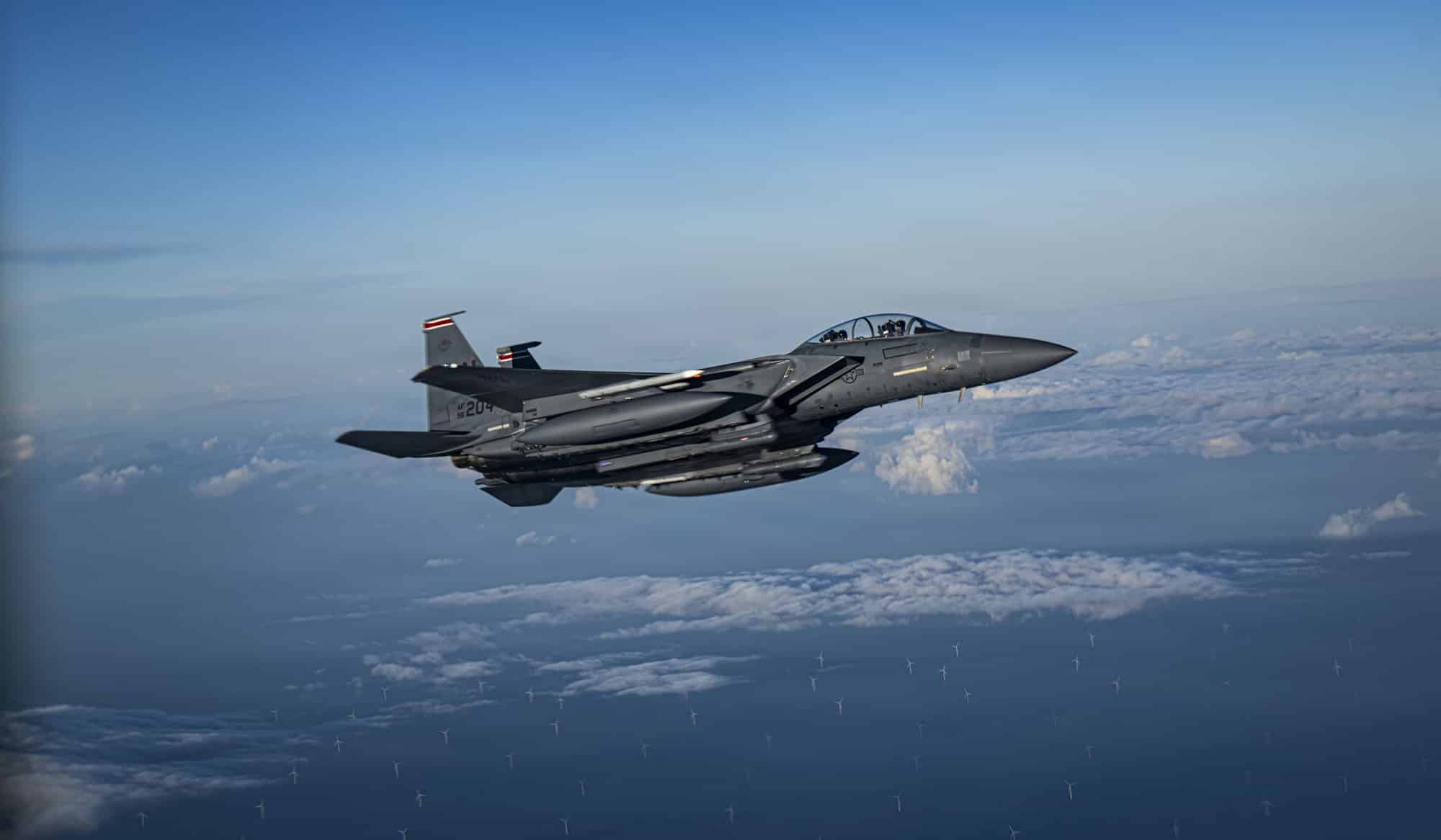
Today, excluding A-10s which will be gone by 2030, the mix is about 30% F-35A, 10% F-22, 15% F-15E and EX, as well as 45% F-16. Against the 1,509 aircraft desired, these percentages equate to around 600 F-35A, 300 F-22/F-47s, and 600 F-15/F-16s of various types.
I always love seeing heritage flights. This also may be one of the last times that these 4 aircraft are seen flying together, with the retirement of the A10 nearing.
USAF F-22 Raptor, USAF F-35A, USAF A10 warthog, and the USAAF P51 Mustang with a beautiful flight over KOSH. https://t.co/Y0GDGD0vZu
— Benight (@Benight_photog) September 5, 2024
Currently, the USAF operates 186 operational F-22s with a comparable number of F-47s set to be procured in the near future. The USAF attempted to divest 32 of its oldest Block 20 Raptors, as they were not combat capable and not considered worth upgrading.
The intention was to outright replace them with F-47s, but this was scuttled by the U.S. Congress in June 2026. The crossover between F-47 and F-22 could generate that near 300 aircraft figure, but the other numbers will have to be met by increased aircraft orders.

Congress has allowed the USAF to increase its planned procurement of F-15EXs beyond 267 jets, without specifying how many. This is a positive sign, however a multi-year deal as was struck with Lockheed recently is not yet complete.
The USAF currently has about 544 F-35A, of which only 344 are counted as combat-coded for FY2026. The others are either in test and evaluation, training roles or waiting to receive the TR3 update.
Adding to the confusion of ascertaining the USAF’s mainline fighter strength are the two separate metrics used by the USAF and Congress for ascertaining the desired number of aircraft in the air force. The USAF uses Combat Coded Total Aircraft Inventory (CC TAI), whilst Congress uses Primary Mission Aircraft Inventory (PMAI).
Both figures are measured very differently, and it forms a key part of the funding battles between the USAF and its civilian oversight. The report to Congress outright contends that PMAI does not accurately reflect the Air Force’s true combat capacity, since it does not address backup and attrition reserve aircraft.
The Air Force’s target of 1,509 jets by 2035 is measured using the CC TAI figure. Tabor said officials are still in talks with Congress about changing the metric. “We’ve been having a lot of conversations with Congress about that language. I think that it’s a transition. It won’t be a flip of the switch that changes it, but we think we’re in a pretty good position on that,” he said.