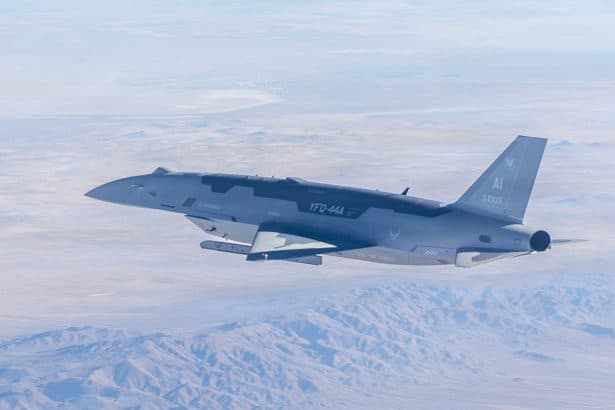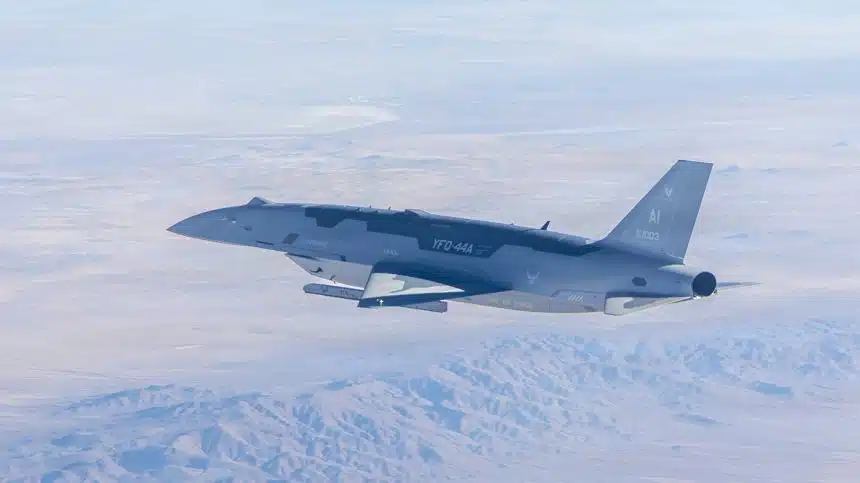
An F-22A Raptor controlled for the first time a YFQ-44A Collaborative Combat Aircraft during an airborne tactical-control demonstration in early October.
The U.S. Air Force has announced that the pilot of an F-22A Raptor took control of a YFQ-44A Fury Collaborative Combat Aircraft (CCA) during a test in early October 2026. The development follows the first flights of crewed fighters alongside both the YFQ-44 and YFQ-42 during this summer.
On that occasion, it was confirmed that the drones were not controlled by the crewed fighters, and that the first live-flight demonstrations were expected within the coming weeks or months. At the time, Anduril said this work has already progressed through hardware-in-the-loop and software-in-the-loop testing and also on the aircraft itself.
An ‘airborne tactical command and in-flight control’ demonstration
During this month’s demonstration, the service said “an F-22 pilot served as an airborne ‘quarterback,’ issuing high-level tactical directives to a single YFQ-44A.” The YFQ-44’s autonomy software executed those directives, conducting what has been described as dynamic flight maneuvers and simulated combat tasks.
“This flight shows the power of crewed-uncrewed teaming and the advantage it provides our warfighters,” said Air Force Chief of Staff Gen. Ken Wilsbach. “We must test often, learn fast and give commanders what they need, when they need it.”
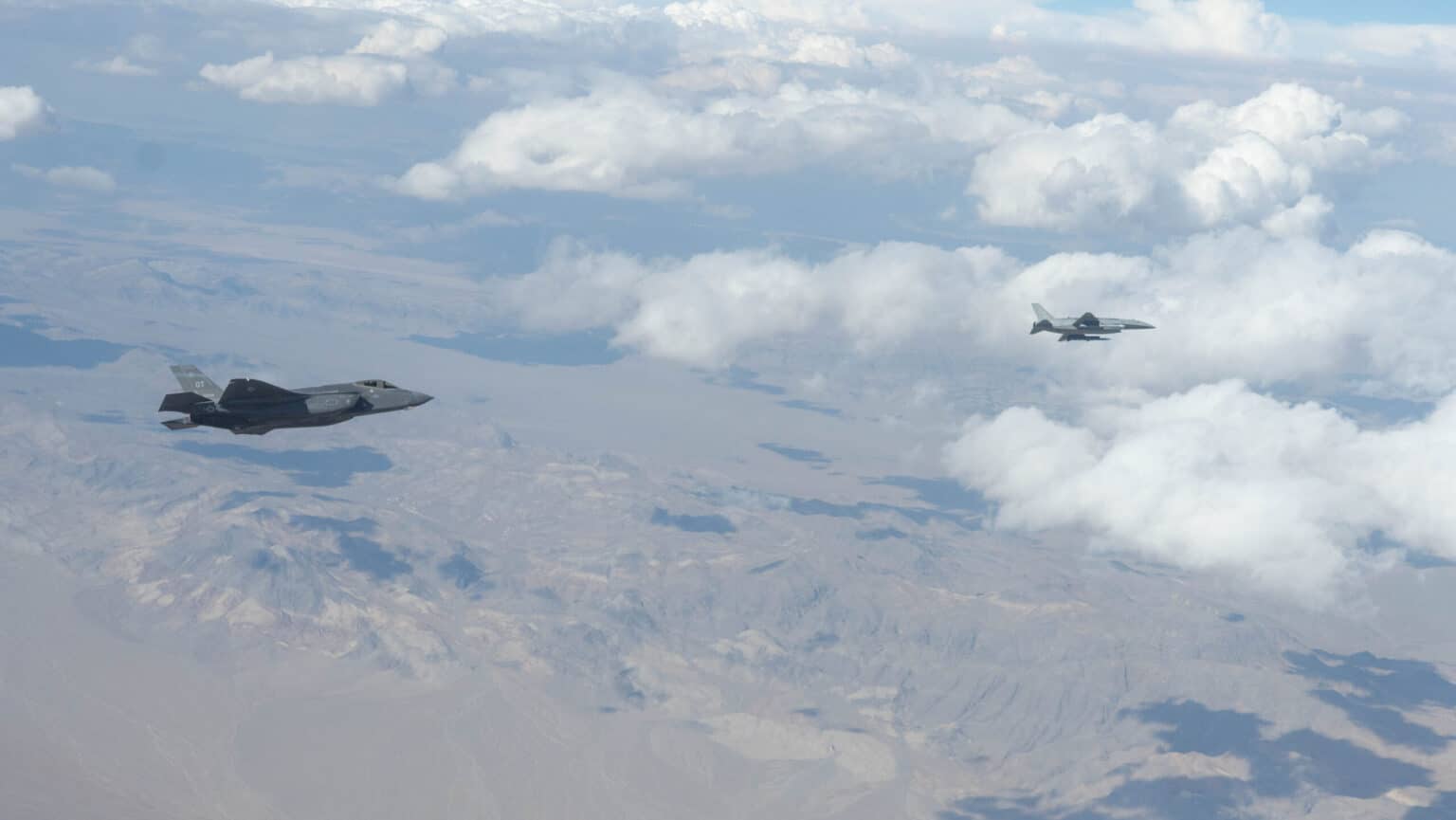
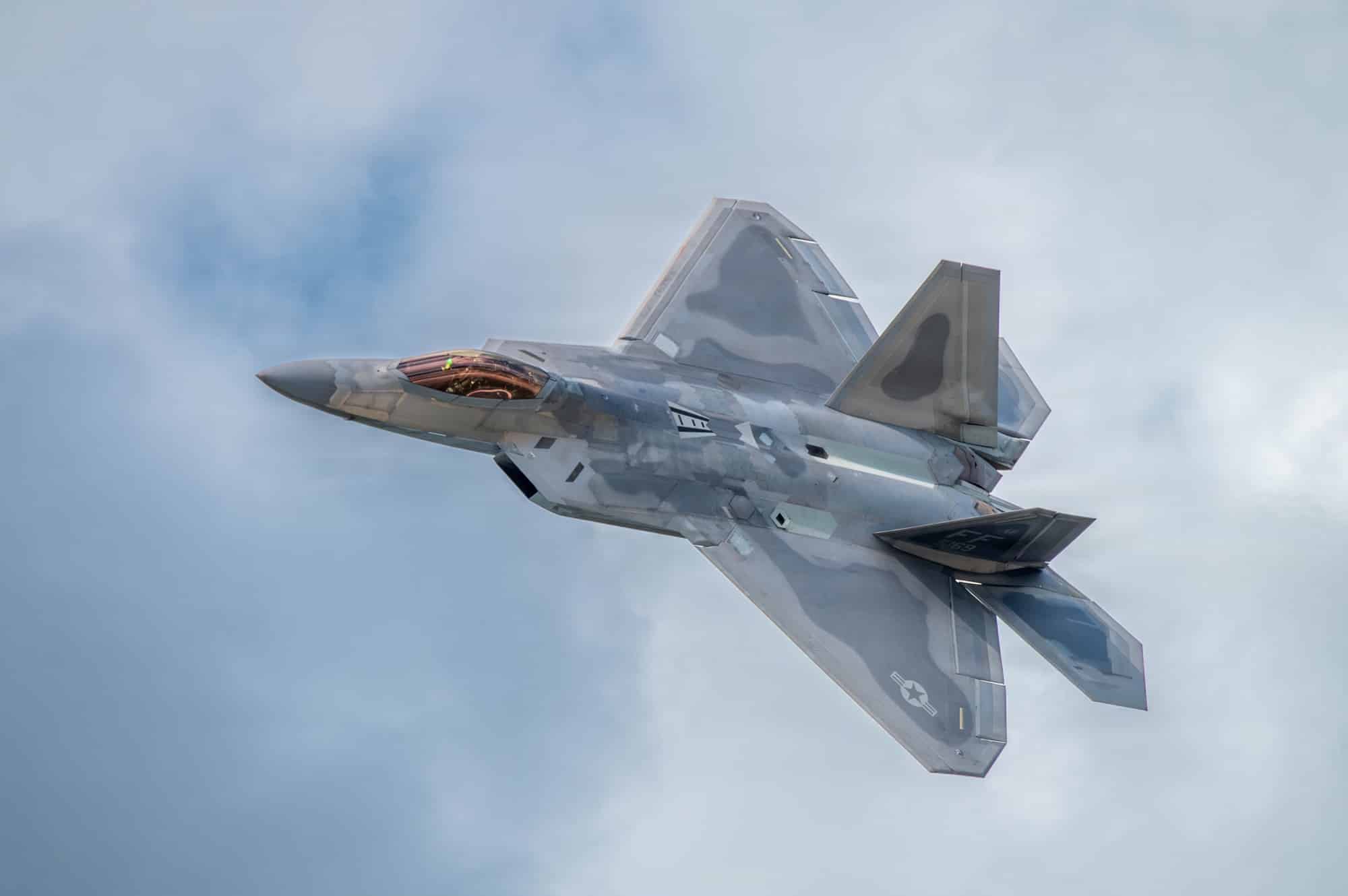
The choice of the F-22 is not casual, as the Air Force has already confirmed in the past that the Raptor is the “threshold platform” for the CCA program. In fact, while integration with F-16s, F-35As, F-15Es and F-15EXs is being considered, the U.S. Air Force will initially pair CCAs only with the F-22 Raptor.
Leading to this demonstration, the F-22 previously took control of an MQ-20 Avenger uncrewed aircraft during a test focused on validating MUM-T (manned-unmanned teaming) operations. The Avenger has been used as a surrogate CCA platform for more than five years, supporting the development and validation of autonomy concepts before and after the arrival of newer purpose-built platforms such as the XQ-67A and YFQ-42A.
“This achievement demonstrates what is possible when we are aligned with industry on a shared imperative: delivering capability to the warfighter at unprecedented speed,” said Secretary of the Air Force Troy Meink. “We are driving urgency into every part of acquisition from rapid integration and flight learning to disciplined assessment, so we can turn promising technology into combat capability at the pace the threat demands.”
The service says the demonstration brought together personnel from the 412th Test Wing, 422nd Test and Evaluation Squadron, 309th Software Engineering Group, Experimental Operations Unit, F-22 System Program Office and the CCA Software Autonomy and Teaming Branch. Meanwhile, the both the YFQ-42 and YFQ-44 continue to be tested by the Experimental Operations Unit, with more aircraft recently delivered.
CCA Increment 1 program advances
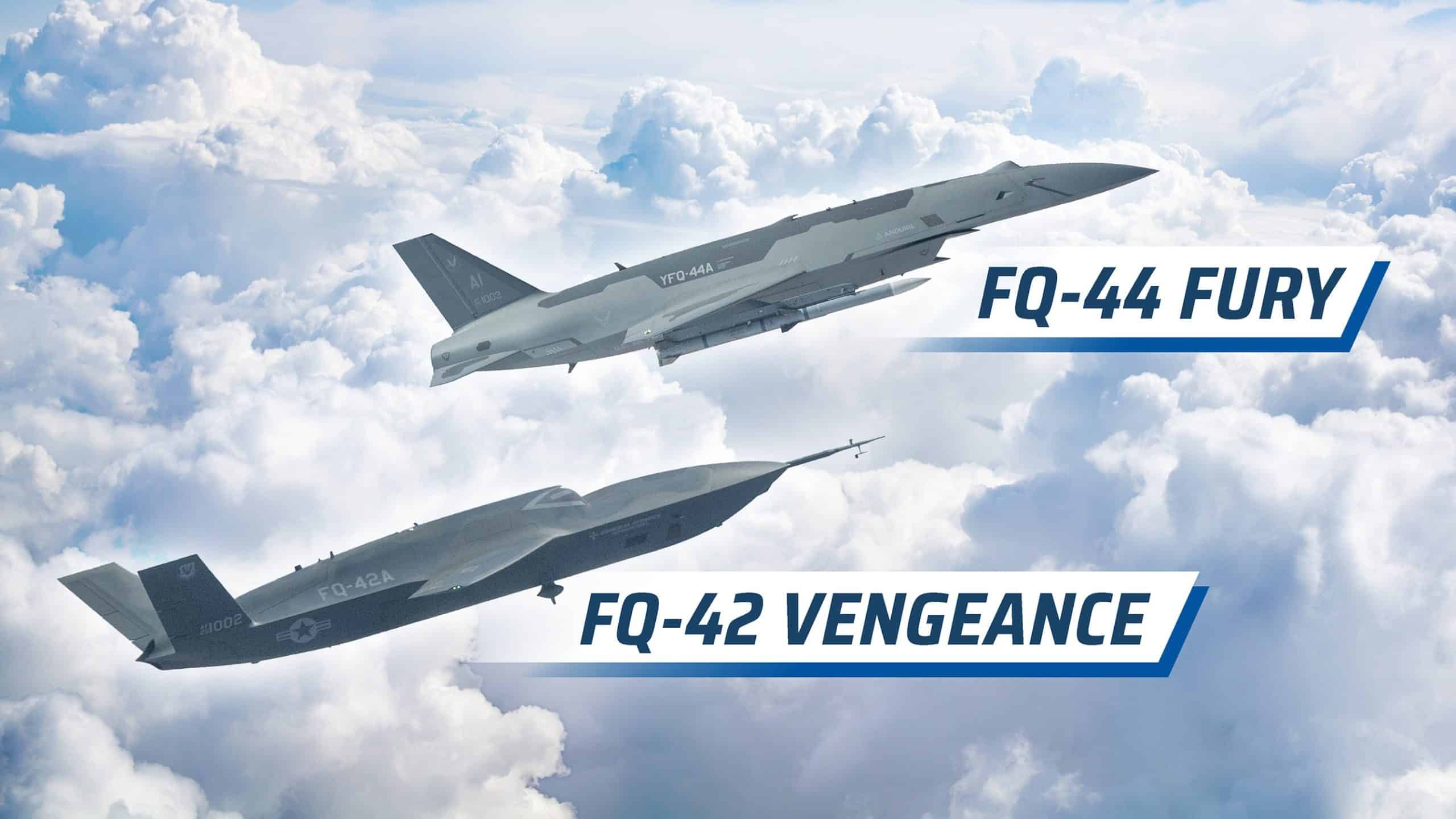
The demonstration follows the recent announcement of the popular names for both the FQ-42 and FQ-44, which will now be known as Vengeance and Fury, respectively. While for the FQ-44 the service confirmed the name “Fury” already used internally by Anduril, for the FQ-42 it decided to replace the name “Dark Merlin” chosen by GA-ASI.
The service said that “revealing popular names was a natural next step for the CCA program as the Air Force modernizes the nation’s aerial combat fleet.” Secretary of the Air Force Troy Meink, who announced the names, additionally confirmed that the service would have 500 CCAs by 2032, out of the 1,000 planned by the end of the decade.
The development follows the production contracts announced earlier this summer for the CCA Increment 1 program. As we reported in June, the Air Force awarded engineering and manufacturing development and production contracts for the FQ-42 and FQ-44, as well as mission autonomy production contracts.
The service explained that the award arrived months ahead of scheduled because the two uncrewed assets already met rigorous mission requirements and are ready for full-scale manufacturing. One of the changes with the award of the production contracts was the two designs dropping the ‘Y’ designation which indicated prototypes.
On that occasion, Secretary of the Air Force Troy Meink said the goal was “to procure over 150 combat capable CCA by the end of the decade.” With the latest announcement, this goal now changed to 500 aircraft by 2032.
In August, the Air Force also tested portable ground control stations for CCAs, called Portable Command and Control Enclave (C2E). The evaluations featured ground operations demonstrations from leading industry partners, said a statement.
The demonstration, hosted by the Ohio Air National Guard’s 178th Wing at Springfield Air National Guard Base, provided an ideal operational setting for testing these next-generation systems. The system is meant to support Agile Combat Employment operations in austere environments anywhere in the world.
The FQ-44A Fury
The FQ-44A Fury is Anduril Industries’ design for the U.S. Air Force’s Collaborative Combat Aircraft (CCA) program. Developed as a low-cost, autonomous force multiplier, the FQ-44A is designed to operate alongside crewed fighters such as the F-35 Lightning II, F-15EX Eagle II and the future F-47, extending their reach while undertaking high-risk missions that would otherwise expose human pilots to danger.
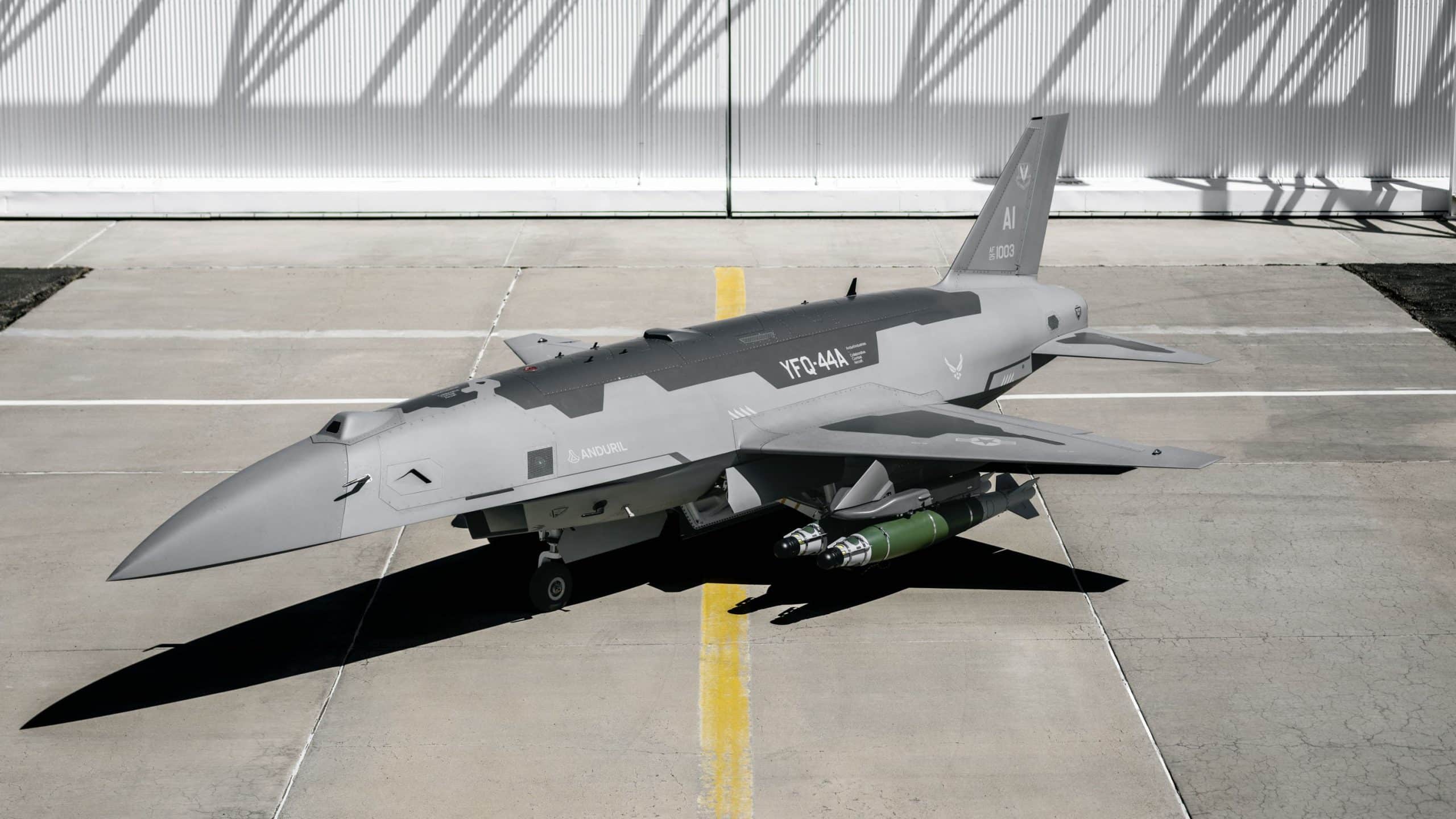
Originally derived from Anduril’s Fury concept, the aircraft emphasizes rapid development, open-system architecture and modularity. The Air Force officially unveiled the production-representative test vehicle in May 2025, with the announcement of the beginning of ground testing.
The YFQ-44A prototype achieved its maiden flight on Oct. 31, 2025, reaching this milestone “just 556 days after the start of development,” says Anduril, an unusually rapid pace for a military aircraft. According to the company, the aircraft flew semi-autonomously rather than being remotely piloted, demonstrating the company’s software-driven approach to autonomous aviation.
Testing has continued to expand throughout 2026, with the CCA conducting captive-carry evaluations with inert AIM-120 AMRAAM missiles to validate weapons integration and safe store separation before live-fire testing. Later, it has also begun operational experimentation with the U.S. Air Force’s Experimental Operations Unit at Edwards Air Force Base, California, allowing to start developing tactics, techniques and procedures for integrating autonomous combat aircraft into future air operations.