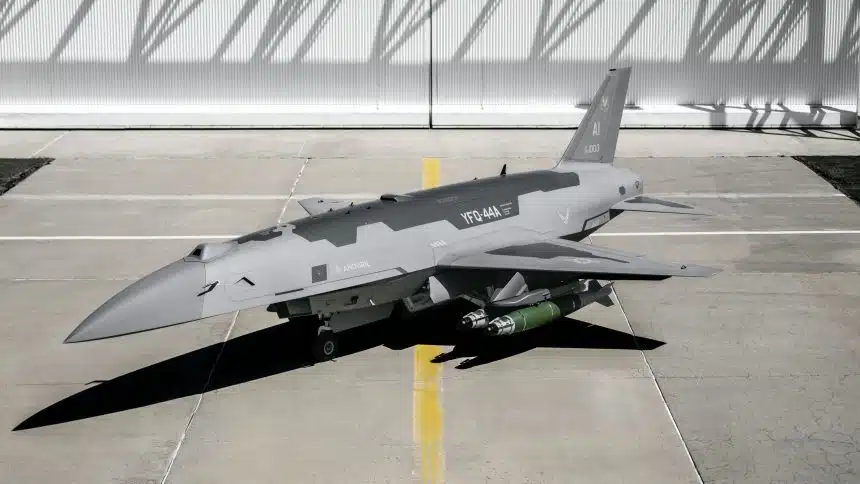
Anduril fit checked its YFQ-44A Fury CCA with various air-to-ground munitions, and conducted the first formation flights of the autonomous fighter drone alongside F-35s.
Anduril’s YFQ-44A Fury is expanding its capabilities beyond the air-to-air mission that initially defined the U.S. Air Force’s Collaborative Combat Aircraft (CCA) program. New imagery released by the company shows the unmanned fighter configured with multiple air-to-ground weapons.
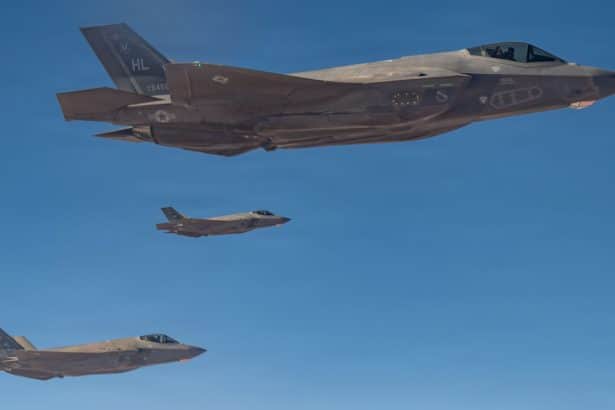
Anduril also confirmed that Fury has already flown alongside U.S. Air Force F-35s during testing. The test flight, part of an exercise conducted with the Air Force’s Experimental Operations Unit (EOU) at Creech Air Force Base, Nevada, in July, included formation flying but the drone was not controlled by the F-35s’ pilots.
Fit for Fury.
Notional FQ-44 configurations confirm Fury’s compatibility with a range of munitions, including 500-pound class guided bombs, Small Diameter Bombs, air-launched cruise missiles, rocket pods, external targeting pods, and (many) more. Fight unfair. pic.twitter.com/wxtET00MtD
— Anduril Industries (@anduriltech) September 15, 2026
The developments were disclosed during the Air & Space Forces Association’s Air, Space & Cyber Conference and come as the Air Force moves toward the next stage of the CCA program. Anduril is looking to develop Fury into a multi-mission aircraft able to carry different weapons and payloads.
Air-to-ground weapons fit check
Images released by Anduril on social media show the YFQ-44A carrying different air-to-ground stores on its external stations. Among the weapons shown, all mounted on twin adaptor racks, are GBU-54 Laser JDAM bombs and LAU-131A/A with possibly APKWS rockets, while photos published by The War Zone also show GBU-39/B Small Diameter Bombs.
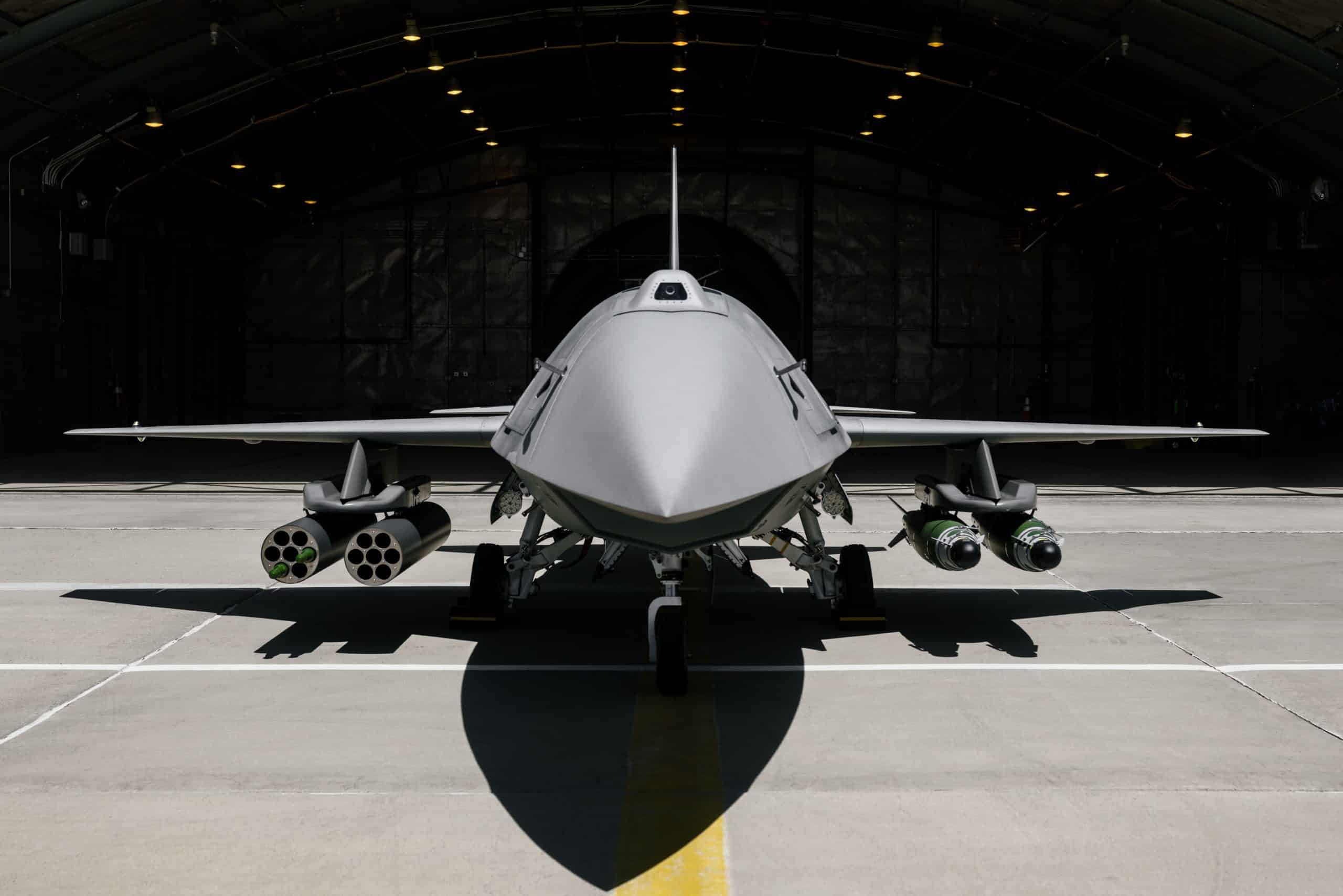
Anduril executives Jason Levin, senior vice president for Air Dominance and Strike, and Erin Simpson, vice president for Strategy for Air Dominance and Strike, confirmed that the company has begun integration and ground-based fit checks for several air-to-ground weapons. These include 500-pound-class guided bombs, 250-pound Small Diameter Bombs, low-cost cruise missiles, external targeting pods and pods for 2.75-inch guided or unguided rockets.
Additionally, Levin told reporters that Anduril is also working on integrating its Barracuda 500 into Fury. The integration of the air-to-ground weaponry is being done with internal funding.
The distinction between fit checking and actual weapons testing is important. The weapons shown in the latest imagery, in fact, have not yet been flight-tested with the YFQ-44.
The current activity is an integration step intended to verify that the stores can physically and structurally be carried by the aircraft before progressing toward captive-carry and, potentially, live-release testing. The imagery nevertheless provides the clearest indication so far that Anduril is considering a considerably broader mission set for the aircraft.
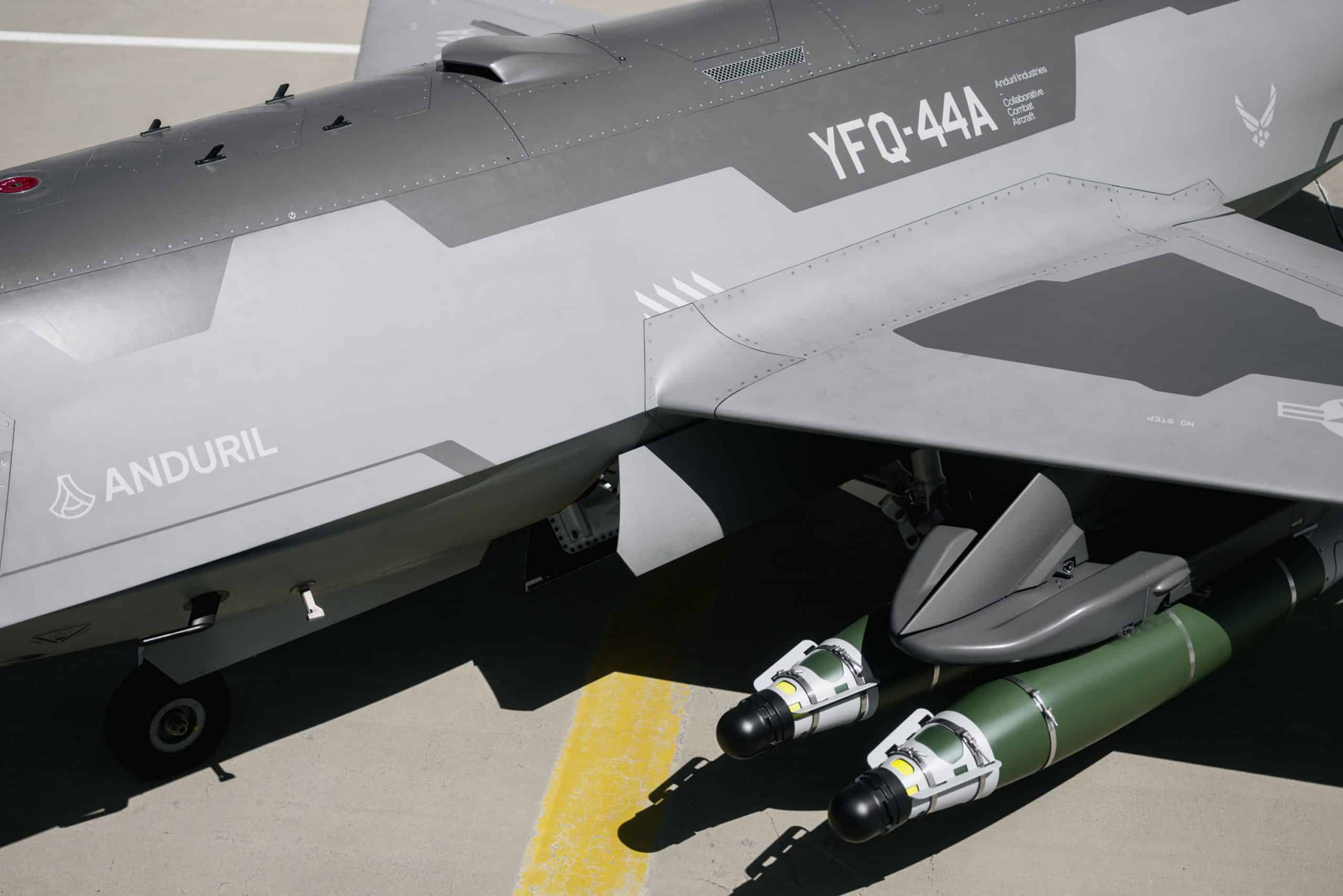
The production FQ-44 will feature four external hardpoints, compared with the two currently installed on the YFQ-44A demonstrator, allowing it to carry four AIM-120 AMRAAM air-to-air missiles. The full-size model of the production variant is also being exhibited at the Air, Space & Cyber Conference.
The additional weapons integrations could allow the same basic aircraft to be configured for counter-air, counter-UAS, counter-cruise-missile and air-to-ground missions. This approach would also allow different members of a CCA formation to perform different tasks, depending on the tactical situation.
A mockup of Anduril’s first production model FQ-44 Fury Collaborative Combat Aircraft (CCA) was on display at the AFA Air, Space & Cyber Conference.
📹 Aviation Week Senior Defense Editor Steve Trimble outlines some of its key features and evolution plans.…
— Aviation Week (@AviationWeek) September 15, 2026
Flying alongside F-35s
During the Air, Space & Cyber Conference, the company has also disclosed that the YFQ-44 Fury has already flown in formation with F-35 Lightning II fighters. The milestone arrived during a July exercise conducted with the Air Force’s Experimental Operations Unit at Creech Air Force Base, Nevada.
There is, however, an important distinction between flying alongside an F-35 and being controlled or tasked by an F-35. In fact, as confirmed by Levin, the latter has not yet been demonstrated.
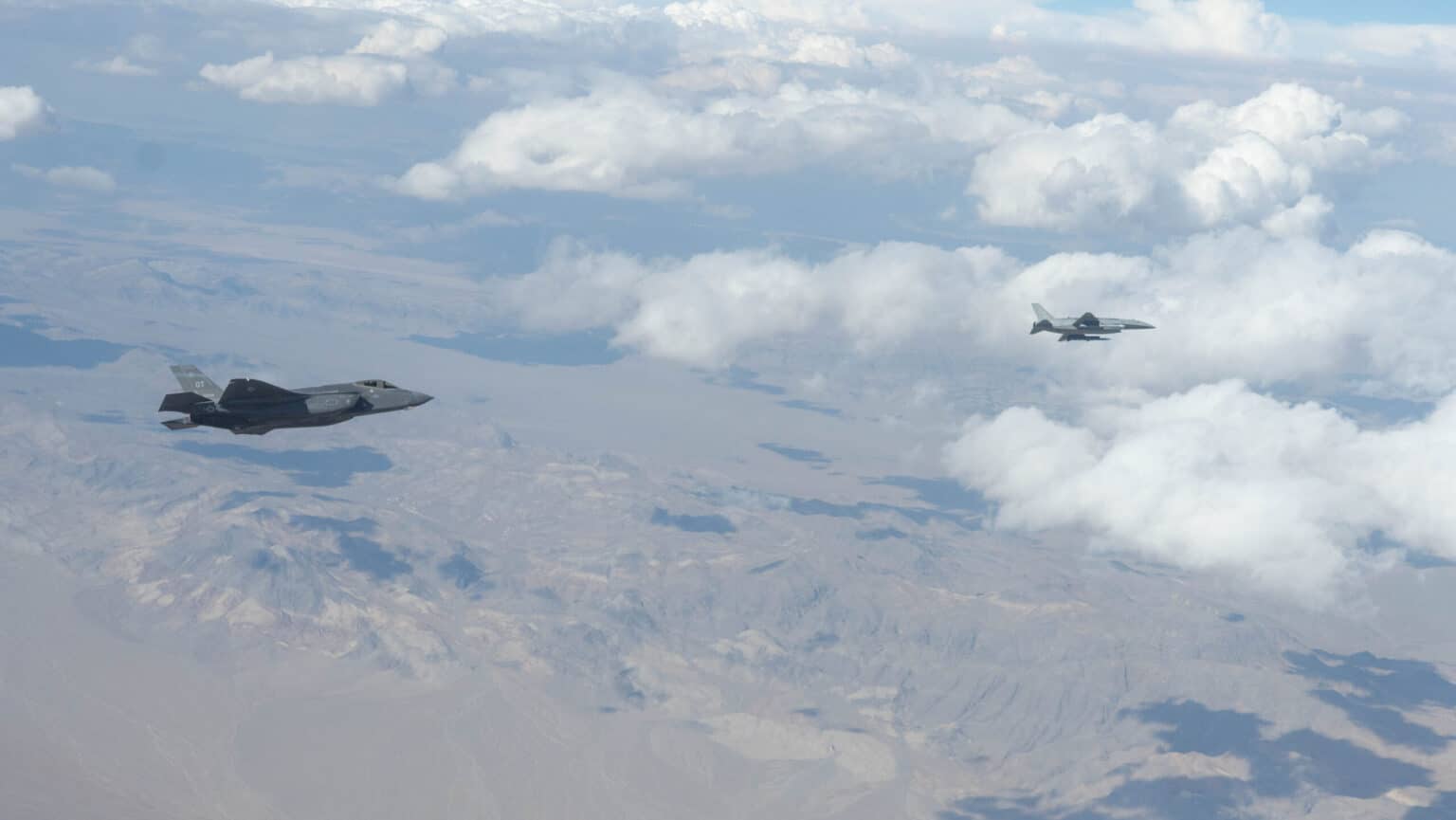
During the testing, the YFQ-44 operated using its own Mission Autonomy system while sharing the battlespace with crewed fighters, other CCAs and other aircraft. The Mission Autonomy system was operated by Air Force personnel, with Anduril’s personnel participating only in a supporting role.
The company is now working toward what it calls “quarterback integration,” referring to the ability of a crewed aircraft or task autonomous aircraft operating as part of the same formation. This appears to be a reference to the wording previously used by the Air Force, which said the CCAs area meant to fly in the heat of the fight while the manned fighters will stay at standoff ranges and “play quarterback.”
Anduril says this work has already progressed through hardware-in-the-loop and software-in-the-loop testing and also on the aircraft itself, with the first live-flight demonstrations expected within the coming weeks or months. The initial implementation could involve a tablet-based interface inside the crewed fighter, as seen during previous tests like the one which saw an F-35 take control of an MQ-20 Avenger.
FY2027 funding remains a constraint
Although the Air Force awarded production contracts for both the FQ-44 Fury and General Atomics’ FQ-42A earlier this year, Anduril says it cannot fully begin work on the production contract until Congress provides the necessary FY2027 procurement funding. Erin Simpson, Anduril’s vice president for strategy execution, said the company has already invested heavily and has gone as far as it can without procurement dollars.

The company has already begun preparing, investing its own funds in the production infrastructure and long-lead components. Levin said Arsenal-1 can ultimately produce as many as 150 Fury aircraft annually, although current Air Force orders do not reach that production rate.
Anduril has also said that the aircraft’s production cost is expected to remain below $20 million at the quantities currently contemplated by the Air Force, although the exact production quantities under the initial contracts have not been disclosed. For context, few days ago, Secretary of the Air Force Troy Meink said the service is planning to have 500 CCAs in service by 2032.