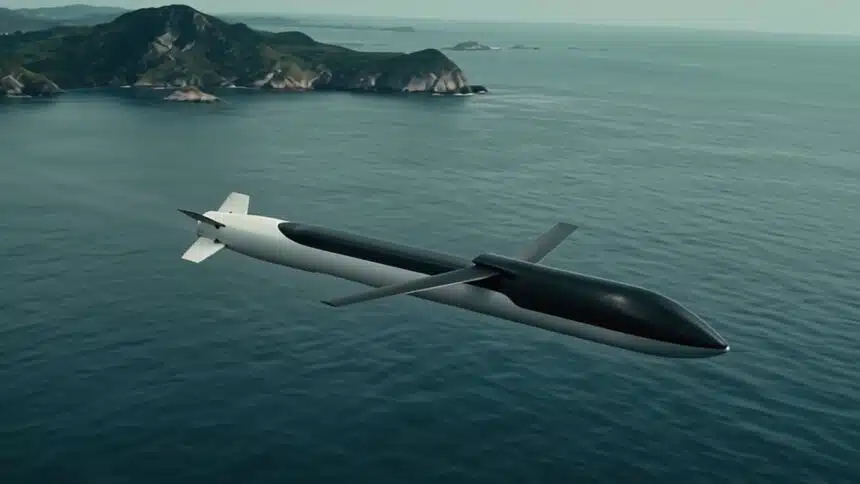
Based on the Ice Breaker cruise missile, Super Ice combines a 1,000 lb warhead with improved navigation, guidance and seeker capabilities, according to Rafael.
Israel’s Rafael Advanced Defense Systems has unveiled the Super Ice long-range multi-platform cruise missile, based on the Ice Breaker standoff weapon unveiled in 2022. Building on the architecture and technology of the original weapon, the new missile features a substantially larger warhead and enhanced guidance and navigation capabilities, says Rafael.
The original Ice Breaker featured a 250 lb warhead, while the new Super Ice features a 1,000 lb warhead. According to the company’s Nov. 11, 2026 release, the missile is employable from air, land and naval platforms, “providing maximum operational flexibility.”
General Atomics and Rafael teamed up last year to produce the Ice Breaker-based Bullseye standoff missile in the U.S. Both the Ice Breaker and Bullseye have a near similar design and dimensions.
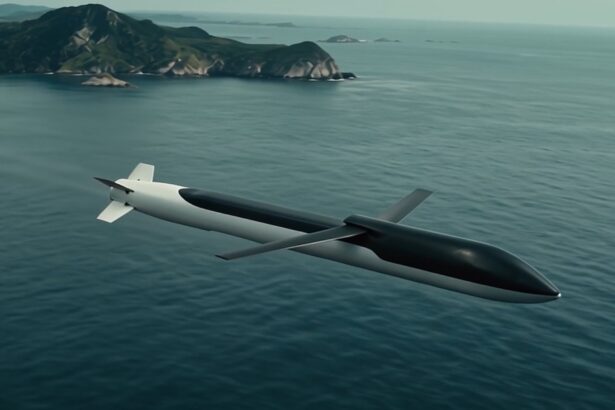
The Super Ice’s rendering released by Rafael shows a markedly different front section. The missile appears to have a smoother pointed nose instead of the trapezoidal nose with the large glass optical seeker seen on the Ice Breaker.
Rafael unveils SUPER ICE, its new long-range cruise missile.
“Building on the technological breakthroughs of ICE BREAKER, SUPER ICE features a powerful 1,000-pound warhead (MK83 compatible) and supports multiple launch platforms across air, land and sea, providing maximum operational flexibility.”
https://t.co/RImrvKhlbp
— Guy Plopsky (@GuyPlopsky) November 11, 2026
However, a promotional video showed a small circular optical module on the front, visually reminiscent of the seeker arrangement on the Taurus KEPD 350 ALCM. The rest of the missile retains the highly faceted, stealth-optimised body with top-mounted fold-out wings, a single ventral turbojet air intake and cruciform tail fins.
Rafael’s illustrations depict the missile flying at low-altitude in both sea-skimming and terrain-following flight profiles, including over plains and mountainous valleys, before engaging surface-to-air missile (SAM) installations.
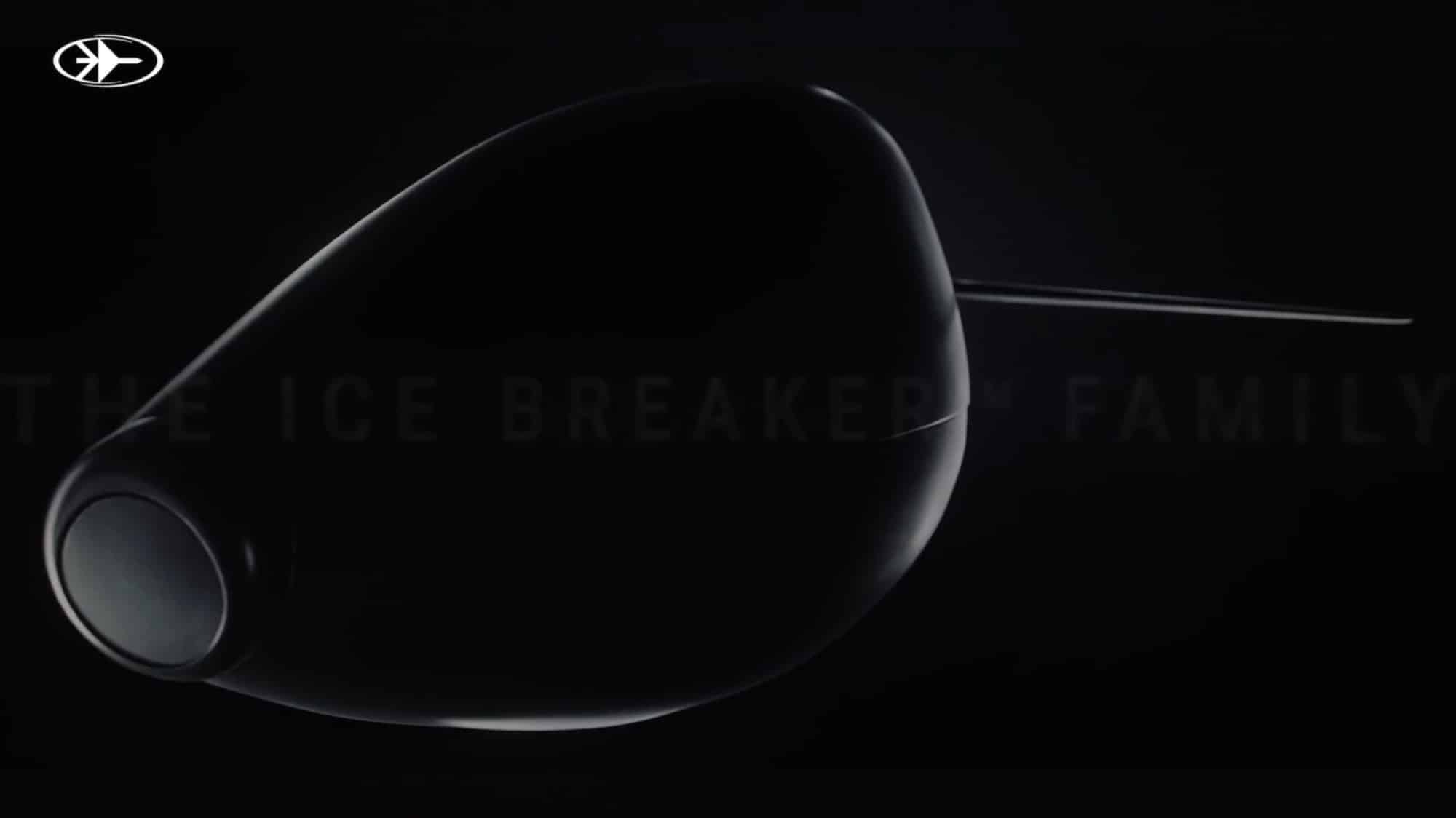
Next gen cruise missile
Rafael’s product page for the Super Ice describes it as an “ultra-long-range” missile designed to engage high-value targets at standoff, Beyond Line-of-Sight (BLOS) ranges. According to the company, it is independent of satellite navigation (SATNAV) and “EW [Electronic Warfare] resilient,” and employs autonomous navigation to operate in electronically contested environments.
The manufacturer also advertises a high-subsonic flight speed, although detailed performance figures, including the missile’s maximum range and speed, have not been fully disclosed. “The system’s cutting-edge capabilities include high subsonic speed, low-level flight, terrain-following, and Very Low Observable (VLO) technology,” says the website.
Rafael’s Chairman Yuval Steinitz described the Super Ice as “the best cruise missile” in its class for “long-range stand-off strikes against high-value targets, including air-defense systems.” He also traced the company’s cruise-missile heritage back to the introduction of the Popeye missile family.
President and CEO of RAFAEL Yoav Tourgeman said the Super Ice comes after Rafael’s company’s systems had played a decisive role in recent conflicts. “Super Ice represents the most advanced generation of RAFAEL’s cruise missiles, incorporating advanced capabilities designed to meet the most demanding and complex multi-domain operational requirements of our customers,” he said.
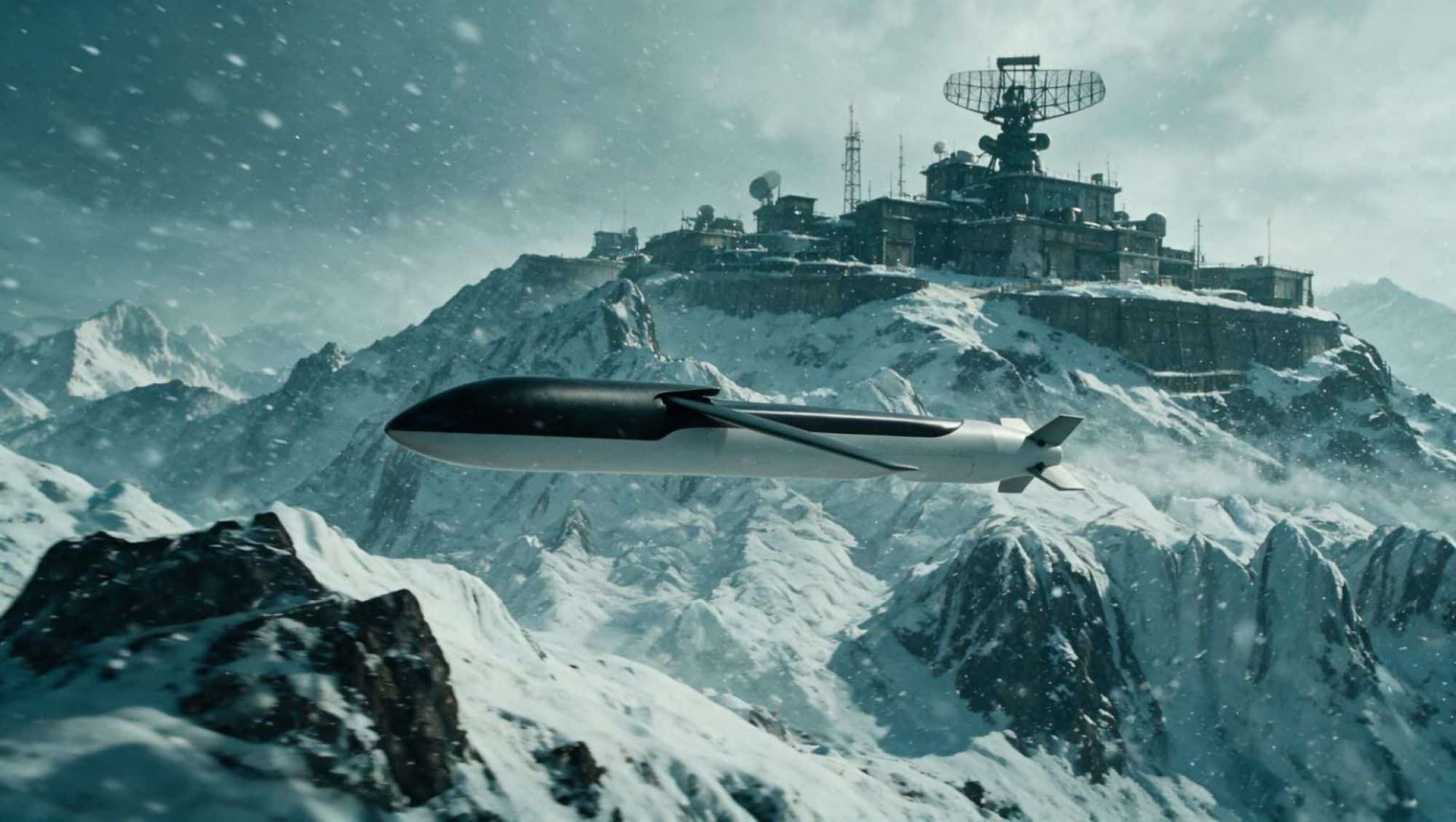
Senior Vice-President and Head of Rafael’s Air Systems Division Gad Geva said Super Ice “was developed for integration across a wide range of aerial platforms without requiring significant modifications to the platforms themselves.” He further said the commonality with Ice Breaker ensures “significant savings in mission-planning requirements and life-cycle costs.”
“The missile’s multi-domain design also enables launch from air, sea or ground-based launchers,” said Geva. “Together, Super Ice and Ice Breaker provide an operationally effective and cost-efficient solution, allowing customers to select the appropriate weapon system for each target.”
Super Ice missile
Rafale says that the Super Ice “builds on the technological breakthroughs of the Ice Breaker.” The weapon features a powerful “MK83 compatible” 1,000-pound (453 kg) warhead.
The Mark 83 is a low-drag general-purpose (LDGP) unguided bomb used by the U.S. military and multiple air forces around the world. This bomb body can also be fitted with guidance kits to produce precision-guided weapons, including the GBU-16 Paveway Laser-Guided Bomb (LGB) and GBU-32 Joint Direct Attack Munition (JDAM).
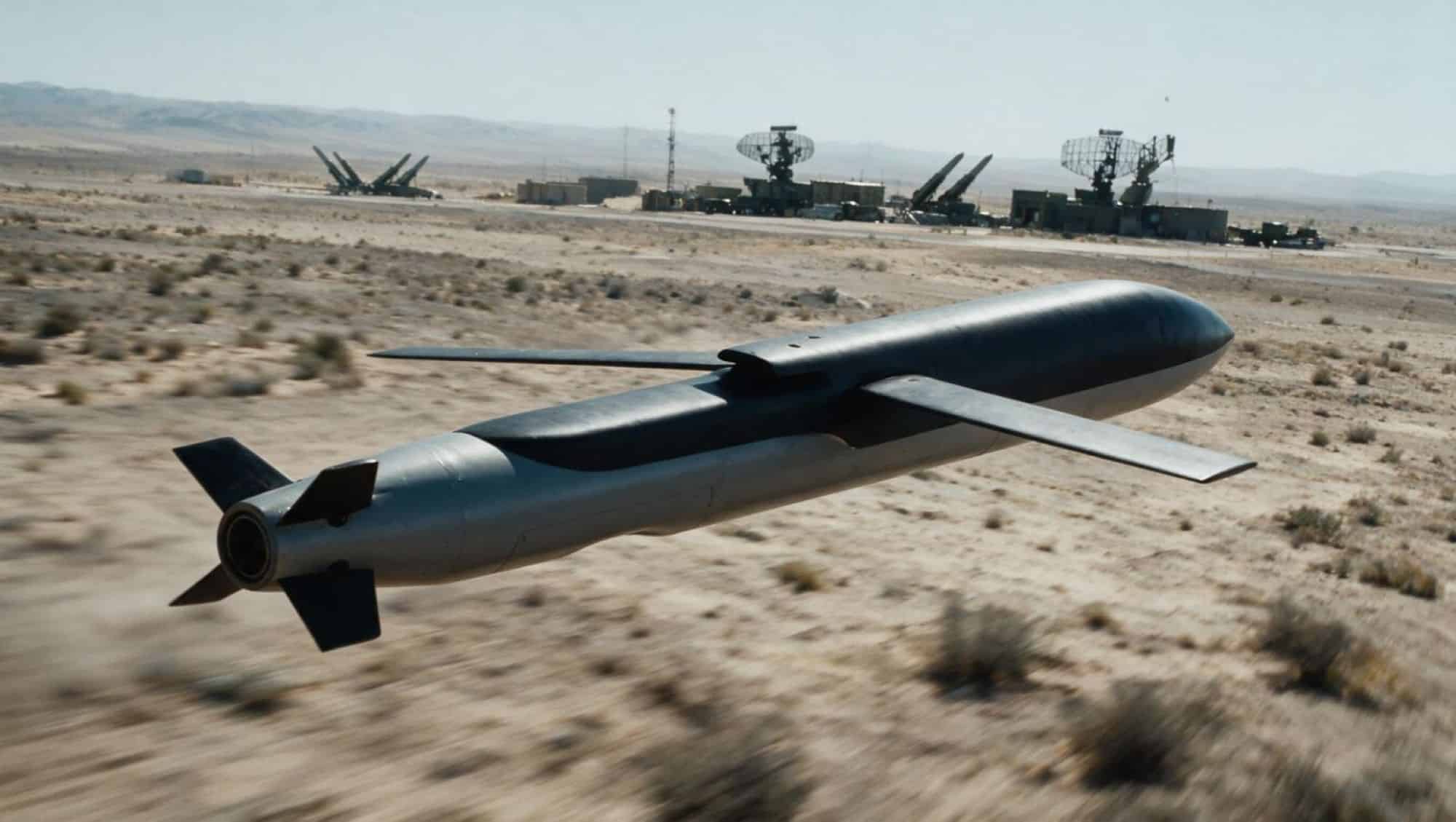
The statement by Rafael said: “The missile incorporates advanced capabilities, including robust autonomous navigation, low-altitude terrain-following flight, all-weather operation and high-precision engagement of diverse targets. Its advanced electro-optical guidance system employs high-accuracy image-matching technology.”
Rafael describes Super Ice as a new addition to its Ice Breaker missile family, sharing the family’s launch-system compatibility, mission-planning infrastructure and logistics. The company has not disclosed whether the seeker or other major components are modular or interchangeable between the different variants.