Ukraine could get up to 16 L-39NG Skyfox aircraft, potentially adapted for counter-drone missions, while the first JAS 39 Gripen C/D fighters are expected to arrive in January or February 2027.
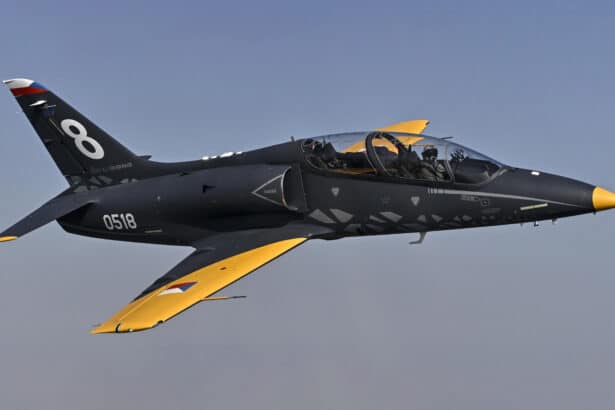
Ukraine could acquire up to 16 L-39NG Skyfox jet trainers, as the country also prepares to receive its first JAS 39 C/D Gripen fighters in early 2027. The two developments arrived on Nov. 11, 2026, at a time when Ukraine continues to work on securing new equipment for its Air Force.
L-39NG for Ukraine
The possibility of supplying the L-39NG Skyfox aircraft emerged during a visit to Ukraine by Czech Deputy Prime Minister and Minister of Industry and Trade Karel Havlíček. Speaking to Czech media outlet iDNES, Havlíček said that four aircraft had already been confirmed, while discussions were underway regarding the provision of another 12.
#Czechia/#Ukraine 🇨🇿🇺🇦:
Ukraine will receive four L-39 Skyfox aircraft from Aero Vodochody (@AERO_Vodochody).
Minister of Industry and Trade Karel Havlíček made the announcement on November 11 following a meeting in Kyiv. He is now discussing the delivery of an additional twelve with Ukrainian Prime Minister Serhiy Koretsky. In total, Ukraine could receive 16 of these aircraft. The price, financing, and delivery schedule have not yet been disclosed.
Ukraine will likely receive the L-39 Skyfox in the “Drone Hunter” version, designed to shoot down jet-powered drones.
— 𝕻𝖗𝖆𝖎𝖘𝖊 𝕿𝖍𝖊 𝕾𝖙𝖊𝖕𝖍 (@praisethesteph) November 11, 2026
According to the minister, the discussions had produced a preliminary indication that the additional aircraft could be made available. However, no final agreement or delivery schedule for the proposed additional aircraft has been announced.
The potential transfer follows Ukraine’s earlier unsuccessful attempt to acquire four L-159 ALCA light combat aircraft from the Czech Republic. The proposal, initially supported by Czech President Petr Pavel, was eventually rejected by Prime Minister Andrej Babiš’s government, which argued that the aircraft were still required by the Czech Armed Forces.
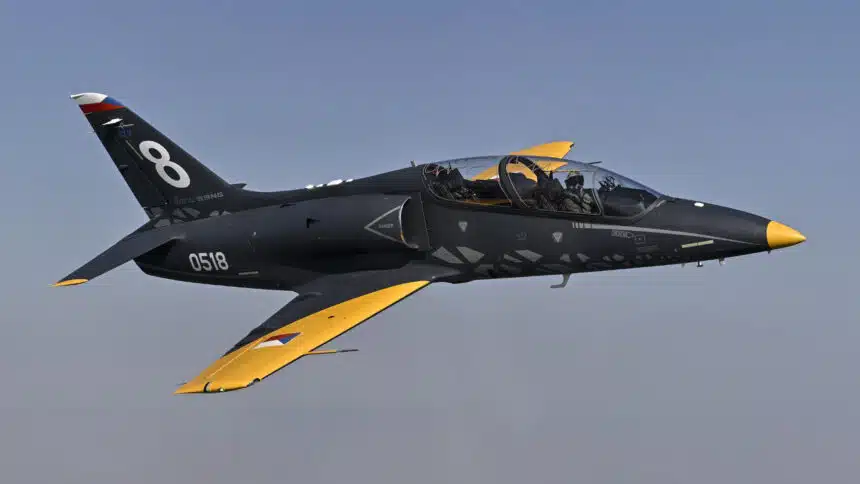
Aero Vodochody, the manufacturer of both aircraft, had previously proposed the L-39NG as an alternative. The aircraft, marketed as the L-39 Skyfox, is a modernized successor to the Cold War-era L-39 Albatros, which is also in service in Ukraine, and combines jet training capabilities with a secondary light-attack role.
The L-39NG features a redesigned airframe, a modern glass cockpit and a Williams International FJ44-4M turbofan engine, replacing the original Soviet-designed Ivchenko AI-25TL turbofan engine. The aircraft can reach a maximum speed of approximately 490 kt (907 km/h), has a service ceiling of 38,000 ft and can carry external stores on five hardpoints.
Notably, Aero Vodochody is working on the development of a ‘Skyfox Drone Hunter’ variant, equipped with a targeting pod, laser-guided rockets and gun pods. The acquisition of this aircraft could thus potentially provide the Ukrainian Air Fox with another option to counter Russian attack drones.
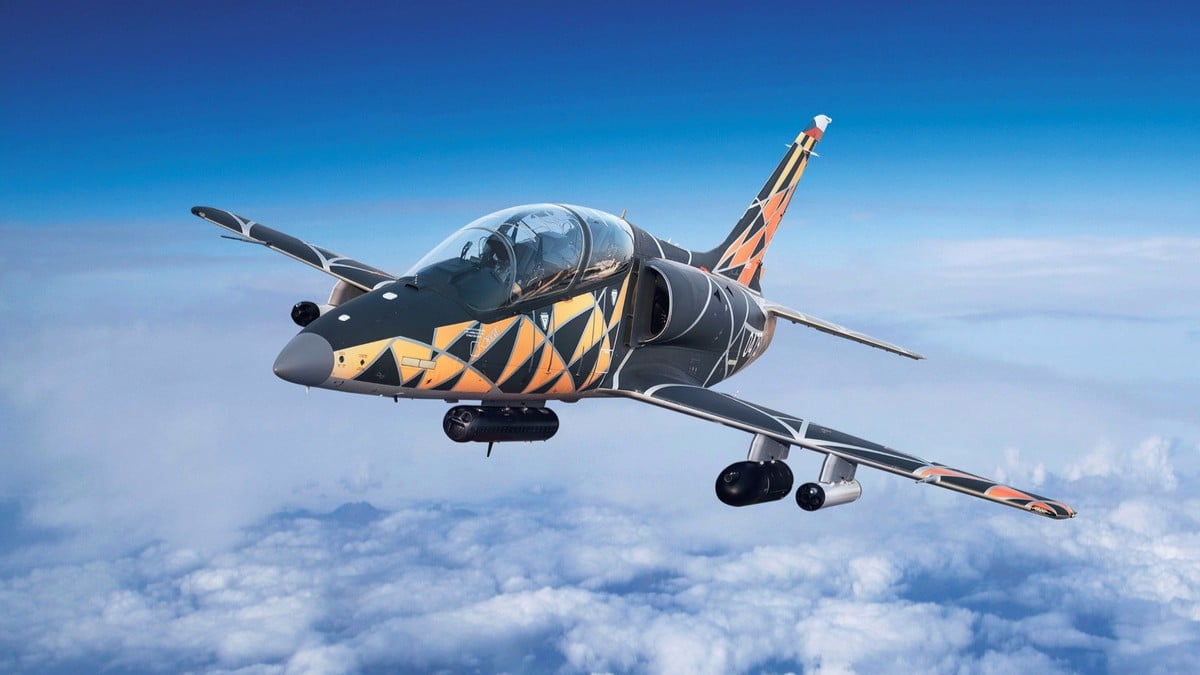
The manufacturer is working with Thales Belgium to integrate and test the FZ275 laser-guided rocket system. These 70 mm rockets are compatible with both the Thales FZ800 and the U.S.-made LAU-131A/A seven-round rocket pods, with the latter being the same used by the Advanced Precision Kill Weapon System (APKWS) which is already in service in Ukraine.
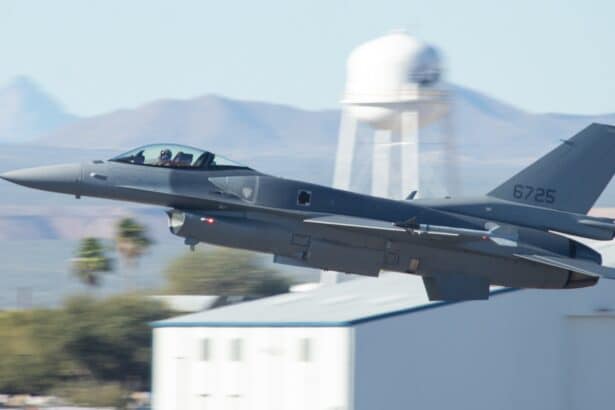
At the time of writing, it remains unclear whether the L-39s destined for Ukraine will be in the standard training and light attack configuration or the Drone Hunter configuration. However, should the latter be delivered, it would provide Ukraine with an aircraft capable of intercepting slower attack without having to commit frontline fighters such as the F-16.
The F-16 so far allegedly destroyed over 4,700 drones, according to the Ukrainian military, mainly by using the 20 mm M61 cannon to preserve the limited stocks of air-to-air missiles for higher-priority missions. Denmark recently delivered more than 50,000 rounds of 20 mm ammunition to replenish Ukrainian stocks.
First Gripens expected in early 2027
While discussions regarding the Czech aircraft continue, Ukraine is also preparing for the arrival of its first Gripen fighters. President Volodymyr Zelenskyy said during a press conference in Copenhagen that the first aircraft should arrive in January or February 2027.
Ukraine is set to receive its first Swedish Saab JAS 39 Gripen fighter jets in January–February 2027, Zelenskyy said during a press conference.
The delivery appears to be broadly on schedule, with Sweden previously announcing that the first Gripen C/D fighters would arrive in early 2027.
— Special Kherson Cat 🐈🇺🇦 (@bayraktar_1love) November 11, 2026
The first aircraft to be delivered will be the 16 JAS 39 Gripen C/D fighters that Sweden has committed while waiting for the delivery to Ukraine of the newer Gripen E fighters. The transfer follows the procurement announced in May 2026 and the agreement signed in October 2025.

Speaking about the timeline, Zelenskyy said that February was a possible delivery date, while emphasizing that Kyiv was seeking to receive the aircraft as quickly as possible. Sweden previously said the fighters would be delivered as early as next year, together with weapons “which may consist of IRIS-T missiles, advanced medium range air-to-air missiles (AMRAAM) and long-range METEOR air-to-air missiles.”
At the time of the announcement in May, Ukrainian pilots and technical personnel were already undergoing training in Sweden in preparation for operating the aircraft. Sweden also said that the donation of the older Gripen C/Ds was conditional on the acquisition of the newer variant.
In June, the contract for the acquisition of 16 Gripen E fighter jets was finalized, with deliveries scheduled to begin in 2029. The official statements once again noted that this is only the first step as part of Ukraine’s ambition to buy up to 150 Gripens over time to rearm its air force.
The Gripen was designed around Sweden’s requirement to operate from dispersed air bases and relatively austere facilities, including sections of highway. This characteristic could be particularly valuable for Ukraine, where Russian missile and drone attacks regularly target military airfields and aviation infrastructure.