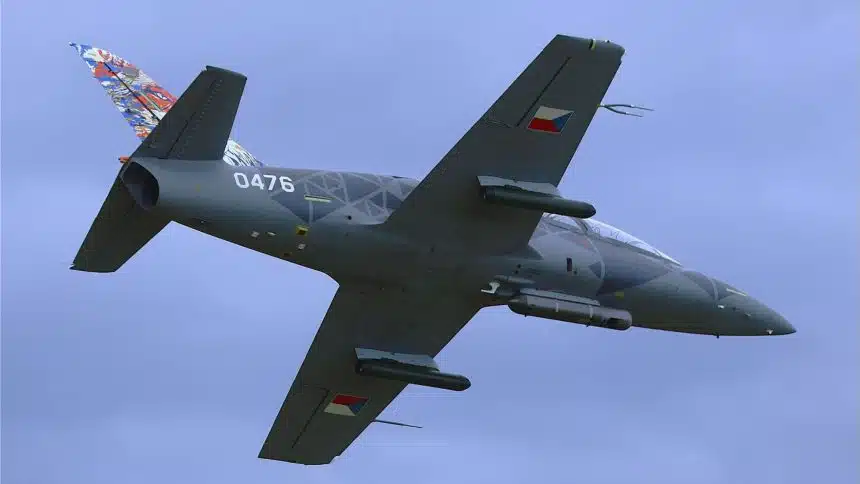
Aero Vodochody has announced an MoU with Thales to continue testing a 70 mm rocket capability for the L-39 Skyfox Drone Hunter configuration.
The Czech Republic’s L-39 Skyfox advanced jet trainer and light combat aircraft will be integrated and tested with the Thales 70 mm rocket pod for a counter-Unmanned Aerial System (UAS) capability. The manufacturer Aero Vodochody announced on Oct. 5, 2026 a Memorandum of Understanding (MoU) with Thales Belgium to equip the L-39 Skyfox in the Drone Hunter configuration.
The MoU is intended “to further develop the Skyfox’s counter-UAS capabilities, including continued integration and testing of Thales’ 70 mm rocket system,” the Czech company said on X. Neither company has issued additional separate statements.
The accompanying image showed an L-39 Skyfox with what appear to be two Thales FZ800 seven-round rocket pods under the wings – designed to employ FZ275 Laser Guided Rockets (LGRs) – and a SiNAB Phoenix targeting pod on the centerline. The pods, which the company did not explicitly identify, do not appear to be loaded.
This image and the mention of the word “continued” in Aero Vodochody’s X post suggests some test flights might have already taken place. The company did not disclose details on this.
Another step forward for the L-39 Skyfox Drone Hunter.
@AERO_Vodochody and Thales Belgium have signed an MoU to further develop the Skyfox’s counter-UAS capabilities, including continued integration and testing of Thales’ 70 mm rocket system.
#L39Skyfox #DroneHunter #CounterUAS
— AERO Vodochody (@AERO_Vodochody) October 5, 2026
It must be noted that Aero Vodochody has been proposing the L-39 Skyfox for the counter-drone for some time. During the Dubai Air Show in November 2025, the aircraft was first displayed with the relevant payload for this mission, which included a gun-pod, the Thales rocket pods and the SiNAB Phoenix targeting pod.
The pods and rockets
The 70 mm Forges de Zeebrugge (FZ)-Thales FZ275 LGRs are compatible with both the Thales FZ800 and the U.S.-made LAU-131A/A seven-round rocket pods, as seen with the C-UAS trials on Belgian Air Force F-16s. Thales also has another similar product, the 68 mm rockets fired from the JF12 pods that were tested and cleared for operational employment from the French Navy Rafale M for the anti-drone mission.
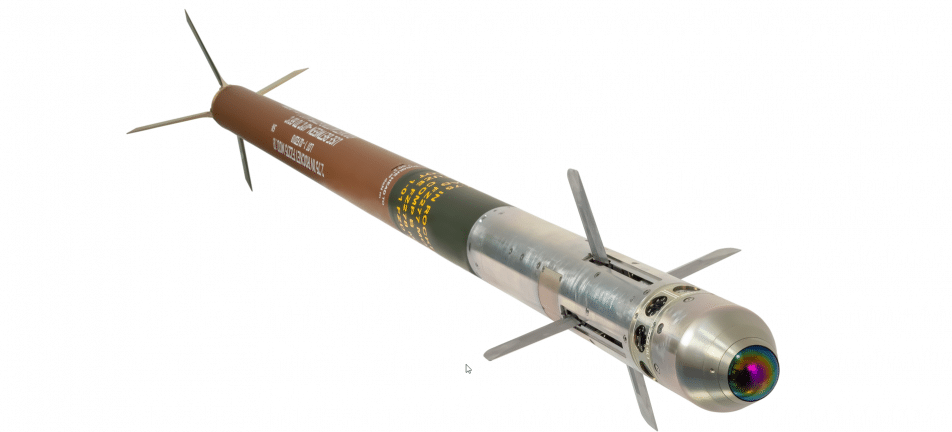
According to FZ, the FZ275 LGR has a Semi-Active Laser (SAL) seeker, and the guided rocket “closes the gap between the long-range high-value missiles and the shorter range guns/cannon and unguided rockets, thus affording a full range of precision effects from a platform to defeat soft and light armoured targets.”
The company also describes the FZ800 seven-round pod as a reusable digital launcher for firing FZ275 LGRs from fixed-wing aircraft. It can fire both the Folding-Fin Aerial Rocket (FFAR) and the Wrap Around (WA) rockets, enabled by the FZ125 detent mechanism.
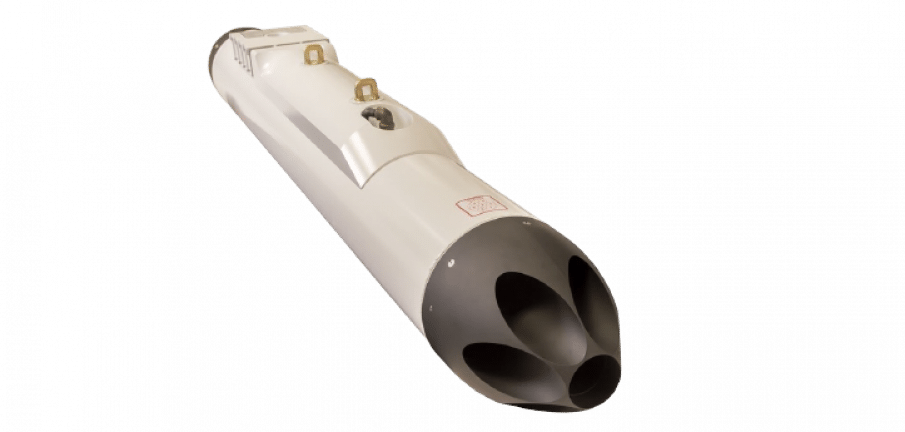
The Australian SiNAB Phoenix meanwhile is described as a “fully self-contained mission system” offering various optical reconnaissance, targeting, navigation, secure communication and data-linking capabilities in a single detachable pod that does not require airframe or wiring modification. It has also been cleared for use across 14 NATO aircraft pylons.
The pod offers GPS-enabled Satellite Navigation (SATNAV) and an Inertial Navigation System (INS); a MANET radio, Link 16 data link, combat net radio and video downlink as a part of its networking suite; and a laser pointer, designator and a range finder for target acquisition and tracking. Images on the company’s website also show the pod mounted underneath the L-39 Skyfox’s starboard (right-side) wing.
Aero Vodochody’s family of trainers
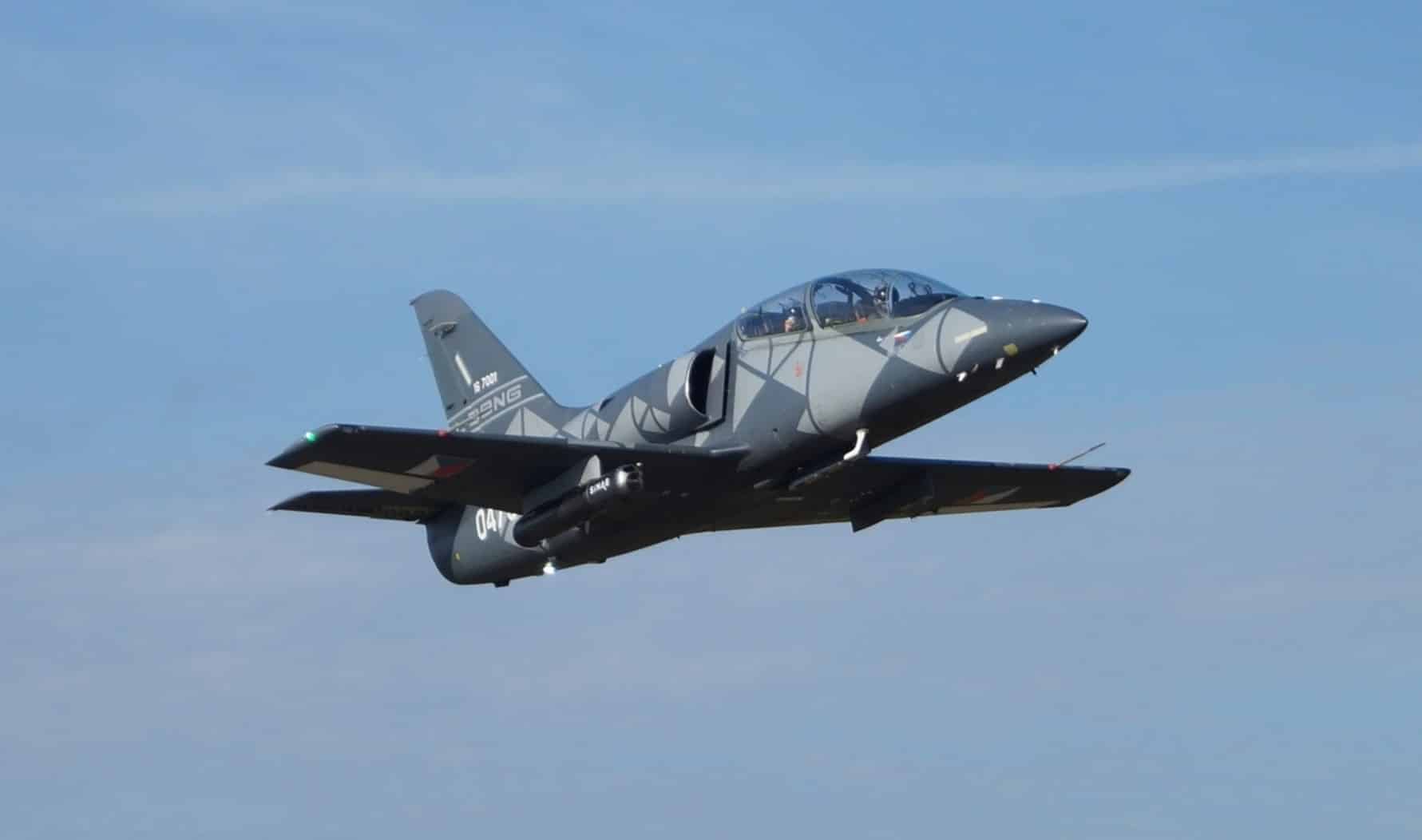
Aero Vodochody’s family of light combat aircraft and advanced jet trainers have all directly or indirectly sprouted off the Cold War-era L-39 Albratross. The L-39 Skyfox is a direct successor to the L-39 Albatross, which was initially known as the L-39NG (Next Generation).
The L-39 Albatross was followed by the L-59 Super Albatross, which itself led to the L-159. The L-159, a multirole combat/trainer aircraft equipped with a Grifo-L multi-mode radar and a range of guided and unguided weapons, has also been mired in domestic Czech politics from being sent to Ukraine.
The L-39 Skyfox is now an emerging player in the advanced trainer segment. The Hungarian Air Force is one of the first customers, operating at least three of 12 aircraft ordered.
Hello from @DubaiAirshow where European 🇪🇺 innovation is on full display, including this Skyfox from my home country 🇨🇿.
Just as the EU is strengthening its defence readiness, our focus is on smarter mobility, stronger partnerships & a more resilient Europe in a changing world. https://t.co/w765vj82id
— Lucie Berger (@BergerLucie) November 19, 2025
Aero also announced on June 18, 2026 two new contracts for the L-39 Skyfox for customers in Angola and an unidentified customer in North America.
Introduced in the 2010s and entering service in the 2020s, the L-39 Skyfox incorporates significant upgrades, the primary one being a powerful and fuel efficient Williams International FJ-44-4M replacing the original Soviet-era power plant. Other features include a fully digital glass cockpit, two multifunctional displays (MFD), a head-up display (HUD) and a hands-on-throttle-and-stick (HOTAS) system.
Depending upon customer needs, the L-39 Skyfox can also be equipped with an Active Electronically Scanned Array (AESA) radar and an MX-15 electro-optical and laser designator/tracking sensor for the reconnaissance role.