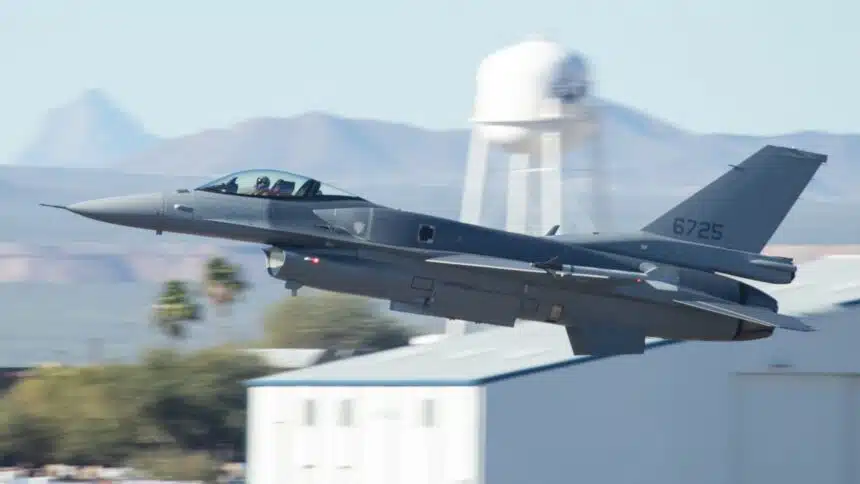
Although often used interchangeably, the F-16V and the F-16C Block 70/72 designations describe two sides of the Viper’s evolution, with important differences between upgraded and newly built aircraft.
The F-16 Fighting Falcon’s latest evolution has been at the center of several news in recent months, highlighting how the aircraft continues to evolve more than five decades after its first flight. From new-production fighters reaching customers to extensive modernization programs for existing fleets, the latest developments show that the fourth-generation fighter remains an important component of numerous air forces’ future plans.
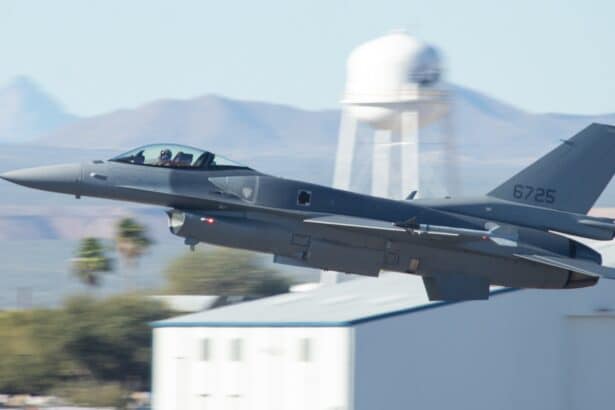
In October, Taiwan received its first two newly manufactured F-16C Block 70 fighters, part of a long-delayed order for 66 aircraft. The delivery marked an important milestone, with these jets complementing the island’s existing fleet upgraded to the F-16V configuration.
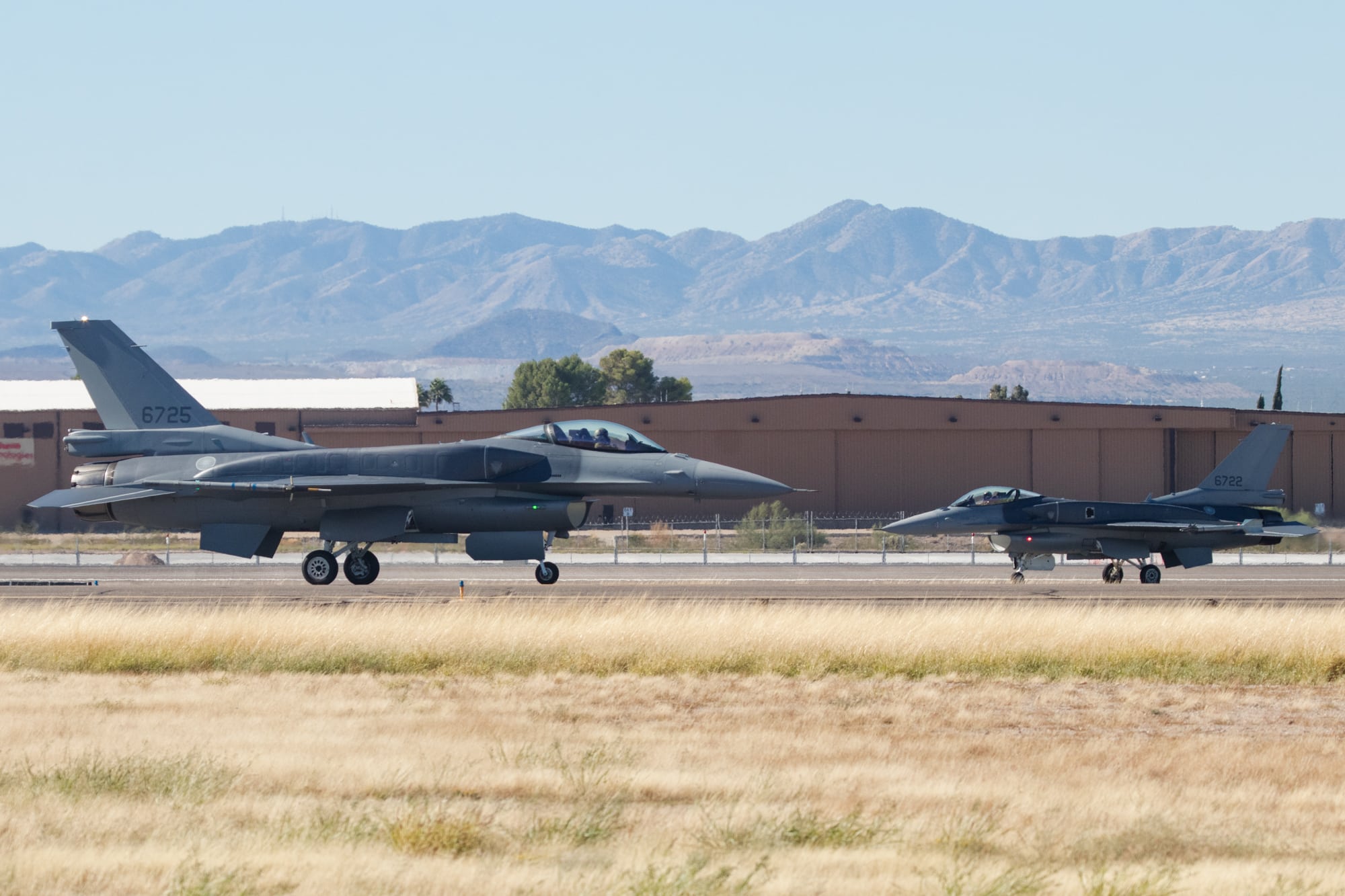
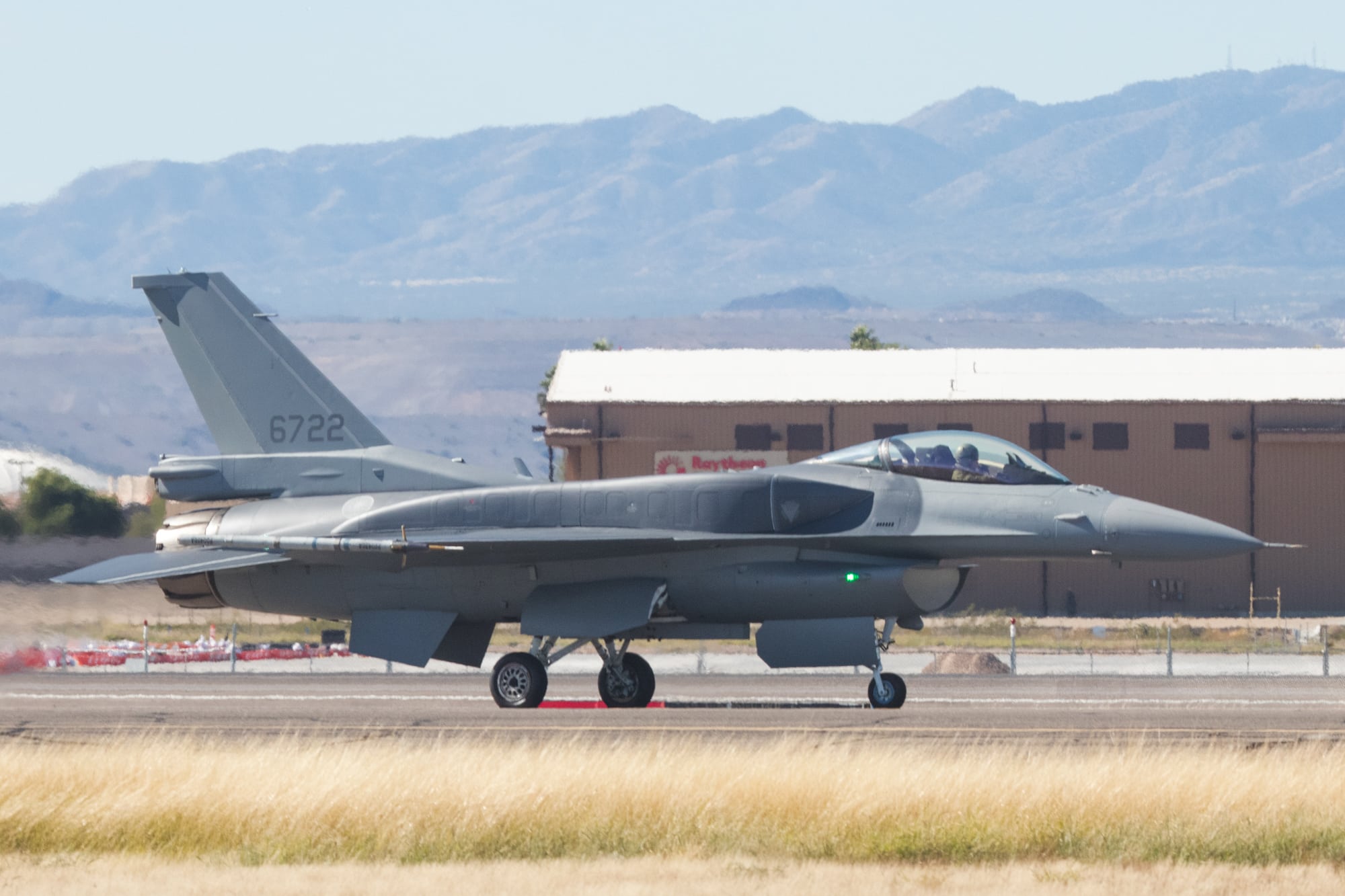
A second batch was delivered in early November, while training on the aircraft continues in the U.S. at Morris Air National Guard Base in Tucson, Arizona. Aviation photographer Thomas Backus (@machtwoimages) photographed two of the airframes and kindly shared the images with us.
Also in October, Lockheed Martin announced the maiden flight of Morocco’s first F-16D Block 72, which is also the first newly manufactured Block 72 jet. Morocco is also pursuing a parallel modernization effort, upgrading 23 existing F-16C/D Block 52 aircraft to the F-16V configuration.
Speaking of modernized Vipers, in September, Greece received its 60th F-16V, as part of a program which will first see 84 F-16s Block 52+ and Block 52+ Advanced upgraded to the new configuration, followed by 38 older Block 50s. Meanwhile, Lockheed Martin pitched a Block 70-based variant called F-16G to the U.S. Air Force and the F-16C/D Block 70/72 to the Ukrainian Air Force.
Visualizza questo post su Instagram
These developments illustrate the different ways in which operators are investing in the Fighting Falcon. However, they have also brought renewed attention to a terminology that can be confusing even for aviation enthusiasts: F-16V, F-16C/D, Block 70 and Block 72.
Although these designations are sometimes used interchangeably, they do not mean the same thing. Understanding what each designation means is essential to distinguish a newly manufactured F-16C/D Block 70/72 from an older F-16 upgraded to the F-16V configuration.
Understanding the designations
The F-16V, with the ‘V’ standing for the F-16’s nickname Viper, was introduced by Lockheed Martin as a modernization package for existing Fighting Falcons. Announced in 2012 and first flying in 2015, the F-16V was intended to bring earlier F-16 variants up to a more advanced technological standard without requiring operators to purchase entirely new aircraft.
The package introduced significant improvements to the aircraft’s radar, mission computers, cockpit displays and avionics architecture. These changes were subsequently incorporated into the Block 70/72 production configuration for newly manufactured aircraft.
The Block designation identifies a particular progressive production standard of the F-16, starting with the F-16A Block 1. The F-16C and F-16D designations (similarly to the F-16A and B, and the F-16E and F) identify the aircraft single-seat and two-seat variants, respectively.
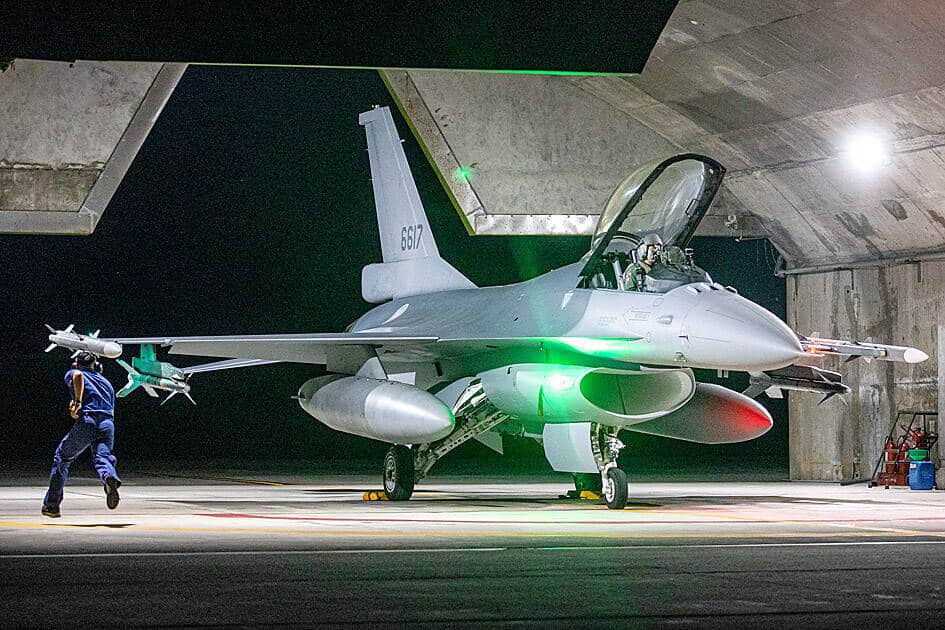
Consequently, an F-16C Block 70/72 is a single-seat, newly manufactured Fighting Falcon built to the latest production standard, while an F-16D Block 70/72 is its two-seat counterpart. The Block 70 and 72 designations identify different engine configurations, which will be discussed later.
An existing F-16C or F-16D (or, in Taiwan’s case, F-16A or F-16B) modernized to the F-16V standard retains its original airframe and powerplant. However, many of its systems are brought up to a configuration comparable to the Block 70/72 production aircraft, with few differences.
The similarities: radar and avionic upgrades
Among the new systems installed om both the modernized F-16V and the newly manufactured Block 70/72 we can find the APG-83 AESA (Active Electronically Scanned Array) radar, a new Center Pedestal Display (CPD), the AN/APX-126 Advanced IFF (Identification Friend or Foe), Link 16 datalink, full NVIS (Night Vision Imaging System) and JHCMS II (Joint Helmet-Mounted Cueing System II) compatibility, a new Embedded GPS/INS (EGI), a modern commercial off-the-shelf (COTS)-based avionics subsystem, a high-volume, high-speed data bus and the Automatic Ground Collision Avoidance System (Auto GCAS).
The radar, built by Northrop Grumman as the Scalable Agile Beam Radar (SABR), is undoubtedly one of the most important features. Notably, this radar is designed to fit the F-16 with no structural, power or cooling modifications, and is also being installed on U.S. Air Force F-16s as part of the ongoing upgrades.
This AESA radar represents a significant improvement over the mechanically scanned AN/APG-66 and AN/APG-68 radars fitted to earlier F-16 variants. Unlike mechanically scanned radars, which rely on a moving antenna to direct the radar beam, an AESA uses multiple transmit/receive modules to electronically steer the beam.
The new radar enables the F-16 to detect, track and identify a greater number of targets (reportedly more than 20 at the same time) faster and at longer ranges while providing all-weather, high-resolution Synthetic Aperture Radar (SAR) mapping. The system also integrated a robust electronic protection to operate in hostile electronic environments.
The radar is complemented by an upgraded Modular Mission Computer and a modernized avionics architecture. This is designed to process the increased volume of information generated by the new sensors and provide pilots with a more comprehensive tactical picture.
The cockpit has also received substantial improvements, with one of the most recognizable additions being the Center Pedestal Display (CPD). The CPS is a high-resolution, 6-by-8-inch color display installed in the center of the instrument panel instead of the older analog gauges, providing access to radar information, targeting pod imagery, digital maps and other tactical data, complementing the existing Multi-Function Displays (MFD).
The newly manufactured aircraft also include new digital standby attitude indicator, engine and fuel gauges, as well as a new Integrated Control Panel (ICP) which includes the Data Entry Display (DED). On the other hand, the F-16V retains the original standby attitude indicator, engine and fuel gauges, and ICP, with the DED remaining in the original position.
The differences: new and life-extended airframe
Perhaps the most important distinction between a newly manufactured Block 70 and an older F-16 upgraded to the F-16V standard concerns the airframe itself. The Block 70/72 features a structural service life of 12,000 flight hours, while the F-16V features an airframe which already accumulated a number of flight hours and underwent a Service Life Extension Program (SLEP) during the upgrade.
The Block 70/72’s structural service life is more than 50% greater than that of previous production F-16s, according to Lockheed Martin. This was achieved through structural improvements incorporated during manufacturing, allowing the aircraft to remain in service for several decades without requiring the same extensive structural interventions that older airframes may eventually need.
This distinction is particularly important when comparing the two configurations. In fact, although an upgraded F-16V may offer similar avionics and mission capabilities to a Block 70/72, the latter starts from zero flight hours since it is newly manufactured, while the former’s service life depends on the original aircraft’s condition and operational history.
Engine and external configuration
The Block 70 and Block 72 designations, as mentioned earlier, identify different engine configurations. The Block 70 is powered by the General Electric F110-GE-129D turbofan, while the Block 72 uses the Pratt & Whitney F100-PW-229 engine.
Both engines belong to established families already used by previous F-16 variants, but the choice of powerplant depends on the customer’s requirements and existing logistics infrastructure. The use of the Block x0/x2 designation goes back to the early 1980s, when it was first used for the F-16C/D Block 30 and Block 32 aircraft.
The F-16’s initial variants – from the A/B Block 1 to the C/D Block 25 – were powered by the Pratt & Whitney F100-PW-200 turbofan, followed by the upgraded F100-PW-220 turbofan. However, in 1984, the U.S. Air Force decided to adopt both P&W and GE engines under the Alternative Fighter Engine (AFE) program.
The F-16C/D Block 30/32 thus included a common engine bay, able to accept either powerplant. However, that was not the only modification required for the different engine.
In fact, with GE’s F110 providing more thrust and thus requiring a larger airflow, the air inlet had to be enlarged. This led to the larger inlet becoming the standard for F110-powered F-16s, which were referred to as “Big-mouths,” while the F100-powered F-16s retained the original smaller inlet as the larger one would be detrimental to the flight performance.