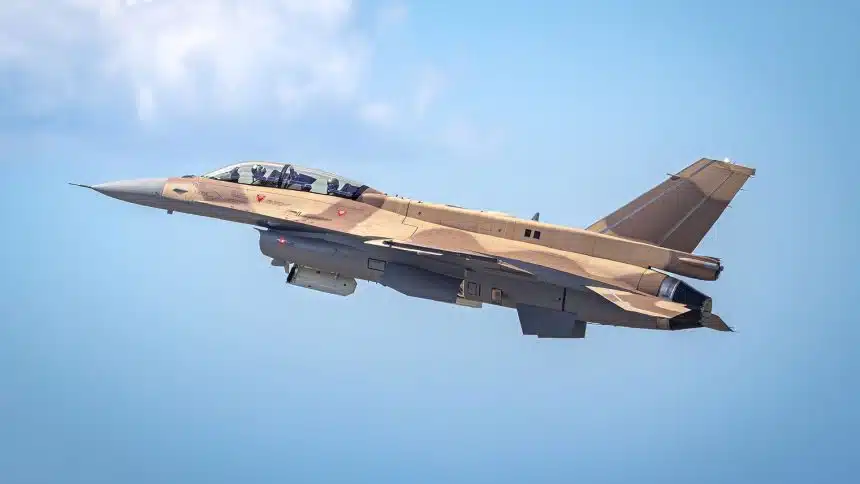
The aircraft, a two-seat F-16D, is not only the first of Morocco’s new Vipers to fly, but also the first new-build F-16 Block 72 to take to the air.
The first F-16D Block 72 destined for the Royal Moroccan Air Force (RMAF) has conducted its maiden flight. Lockheed Martin announced the milestone on Oct. 6, 2026, saying that the aircraft completed its first flight from the company’s F-16 production facility in Greenville, South Carolina.
Notably, the aircraft is not only the first of Morocco’s new Vipers to fly, but also the first new-build F-16 Block 72 to take to the air. Morocco became the launch customer for the Block 72 variant when the U.S. government approved the proposed Foreign Military Sale (FMS) in March 2019.
Morocco’s first @LockheedMartin F-16 Block 72 aircraft has taken flight in Greenville, South Carolina. The milestone marks another step toward delivering the most advanced F-16 configuration to the Royal Moroccan Air Force.
— Lockheed Martin News (@LMNews) October 6, 2026
This first flight now marks a major milestone in Morocco’s effort to expand and modernize its F-16 fleet, including both new-build and upgraded Block 72s. The aircraft will now undergo further flight testing before being delivered to Morocco.
A seven-year wait for the Block 72
Morocco’s acquisition dates back to March 2019, when the U.S. State Department approved a possible Foreign Military Sale (FMS) covering 25 new F-16C/D Block 72 fighters for an estimated $3.787 billion. The FMS notice did not specify how many twin-seater F-16Ds were included in the 25-aircraft total.
The proposed package included 29 Pratt & Whitney F100-PW-229 engines, of which four are spares, as well as 26 AN/APG-83 AESA radars, 26 modular mission computers, Link 16 systems, LN260 embedded navigation systems and Joint Helmet Mounted Cueing Systems. The package also included weapons and targeting equipment, including AIM-120C-7 AMRAAMs, GBU-38 JDAMs and GBU-54 Laser JDAMs, GBU-39 Small Diameter Bombs, GBU-49 Enhanced Paveway II laser-guided bombs and AN/AAQ-33 Sniper targeting pods.
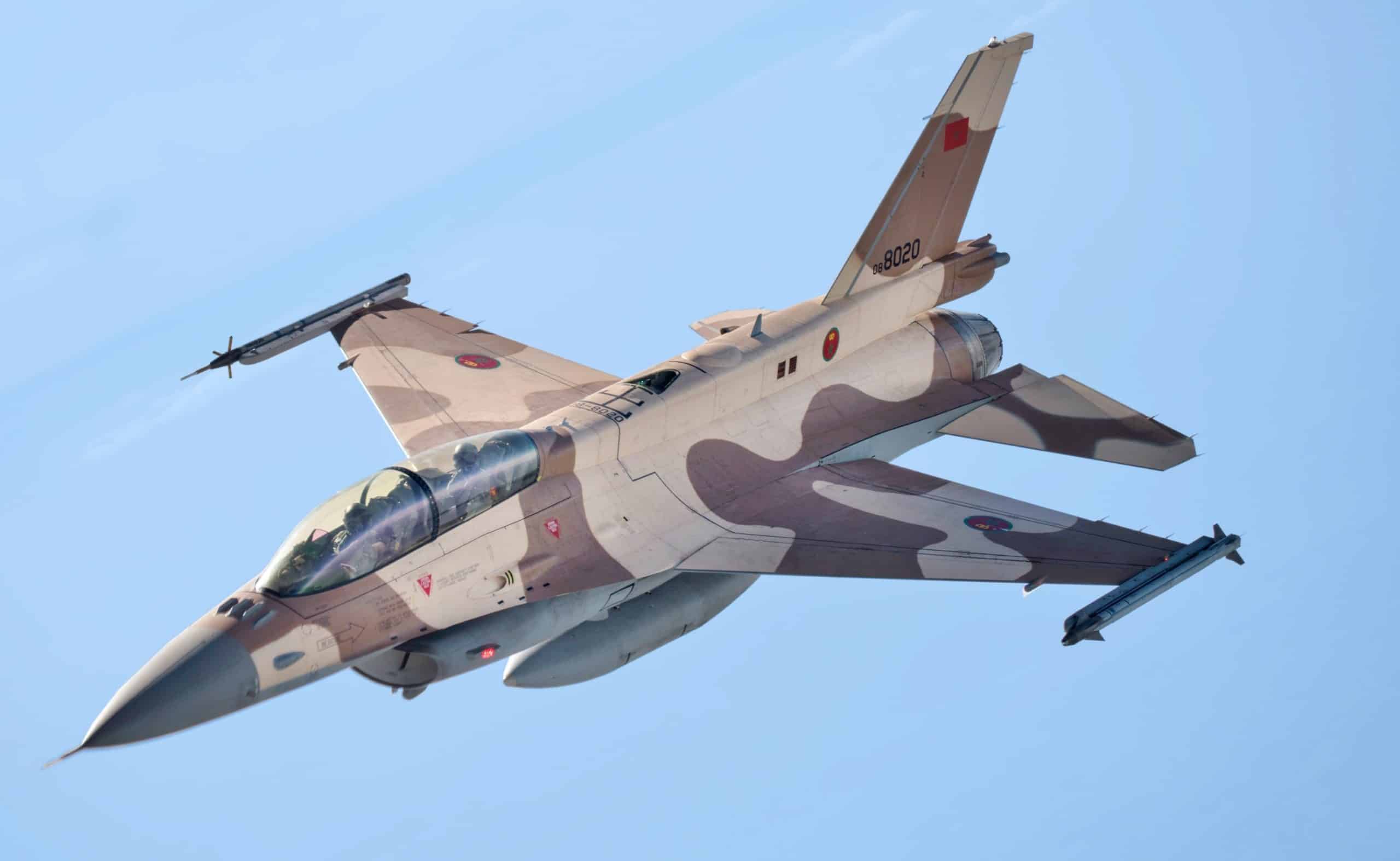
The Block 72 is part of the latest-generation F-16 Block 70/72 family, which incorporates a major modernization of the aircraft’s avionics, sensors, mission systems and cockpit while retaining the basic F-16 airframe. The distinction between the two configurations is primarily the engine.
In fact, the F-16 Block 70 is powered by General Electric’s F110-GE-129, while the Block 72 uses Pratt & Whitney’s F100-PW-229. The two versions otherwise share the same systems, mirroring the earlier Block 40/42 and Block 50/52 families.
The choice of the Block 72 is particularly relevant to Morocco because the RMAF already operates F-16C/D Block 52+ aircraft powered by the Pratt & Whitney F100 engine family. Using the same engine family on the new aircraft provides a degree of commonality in maintenance, logistics and personnel training, especially with the planned upgrade of the existing aircraft to the F-16V Block 72 configuration.
Expanding Morocco’s F-16 fleet
The 25 new F-16s Block 72 are only one part of Morocco’s broader F-16 modernization effort. In fact, alongside the purchase of the new-build aircraft, Washington approved a separate package in 2019 to upgrade Morocco’s existing F-16C/D Block 52+ fleet to the F-16V Block 72 configuration.
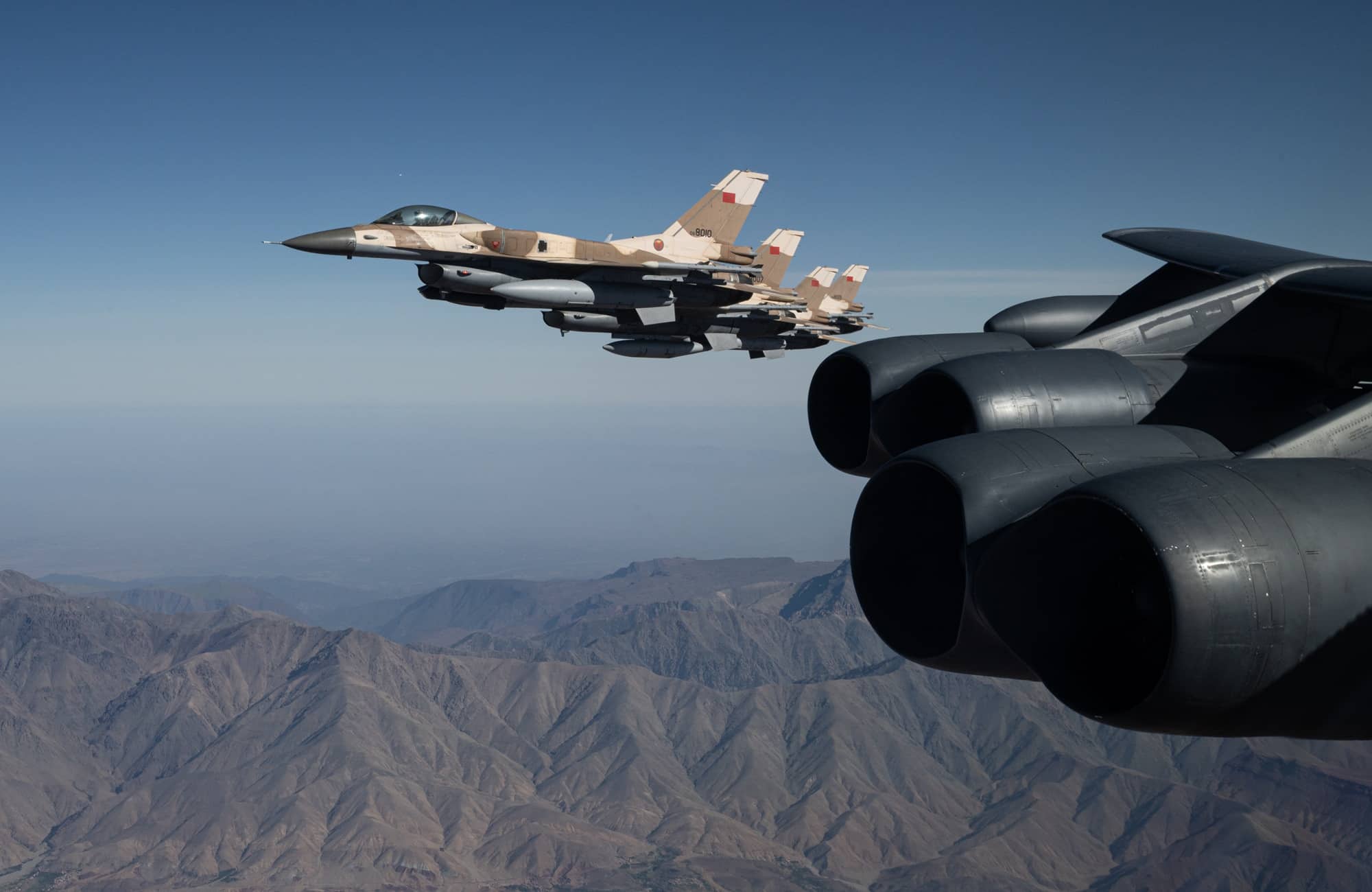
Among the new systems installed during the upgrade we can find the APG-83 AESA (Active Electronically Scanned Array) radar, a new Center Pedestal Display (CPD), the AN/APX-126 Advanced IFF (Identification Friend or Foe), Link 16 datalink, full NVIS (Night Vision Imaging System) and JHCMS II (Joint Helmet-Mounted Cueing System II) compatibility, a new Embedded GPS/INS (EGI), a modern commercial off-the-shelf (COTS)-based avionics subsystem, a high-volume, high-speed data bus and the Automatic Ground Collision Avoidance System (Auto GCAS).
The combination of new-build aircraft and upgraded fighters is intended to give the RMAF a much more homogeneous and capable F-16 fleet. The service initially received 24 aircraft ordered in 2009, with the new order now doubling the fleet.