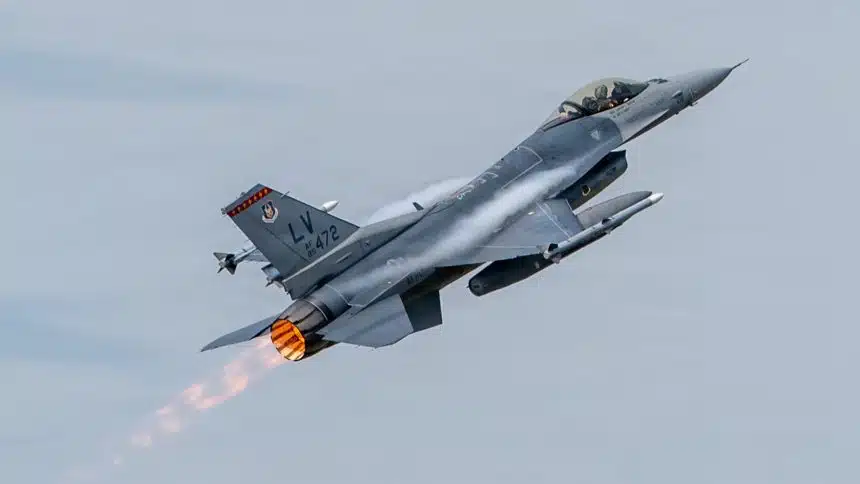
The U.S. Air Force is considering the acquisition of newly built F-16s, possibly an upgraded F-16G variant, to address the aging of the fleet.
The U.S. Air Force is once again considering the acquisition of newly built F-16 fighter aircraft, according to multiple sources who spoke with Air and Space Forces Magazine and Aviation Week, who first published the news. The move is being framed as a possible solution to address the shortfalls due to the aging of the fleet.
The news follows the recent Congressional Research Service (CRS) report published earlier this month, which highlighted the growing gap between the U.S. Air Force’s current fighter inventory, its legally mandated force structure, and the much larger planned fleet. The report mentions that the service had 1,098 fighters in May 2026, 47 aircraft below the statutory requirement of 1,145.
This is not the first time the service is considering such procurement, with precedents going back to 2021 when Will Roper, former Assistant Secretary of the Air Force for Acquisition, Technology and Logistics, mentioned a possible F-16 order to complement F-22s, F-35s and F-15EXs. Should the plan go ahead, the new F-16s would come more than 20 years after the delivery of the last F-16C, the Block 50 CC-231 AF 01-7053, on Mar. 18, 2005.
Upgraded F-16G variant
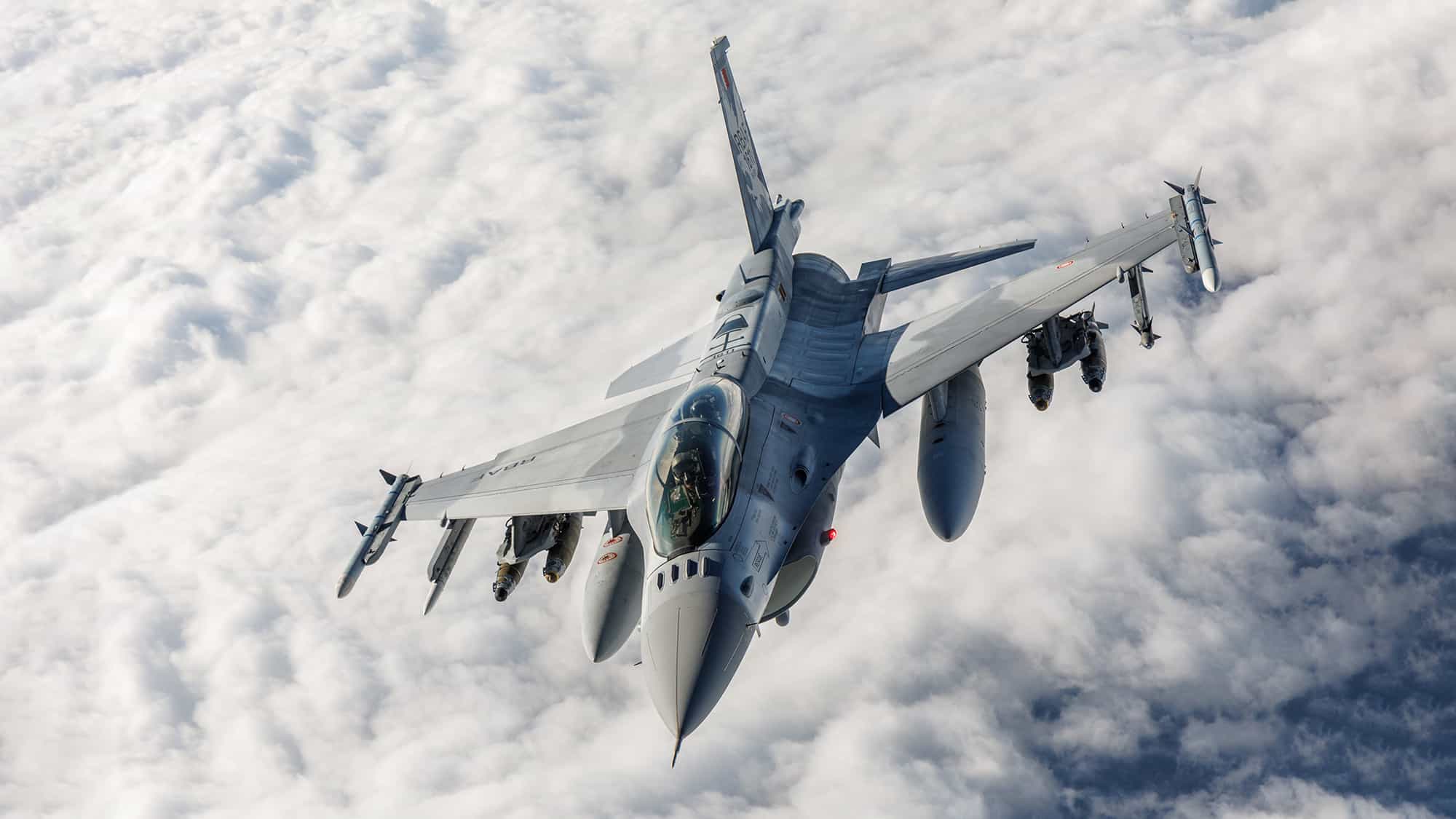
According to the sources, the procurement could possibly involve a new, upgraded variant called F-16G, described as an improved version of the Block 70 currently in production. Aviation Week reports that the new variant could include conformal fuel tanks, 600-gal. wing tanks, an infrared search and track (IRST) pod, Sniper targeting pod and a drag chute.
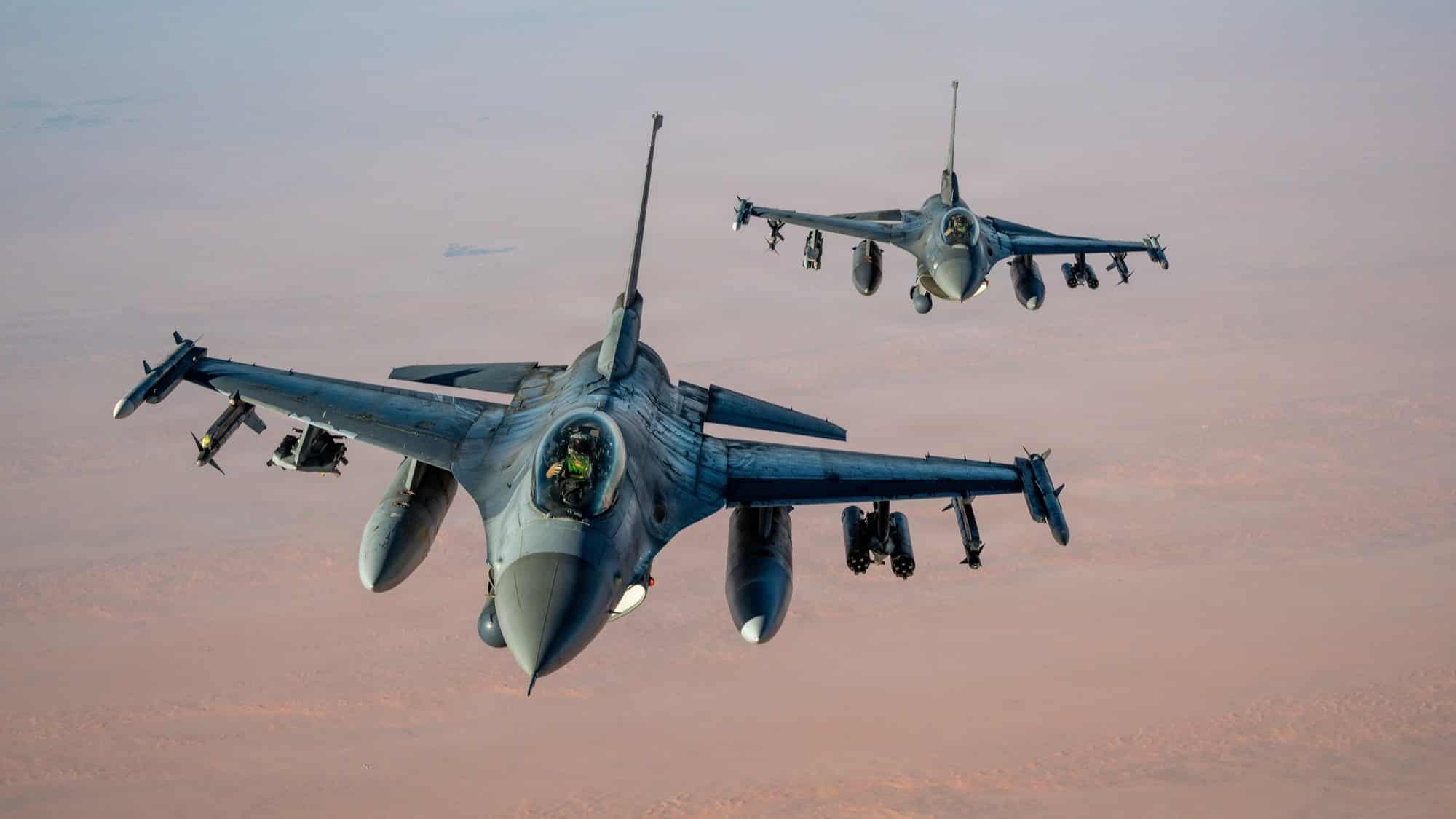
While the current C/D variant is being heavily upgraded to introduce new capabilities which will help keep the Viper relevant in the modern operational scenarios, the G variant would have the advantage of being newly-built airframes delivered straight from the production lines. In fact, the 826 F-16s currently in service are on average 34 years old and already underwent a service life extension program (SLEP).
As reference for the new capabilities, the Block 70, upon which the F-16G will be based, includes the APG-83 AESA (Active Electronically Scanned Array) radar, a new Center Pedestal Display (CPD)/Center Display Unit (CDU), the AN/APX-126 Advanced IFF (Identification Friend or Foe), Link 16 datalink, full NVIS (Night Vision Imaging System) and JHCMS II (Joint Helmet-Mounted Cueing System II) compatibility, a new Embedded GPS/INS (EGI), a modern commercial off-the-shelf (COTS)-based avionics subsystem, a high-volume, high-speed data bus and the Automatic Ground Collision Avoidance System (Auto GCAS).
Many of these components are being integrated already on the F-16s currently in service in the Air Force, like the APG-83 radar, Link 16 and AGCAS. Additionally, the newly built aircraft would feature an extended structural life of 12,000 hours, which represents more than 50 percent beyond that of previous production F-16 aircraft.
Still in the early stages
Both Air and Space Forces Magazine and Aviation Week contacted Lockheed Martin and the Air Force to obtain more information. However, the details currently available are limited.
“The Department of the Air Force is in initial phases of analyzing options for the next Future Years Defense Program,” an Air Force spokesperson said to both outlets. “At this stage, we have neither defined the precise mission requirements nor the spectrum of options that could fill it.”
The service is currently looking to increase its fighter fleet to 1,558 aircraft by 2035 to achieve what it considers a low-risk operational posture. An interim objective of approximately 1,369 fighters by 2030 was also established.
The Air Force plans to continue retiring older aircraft while increasing procurement of newer platforms in order to achieve the objective. As we already reported last year, the 2025 Air Force report identified potential maximum procurement rates of approximately 100 F-35As and 24 F-15EXs per year by 2030 towards the 1,558-aircraft goal.
The inclusion of the F-16 in these procurements would add another stream of aircraft which could help to reach the goal more quickly, even with slower procurement rates. Obviously, an important constraint would be the funding, and the service already stated that it is not projected to have sufficient obligation authority to afford the increased production rates.
Whatever the final decision will be, Lockheed Martin says it stands ready to support the U.S. Air Force and its mission needs. “Our proven products are the backbone of the USAF fleet and provide the most advanced and versatile capabilities to ensure air dominance now and for decades to come,” a company spokesperson said.