The new AGM-158 FLEX architecture is designed to accommodate different sensor packages, airframe lengths and launch configurations while leveraging the existing JASSM/LRASM industrial base.
Lockheed Martin has unveiled a new modular airframe concept for its AGM-158 family of cruise missiles, called AGM-158 FLEX. The concept introduces a new architecture intended to provide greater flexibility in the configuration, launch and future upgrade of the weapon.
The company says that, so far, it has invested more than $35 million of its own funds in the development, covering airframe design, testing, prototype production, subsystem qualification and the establishment of key suppliers. The objective is to provide current and future JASSM customers with a common airframe around which different capabilities can be integrated as requirements evolve.
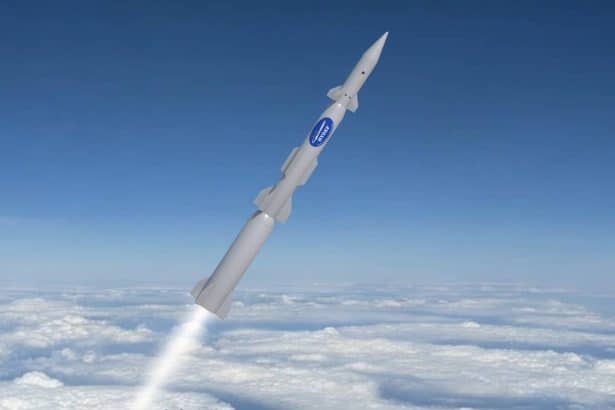
The announcement comes as the AGM-158 family continues to expand beyond the original JASSM design. The family currently includes the baseline AGM-158A JASSM, the longer-range AGM-158B JASSM-ER and the AGM-158C Long Range Anti-Ship Missile (LRASM), while the significantly larger JASSM-XR (Extreme Range) is also under development. The latter will be the first configuration of the FLEX airframe.
A modular JASSM airframe
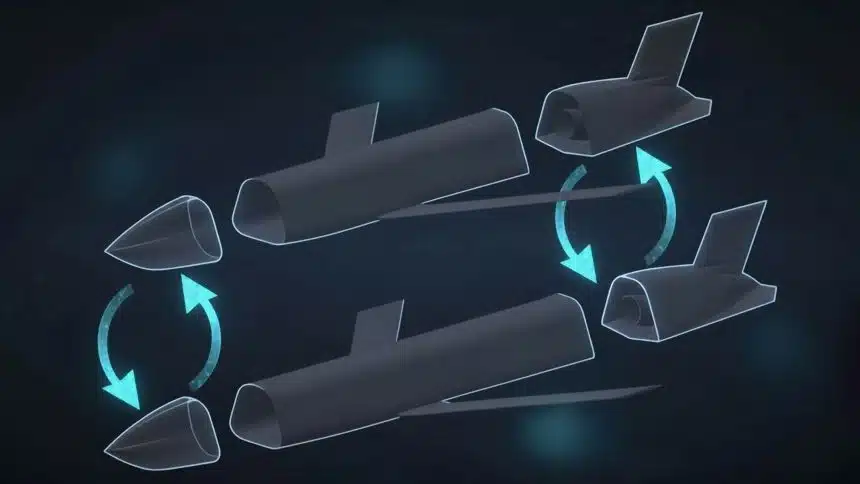
At the center of the FLEX concept is a common modular airframe with interchangeable components. According to Lockheed Martin, the design incorporates removable nose sections that can accommodate the sensor suites associated with different members of the AGM-158 family, as well as a removable boat tail that can be configured for different launch methods.

This would allow the same basic airframe architecture to support not only the existing air-launched JASSM and LRASM configurations, but potentially surface-, ground- and submarine-launched weapons as well, says the company. Moreover, the air-launched configuration will be specifically designed to leverage existing compatibility with all current and future JASSM and LRASM air-launched platforms.
The FLEX concept is also intended to accommodate different airframe lengths, with Lockheed Martin saying the architecture can be configured around a 206-inch airframe consistent with the JASSM-XR and a 168-inch configuration consistent with the JASSM-ER. As mentioned earlier, the company said the JASSM-XR configuration will be the first implementation of the FLEX airframe.
The concept would expand the potential application of the AGM-158 architecture considerably. The feasibility of these applications was already tested, with the LRASM launched from a Mk 41 vertical launch system, demonstrating that it can be adapted for a surface-launched capability, and the JASSM-ER deployed via the U.S. Air Force’s Rapid Dragon (now Dragon Cart) palletized launch system carried inside cargo aircraft.
Preserving industrial base and addressing obsolescence
In order to enable a quick and affordable production at scale, Lockheed Martin says it does not intend FLEX to require an entirely new industrial ecosystem. In fact, the new airframe will leverage the existing JASSM and LRASM production line, supply chain, mission-planning infrastructure and software ecosystem.
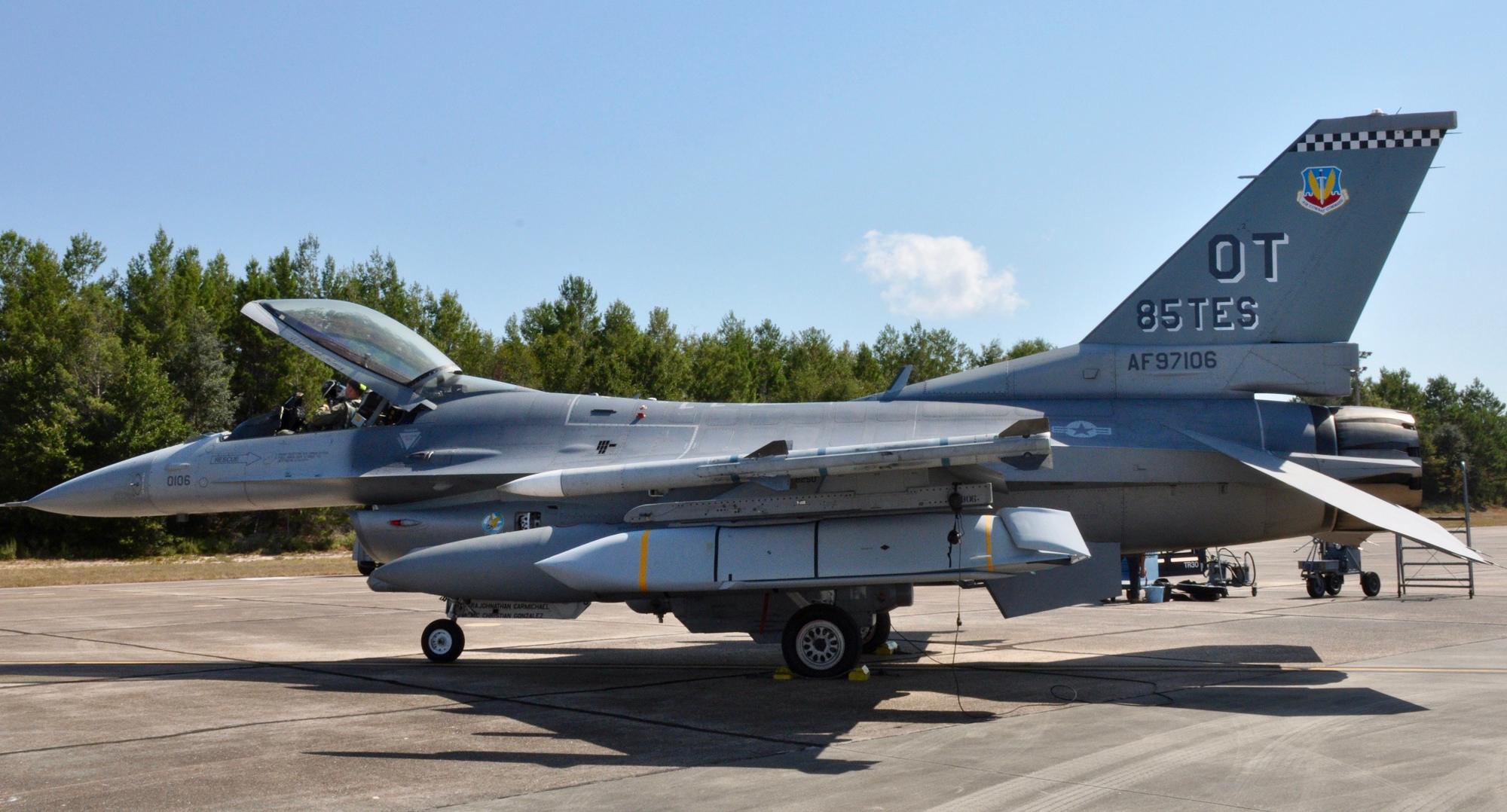
That is particularly relevant as the U.S. seeks to increase production of long-range precision weapons. As part of the effort, Lockheed Martin opened a 225,000-square-foot production facility in 2022, incorporating increased automation to support higher production rates for the AGM-158 family.
Among the advantages introduced thanks to the modularity of LFEX, there is also the ability to address component obsolescence. The company says the modular design would allow customers to replace components and introduce new capabilities without necessarily requiring an entirely new missile design.
Obviously, that would not stop at just replacing obsolete subsystems, but it would also allow to integrate new sensors or incorporate other technologies as they mature. The company describes this as a way to “get ahead of subcomponent obsolescence” while enabling future capability enhancements and production scalability.