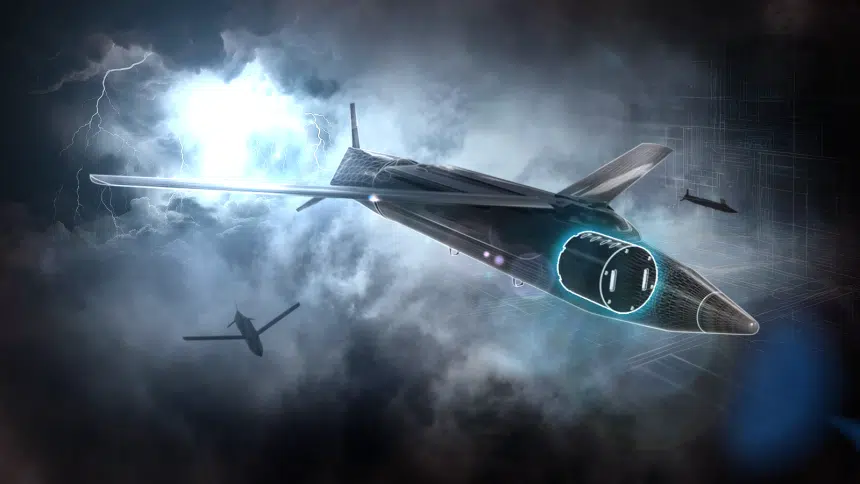
The new low-cost, software-defined Shadow EW systems are designed to bring electronic warfare capabilities to small drones, munitions and other airborne platforms.
BAE Systems has unveiled a new family of compact electronic warfare systems called Shadow EW, designed to bring capabilities traditionally associated with much larger and more expensive platforms to small airborne systems. The announcement arrived on Sept. 15, 2026, during the Air, Space & Cyber Conference in National Harbor, Maryland.
The company describes Shadow EW as a range of cost-effective, low-size, weight, power and cost (SWaP-C) solutions intended to provide situational awareness, self-protection, targeting, deception and other electronic warfare effects from platforms where space, power and payload capacity are limited. Notably, the press release also mentions “collaborative effects delivery,” hinting at a possible use in swarming tactics.
“The modern battlefield is changing at an unprecedented pace and all platforms, regardless of size, require adaptable electronic warfare capabilities to survive,” Rebecca Cruz, director of Shadow EW products at BAE Systems, said.
#NEWS: Our Shadow EW™ compact electronic warfare solutions provide critical situational awareness and self-defense capabilities for a diverse and growing range of small airborne platforms, improving their mission effectiveness in contested environments.
Learn more:… pic.twitter.com/DkSulDJWHy
— BAE Systems, Inc. (@BAESystemsInc) September 15, 2026
Rather than developing a specific EW suite for each application, BAE Systems designed Shadow around configurable hardware, open architectures and software-defined capabilities. The approach is intended to make the systems easier to integrate across different platforms while allowing their capabilities to evolve through software updates as threats change.
According to the press release, Shadow uses commercial microchips for high-performance computing and supply-chain efficiency. The company says this approach allows the system to be produced in high quantities and at lower cost than traditional, highly customized EW systems.
Three systems for different missions
According to the company’s website, the initial Shadow EW family consists of three variants: the Shadow EW 100, Shadow EW 120 and Shadow EW 500. While all three are based on software-defined radio technology and share an emphasis on compactness and platform integration, they appear to cover different portions of the electromagnetic spectrum and provide different levels of processing and EW functionality.
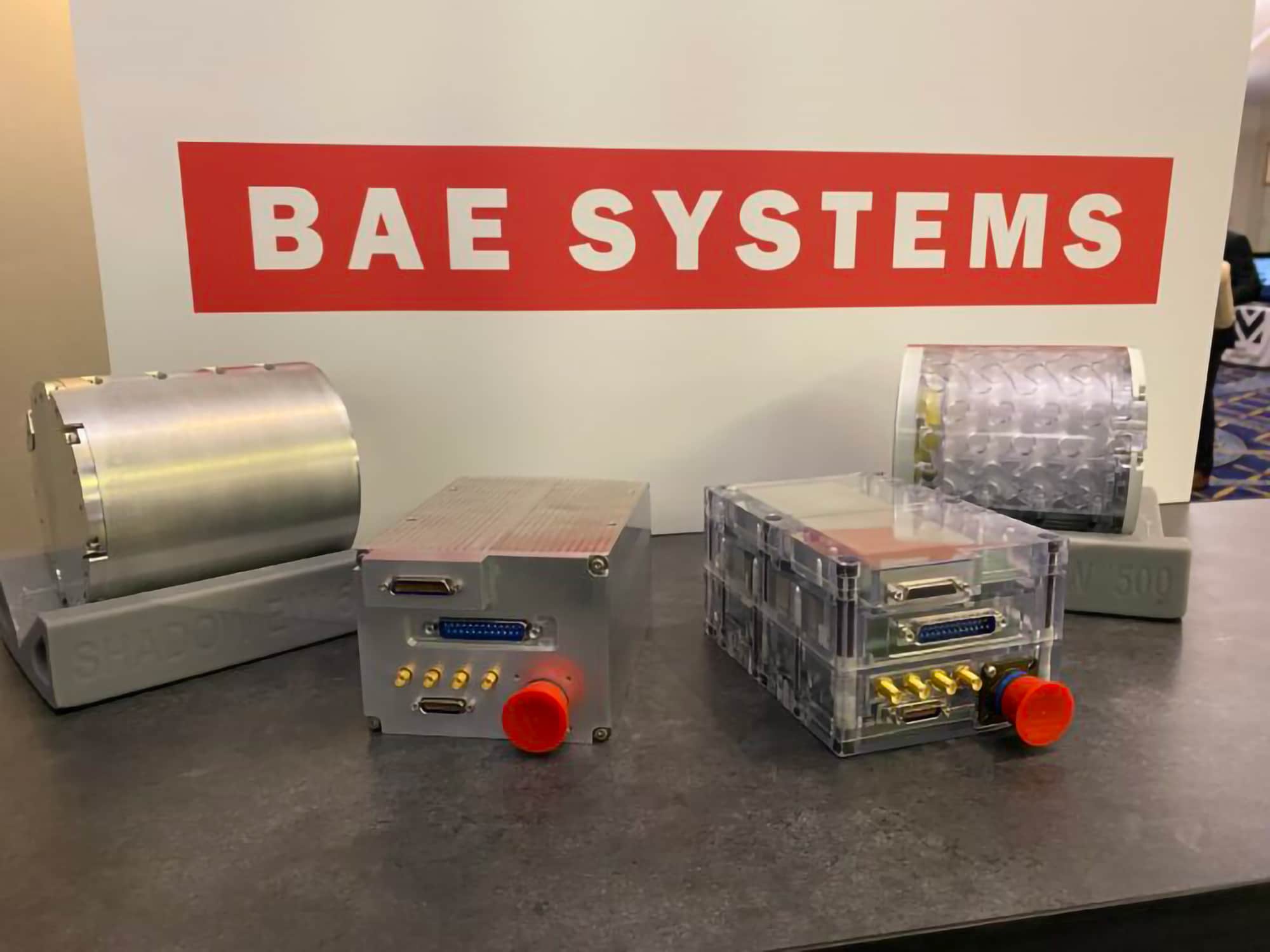
The Shadow EW 100 is the smallest of the three and is specifically positioned for UAVs and other affordable-mass or attritable platforms. It is a hybrid software-defined radio, covering 70 MHz to 6 GHz, optimized for radar electronic warfare while also supporting signals intelligence (SIGINT) and communications intelligence (COMINT) through its streaming in-phase and quadrature (IQ) interface.
The Shadow EW 120 expands the frequency coverage down to 5 MHz, while retaining an upper limit of 6 GHz. BAE describes it as a complete software-defined EW radio optimized for radar EW, with SIGINT and COMINT capabilities.
At the top of the initial announced range is the Shadow EW 500, which is designed to provide considerably wider frequency coverage and greater onboard processing capability. It covers 10 MHz to 18 GHz and incorporates two wideband receiver channels, enabling direction finding and geolocation.
From highly customized EW technology to affordable mass
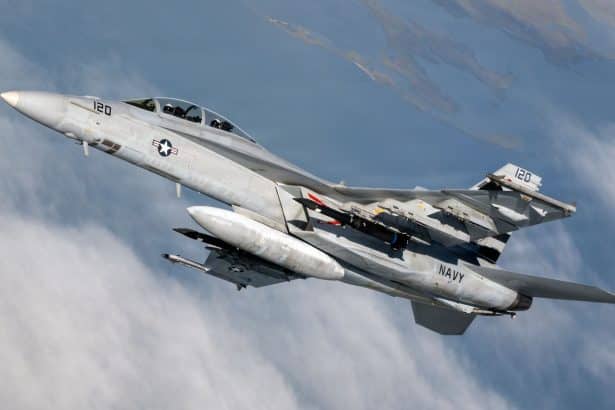
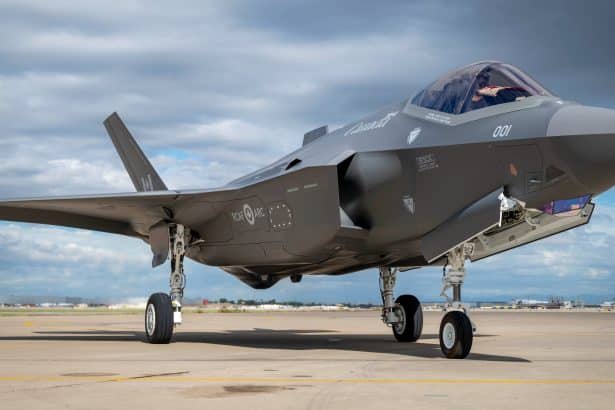
One of the main ideas behind Shadow EW is to apply technologies and architectures usually found on high-end aircraft to platforms that can be procured and deployed in much larger numbers, building mass. BAE’s existing EW systems include highly customized solutions for aircraft such as the F-15, F-22 and F-35.
Shadow takes a different approach, using commercial components and open standards rather than developing a unique system around a particular aircraft. Josh Niedzwiecki, BAE’s vice president and general manager of Electronic Combat Solutions, told reporters that the company made a deliberate decision to develope the new EW system ahead of a specific set of government requirements, based on what .
The objective is to reduce the time required to field an EW capability and enable a quick production at scale. The system has also been designed with the goal of being as platform agnostic as possible.