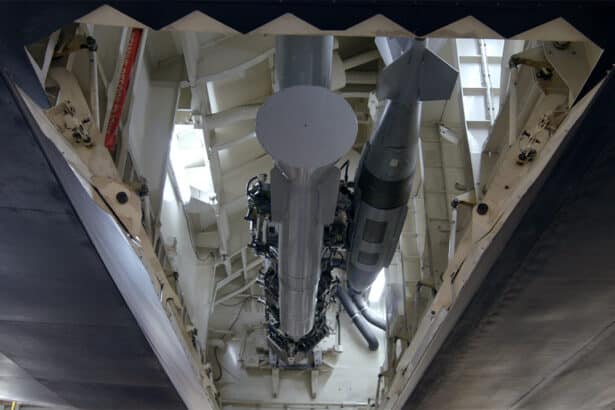
The B61-11 is a decades-old nuclear weapon, but footage showing it being loaded inside the B-2 Spirit’s weapons bay is exceptionally rare. Jeff Bolton’s new documentary series The Watch offers a close-up look at an operation seldom seen by the public.
The Watch: America’s Nuclear Mission is a new six-part documentary series that provides rare access to some of the most secretive elements of the U.S. nuclear deterrence enterprise.
We recently had the opportunity to preview the first episodes of the series: while it includes plenty of interesting footage of strategic bombers, nuclear weapons operations, command-and-control facilities and the personnel responsible for America’s nuclear arsenal, one particular sequence immediately caught our attention.
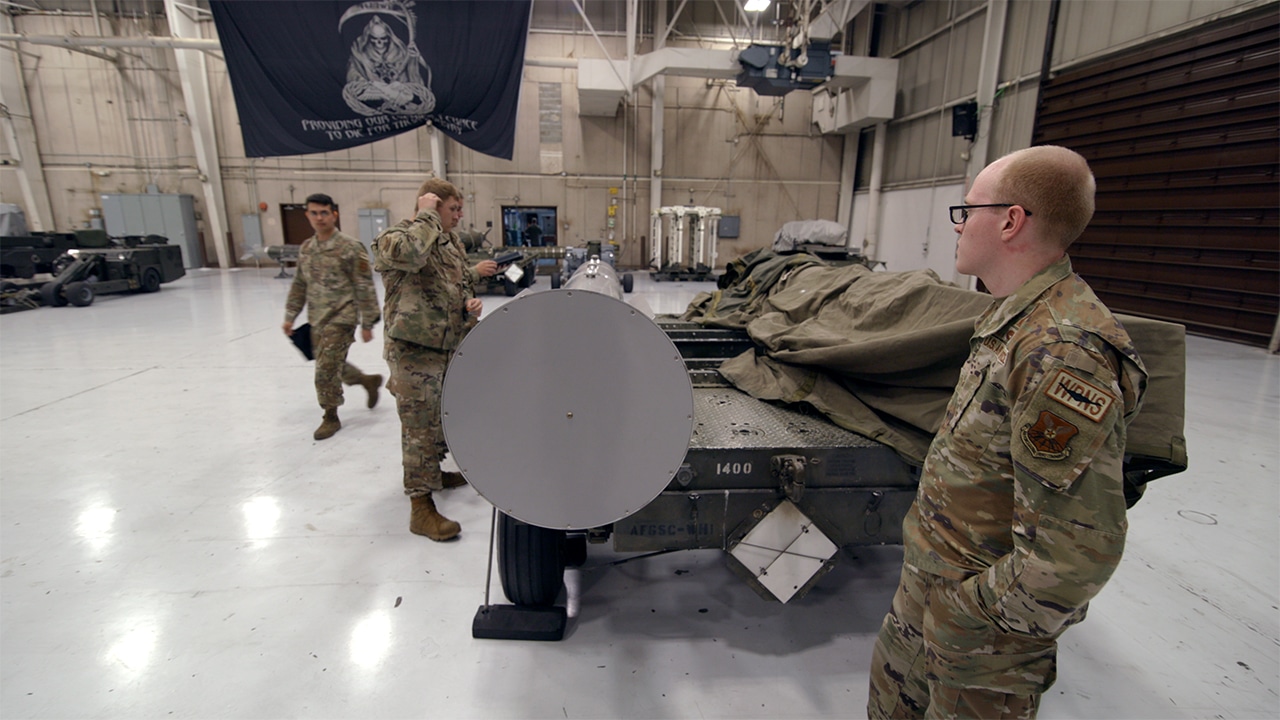
The footage, also briefly visible in the official teaser trailer, shows what appears to be a B61-11 nuclear gravity bomb being loaded into the weapons bay of a Northrop Grumman B-2 Spirit stealth bomber.
Photographs of the B61 family of nuclear weapons have been publicly available for decades, and the B61-11 itself is a legacy variant, however, images showing the B-2’s internal weapons bays, particularly during the loading of inert nuclear weapons, are considerably less common.
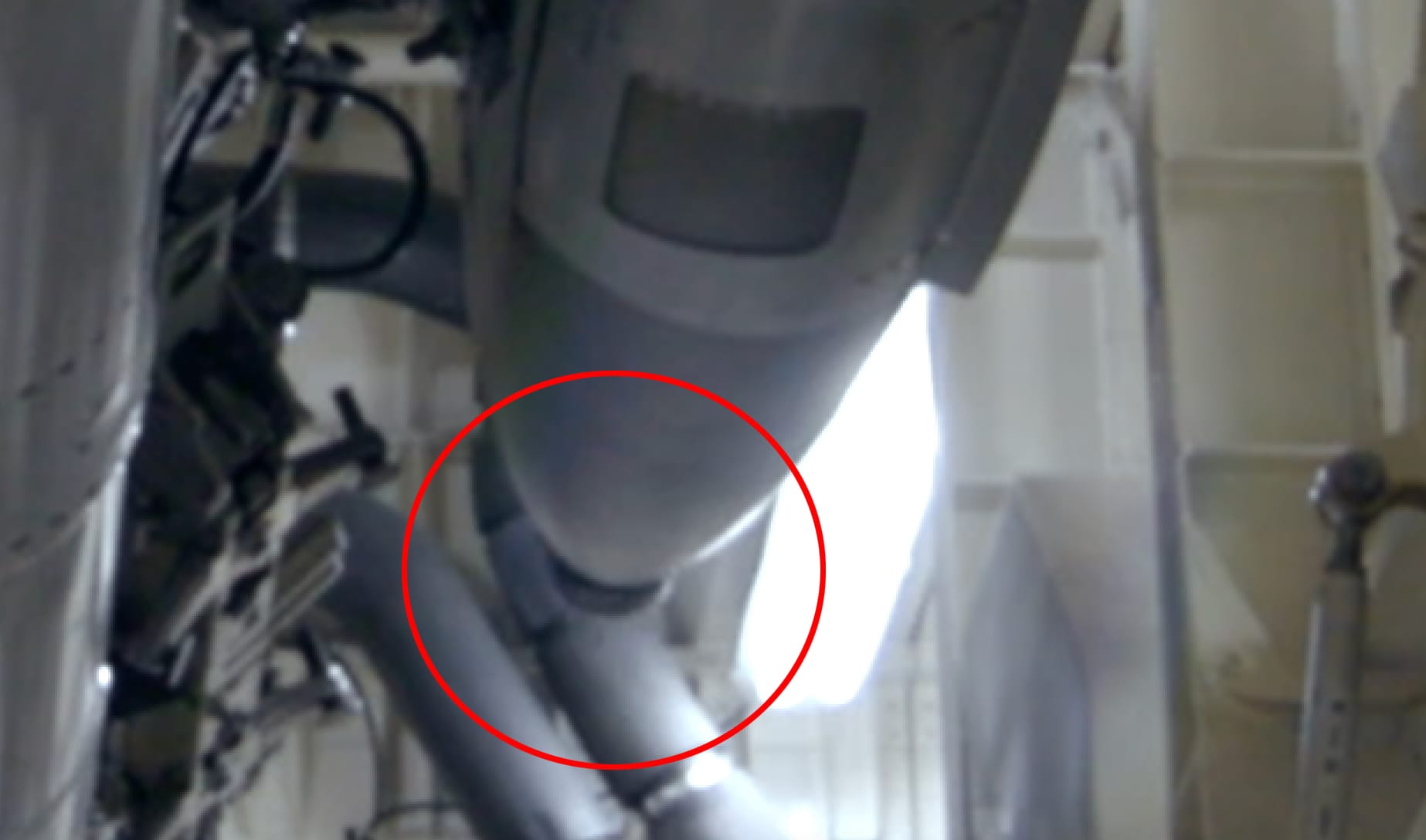
Interestingly, the segment in question shows the bomb on the Rotary Launcher Assembly (RLA) of the stealth bomber. The rotary launcher carries also what appears to be a 2,000 JDAM (Joint Direct Attack Munition). The latter looks like a GBU-31 at first sight but a closer look seems to show a seeker attached to the front nose of the bomb. If that is the case, the bomb would be GBU-56 Laser-guided 2,000-pound conventional weapon, which combines GPS-aided inertial navigation with a semi-active laser seeker, allowing it to engage both fixed and moving targets. This type of LJDAM is currently not known to have been integrated with the B-2, hence its identification in the footage remains uncertain.
We asked our friend and contributor Jeff Bolton, who created and produced The Watch, whether the sequence had been filmed specifically for the documentary and how sensitive it had been to obtain and clear such footage.
“Good question and I have something of a measured answer for you. We didn’t ask for special access film to anything specific to the B-61 in the B-2 weapons inventory for two reasons. One, in the “we don’t know what we don’t know” category I didn’t want to limit our capture if we asked for the wrong things to film. And two, I thought leaving the weapons filming request more organic would lead to a more interesting capture, and that was indeed the case as the footage reveals. Yes, we did film these scenes specifically for THE WATCH, and it was absolutely sensitive in terms of both the filming evolution and clearance of the footage. This piece of the filming puzzle was actually a bit more nerve wracking in a project defined by nerve wracking moments.”
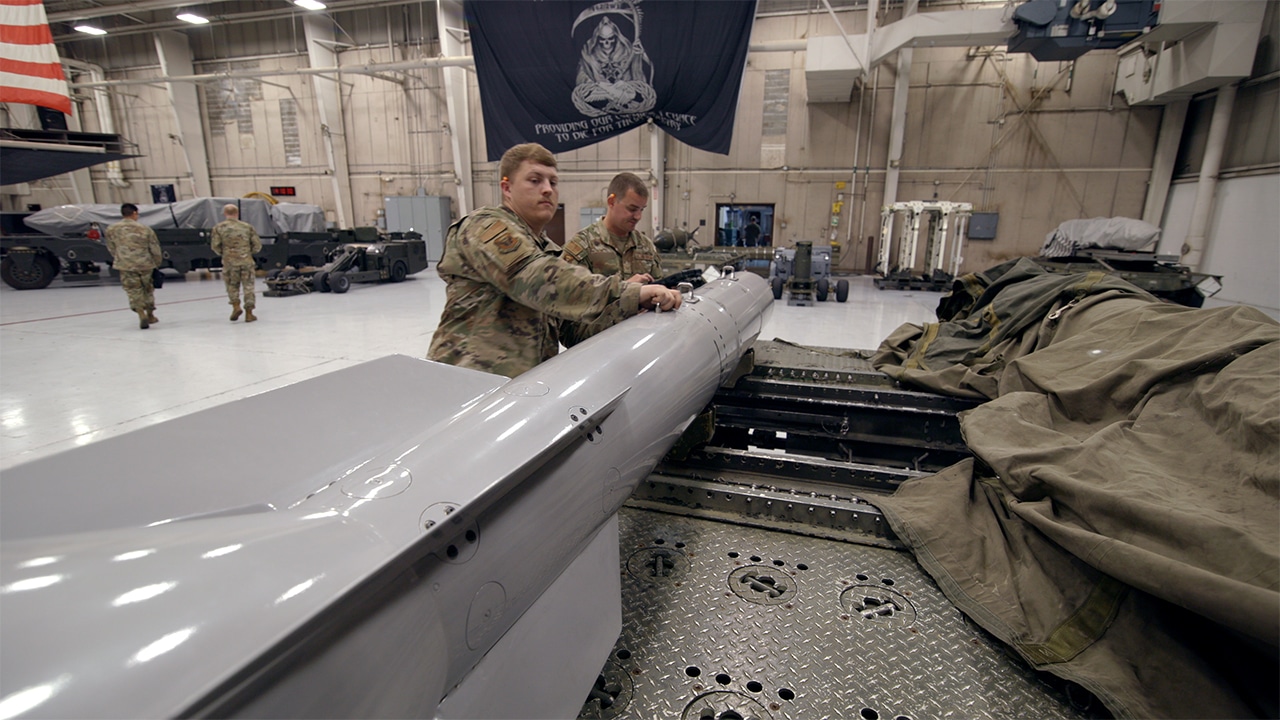
A Rare Look Inside the B-2’s Weapons Bay
To keep its Low Observability (LO), the B-2 bomber features two internal weapons bays that can accommodate different conventional and nuclear weapons, using rotary launchers or other carriage arrangements depending on the type of munition and mission.
In particular, the Rotary Launcher Assembly allows multiple weapons to be carried internally and individually positioned for release.
As already mentioned, photographs of the B-2’s weapons bays and rotary launcher are not new: in September 2009, the U.S. Air Force released photographs showing a nuclear weapons system evaluation known as Combat Sledgehammer, carried out at Whiteman Air Force Base, Missouri, on Aug. 17 of that year. The images showed personnel loading mock weapons and lifting a rotary launch assembly into a B-2.
Other official photographs released in 2021 showed weapons specialists inspecting and handling an empty rotary launcher outside the aircraft.
More recently, in July 2022, The Aviationist reported on photographs released by the USAF showing a high-fidelity, non-nuclear B61-12 Joint Test Assembly being prepared for loading inside a B-2’s weapons bay.
Those photographs, taken at Whiteman AFB on June 13, 2022, provided an interesting look at the testing and integration of the newer B61-12 guided nuclear bomb.
The footage in The Watch, however, appears to show a different variant, the previous B61-11, during the loading process.
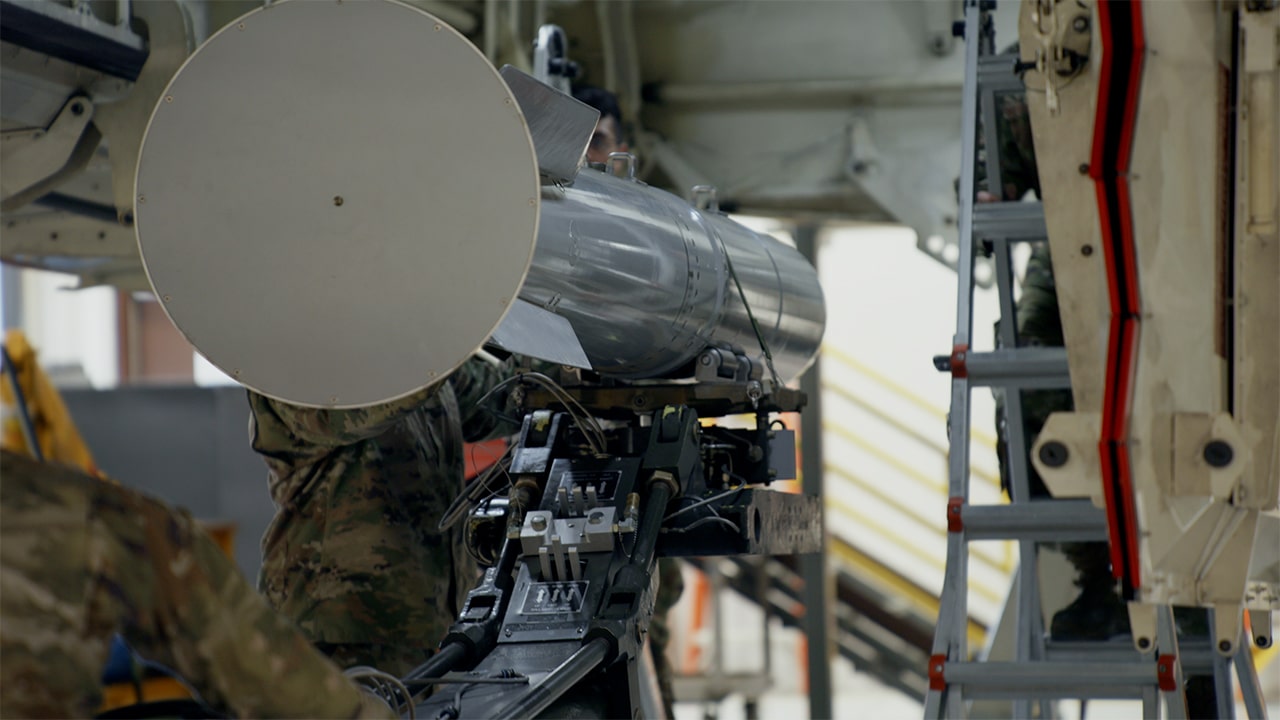
Unlike the B61-12, the B61-11 is an unguided, earth-penetrating nuclear gravity bomb developed to attack hardened and deeply buried targets. Introduced in the 1990s, the weapon features a reinforced casing intended to allow it to penetrate the ground before detonation, increasing its effectiveness against certain underground facilities.
It is a specialized weapon within the U.S. nuclear arsenal, and one whose mission differs considerably from conventional precision-guided weapons, even when both are associated with attacks against hardened targets.
The B-2 has long been the asset of choice for the bunker buster mission (for instance, using the GBU-57 Massive Ordnance Penetrator during the air strikes on Iran or Yemen), thanks to its ability to penetrate heavily defended airspace and deliver nuclear or conventional weapons against strategic targets.
Therefore, the new footage is interesting not because the B61-11 or the B-2’s ability to carry it represents a new development, but because it provides a rare opportunity to observe the weapon being loaded into the stealth bomber’s weapons bay. To our knowledge, publicly available footage documenting this particular procedure is extremely limited, if it exists at all.
The Watch: America’s Nuclear Mission
As already explained, the rare footage with the B61 comes from The Watch: America’s Nuclear Mission, a six-part documentary series created by filmmaker Jeff Bolton of NFN Productions and narrated by award-winning actor Gary Sinise.
The project provides a behind-the-scenes look at the men and women responsible for the United States’ nuclear deterrence mission, covering all three components of the nuclear triad: strategic bombers, intercontinental ballistic missiles and ballistic missile submarines.
According to the production, filming took place over 42 days at high-security military installations and aboard operational platforms, providing access to environments that are rarely documented by civilian film crews.
The series includes in-flight footage aboard the B-2 Spirit and B-52 Stratofortress, as well as the E-4B Nightwatch airborne command-and-control aircraft.
Other episodes explore U.S. Navy ballistic missile submarines, underground ICBM launch control centers, nuclear weapons security convoys and command-and-control facilities supporting the strategic deterrence mission.
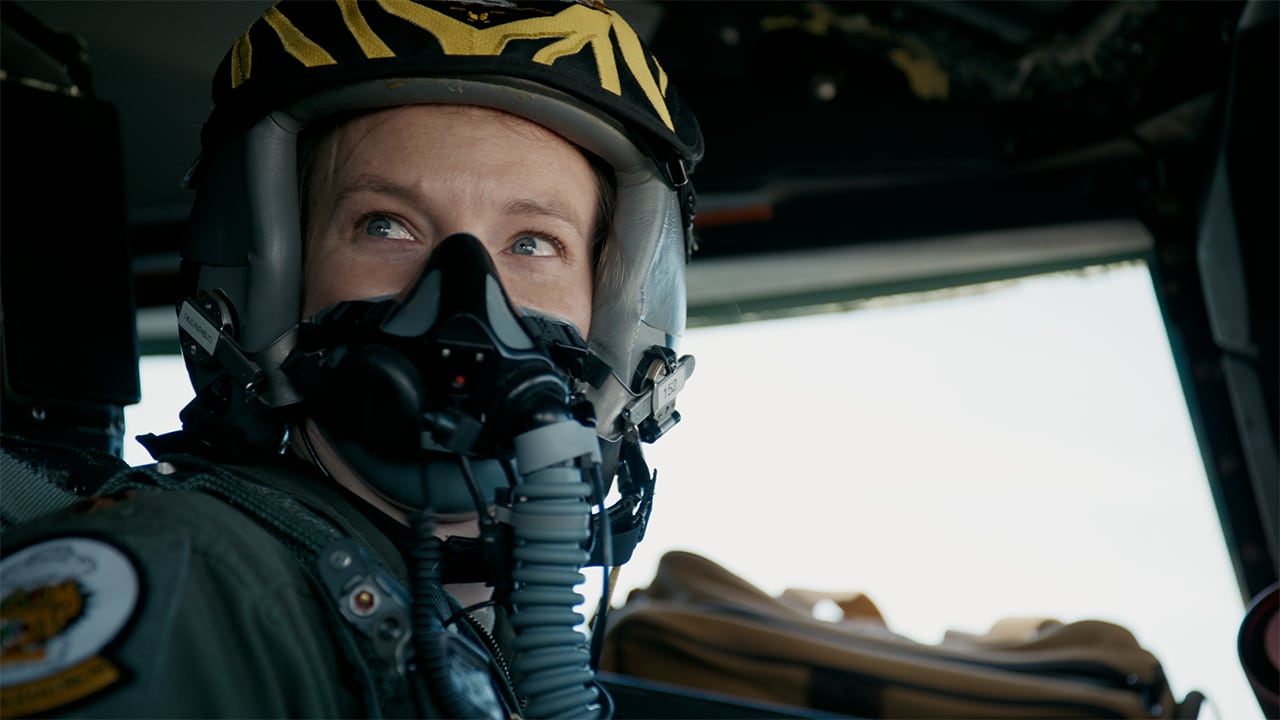
The B-2 episode, featured during the series’ special IMAX engagements, follows the aircraft’s operations through the eyes of a pilot who is also a wife, mother and combat leader, highlighting the personal responsibilities and challenges faced by the servicemembers entrusted with the nuclear mission.
The documentary is not exclusively focused on the weapons and technology, but also on the people operating them.
The series began its special IMAX screenings on Oct. 22, 2026, at the California Science Center, followed by additional screenings in San Antonio, at the Smithsonian National Air and Space Museum in Washington, D.C., and in Southampton, New York. A streaming release on Prime Video was also announced.
Twelve Years in the Making
Longtime readers of The Aviationist are already familiar with Jeff Bolton’s work.
In April 2019, we reported on the first publicly released in-flight footage from inside the cockpit of a B-2 Spirit, filmed by Bolton during a mission with the 509th Bomb Wing at Whiteman AFB, Missouri.
The video provided an unprecedented look at the cockpit of one of the world’s most secretive military aircraft, allowing us to identify and discuss several details of its avionics, instruments and operating environment.
A few months later, in July 2019, we published an exclusive interview with Bolton, along with previously unpublished cockpit footage and additional details about the mission.
Bolton described the years of work required to obtain approval to film aboard a flying B-2, an achievement that had previously been considered nearly impossible.
Later that year, we covered another of Bolton’s unusual videos, filmed inside a B-52H Stratofortress during a simulated nuclear alert mission.
That footage provided a rare glimpse of the aircraft’s nuclear weapons controls and the Polarized Lead Zirconium Titanate (PLZT) goggles worn by the pilots to protect their eyes against the intense thermal flash of a nuclear explosion.
Interestingly, when we interviewed Bolton in 2019, he explained that his work aboard the B-2 was part of a much broader effort to document the U.S. nuclear enterprise, including other strategic bombers, command-and-control aircraft, ICBM operations and ballistic missile submarines.
Seven years later, The Watch appears to be the culmination of that long-running project.
We asked Bolton what had changed since the first B-2 flight in 2018 and how he managed to obtain access to aspects of the aircraft’s nuclear mission that had not been included in his previous work.
“The first conversation I had about THE WATCH was with USAF Colonel Jon “Jester” Ellis (now Brigadier General Ellis, ret.) commander of the B-52 307th Bomb Wing in 2014, so we’ve been buried deep in the issues surrounding access for twelve years now. There are a myriad of concerns with classification, secrecy, and context; every episode of season one of THE WATCH, including the B-2 episode (which was the second time in history a hand-held camera was allowed aboard, the first being when I did it in 2018), presented a new set of issues. I look more like Moses today and less like the cool guy I used to think I was if that tells you how much stress surrounds the access issues. We didn’t discuss nuclear delivery with the B-2 at all in 2018. The second episode in season one of THE WATCH touches on conventional capabilities of the B-2 but deals deeply with nuclear delivery.”
The People Behind the Nuclear Mission
One of the recurring themes of The Watch is the contrast between the extraordinary destructive power of nuclear weapons and the ordinary lives of the servicemembers entrusted with maintaining the deterrent.
We asked Bolton whether spending so much time embedded with America’s nuclear forces had changed his understanding of how the mission is carried out.
“You always make me think David! Yes, my understanding was radically changed. We were in the mission so deep that you couldn’t help but realize that the vast majority of the work associated with nuclear deterrence is grinding, blue collar work. The business is not simply grounded in theoretical, “end-of-times” thinking. Rather, the very practical, day-to-day job of nuclear deterrence is brutally unglamorous with long hours in harsh environments. It’s very moving to me as an outsider and recipient of the umbrella of security these people provide to my family. As the blue collar son of an electrician and a bank teller, the service of the people in the mission resonates with me deeply. It’s a hard, tough business.”
The B-2 episode provides a particularly interesting example through the story of a pilot identified as Rider, whose responsibilities extend far beyond the cockpit.

We asked Bolton what her story revealed about the personal sacrifices associated with the nuclear mission.
“Oh man. Talk about an eye opener and it’s not the fact that Rider is a woman. The true story is that all of the “carefree scarf-wearing pilot” myths are shattered by the truth of military service today. She kindly allowed us a window into her life and we’re forever grateful. What we discovered is that virtually all of the pilots we met had a similar story grounded in trying to balance work and family… and the nuclear deterrence mission. So they’re just like the rest of us until they’re not… their other calling can influence the course of history.”
Telling Stories, Not Secrets
Documenting the nuclear mission inevitably raises questions about the balance between transparency and operational security.
Nuclear deterrence depends not only on the capabilities of the weapons themselves but also on the credibility of the force that maintains them. At the same time, many aspects of nuclear weapons operations and procedures remain highly sensitive.
Publicly showing some of these capabilities can help explain the mission and contribute to the visibility of the deterrent, but revealing too much could compromise security.
We asked Bolton how he and the military managed that balance while obtaining access to some of the most restricted areas of America’s nuclear enterprise.
His answer was remarkably straightforward.
“We created a statement to guide our efforts within the context of every issue you describe in your question. We tell everyone we work with in the military that “We’re here to tell stories, not secrets, and to talk about the “what” of the mission and not the “how”. That helped immensely and we work very, very hard to be good guests and good people with the military people who host us at all of the locations where we visit and film. As in life, humility goes a long way.”
The B61-11 loading footage offers a good example of this balance.
What About the B-21 Raider?
With The Watch documenting the current nuclear triad, it is natural to wonder whether Bolton’s cameras will eventually turn toward the systems that will replace today’s strategic platforms.
The B-21 Raider, which is currently undergoing flight testing, is expected to become a central component of the U.S. Air Force’s future long-range strike and nuclear deterrence capabilities, eventually replacing the B-2 Spirit.
Having already secured extraordinary access to the B-2 and B-52 bomber fleets, Bolton would seem particularly well positioned to document the next generation of stealth bombers.
We asked him whether the B-21 might feature in his future work.
He did not confirm any plans involving the Raider, but he did offer a tantalizing hint about what comes next.
“We’re deep in planning for season two and it is OFF THE CHAIN! I believe we’ll even get to see you in person… hint, hint!”
We’ll certainly be interested to see what he has planned!
In the meantime, The Watch provides a remarkable opportunity to explore the aircraft, weapons, personnel and operations behind America’s nuclear deterrence mission. And for aviation enthusiasts, the brief sequence showing the B61-11 being loaded into the B-2’s weapons bay is just one of the many details worth watching closely.