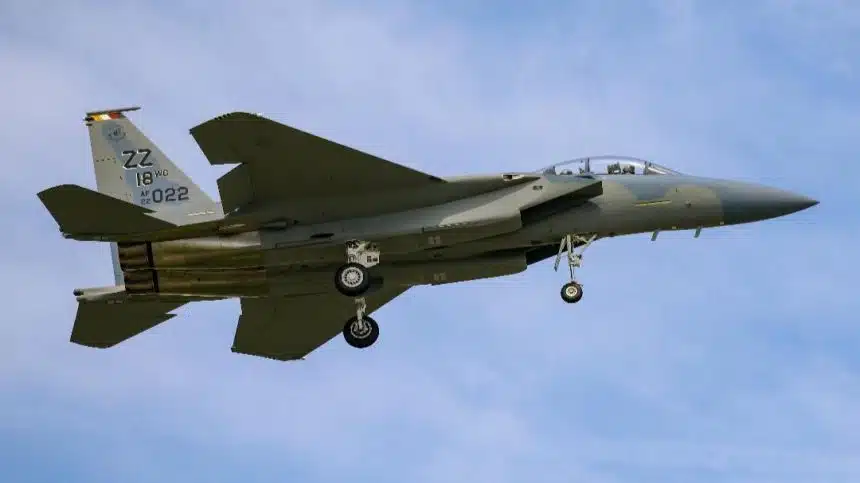
The first F-15EX Eagle II destined to Kadena Air Base in Japan broke cover, flying with the “ZZ” tail flash and the markings of the 18th Wing.
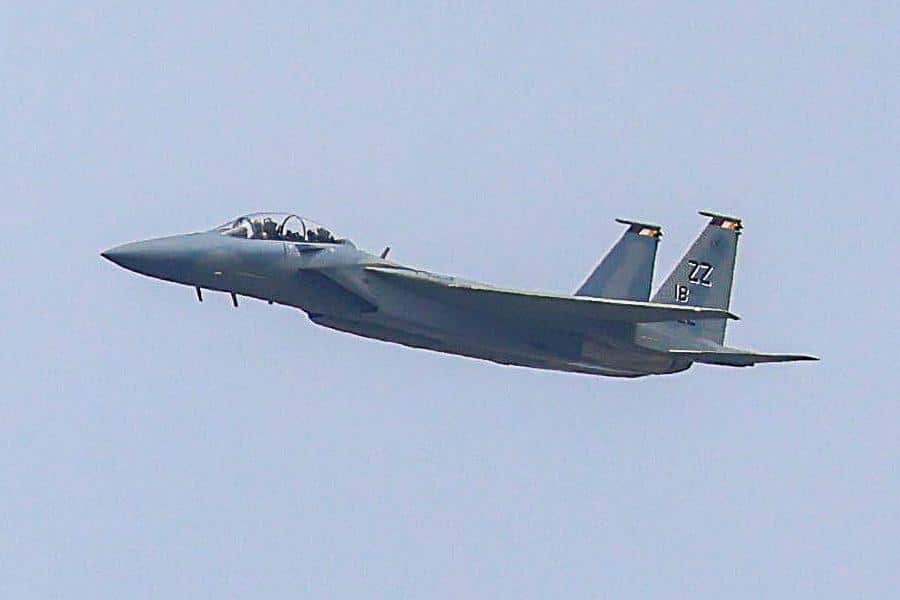
The first F-15EX Eagle II destined to Kadena Air Base, in Japan, has received the “ZZ” tail flash and the markings of the 18th Wing. The aircraft, 22-0022, has flown from Boeing’s facilities in St. Louis, Missouri, for the first time on Aug. 4, 2026, at the time only with the primer paint, before receiving its full livery and flying again on Aug. 15.
Our friend and aviation photographer Jerry McGrath was able to capture images and videos on both occasions and kindly shared them with us. Notably, this F-15EX is also the first of the new Lot 3, whose deliveries are planned to begin later this year.
Visualizza questo post su Instagram
Meanwhile, Kadena is continuing the preparations to receive the new fighter jet. As part of the preparations, an F-15EX was deployed to Kadena in June 2026 to conduct integration and familiarization training with local units, following a first visit a year earlier.
The 67th Fighter Squadron will be Kadena’s first operational F-15EX unit, followed by the 44th Fighter Squadron. A total of 36 new fighters is expected to be delivered there starting next year, according to Air Force Secretary Troy Meink.
The arrival of the first Eagle IIs at Kadena was initially expected in Spring 2026. Recently, Meink said that the first F-15EXs would arrive in Japan in 2027, with a full complement delivered by 2028.
The F-15EX at Kadena
Kadena Air Base, home of the 18th Wing’s 44th and 67th Fighter Squadrons, most recently flew in an air superiority role with the F-15C/D Eagle. The unit conducted the final operational flight of the F-15C Eagle on Jan. 24, 2025, after 45 years of flight operations at the Japanese base.
Visualizza questo post su Instagram
On July 3, 2024, the U.S. Department of Defense announced a “modernization plan” with the goal of deterring Chinese aggression in the region and strengthening forces in Japan. As part of the plan, it was announced that the base would replace its 48 Eagles with 36 F-15EX Eagle II jets.
Remarkably, the announcement marked the first commitment of the new F-15EX Eagle II, the most advanced Eagle variant ever produced, to a base outside the United States. At the time, no definitive timeline for the arrival of the first F-15EXs at the base was given, but it was later revealed that the delivery was expected between March and June 2026, before being delayed to 2027.
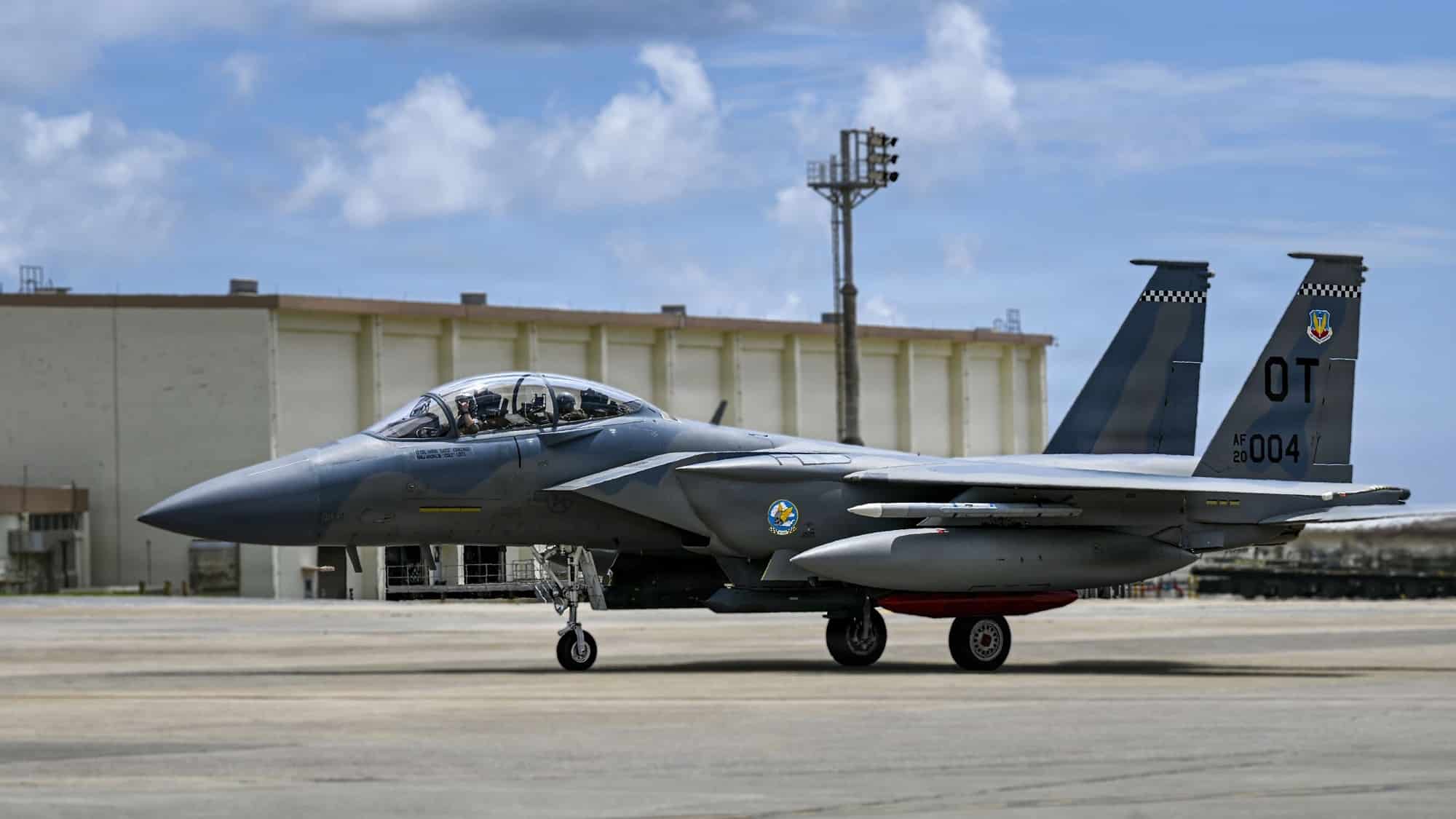
The new aircraft required a shift in the organizational structure of the 18th Wing. The 67th FGS (Fighter Generation Squadron) was in fact activated to support the eventual arrival of the F-15EX, while the 18th AMXS (Aircraft Maintenance Squadron) was deactivated.
At least one of Kadena’s last F-15Cs is being converted into a maintenance training aircraft for weapons loaders and maintainers, taking advantage of the large commonality between the F-15EX and the F-15C. Also, some crews with the 67th FGS have been sent to the Portland ANG to train with their new F-15EXs.
Thanks again to Jerry McGrath for the photos he sent us. Make sure to follow him on Instagram for more!