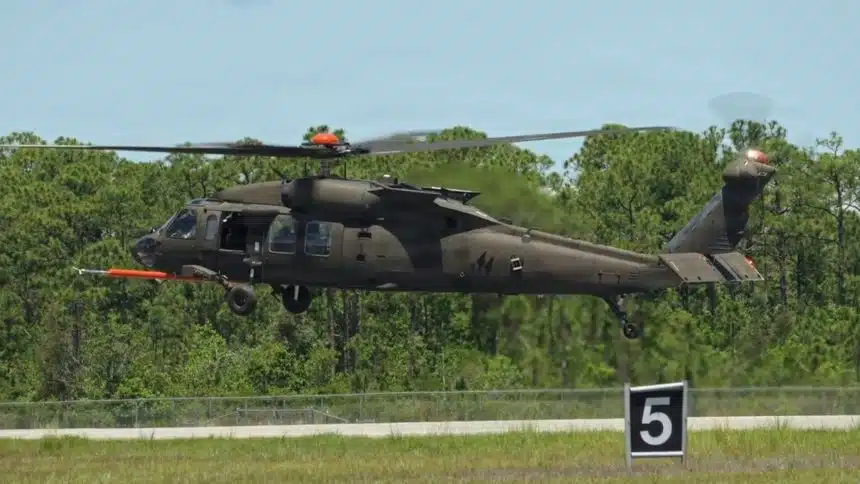
The next-generation T901, developed as part of the ITEP program, cleared the Preliminary Flight Rating and will now proceed toward full airworthiness qualification testing.
The T901 engine developed by GE Aerospace to replace the T700 engines powering the U.S. Army’s UH-60M Black Hawk and AH-64 Apache fleets has completed Preliminary Flight Rating (PFR) testing, the service announced on Aug. 12, 2026. The Army described the PFR as a key airworthiness milestone on the path toward full qualification.
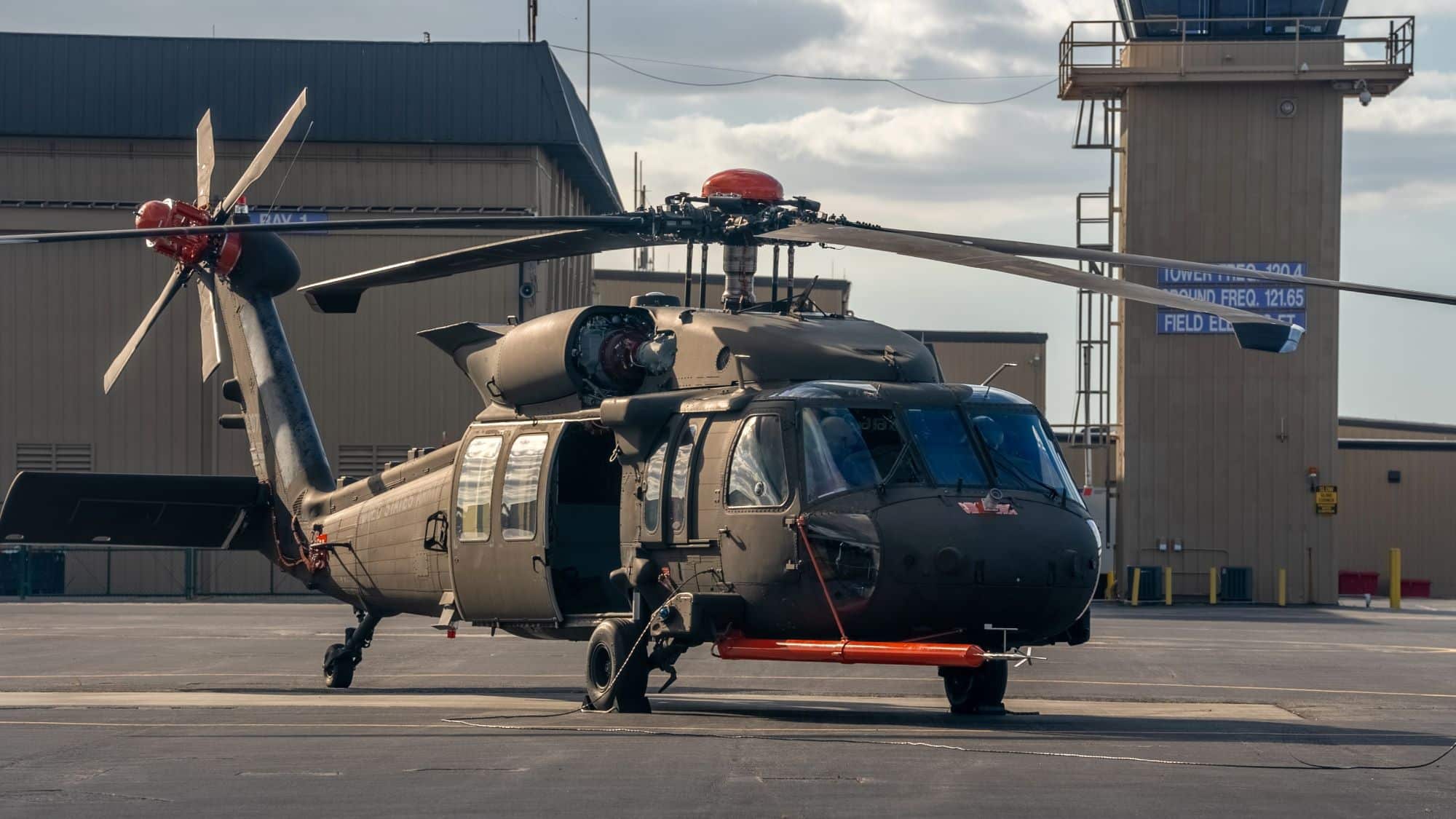
This new development comes a year after the T901’s first ground test in January 2025 on a Black Hawk. Images from both the test events show orange-colored shrouds on both the main and tail-rotor assemblies, believed to contain sensors to collect data on the engine’s performance.
The Army said that the next step is the full airworthiness qualification testing, which is scheduled to begin in the first quarter of Fiscal Year 2027 and will run in parallel with the UH-60M’s developmental testing. The campaign will include Flight Load Surveys and continued flight tests to “demonstrate the added capabilities the T901 provides for the UH-60M at heavy, high, and hot conditions.”
Additionally, the Army released on Aug. 14 a sources sought notice for the production of the T901. This will allow the service to push the engine into rapid production after testing concludes.
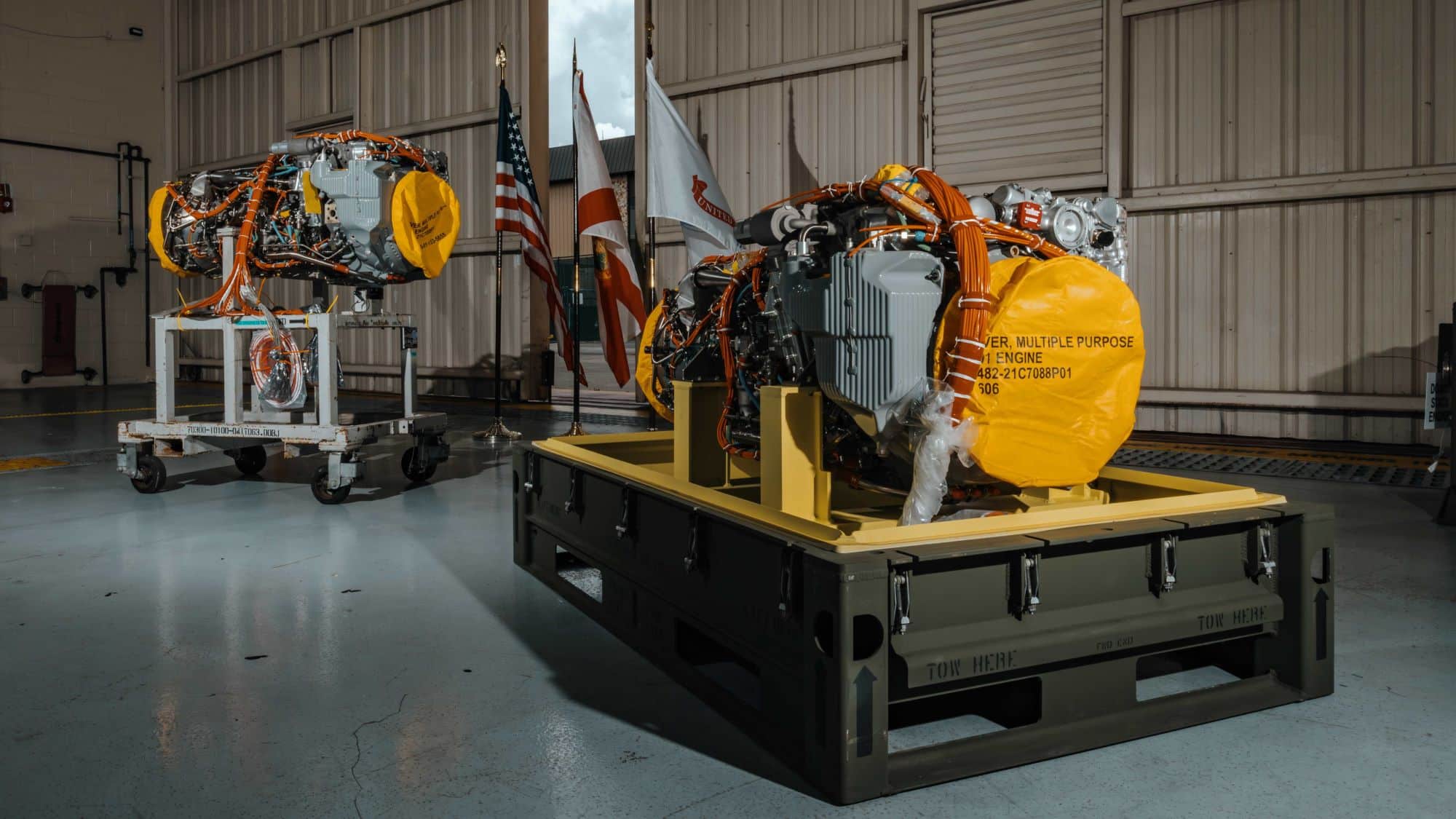
T901 engine
The T901 was developed in response to the Army’s Improved Turbine Engine Program (ITEP) effort, with the primary requirement of a 3,000 shaft-horsepower powerplant for the UH-60 and AH-64. GE Aerospace says that the T901 is an improvement in several attributes to the existing T700.
Compared with the T700, the T901 provides 50% more power and 25% better specific fuel consumption, translating into “less fuel usage and fewer carbon emissions,” while its single-spool core architecture is intended to simplify maintenance. GE also says the engine incorporates ceramic matrix composites and additive manufacturing to reduce weight and improve efficiency.
Plans to upgrade the MH-60M Black Hawks operated by the 160th Special Operations Aviation Regiment “Night Stalkers” (160th SOAR) depend in part on the T901’s development. U.S. Special Operations Command (SOCOM) officials told journalists at the SOF Week conference in May that they hope to integrate the T901 into their MH-60Ms to create a Block 2 variant of the type.
We have light off!
For the first time, a UH-60M Black Hawk conducted ground runs equipped with two @GE_Aerospace T901 Improved Turbine Engines. pic.twitter.com/xqVV1ScQaE
— Sikorsky (@Sikorsky) January 29, 2025
The Army emphasized how the T901’s development deviated from traditional engineering practices. The conventional route has been “a slow, step-by-step process” with years of testing prototypes “in a sealed ground chamber” to test parts until they fail from fatigue, allowing engineers to identify weaknesses and redesign them before flight testing begins.
Moreover, the T901 program “changed the paradigm with simultaneous ground and flight testing,” the Army said. The service explained that “running ground and flight trials in parallel allowed the team to rack up over 2,600 test cell hours and more than 90 hours of aircraft ground and flight test time.”
This approach shortened the “feedback loop between the ground and air,” where if test pilots detected a minor anomaly during a flight run, ground engineers “could immediately replicate the conditions, diagnose the issue, and push software or hardware refinement back to the flight line for the next day’s mission.”
Digital engineering and high-and-hot testing
Before the physical T901 engine powered an aircraft, its design had already undergone thousands of hours of simulated testing in a digital environment during the Engineering and Manufacturing Development (EMD) phase. The Army explained the team built a digital twin and used Numerical Propulsion System Simulation to run thousands of iterations, incorporating real-world data from early altitude testing.
The combined Lockheed Martin, GE, and the U.S. Army team also used advanced Computational Fluid Dynamics to model complex aerodynamic and thermal behaviors. By simulating heat transfer within the cramped confines of the helicopter’s engine compartment before manufacturing any physical parts, the team mitigated integration risks and saved months of software and hardware redesigns.
The ultimate benchmark for the T901 is its high-and-hot operational rating: the ability to deliver full mission performance at 6,000 feet in 95-degree Fahrenheit conditions (6k/95°), where high density altitude severely degrades engine performance.
To expand the engine’s flight envelope so it could handle these extreme operational conditions, the program took a methodical, stepped approach. The Army says the recent testing reached 17,000 ft and 160 knots and established the foundation for the formal operational assessment of the 6k/95° requirement planned for FY2028.