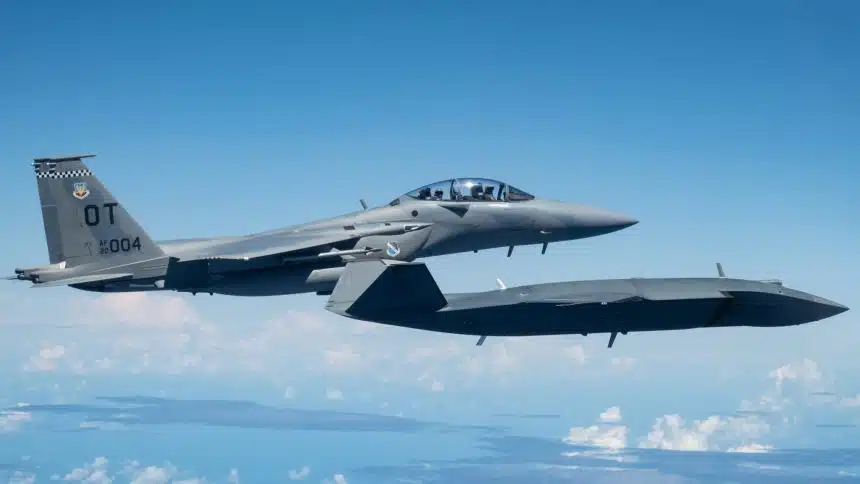
A new Congressional Research Service report highlights the growing gap between the U.S. Air Force’s current fighter inventory, its legally mandated force structure, and the much larger planned fleet.
The U.S. Air Force is currently operating below the fighter inventory minimum established by Congress, even as the service is seeking to dramatically increase the size of its combat-coded fighter fleet over the next decade. The issue is highlighted in a new Congressional Research Service (CRS) report, Air Force Fighter Force Structure: Background and Issues for Congress, published on Sept. 4, 2026.
The report mentions a 1,558-aircraft objective by 2035, although it does not introduce it to the public for the first time. In fact, that number comes from the Department of the Air Force’s (DAF) Long-Term USAF Fighter Force Structure report submitted to Congress in October 2025.
Instead, CRS provides a detailed assessment of the plan almost a year after its publication, examining whether the Air Force can actually achieve the proposed force structure and what Congress may need to do to either support or modify it.
The Air Force is already below the statutory minimum
Under Title 10, Section 9062, of the U.S. Code, the Air Force is required to maintain a primary mission aircraft inventory (PMAI) of at least 1,145 fighter aircraft. Yet on May 5, 2026, Secretary of the Air Force Troy Meink notified Congress that the service had 1,098 fighters, putting it 47 aircraft below the statutory requirement.
The discrepancy becomes more interesting when compared with the Air Force’s October 2025 report, which offers a different way of counting the fleet. On that occasion, the service proposed the introduction of a Combat-Coded Total Aircraft Inventory (CC TAI), which would include backup aircraft inventory and attrition reserve aircraft.
The service argued that PMAI omitted approximately 15 percent of aircraft assigned to combat-coded units. It should be noted that the 1,145-aircraft congressional requirement is still based on PMAI.
The CC TAI would put the inventory for FY 2026 at 1,271 fighters, compared with a PMAI of 1,098. The report prospects for FY 2030 a CC TAI of 1,304 fighters and a PMAI of 1,146.
Achieving the 1,558-fighter requirement
The Air Force’s 2025 analysis concluded that it would need 1,558 manned, combat-coded fighters by 2035 to achieve what it considers a low-risk operational posture. An interim objective of approximately 1,369 fighters by 2030 was also established. These figures refer to CC TAI, says the service.
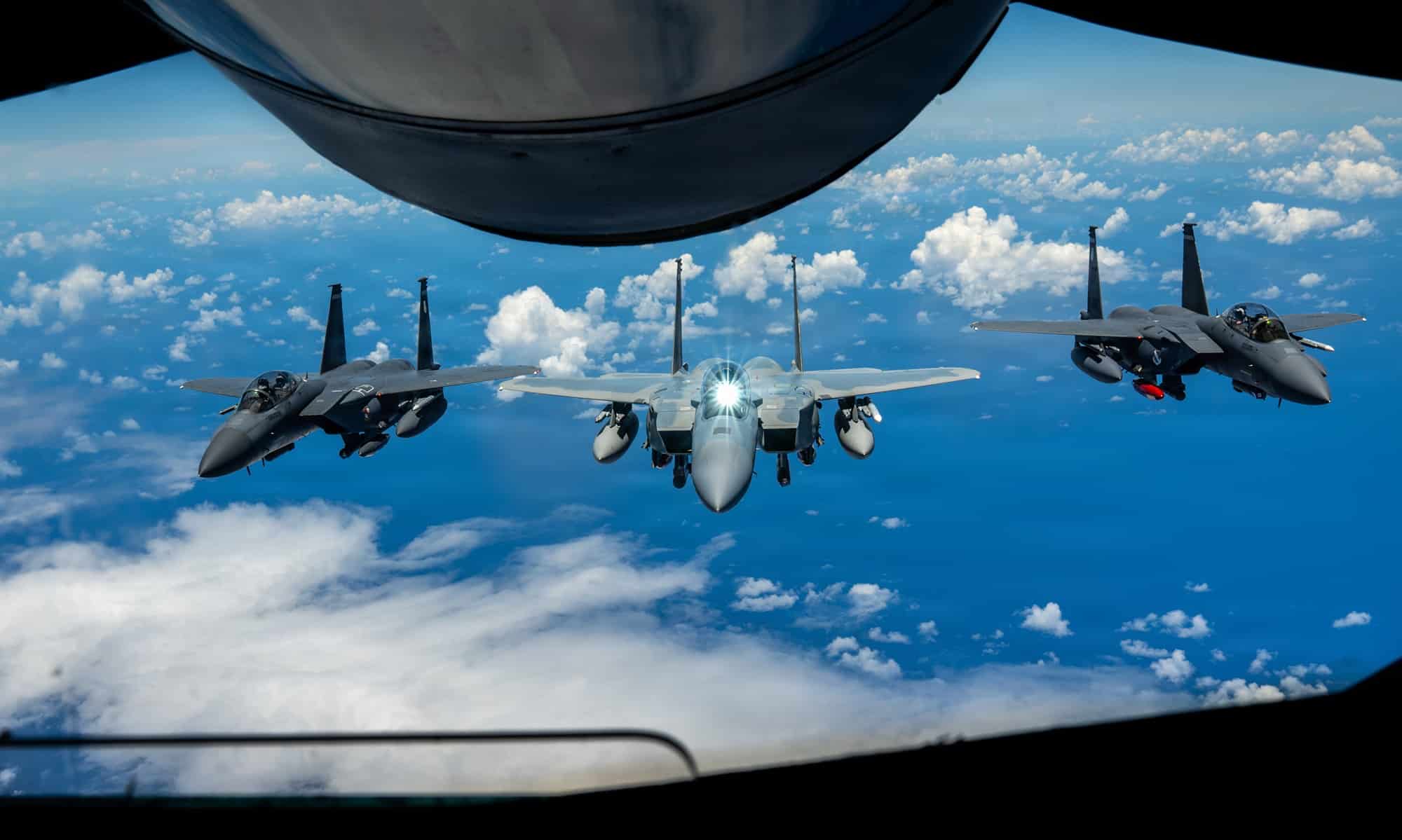
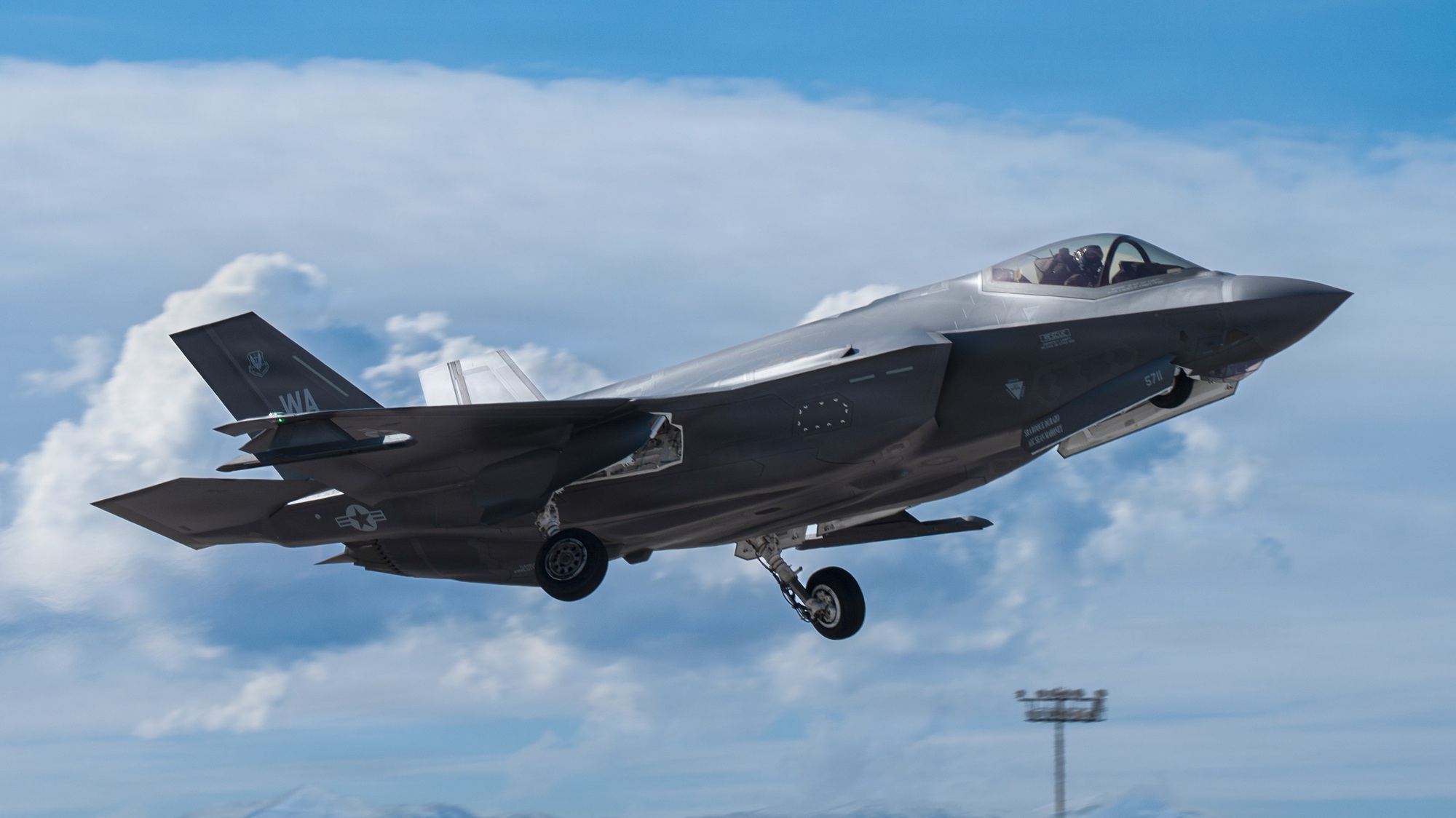
The Air Force plans to continue retiring older aircraft while increasing procurement of newer platforms in order to achieve the objective. As we already reported last year, the 2025 Air Force report identified potential maximum procurement rates of approximately 100 F-35As and 24 F-15EXs per year by 2030.
The CRS report repeats those figures but adds an important qualification: achieving the desired inventory would require both sufficient funding and sufficient industrial capacity. The service states is however not projected to have sufficient obligation authority to afford the increased production rate.
The F-35A is expected to remain the backbone of the Air Force’s tactical fighter force, while the F-15EX provides a complementary capability based around range, payload and the ability to carry large numbers of weapons. The two aircraft also occupy very different positions in the future force.
The F-35 is a fifth-generation stealth fighter designed around survivability, sensors and networking, while the F-15EX provides a large, non-stealthy weapons platform capable of carrying a substantial payload. Together, they are expected to provide much of the force required before the Air Force’s next-generation F-47 becomes available in meaningful numbers.
The fleet is also getting older
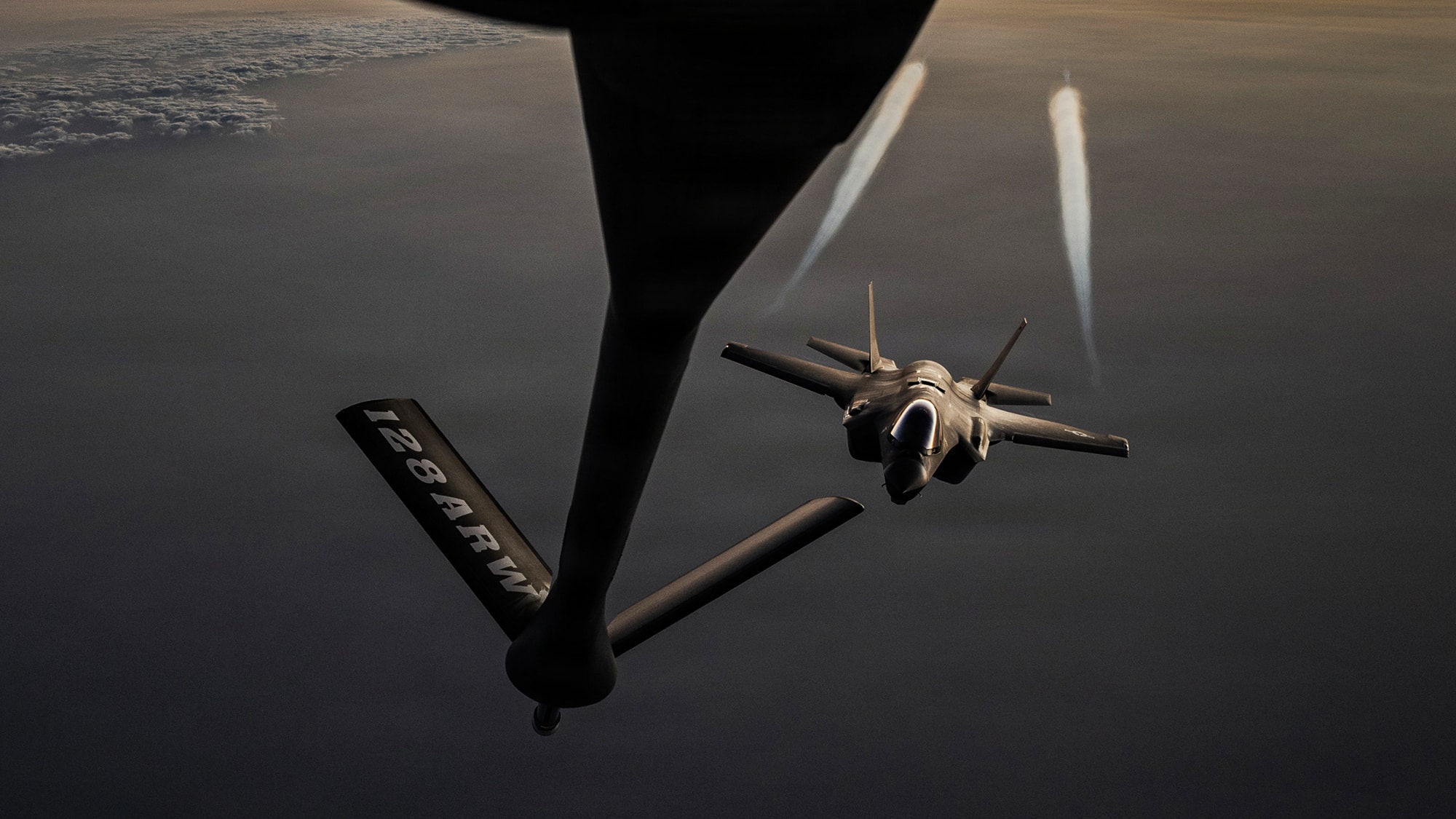
The challenge is not limited to procurement, as the Air Force operates a heavily used fleet with an average aircraft age of approximately 27.4 years. Notably, the report further mentions that the Air Force operates the oldest fighter fleet of any service and many partner nation, saying that it is twice as old as that of the U.S. Navy and three times older that the Royal Australian Air Force’s fighter fleet.
This has obvious implications, as older aircraft are increasingly expensive and difficult to sustain, while spare-parts shortages and maintenance problems can reduce the number of aircraft actually available for operations. The report further mentions that a “near perfect correlation” was wound between the increasing fighter fleet’s age and the decreasing aircraft availability rates.
The Air Force’s modernization plan thus depends heavily on retiring older aircraft, such as the legacy F-15C/D and A-10C and the oldest F-15E and F-16C/D fighters, while increasing procurement of the F-15EX and F-35A. However, Congress has repeatedly intervened in fighter-retirement plans because lawmakers are concerned about losing capacity before replacement aircraft become available.
The current statutory framework, for example, restricts the retirement of F-22s and F-15Es, while Congress has also imposed restrictions on A-10 retirements. The service will have to minimize disruptions to operational readiness as it recapitalizes the fleet.

The F-47 and CCAs
The future force will eventually be reshaped by the F-47, the sixth-generation fighter being developed under the Next Generation Air Dominance program. The aircraft is intended to provide capabilities beyond those of the F-35 and F-15EX, particularly in highly contested environments against advanced peer adversaries.
However, the F-47 is not an immediate solution to the Air Force’s fighter inventory problem. The service still has to operate its existing fleet while the new aircraft moves through development, testing and eventual production.
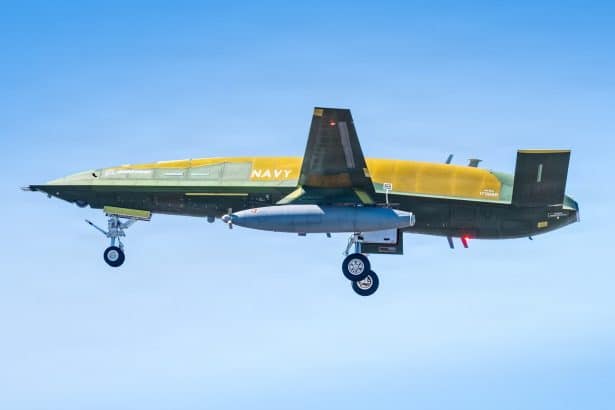
The Air Force’s fighter plan also introduces another question about how Collaborative Combat Aircraft (CCA) should be counted in the new fighter force structure. In fact, as mentioned earlier, the 1,558-fighter objective applies to crewed aircraft, while CCAs are excluded.
The Air Force’s 2025 report explicitly describes CCAs as a force multiplier rather than a replacement for manned fighters. That approach remains unchanged in the latest CRS report, although it mentions that CCAs allow for a larger overall force for a given budget.