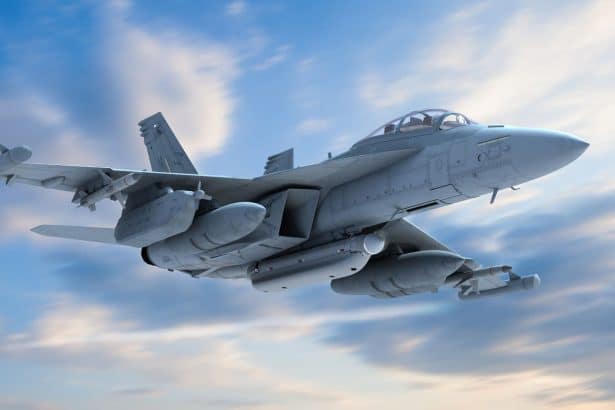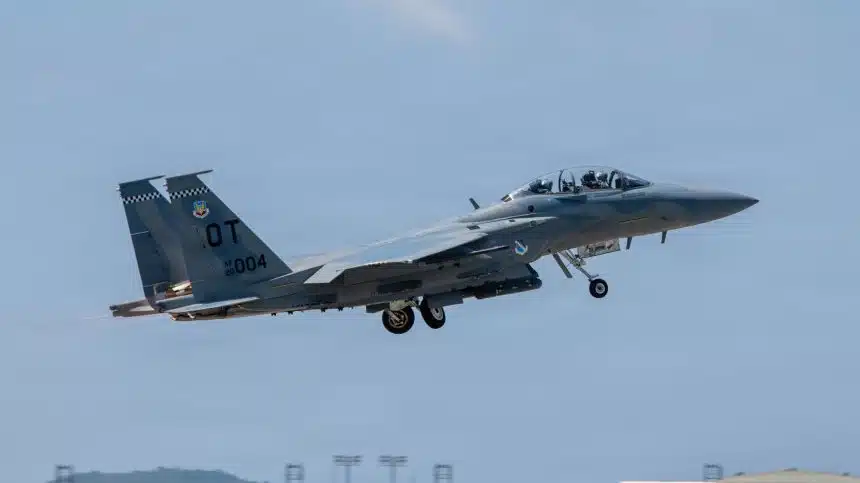
The Secretary of the U.S. Air Force confirmed that Seymour Johnson AFB is the planned recipient of the F-15EX Eagle II aircraft included in the proposed Fiscal Year 2027 budget.
The Secretary of the U.S. Air Force Troy Meink confirmed in a letter to Senator Ted Budd that Seymour Johnson Air Force Base, North Carolina, will replace new F-15EX Eagle IIs to replace its current F-15E Strike Eagles. The undated letter, published on Aug. 20, 2026, referred to an inquiry by Sen. Budd dated July 29, 2026.
Air and Space Forces Magazine first reported the news, noting that Seymour Johnson’s F-15Es assigned to the 4th Fighter Wing are expected to move to Whiteman AFB, Missouri. The move, however, is pending a final decision expected in fall 2028, and would happen after the base receives the F-15EX.
Seymour Johnson Will Get F-15EXs to Replace Some Strike Eagleshttps://t.co/uR9ag15PPL
— Air & Space Forces Magazine (@ASForcesMag) August 20, 2026
Near term F-15E upgrades
Seymour Johnson was the first operational base to receive the F-15E Strike Eagle in 1988, few months after the training unit at Luke AFB, Arizona. A year later, the local 336th Fighter Squadron achieved the Initial Operational Capability for the type.
The base hosts the F-15E’s Formal Training Unit (FTU) and operational squadrons. Throughout the years, it has been deeply involved in operations, however its aircraft are among the oldest in the fleet, including ones with the older Pratt & Whitney F100-PW-220 engines (newer Strike Eagles use the F100-PW-229).
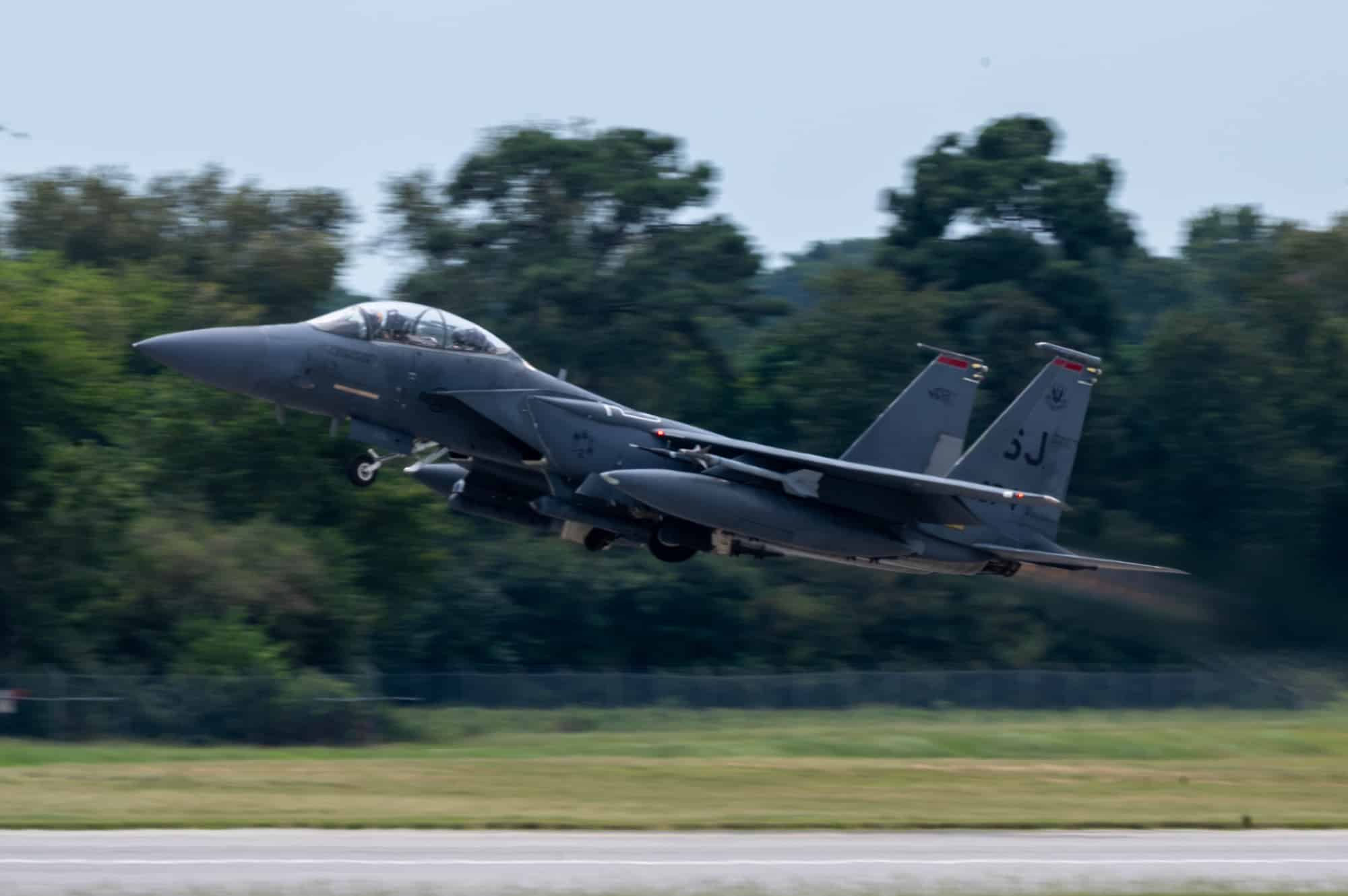
“The 4th Fighter Wing has operated at a significantly high operational tempo, including deployments to the Middle East and the Pacific, demonstrating the critical role Seymour Johnson plays in defending our nation,” said Sen. Budd. “The base is also the primary training ground for Air Force F-15 pilots and home to two operational F-15E squadrons, currently deployed to undisclosed locations in Southwest Asia in support of Operation Epic Fury.”
Sec. Meink said that “the Air Force has no plans to reduce Seymour Johnson’s F-15 missions without replacement aircraft already in place.” The service is now moving to preserve the base’s capabilities and missions without gap.
Because of this, in the near term, Seymour Johnson will receive modernized F-15Es “as aircraft become available elsewhere in the Air Force,” added the Secretary. It is yet unknown from which units the service will take the modernized Strike Eagles for the transfer.
However, last year, responding to questions from Sen. Budd, the then U.S. Air Force Chief of Staff Gen. David W. Allvin said the service was evaluating a transfer of RAF Lakenheath’s two F-15E squadrons. He further added that Seymour Johnson was one of the locations being evaluated for the transfer the base will be “critical to the F-15E and F-15EX community.”
F-15EX for Seymour Johnson
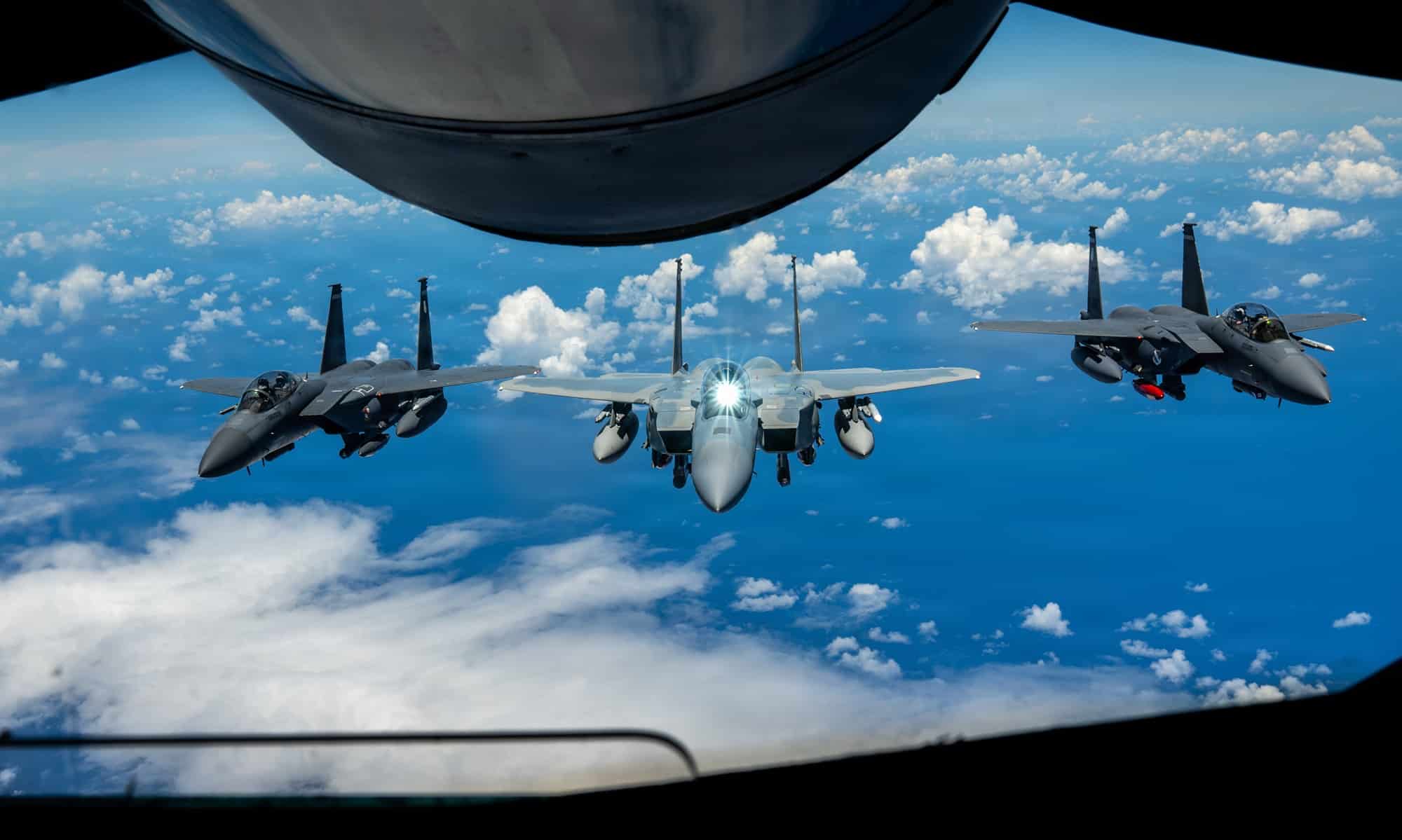
Following the arrival of the modernized F-15Es, Seymour Johnson will prepare to receive newly built F-15EX Eagle IIs. “Seymour Johnson is the planned recipient of the F-15EX aircraft procured through the Fiscal Year 2027 budget, if authorized and appropriated by Congress,” said Meink in the letter.
“This confirmation from the Department of the Air Force that Seymour Johnson’s mission is being prioritized and modernized with the procurement of F-15EX aircraft is an important step toward ensuring America maintains its air dominance,” said Sen. Budd in response to the announcement.
The service was initially planning to perform the training on the type at Kingsley Field in Klamath Falls, Oregon, where the 173rd Fighter Wing ran the F-15 Eagle B-Course. Following the base’s selection for an F-35 FTU in 2023, the F-15EX training was expected to be taken over by Seymour Johnson.
The timeline for the delivery of the new aircraft has not been disclosed, although it is likely to happen by the early 2030s, according to the letter. In fact, Meink noted that the base’s F-15Es would be transferred only after the delivery of the F-15EXs.
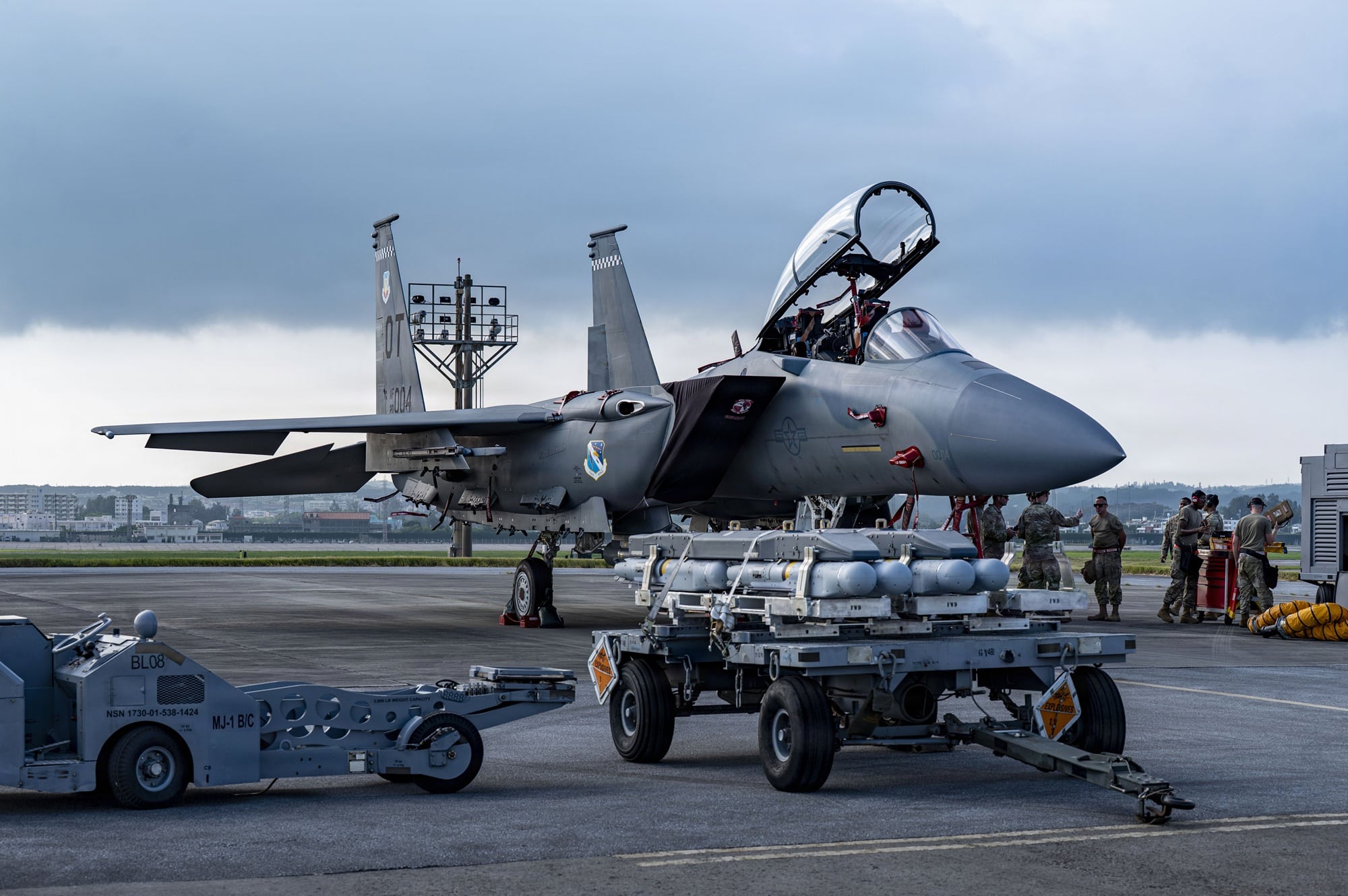
He then mentioned the potential future relocation of F-15E to support an Air Force Reserve mission. While the final decision is expected in Fall 2028, Whiteman AFB, Missouri, has been identified as the sole candidate location, according to Rep. Mark Alford.
The Reserve unit there, the 442nd Fighter Wing, will replace its current A-10Cs with the F-15Es. Air and Space Forces Magazine received a statement by a service spokesperson saying that the F-15Es at Whiteman will reach Initial Operational Capability in 2032 and Full Operational Capability in 2034.
Considering both this statement and Meink’s, it is possible the Air Force expects the delivery of the F-15EX at Seymour Johnson to happen before 2032.