A rapid departure of aircraft from RAF Mildenhall to bases across Europe was noted by enthusiasts on Nov. 9, with WSJ then reporting that a threat relating to Iran was responsible for a heightened security posture.
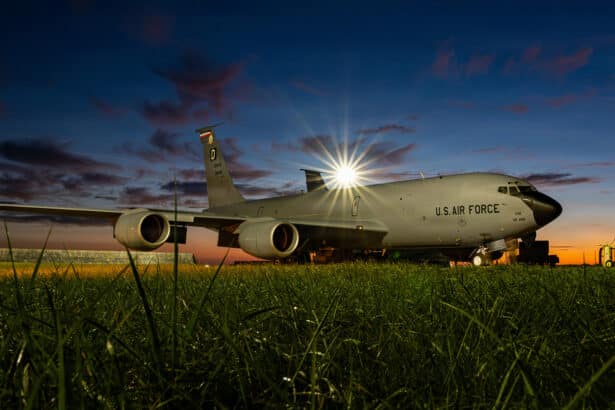
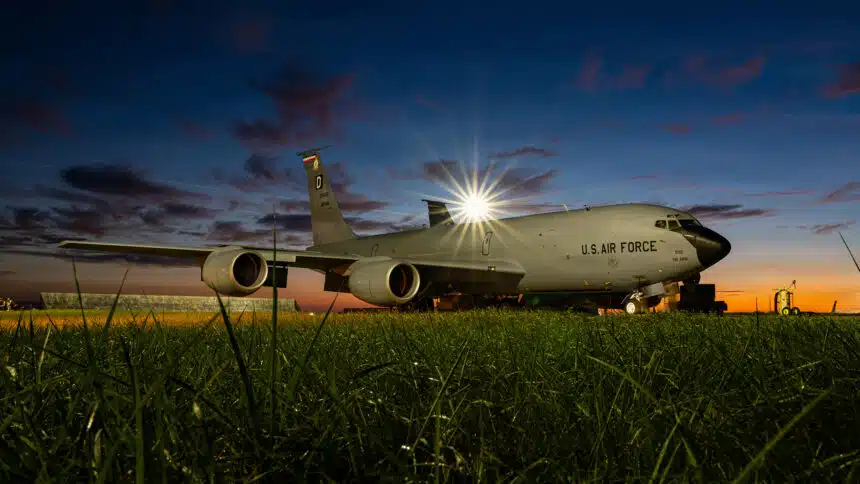
RAF Mildenhall based U.S. Air Force KC-135 Stratotankers were mobilised and dispersed across Europe to Prestwick, Spangdahlem, Ramstein, and Morón during the afternoon of Monday Nov. 9, 2026, while CV-22B Ospreys were sent to the nearby RAF Lakenheath.
The Aviationist understands from local sources that the Mildenhall’s force protection condition, or FPCON, was raised to Charlie – the second highest alert level – early that afternoon. Echoing this raised security level, a number of departures from Mildenhall were given the go-ahead to take off despite weather conditions that would usually restrict non-operational flying due to reduced visibility.
Current dispersed aircraft as-of 2153z https://t.co/NrsF6uU0uT
— Armchair Admiral 🇬🇧 (@ArmchairAdml) November 9, 2026
The Wall Street Journal (WSJ) subsequently confirmed via U.S. Department of Defense (DoD) sources that the security levels at both Mildenhall and Lakenheath, which are just three miles apart, had been increased. While aircraft were not dispersed from the latter base, its status as a fighter base means its F-15E Strike Eagles and F-35A Lightning IIs are able to be secured in hardened aircraft shelters (HAS) to protect them from external threats.
The U.S. evacuated American aircraft from a Royal Air Force base in England on Monday in the wake of a threat from Iran, according to people familiar with the matter.
“The U.S. upgraded the security posture at RAF Mildenhall and RAF Lakenheath, both used by the U.S. military, to FPCON Charlie, which occurs when intelligence indicates that a form of terrorist action is likely, according to a U.S. official familiar with the matter.”
https://t.co/eFuHd8AlG3
— Jason Brodsky (@JasonMBrodsky) November 10, 2026
The news has been picked up across UK mainstream media, reported on during live coverage by both BBC News and Sky News.
UK Defence Minister Luke Pollard was questioned on Nov. 10 about the ongoing events during the International Sea Power Conference, held on board the aircraft carrier HMS Prince of Wales in Oslo. He told Sky News reporter that it was not for him to comment on specifics but that the U.S. remains the UK’s “closest security and defence partner”.
Asked about the US pulling aircraft from RAF Mildenhall reportedly because of a security threat from Iran – and whether the UK could guarantee the security of US forces on British soil, Defence Minister @LukePollard says it is up for other nations to comment on their own military movements but the US “remains our closest security and defence partner and that won’t be changing”
— Deborah Haynes (@haynesdeborah) November 10, 2026
Official comment from U.S. DoD sources was limited to a largely boilerplate response, saying: U.S. Air Force aircraft rotate between installations and operating locations for a variety of reasons including training and real world requirement. U.S. military aircraft are hosted in accordance with access, basing, and overflight agreements with our Allies and partners. Due to operations security, we will not provide further information on movement of assets”.
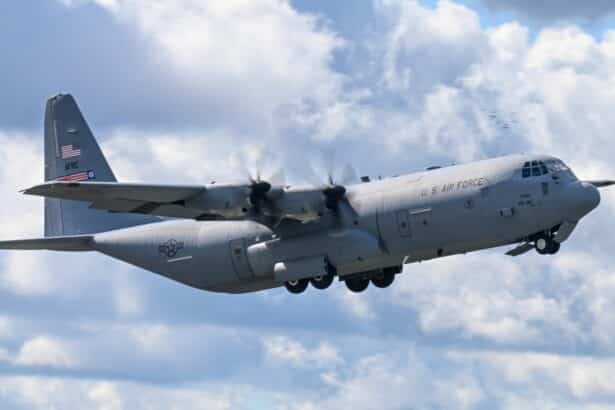
A flight into Mildenhall by a C-130 from Ramstein Air Base in Germany raised questions about whether reinforcements from the large European base were being brought in to buff Mildenhall’s security forces. Transmissions from the aircraft would support the notion that it was transporting a payload from Ramstein to offload at Mildenhall. Upon arrival it notably suffered from the same weather conditions for which a number of the Nov. 9 departures required a waiver for.
0910z – HERKY 920 unable to land due to weather.
— Armchair Admiral 🇬🇧 (@ArmchairAdml) November 10, 2026
Interestingly, an RC-135U Combat Sent intelligence aircraft which arrived at Mildenhall last week was not among the aircraft dispersed despite being one of only two in the entire U.S. Air Force inventory. The Combat Sent is a specialised electronic intelligence aircraft focused on gathering and analysing signals from radar systems. Outwardly, the aircraft appears similar to the RC-135V/W Rivet Joint, which is a more general purpose signals intelligence aircraft.
The Combat Sent has been forward deployed to Mildenhall to take part in intelligence gathering sorties along NATO’s eastern flank, where Russian radar systems are in near constant use due to the war in Ukraine. Because of the threat from Ukrainian drones and missile attacks, the usual strategy of disabling or downgrading radar capabilities when such an intelligence gathering aircraft is operating nearby is a much more risky endeavor.
Additionally, none of Mildenhall’s MC-130J Commando II aircraft were noted to have been part of the mass dispersal.
RAF Fairford
In late September, a major incident was declared on the perimeter of RAF Fairford – another U.S. operated base in the UK – following the arrest of a number of individuals under the Explosives Act. It was later confirmed that no actual explosives had been found, but some of the men were later re-arrested and charged under the National Security Act. U.S. Secretary of State Marco Rubio claimed a ‘foreign actor’ was involved in the strange incident, and Westminster magistrates court later heard that Iranian intelligence services were believed to have directed the arrested individuals through a handler.
Counter Terrorism Police have released a statement on the RAF Fairford incident which they “believe” was linked to Iran, their comments come after two men were charged with national security offences.
https://t.co/PAiZ4D1jU3
📺 Sky 501, Virgin 602, Freeview 233 and YouTube https://t.co/GfzFDWgfRo
— Sky News (@SkyNews) October 27, 2026
While no direct attack against RAF Fairford succeeded, it drew significant attention to the idea that U.S. bases within the UK and in Europe might be at risk from indirect warfare directed by Iran, leading to the U.S. taking a more risk-averse approach to new security threats. These bases, which were used in support of Operation Epic Fury, were publicly declared by Iran to be valid targets for their retaliatory actions, but the country is not able to reliably attack them through conventional means.