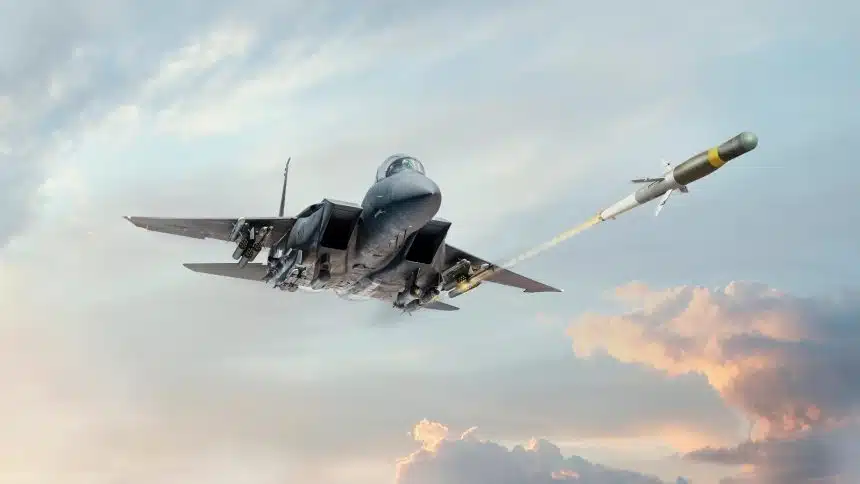
The Pentagon signed a framework agreement with BAE Systems to procure up to 25,000 APKWS kits annually for up to seven years, with provisions to increase production capacity to 35,000 kits per year.
The U.S. Department of War (DoW) and BAE Systems have signed a long-term framework agreement aimed at increasing production of the Advanced Precision Kill Weapon System (APKWS). Announced on Oct. 19, 2026, the agreement establishes a framework for the procurement of up to 25,000 guidance kits annually for up to seven years, while providing a path to expand production capacity to 35,000 units per year to support international customers.
The agreement, which comes under the Arsenal of Freedom initiative, is intended to allow BAE Systems to procure long-lead items and expand its skilled workforce needed for the increase of the production. However, the framework is not itself a finalized multiyear procurement contract, and BAE Systems and the DoW will negotiate it while the company works on increasing the production.
“The Arsenal of Freedom exists for one purpose: to guarantee our warfighters decisive advantage on the battlefield,” said Michael P. Duffey, Under Secretary of War for Acquisition and Sustainment. “By securing multi-year demand, this agreement keeps production lines running at capacity, provides our forces with interceptor inventory, and flips the cost calculus in the taxpayer’s favor.”
According to BAE Systems, the agreement will support the expansion of production capacity at its manufacturing facilities in Hudson, New Hampshire, and Austin, Texas. The company says it has already invested in manufacturing infrastructure, its workforce and supply chain to meet growing demand for APKWS.

Turning unguided rockets into precision weapons
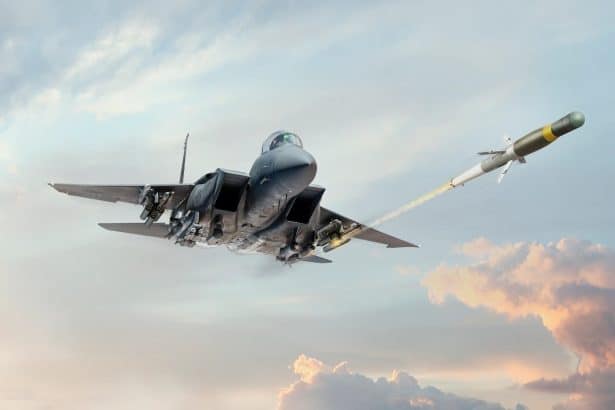
The AGR-20 Advanced Precision Kill Weapon System II (APKWS II) is a conversion of the Hydra 70 unguided rockets which adds a laser guidance kit to the baseline weapon, turning it into a precision-guided munition (PGM). By adding a guidance section to a cheap rocket (inserted in the middle of the rocket, between the 10-pound high-explosive warhead at the front and the Mk66 Mod 4 rocket motor at the rear), BAE Systems created a low-cost smart munition that can be used in the air-to-ground role.
The guidance section of the APKWS includes four foldable wings with wing-mounted laser seeker collection optics with a wide field of view which enable to engage both moving and stationary targets. BAE Systems says that “no modifications are required to the rocket, firing platform or fire control system,” with the only known modification being a longer variant of the LAU-131/A 7-round rocket launcher normally employed by the U.S. Air Force, called the LAU-131 A/A.
Further developing an air-to-air capability out of these older rockets was an impressive feat for the U.S. Air Force, which was the first to test and deploy the new capability, opening to the possibility to engage targets at a very small fraction of the cost of other existing missiles. The high cost of the interceptors against these cheap targets and the magazine size of the launching platforms have been two of the main concerns highlighted by forces countering these attacks.
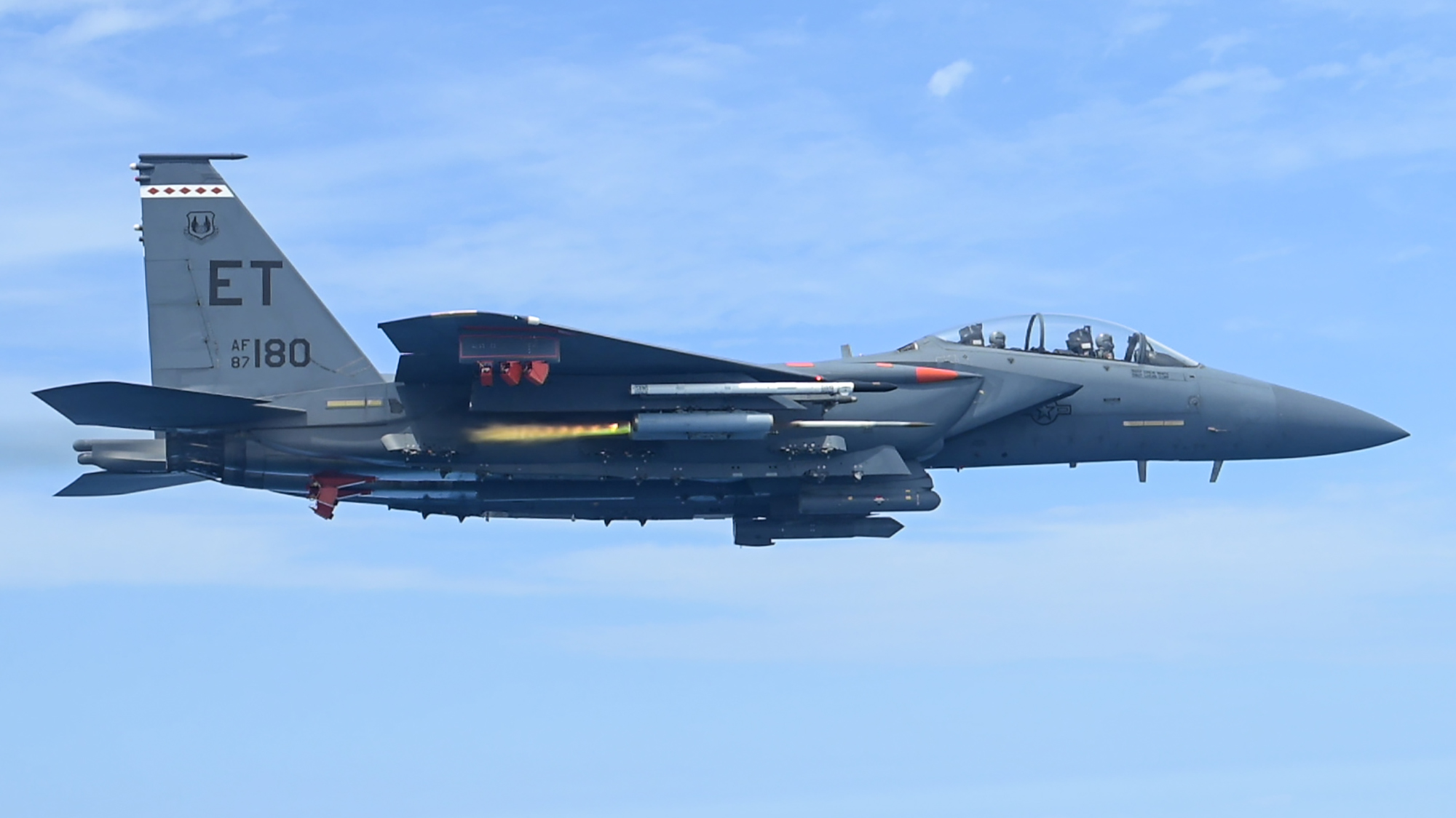
A current beyond visual range radar-guided AIM-120 Advanced Medium Range Air-to-Air Missile (AMRAAM) is priced at more than $1 million each, and an AIM-9X Sidewinder Block II has a price tag of around $420,000. On the other hand, the guidance section of an APKWS II only costs around $15,000, with the full APKWS II round only costing a few thousand dollars more (to include the warhead and the motor).
The low cost of the APKWS II comes with some restrictions, as the weapon is shorter ranged than the current air-to-air missiles, and the warhead is also smaller. However, against slow and cheap targets like drones, the AGR-20 can provide a highly cost-effective weapon.
Moreover, the APKWS II can provide fighter jets with deeper magazines for air-to-air munitions, as they can be carried in a 7-shot rocket pod on a single hardpoint that could otherwise take only a single missile. This feature could come in hand while facing swarm or saturation attacks from enemy drones, a tactic that has already been used by Russia in their aggression of Ukraine, by Iran in their attacks on Israel and sometimes on a smaller scale even by the Houthis.
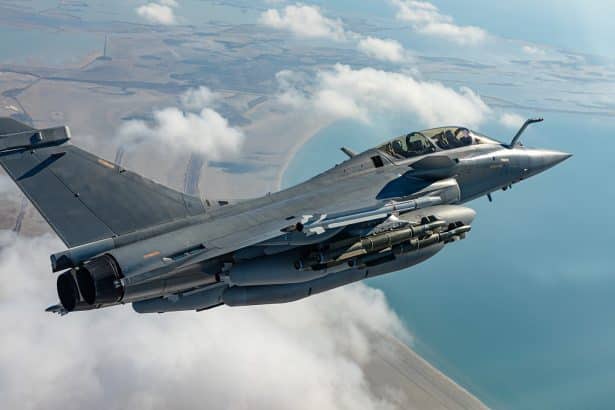
The U.S. Air Force, Army, Navy and Marine Corps all field APKWS, while the system is also available to allied nations through the U.S. Foreign Military Sales program. More than 20 fixed-wing and rotary-wing platforms have been qualified to employ the weapon, according to BAE Systems.
Ground-based launch configurations further extend its potential applications, allowing APKWS-equipped rockets to be used against surface targets from vehicles and other compatible launchers. One of these configurations is used on the Vampire counter-unmanned systems (C-UxS), which was recently delivered to the U.S. Army.