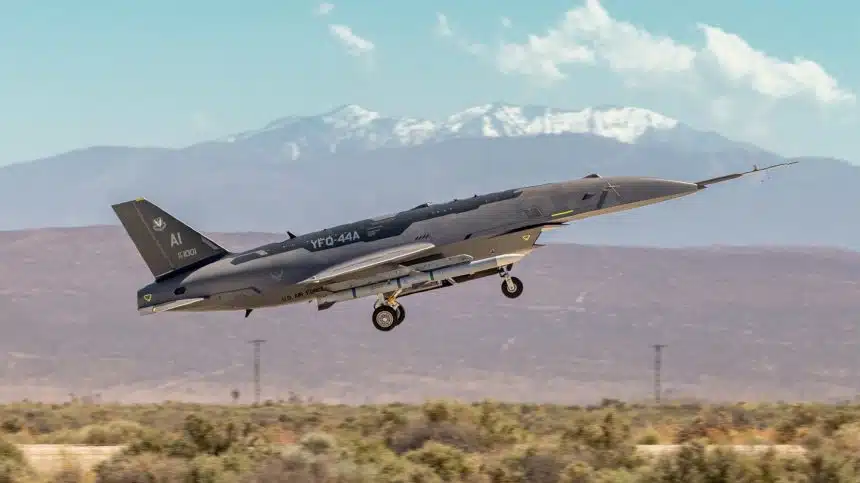
The YFQ-44 flew sorties with the U.S. Air Force Experimental Operations Unit at Edwards AFB, allowing to start working on development of the initial tactics, techniques and procedures for CCAs.
The U.S. Air Force and Anduril announced a first round of testing of the YFQ-44A with the Experimental Operations Unit (EOU) at Edwards Air Force Base, California. The service said that the exercise puts principles of the new Warfighting Acquisition System into practice, with “earlier, operator-driven experimentation to inform tactics and procedures that will accelerate the delivery of this transformative capability to the warfighter.”
Testing at Edwards
In its statement, Anduril said the testing took place last week. The operations were conducted by Air Force personnel from the EOU and the 412th Test Wing, which “executed a series of sorties that refined core operational and logistical procedures for deploying and sustaining CCA in a contested environment.”
Writing the playbook for tomorrow’s fight.
Operators are putting Collaborative Combat Aircraft to work faster—developing tactics through early experimentation & shaping how they’ll be used in the future fight.
More: https://t.co/oPd8aYZN7j#CCA #NextGen #AirForce #Innovation pic.twitter.com/OJUmX0NPsw
— U.S. Air Force (@usairforce) April 16, 2026
Anduril also added that the YFQ-44A flew from the company’s Southern California test site – likely a reference to Southern California Logistics Airport in Victorville, where the type also conducted its first flight – to Edwards Air Force Base. The EOU’s personnel then took over the operations, including pre and post-flight checks and clearances, weapons loading and unloading, and direct tasking of the air vehicle during taxi and flight, for daily sorties.
“This experimental operations event was executed by EOU members from start to finish. Every sortie generated and flown was done with a warfighter, not an engineer or test pilot, kicking the tires and controlling the prototypes,” said Lt. Col. Matthew Jensen, EOU commander. “We are learning by doing, at a speed and risk tolerance accepted by the USAF’s most senior leaders, to ensure CCA is ready to operate and win in the most demanding combat environments.”
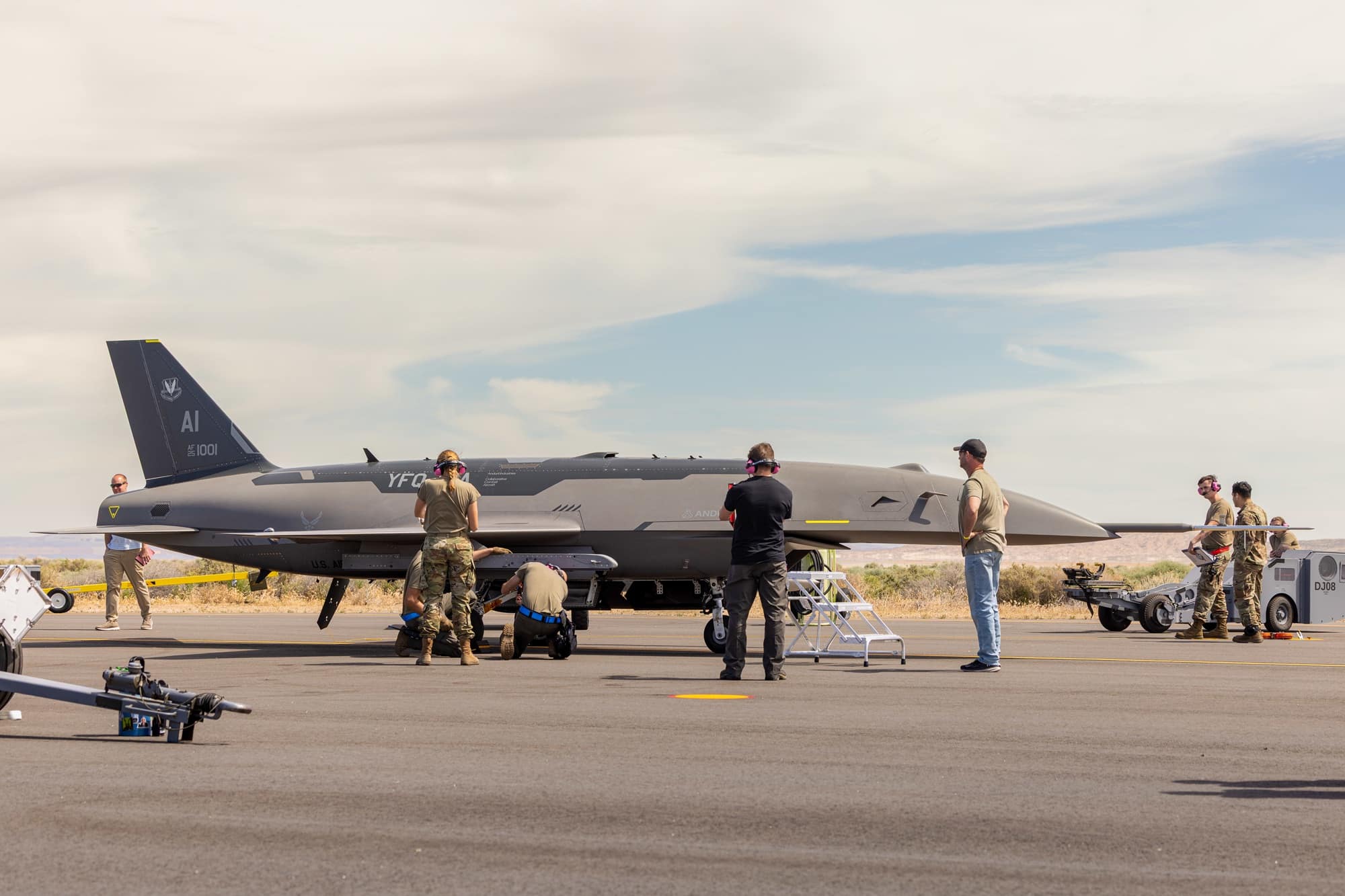
Additionally, the company explained that a ruggedized laptop with its Menace-T command, control, communications, and compute (C4) solution served as the core ground element for YFQ-44A flight operations during the exercise. This allowed to upload mission plans, initiate autonomous taxi and takeoff, task the aircraft while in flight, and manage post-flight data ingestion and checks.
According to the statement, the exercise simulated operations from a forward operating base, with the only equipment required being “two Pelican cases and a laptop,” referring to the Menace-T laptop. Moreover, the exercise also allowed to test the manpower required to sustain flight operations, with the maintainers notably trained in a matter of a few days.
— Anduril Industries (@anduriltech) April 16, 2026
The service explained that the EOU will develop the initial tactics, techniques and procedures needed to ensure CCAs are integrated in the fleet and tactically viable for future conflicts. This was also possible due to the Air Combat Command (ACC), which oversees the EOU, and the Air Force Materiel Command (AFMC), which oversees the 412th TW, working together to fast track the event, “enabling groundbreaking, hands-on experimentation by operators at a uniquely early stage of development.”
“The collaboration we saw in this exercise is the cornerstone of our acquisition transformation. By embedding the operators from the EOU with our acquisition professionals, we create a tight feedback loop that lets us trade operational risk with acquisition risk in real-time,” said Col. Timothy Helfrich, portfolio acquisition executive for fighters and advanced aircraft. “This isn’t just a test; it’s a demonstration of how we are adopting a more agile process. An 85% solution in the hands of a warfighter today is infinitely better than a 100% solution that never arrives.”
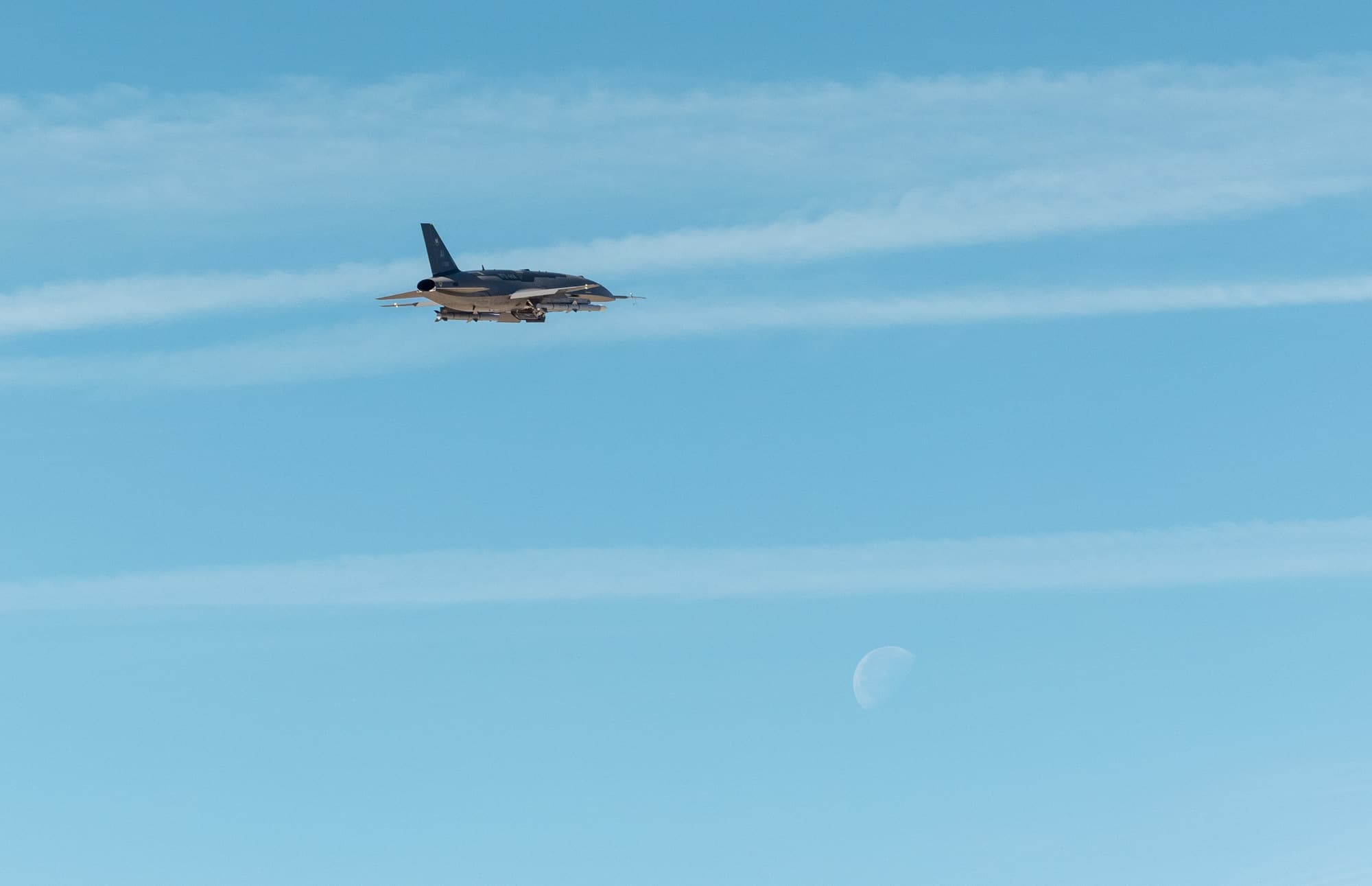
The EOU
The EOU was activated in June 2025 at Nellis Air Force Base, Nevada, to accelerate the introduction of Collaborative Combat Aircraft (CCA). The unit, which subordinated to Eglin AFB’s 53rd Wing, has operated as a detachment since 2023, before being elevated to a fully operational squadron equivalent, said the service in a press release.
At the time, the service explained that the activation of the EOU marks “a significant step forward in the Department of the Air Force’s focus to deliver substantial operational capability for Collaborative Combat Aircraft Increment 1 before the end of the decade.” This announcement also arrived shortly after the selection of Beale AFB, California, as the preferred location to host a CCA Aircraft Readiness Unit (ARU) and the start of the ground testing of the YFQ-42A and YFQ-44A in May 2025.
The Air Force further explained that the EOU will play a key role in the introduction of these uncrewed force multipliers, “providing a proving ground for testing and refining human-machine teaming concepts for CCA in realistic scenarios.” As part of its roles, the EOU will conduct live-fly testing to verify simulation results and optimize tactics, techniques and procedures.