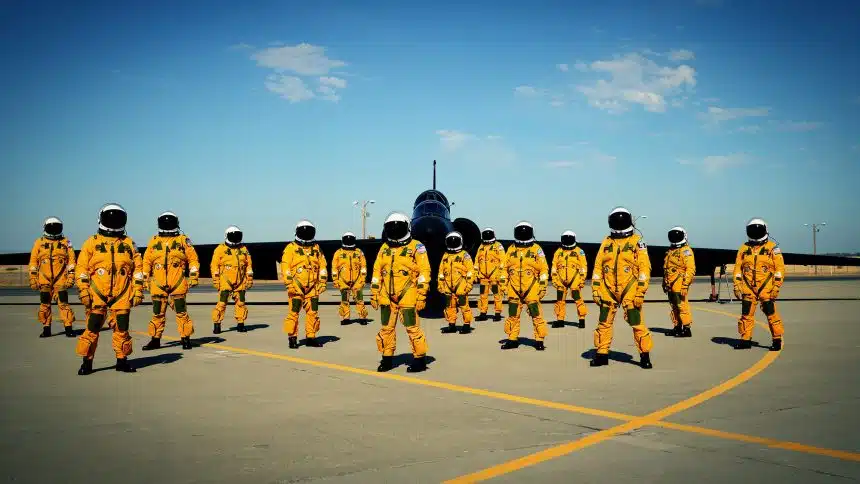
Despite being one of the oldest aircraft still flying in U.S. service, the U-2 remains relevant enough for Skunk Works to seek a qualified pilot in Palmdale.
Skunk Works, the legendary Lockheed Martin’s secretive advanced projects division, is hiring a U-2 pilot in Palmdale, California.
The job posting, that you can find here, calls for an onsite, full-time, first-shift position in Test Engineering for an experienced professional pilot, with a 4x10h schedule and possible relocation, and it is clearly framed as a test-oriented role rather than routine operational flying: according to the listing, the pilot would conduct engineering flight tests, production-acceptance flights, and flight-test support, help verify aircraft compliance and operational suitability, coordinate flight-operations efforts, approve cockpit configuration, and, if needed, perform demonstration flights for customers and government officials.
The ad, published on Apr. 6, 2026, says applicants must be no more than two years outside qualification on the U-2S Dragon Lady, hold a current FAA Class I or II medical, and possess either a suitable FAA Commercial Pilot certificate for multi-engine land and instrument airplane or an ATP (Airline Transport Pilot), while also being willing to travel, holding a valid U.S. passport, and arriving with an active Top Secret clearance.
Among the desired qualifications are 1,000 flight hours, graduation from a formal Test Pilot School, background in flight-test disciplines such as weapons, avionics and flight sciences, as well as instructor/training, communication, organizational and leadership or program-integration experience.
The posted compensation is a California salary range of $156,400 to $275,655 outside most major metro areas and $179,800 to $311,650 in most major metro areas, although the final offer depends on factors such as experience, training, skills, scope and business considerations; listed benefits include medical, dental, vision, life insurance, short- and long-term disability, flexible spending accounts, parental leave, paid time off, holidays, education assistance, and incentive-plan eligibility.
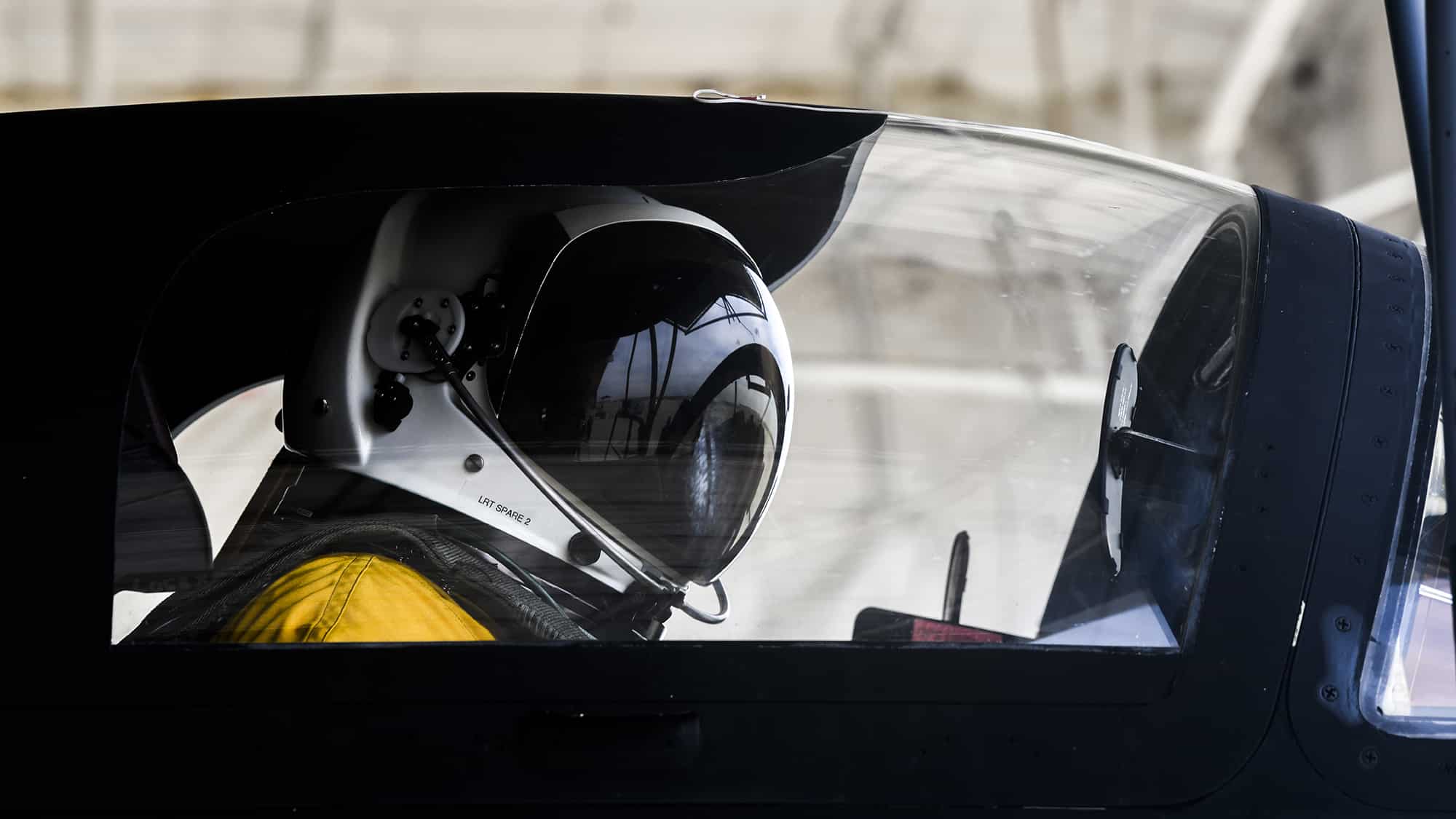
The emergence of the job posting is quite interesting, considering the iconic Dragon Lady was slated for retirement from U.S. Air Force service this year. However, while some U-2s have already been withdrawn from active service, the aircraft’s retirement date is far from settled, and the sundown of the type remains under intense congressional scrutiny.
In fact, U-2s are still flying active intelligence, surveillance, and reconnaissance (ISR) missions on a daily basis from forward operating locations, and there is little sign of that activity slowing down at least for now. USAF U-2s are home based at the 9th Reconnaissance Wing, Beale Air Force Base, California, but are rotated to operational detachments worldwide, including RAF Fairford, UK; Osan Air Base, South Korea, and RAF Akrotiri, Cyprus. The latter sustained damage from an Iranian kamikaze drone launched in retaliation for the U.S. and Israeli air strikes, last month.
In line with such continuous postponement of its retirement, in 2023 Lockheed Martin announced the first flight of the U-2 Avionics Tech Refresh (ATR), carried out by Skunk Works in partnership with the U.S. Air Force. The company said the flight tested an updated avionics suite, new cockpit displays and a mission computer designed to the Air Force’s open mission systems standard, with further testing planned to mature the software baseline before more mission systems were added.
More recently, BAE Systems was awarded a contract to support and sustain the U-2’s AN/ALQ-221 Advanced Defensive System (ADS), another sign that the aircraft is still receiving updates and meaningful attention rather than simply being allowed to age out quietly.
As for Palmdale, Plant 42 remains a hub for major activity involving the type, and the job posting seems to suggest Lockheed Martin expects the Dragon Lady to continue generating the kind of work that may require highly specialized pilot support for quite some time.
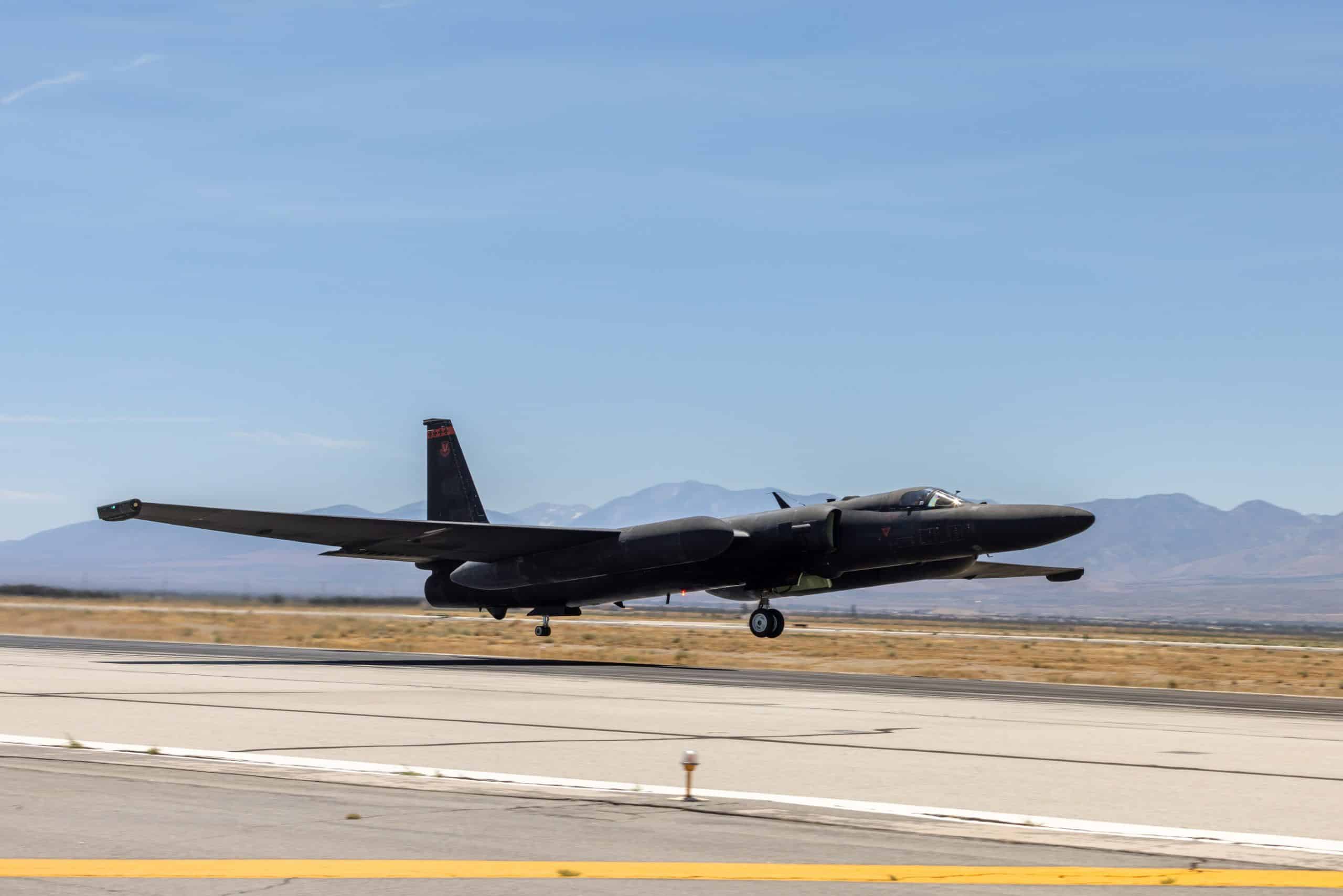
Eventually, it should not be forgotten that, beyond its operational role, the U-2 is still valued as a high-altitude testbed. Testing campaigns conducted over the last five years have leveraged the aircraft’s open architecture and its ability to integrate new technology quickly. The U-2 has been involved in containers and AI/ML experimentation, open-mission-systems integration, and gateway or data-sharing roles between different platforms. A Skunk Works pilot current on the U-2 would be useful if Lockheed is using the aircraft to trial payloads, communications systems, sensors, or battle-management concepts that may feed current and future programs.
Another (even more speculative) possibility is that Lockheed could employ a U-2 pilot as part of work on or around future classified ISR aircraft, using the Dragon Lady as a surrogate, a risk-reduction platform, or a bridge capability. With the RQ-180 spy drone slowly beginning to emerge from the shadows of black programs, there is a chance Skunk Works is maturing new manned or unmanned ISR concepts. In that context, having a U-2 pilot with a test background could make sense for comparative flying, sensor work, or manned-ISR experimentation.
Whatever, if you are interested and your profile fits the requirements, you’d better hurry: you have less than a month to apply, as the deadline is May 15, 2026.