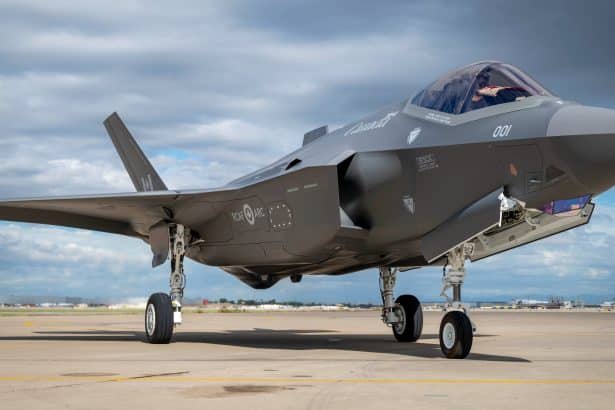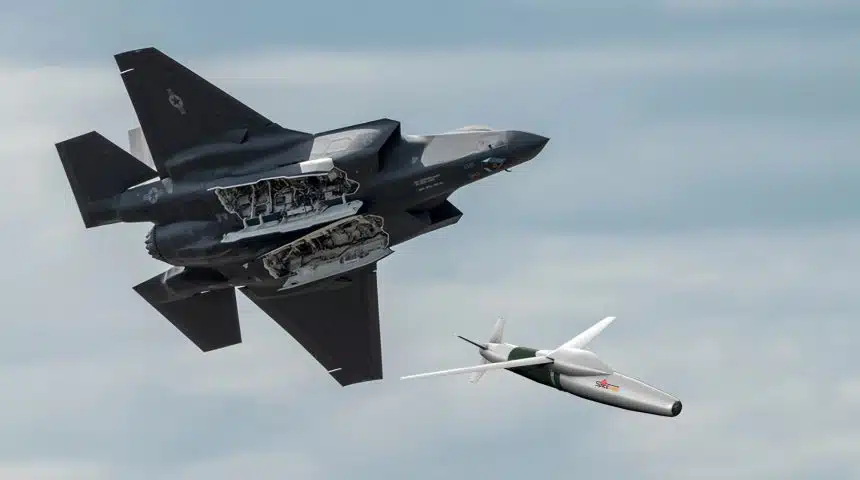
Rafael and Lockheed Martin are integrating the Israeli SPICE 1000 stand-off weapon on the F-35, potentially opening the door for the munition to be offered to other Lightning II operators.
Rafael Advanced Defense Systems has announced that it is integrating its SPICE 1000 air-to-surface munition on the F-35 Lightning II. The integration is being conducted jointly with Lockheed Martin at the company’s facilities in the United States and is expected to be completed over the next several months.
Following the integration, the weapon will be cleared for employment by the Israeli Air Force’s F-35I aircraft, providing them with a new long-range precision-strike capability. Rafael has also indicated that the Israeli integration could subsequently enable other F-35 operators to field the SPICE 1000.
AFA 2026: For the first time, Rafael’s SPICE 1000 is being integrated on the F-35
Rafael Advanced Defense Systems Ltd. is integrating its SPICE 1000 air-to-surface munition on the F-35 Adir fighter aircraft.
SPICE 1000 is an advanced air-to-surface munition capable of striking… pic.twitter.com/QOeNISGKFE
— Rafael Advanced Defense Systems (@RAFAELdefense) September 15, 2026
While the public announcement was made during the Air, Space & Cyber conference, the integration had already been disclosed, albeit in less detail, in the U.S. Department of War’s FY2027 F-35 Modernized Selected Acquisition Report (MSAR).The report, dated April 21, 2026 and cleared for publication in August, states that the integration of the Israel-unique Smart, Precise Impact, Cost-Effective 1000B (SPICE 1000B) was progressing, with a strategy to accelerate implementation through a process referred to as “SPICE Lite.”
On a related note, a recent DoD F-35 MSAR (from April 2026) notes that the “[i]ntegration of Israel-unique Smart, Precise Impact, Cost-Effective 1000B (SPICE 1000B) continues to progress with a strategy to accelerate the implementation via a SPICE Lite process.” https://t.co/ppnRQbVOsR pic.twitter.com/M5lNqobWs3
— Guy Plopsky (@GuyPlopsky) September 15, 2026
The report does not explain precisely what SPICE Lite entails, however it mentions that the weapon integration was already ongoing at the time. Notably, the next line of the document mentions that the work to integrate the Extended Range Tanks and Electronic Warfare Pod for the Israeli Air Force are also on-going.
A long-anticipated F-35I weapon integration
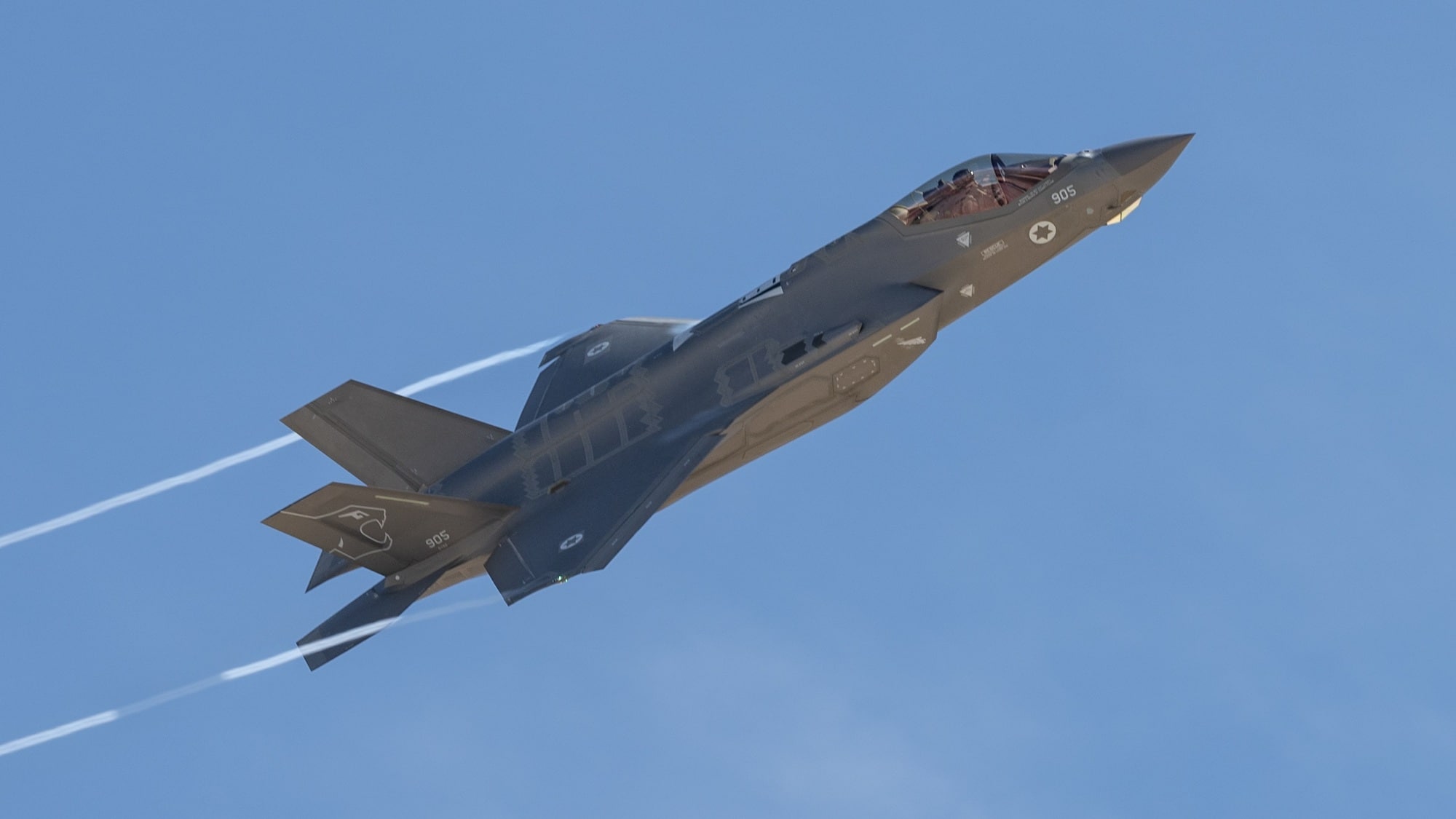
The integration of SPICE 1000 with the F-35 has been anticipated for years. Details about the activities, however, have been limited, and the F-35Is are known to have employed U.S. made weapons such as the GBU-31 JDAM and GBU-39 SDB as their primary air-to-ground ordnance.
Rafael’s SPICE (Smart, Precise Impact, Cost-Effective) family consists of electro-optically guided stand-off weapons designed to allow aircraft to attack targets from outside the engagement envelope of many air-defense systems. The SPICE 1000, as implied by the name, is the 1,000-pound-class member of the family.
According to Rafael and recent reporting, the weapon has a stated range of more than 120 kilometers (approximately 75 miles). The weapon uses an electro-optical seeker and scene-matching algorithms to identify and engage its target, providing a guidance capability that does not rely exclusively on GPS for terminal engagement.
The SPICE 1000 is equipped with deployable wings which allow to extend its range after release. The combination of navigation and guidance technologies allow the weapon to retain precision in environments where satellite-navigation signals may be degraded or unavailable.
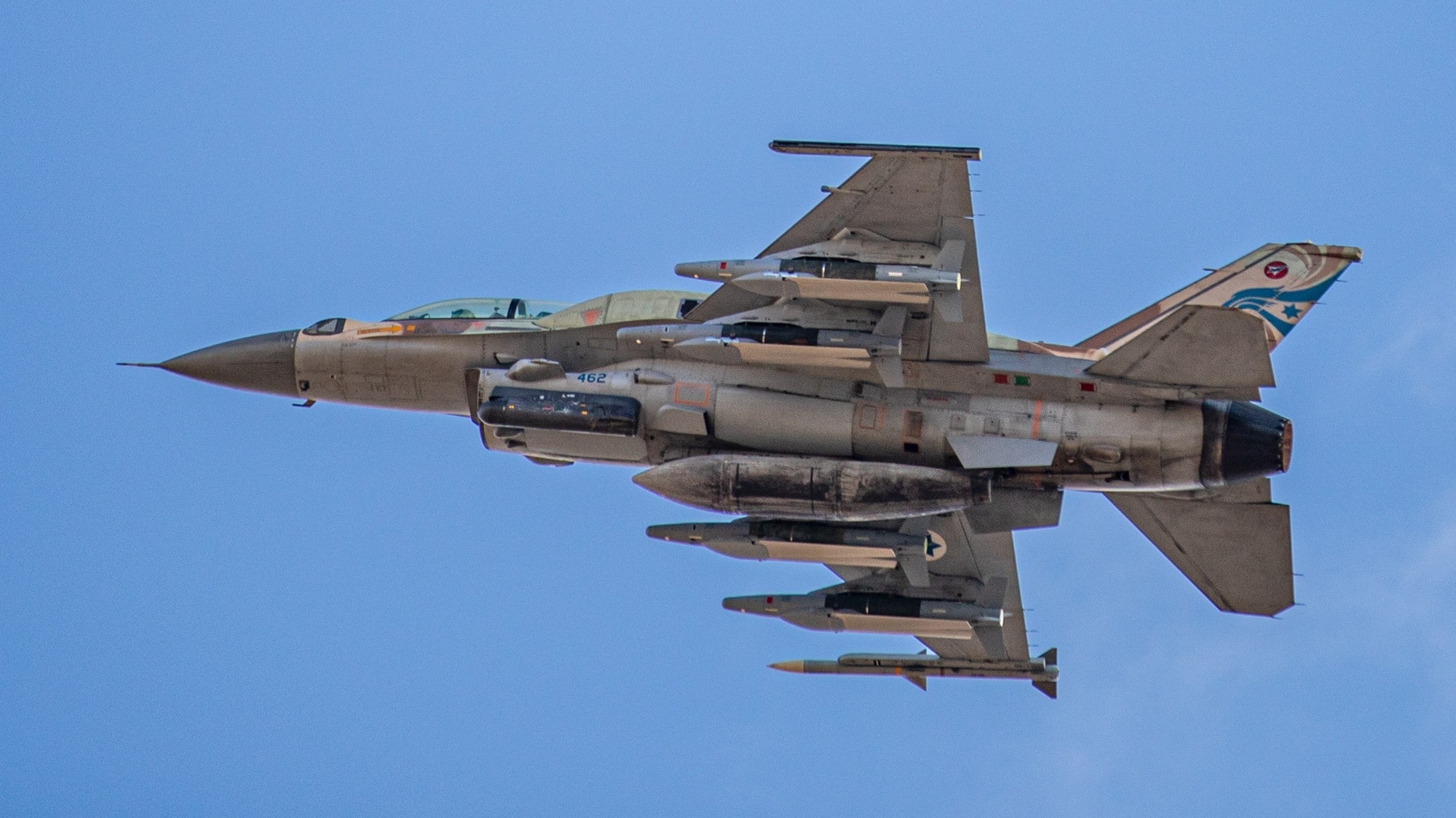
The company describes it as one of the Israeli Air Force’s primary precision weapons, employed from F-15 and F-16 fighter aircraft. The integration with the F-35 therefore would include the already operational Israeli stand-off munition in the fifth-generation fighter’s arsenal.
From F-15s and F-16s to the F-35I
The Israeli Air Force has operated the SPICE 1000 for years, with Rafael stating that the weapon has been operational since 2017. The F-35I Adir, meanwhile, has become one of the IAF’s principal platforms for penetrating and long-range strike missions.
Bringing the SPICE 1000 onto the Adir combines the weapon’s stand-off range with the F-35’s low-observable characteristics, sensors and mission systems. This is particularly relevant because the F-35’s ability to employ weapons internally is central to maintaining its low radar signature.
One of the more interesting details in the Pentagon report is the reference to the SPICE Lite process. While the document does not provide additional technical details on the process, it mentions the goal is to accelerate the implementation of the weapon.
This suggests that the current effort is focused on getting an operational SPICE 1000 capability onto Israeli F-35Is relatively quickly rather than waiting for a much broader future F-35 modernization cycle. This represents a big difference compared with U.S. and international F-35s, which will receive the majority of the new weapons with the upcoming Block 4 upgrade.
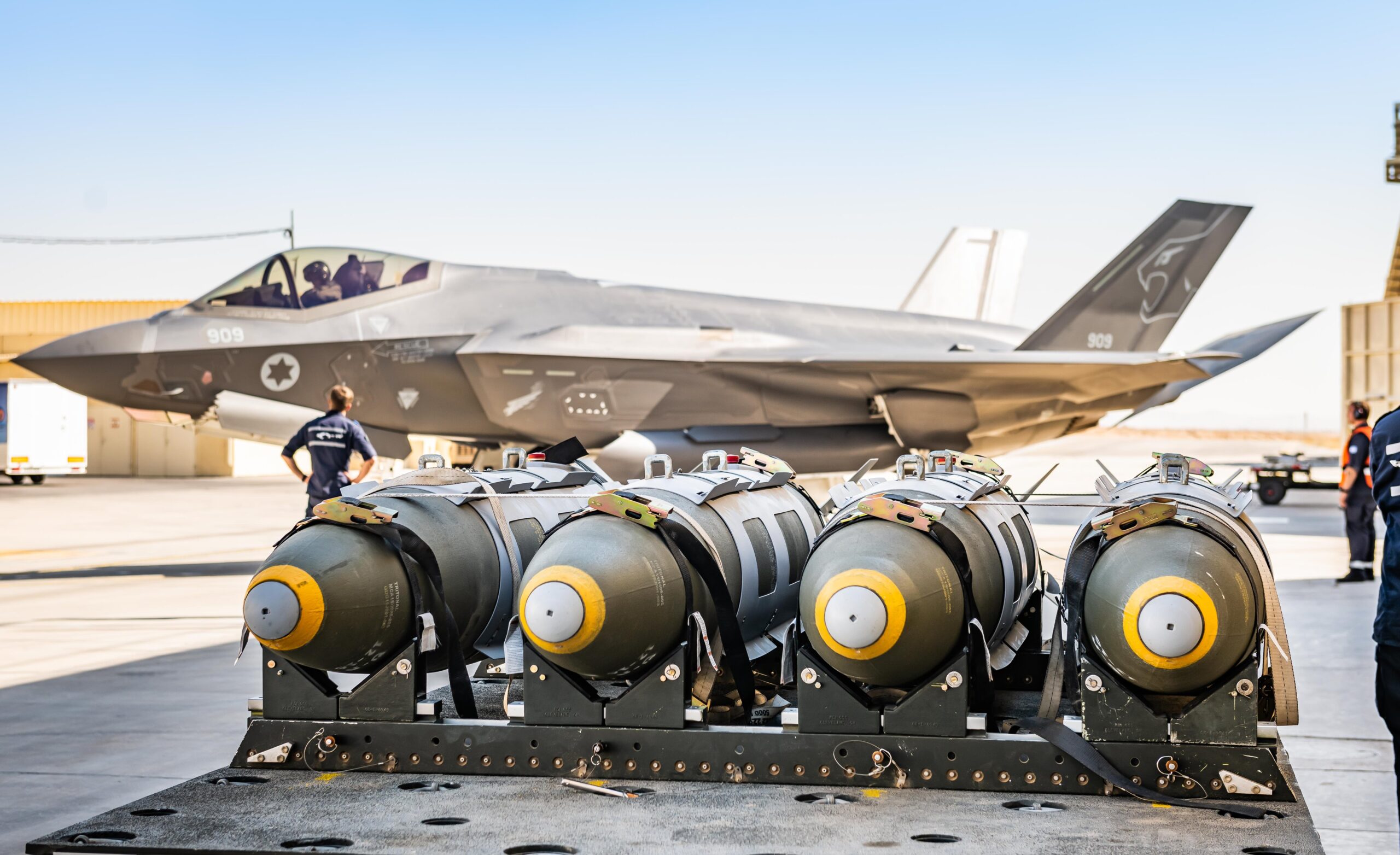
Anyway, while this is the current priority, the Israeli F-35I beneficiaries of the integration. In fact, according to Breaking Defense, Rafael explicitly says that, at a later stage, F-35 operators worldwide will be able to field SPICE 1000.
That would potentially expand the market for the weapon considerably. The F-35 is operated or being acquired by numerous countries, but weapons integration is tightly controlled because of the aircraft’s multinational development and certification framework.