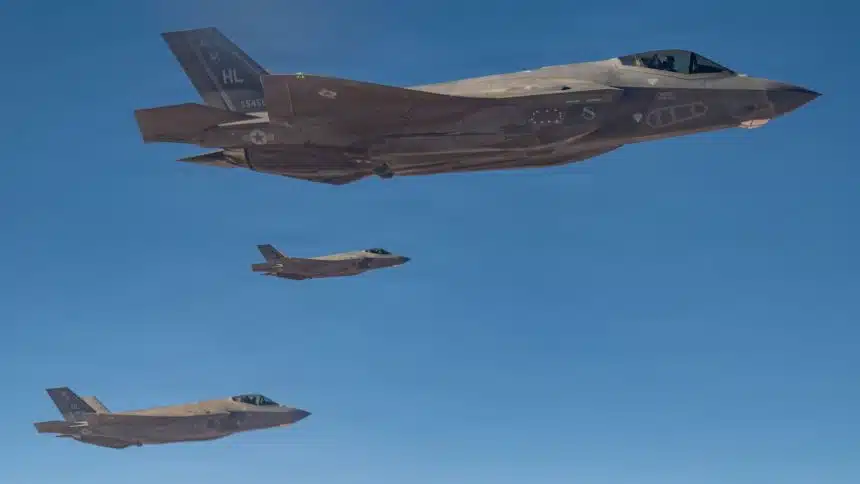
Subject to Congressional approval, the framework gives long-term certainty to the industry, helping stabilize production and supply chain while supporting improvements in aircraft availability rates.
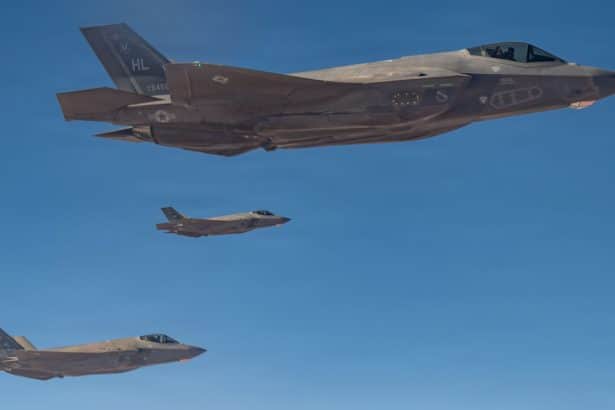
The U.S. Department of War and Lockheed Martin announced on Oct. 22, 2026 that they reached a framework agreement for ten years of F-35 production and long-term sustainment. The agreement includes at least 850 F-35 Lightning II for the U.S. military, as well as orders for international customers across Lots 21-30, at a continued production rate of 156 aircraft per year.
The agreement is not yet a formal procurement contract, and thus the number of the aircraft and pricing will have to be negotiated. Additionally, it is still subject to Congressional approval and funding.
The House passed its version of the FY2027 National Defense Authorization Act (NDAA) in July, but the Senate version remained pending as of October 23. Both versions contain provisions that would authorize multiyear F-35 procurement.
Both Lockheed Martin and the DoW explained that the framework agreement is intended to give the suppliers more predictable long-term demand signal. This allows them to plan production and invest in materials and manufacturing capacity.
.@LockheedMartin announces framework agreement for multiyear @thef35 production and sustainment to strengthen the supply chain, save billions in taxpayer dollars and improve fleet readiness.
— Lockheed Martin News (@LMNews) October 22, 2026
The framework covers Production Lots 21–30, maintaining a planned production rate of 156 aircraft annually and including initial spares, modification kits, and sustainment. The previous finalized production agreement, covering Lots 18 and 19, was completed in September 2025 and provided for up to 296 aircraft. However, Lockheed Martin reported on October 23, 2026, that production-contract negotiations for Lot 20 and subsequent lots remained ongoing.
The ten-year framework covers F-35 production Lots 21 to 30, maintaining a production rate of 156 aircraft per year and including spares, modification kits and sustainment, Lockheed said. The latest contract covered Production Lots 18 and 19 and was signed in September 2025, for a total of 296 F-35, while negotiations for Lot 20 are ongoing.
The DoW added that Lockheed Martin has also agreed to invest a minimum of “$7 billion in initiatives that support the F-35 Program […] in exchange for this decade-long commitment.” The company has so far delivered 1,375 jets worldwide, and the entire fleet has surpassed a million flight hours.
Stability and predictability in the supply chain
“This multiyear framework strengthens the way we can plan and invest in the F-35 enterprise,” said Lockheed Martin Chairman, President and CEO Jim Taiclet. “With the greater certainty that comes from the U.S. government’s transformative approach to F-35 production and sustainment, we can make the upfront investments needed to expand capacity, improve efficiency, and build a more resilient supply chain. That’s good for the taxpayer, good for our suppliers and, most importantly, good for the United States and its allies.”
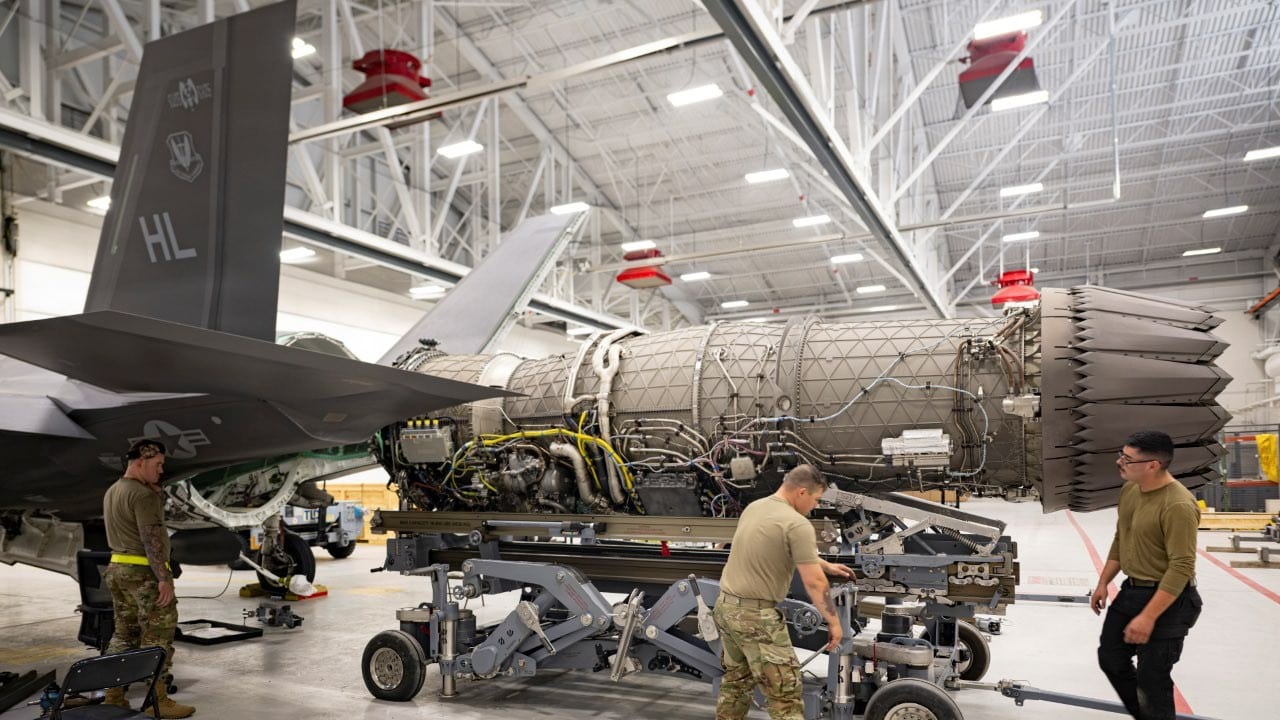
The DoW said the “execution of the agreement remains subject to Congressional authorization and appropriations.” Under Secretary of War for Acquisition and Sustainment Michael P. Duffey said the framework agreement has “fundamentally changed” U.S. arms procurement policy that helps the defense industrial base to produce at “speed and scale.”
“This agreement with Lockheed Martin proves it,” said Duffey. “By aligning financial incentives with actual performance, we are ensuring our warfighters are equipped with the lethal capabilities they need to fight and win.”
Lockheed Martin further added that long-term agreements eliminate the need for supplemental Congressional appropriations that usually cater for “obsolescence management and production tooling.” The multi-year buys would reduce the need for annual contract negotiations, increasing the production’s efficiency and with positive effects on unit cost that “translate into tangible taxpayer savings.”
For suppliers, predictable long-term demand could enable vendors to procure raw materials and critical parts in bulk. Lockheed Martin says this approach is intended to reduce logistics bottlenecks, improve the global spare part pool, shorten repair turnaround times and increase aircraft mission-capable rates.
“Our new multiyear framework gives suppliers stability to plan for the future and invest with confidence, improving readiness across the F-35 fleet,” said OJ Sanchez, president of Lockheed Martin Aeronautics. The DoW added that “integrating hardware requirements across the supply chain […] maximizes purchasing power and delivers true economies of scale.”
Multiyear buys and defense budgets
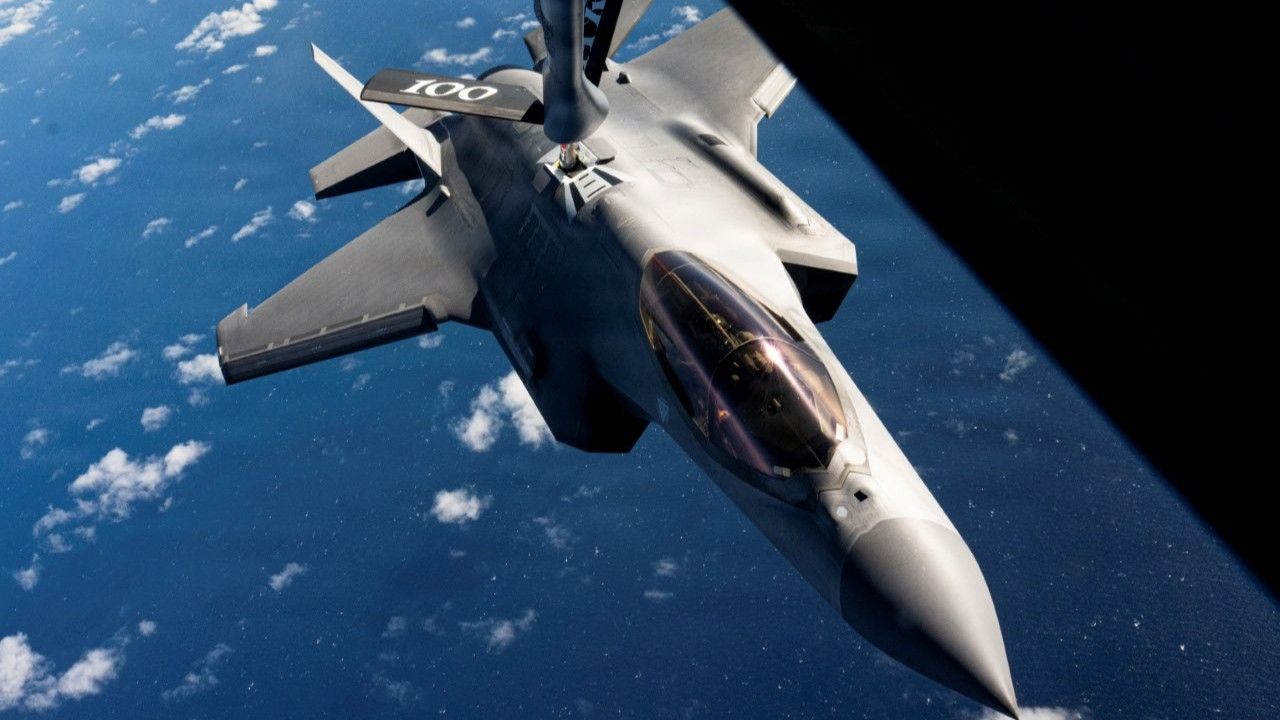
The ten-year framework agreement comes months after the draft 2027 National Defense Authorization Act (NDAA) – yet to be passed into law – recommended multiyear buys for the F-35 and F-15EX Eagle II, bypassing the annual contracting cycle for the reasons enumerated above. Earlier proposals by Senators also called for multiyear procurement of the two jets.
The Air Force submitted in October 2025 a separate report seeking 1,558 combat-coded jets, and hoped for a higher F-35 and F-15EX production output. More recently, in a force structure report submitted to Congress on Oct.16, 2026, the Air Force put the figure of combat-coded jets it needs by 2035 to 1,509, with F-35As making up about 40% of the fleet.
Air power. 💪
An F-35A Lightning II aircraft, assigned to the 422nd Test and Evaluation Squadron, returns to Nellis Air Force Base, Nevada, after a sortie.
The Nevada Test and Training Range provides the space and resources necessary for realistic, high-end training that enhances aircrew readiness.
— F-35 Lightning II Joint Program Office (@theF35JPO) October 23, 2026
The House and Senate versions of the 2027 defense bill allows the Pentagon to enter in multiyear deals. The House passed its bill in July, while Senate consideration remained pending as of Oct. 23, with a vote reportedly postponed until after the November midterm elections.
Thus, the framework agreement with Lockheed Martin cannot be converted into a formal contract until required authority is enacted and the associated funding is appropriated.