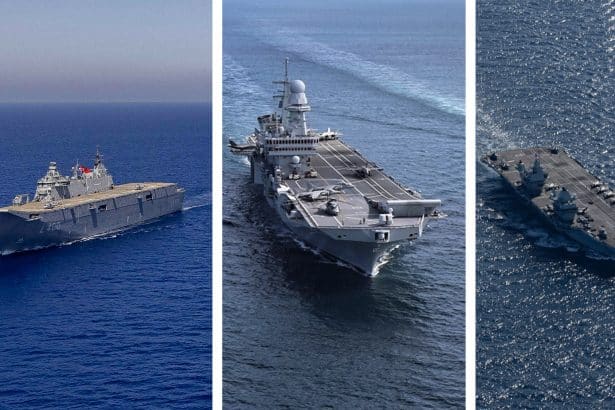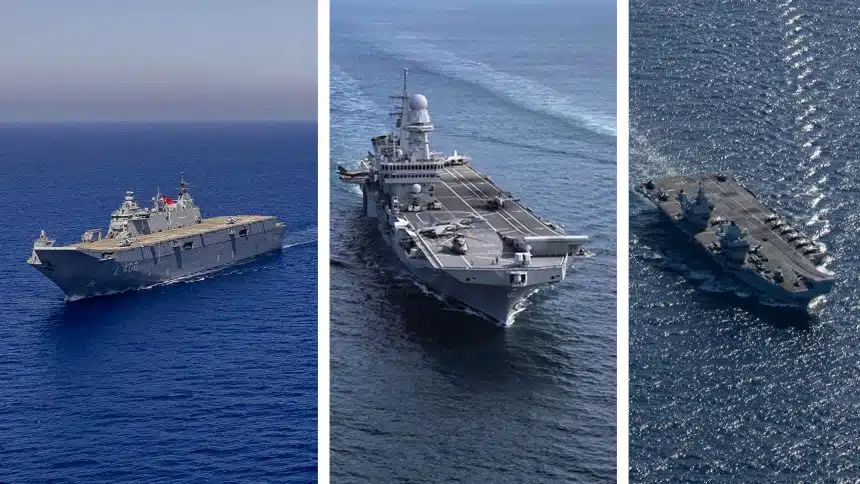
ITS Cavour, TCG Anadolu, and HMS Prince of Wales are leading the fourth and final element of NATO’s Neptune Strike enhanced vigilance activity for 2026, featuring more than 20 warships and 40 aircraft.
Running from Oct. 16 to Nov. 5, Neptune Strike 26-4 involves participation from 17 nations across the breadth of the NATO alliance. Those participating are Albania, Croatia, Finland, France, Germany, Greece, Italy, Lithuania, Norway, Poland, Romania, Slovakia, Slovenia, Spain, Türkiye, the United Kingdom and the United States.
Rather than a traditional exercise, Neptune Strike forms part of what NATO terms enhanced vigilance activity (eVA). While often including large scale training exercises under its umbrella, the primary aim of these activities is to demonstrate NATO’s presence and capability as a deterrent, mainly, to increasingly aggressive Russian activity against NATO nations and allies following the country’s full-scale invasion of Ukraine in 2022.
For Neptune Strike 26-4, individual maritime strike groups will operate across a wide range of NATO’s geographic area, running drills up in the High North as well as over the warmer waters of the Mediterranean.
HMS Prince of Wales, accompanied by an air wing of F-35B Lightning IIs, Type 45 destroyer HMS Dauntless and Royal Norwegian Navy frigate HNoMS Fridtjof Nansen, will hold down the fort in the Northern Atlantic and Arctic regions.
More jets. More capability. More combat power! ⚡
The F-35B Lightning jets are now embarking. https://t.co/leQXbpy0Pz
— UK Carrier Strike Group (@COMUKCSG) October 21, 2026
ITS Cavour and TCG Anadolu will both focus on the Mediterranean Sea, with Cavour carrying its own force of Italian F-35Bs and AV-8B Harrier IIs, and Anadolu providing a platform for amphibious forces and Bayraktar TB3 unmanned combat air vehicles (UCAVs).
#Albania #Turkey | Video footage shows a Turkish 🇹🇷 Bayraktar TB3 UCAV, probably INFAZ01 or INFAZ02, launching from the TCG Anadolu (L-400), Turkey’s drone-carrying amphibious assault ship, during operations off the Albanian 🇦🇱 coast near Vlorë.
As previously reported by Dunav Intel, Turkish 🇹🇷 unmanned aircraft have been operating in the Vlorë Bay area near the Pasha Liman naval base amid NATO military exercises.
Correction to the earlier report: the drones were identified as Bayraktar TB2s, but the footage indicates that the aircraft involved are instead Bayraktar TB3s, designed for operations from short-deck naval platforms such as the TCG Anadolu.
#Albania #Turkey #Ankara #Tirana #Vlore #TCGAnadolu #Bayraktar #TB2 #TB3 #Baykar #PashaLiman #Sazan #NavalBase #Military #MilitaryNews #Defence #DefenceNews #Balkans #OSINT #Maritime #Aviation #UAV @Defense_Talks @Defense785 @coltm4a1gr @S125Mpechora @giammaiot2 @Borrowed7Time
— Luka | Дунав Intel (@Lukai1861) October 20, 2026
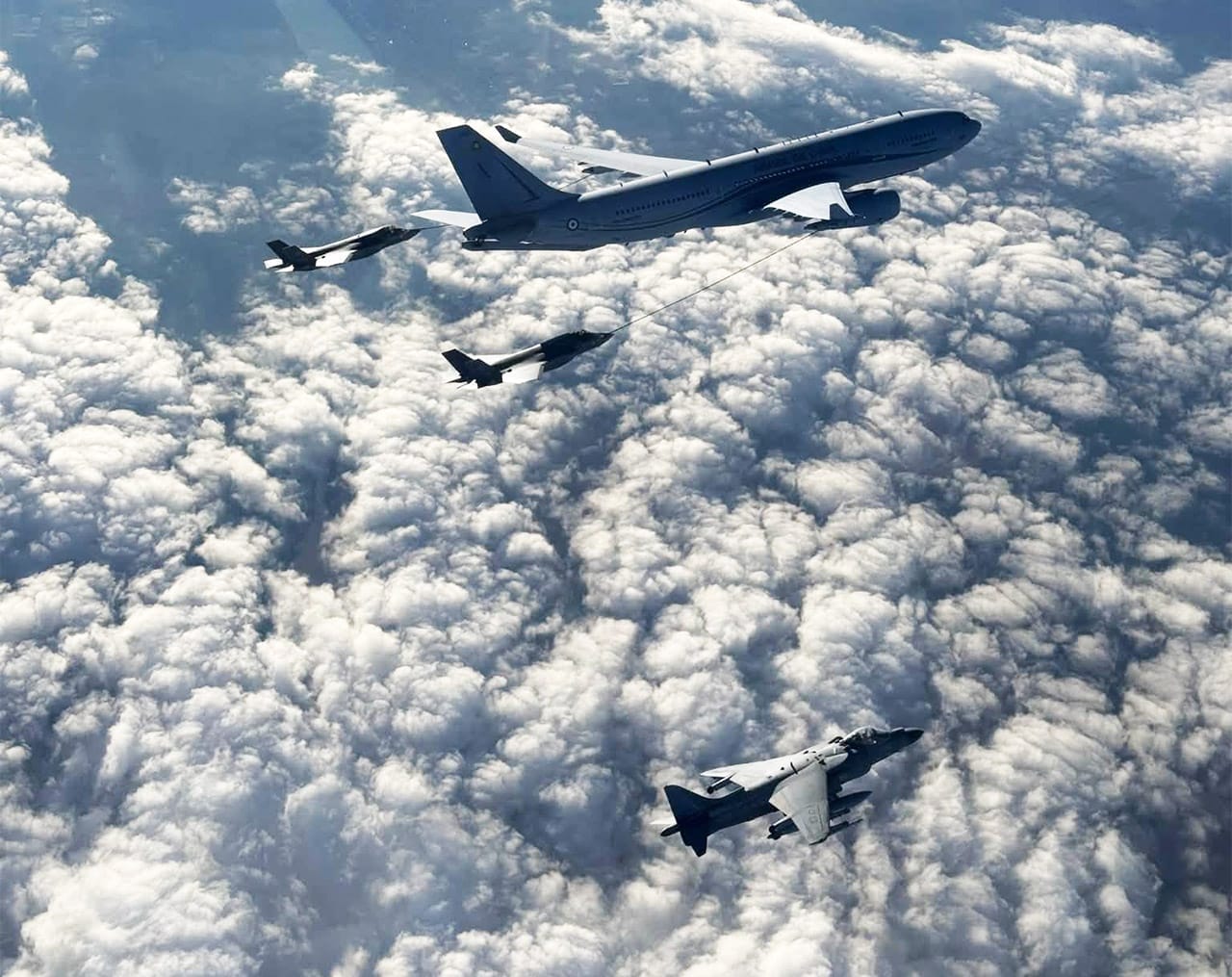
Cavour is backed by the Italian destroyer ITS Andrea Doria and frigate ITS Virginio Fasan. A330 MRTT refueling aircraft from the French Air and Space Force are providing aerial refueling for the carrier’s air wing, allowing longer range missions to be generated.
The eVA is coordinated by Naval Striking and Support Forces NATO (STRIKFORNATO), headquartered in Portugal and commanded ex officio by the commander of the U.S. Sixth Fleet, currently Vice Admiral Jeffrey T. Anderson.
“Our responsibility is to ensure that when the Alliance calls, our forces are ready to act together—with speed, precision, and purpose. That confidence is built through rigorous planning, close coordination with Allied nations and the daily work of turning national capabilities into an integrated NATO force,” said Rear Admiral Eduardo Guitian Crespo, STRIKFORNATO’s Deputy Chief of Staff for Operations.
“Neptune Strike is particularly relevant in today’s security environment. For our Allies, Neptune Strike provides reassurance backed by credible military capability. It demonstrates that NATO is ready to defend Allied territory and deny a potential adversary its objectives. Our purpose is to preserve peace—and we have the capability, cohesion and resolve to defend it,” said Admiral George Wikoff, Commander of Allied Joint Force Command (JFC) Naples.
3 @NATO Maritime Strike Groups:
@RoyalNavy @COMUKCSG, with @HMSPWLS, @HMSDauntless & HNOMS Fridtjof Nansen
@ItalianNavy Carrier Strike Group, with ITS Cavour, ITS Andrea Doria & ITS Carlo Margottini
Turkish Expeditionary Strike Group, with TCG Anadolu, TCG Gaziantep, & TCG Gur
— Dr Phil Weir (@navalhistorian) October 19, 2026
While Neptune Strike is lacking the presence of a U.S. Navy carrier strike group (CSG), with the impact to availability of these potent task groups by the U.S.-Iran war now well noted, the ability of Europe to generate three of its own, independent, maritime strike groups led by ships capable of operating fixed wing aircraft is to be particularly noted.
Although, individually, none of these task groups can match the sheer capability or endurance of a U.S. carrier group, it is never certain – particularly in the modern political landscape – how many, if any, of these groups would be allocated to NATO’s home turf in Europe when the time came.