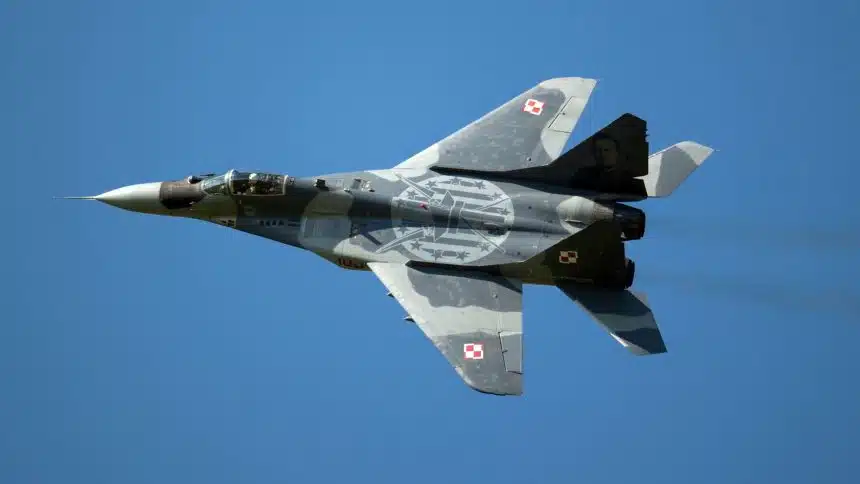
Poland says the transfer of its remaining MiG-29 fighters to Ukraine remains on hold pending the finalization of a reciprocal agreement for the transfer of Ukrainian drone technology.
Five months after Poland confirmed the will to transfer its remaining 14 MiG-29 Fulcrum fighters to Ukraine, the country confirmed the plan is still on hold. In fact, Warsaw has conditioned the donation on sealing a drone technology transfer agreement, which is still pending.
Poland’s deputy defense minister Cezary Tomczyk told Radio Zet, according to TVP World, that the transfer is yet to take place since the deal has not yet been finalized. The agreement would allow Poland to receive Ukrainian UAV technology that Kyiv successfully developed and employed against Russia during the course of the war.
“We have not transferred the MiGs to Ukraine,” said Tomczyk. “We agreed with the Ukrainian side on a transfer of technology. If this matter is agreed, then the issue of the fighters will end successfully.”
Polish defense observers have also backed their government, saying the Ukrainian side too needs to reciprocate with their defense resources for a mutually beneficial military cooperation. This exchange between the two countries is not new, as the transfer of technology was a condition agreed since the beginning for the transfer of the MiG-29s.
It must be noted that Poland has already transferred a number of MiG-29s in the past, as confirmed by former Minister of National Defense Mariusz Błaszczak. In fact, Poland transferred to Ukraine by May 2023 a total of 10 MiG-29s, which increased to 14 by the end of the year.
Polska wstrzymuje MiG-i dla Ukrainy. Wiceszef Ministerstwa Obrony Narodowej Cezary Tomczyk potwierdził, że obecny rząd nie przekazał Ukrainie myśliwców MiG-29.
Mimo wcześniejszych zapowiedzi i sporów z Pałacem Prezydenckim – samoloty nadal stoją u nas. Warunkiem przekazania… pic.twitter.com/aMke2rVfkr
— Służby w akcji (@Sluzby_w_akcji) June 15, 2026
No drone tech, no MiG-29s
TVP World further quoted Tomczyk, who explained: “A relationship of solidarity must be a two-way relationship. Ukrainians are the best in drones of all the countries with which we have positive relations.”
Rzeczpospolita additionally attributed this statement to Tomczyk: “Dialogue between Poland and Ukraine is ongoing. The Poles have made it clear: as we build our own drone capabilities, we would also like to be able to use those Ukrainian capabilities. Of course, we will transfer the equipment to Ukraine if this matter is finalized. Nothing has changed in this matter; the matter has not been finalized.”
Any immediate reason for the Ukrainian side to delay the drone technology transfer agreement remains unclear at this point. However, Ukrainian reports from Dec. 12, 2025, quoted Kyiv’s ambassador to Warsaw, Vasyl Bodnar, who confirmed the two countries were working on sending battle-tested Ukrainian drone technology to Poland in exchange for the MiG-29s.
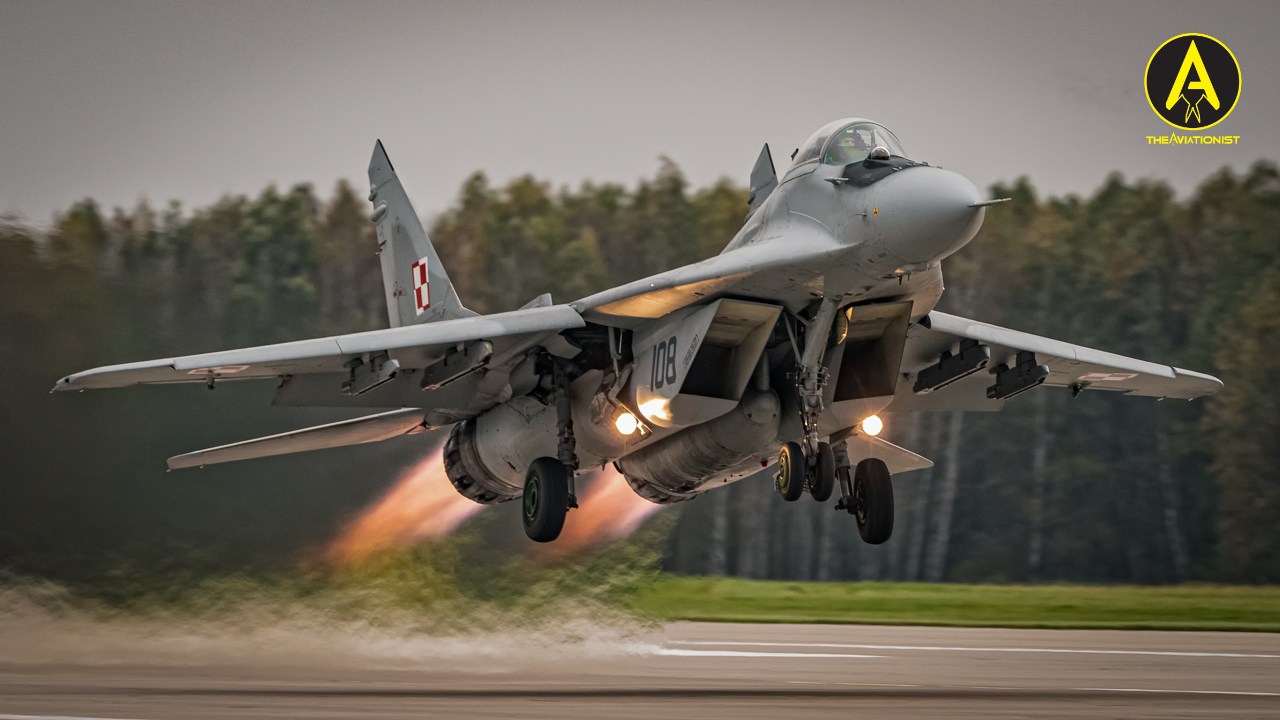
Tomczyk also revealed that Poland was working on transferring 6 to 8 MiG-29s out of the remaining fleet of 14 aircraft. Poland initially said that the Polish Air Force would not face any capability gaps after transferring the fighters due to the imminent arrival of F-35As – with the first three delivered in country in May 2026 – and FA-50PLs, which would more than make up for the MiG-29’s role.
For Ukraine, the MiG-29s can be immediately thrown into operations without requiring new training for the pilots and ground crews, given their experience operating the Soviet-era jet for years. According to the World Air Forces 2026 report, Ukraine operates a total of 45 MiG-29s, which include ex-Polish and ex-Slovakian jets.
W tej spokojnej i niezwykle chwili, którą tym razem to… ja mogłem wykreować, gdzie harmonia światła i przestrzeni pozwalała dostrzec w lotnictwie nie tylko technikę… lecz także subtelne piękno ulotnych momentów ✨✈️#gawronsky #MiG29 #AviationPhotography #PolishAirForce pic.twitter.com/7uZDbxHtIU
— gawronsky.com (@m_gawronski) December 2, 2025
Poland’s remaining 14 MiG-29s are split into 11 single-seaters and three twin-seat jets. Before the start of the war in February 2022, the Polish Air Force (PolAF) operated 28 airframes.
Following the transfer, the aircraft will fly together with Ukraine’s fleet of F-16AMs, Mirage 2000-5Fs, Su-24 Fencers, Su-25s and Su-27s. Kyiv has also inked a Letter of Intent with France to potentially buy up to 100 Dassault Rafale jets, and signed on for 36 Saab JAS39 Gripens with Sweden.
Ukrainian drone technology
Due to the ongoing war, Poland has seen Russian drone incursions, which triggered the launch of the Operation Eastern Sentry mission by NATO. The alliance’s involvement recently saw the scramble of British Eurofighter Typhoons, Romanian F-16s and French Rafales to deal with a number of unidentified drones, which also required the fighters to open fire.
As Poland continues its ongoing modernization of the military, a focus is also being put on the Counter-Unmanned Aerial Systems (C-UAS) defenses. Ukraine is currently considered as the top expert in this sector due to the experience it has collected since 2022.
🇫🇷 In Paris at Eurosatory 2026, the Ukrainian defense industry and defense companies demonstrated the latest long-range weapons of Ukrainian production.
Among the products presented:
– UAV-290 rocket UAV;
– ST-1000 SEA TRIDENT underwater drone;
– FP-7 and FP-9 ballistic… pic.twitter.com/naqEXkRN4U
— Angelica Shalagina🇺🇦 (@angelshalagina) June 15, 2026
Ukraine’s response to the Russian invasion spawned a variety of cost-effective drones for a range of military uses. These include counter-drone systems like interceptor UAVs; small first-person view battlefield attack drones; tactical surveillance drones and ‘bomber’ drones; and simple long-range strike UAVs that have hit Russian air bases, radar sites and energy infrastructure.
The country also has a reasonably effective fleet of Unmanned Surface Vessels (USV) that strike Russian Black Sea Fleet (VSF) ships and even shoot down Russian fighters with repurposed air-to-air missiles. These unmanned systems have been developed under prohibitive Russian standoff strikes on the Ukrainian defense industry and sophisticated electronic warfare jamming.
The effort allowed Kyiv to acquire a wealth of experience in the engineering, electromagnetic spectrum and tactical domains of drone warfare. Many countries are now looking at the progress that Ukraine made in this sector, looking to learn from their experience and even buy their drones.
A recent instance of this was seen during the war in the Middle East, following the Iranian retaliatory attacks against U.S. targets in the neighboring countries. This led regional militaries to procure some Ukrainian counter-drone systems, as well as requesting the help of Ukrainian advisors to improve the defensive measures.