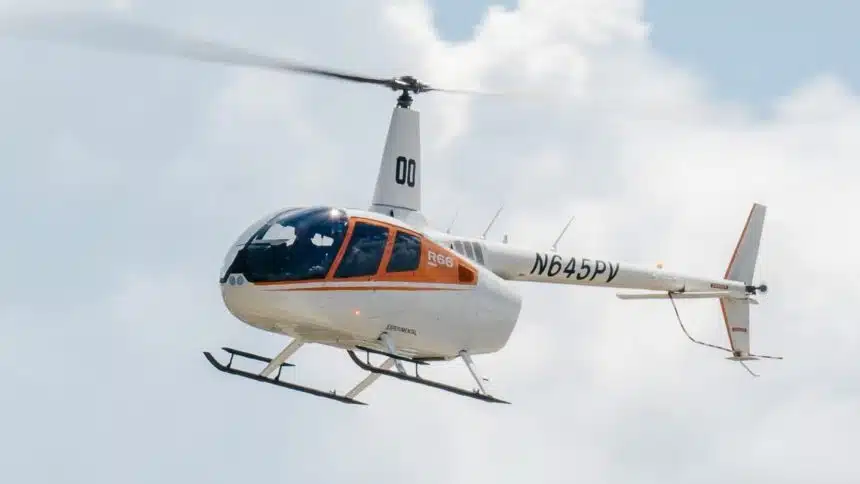
The U.S. Army M1 Support Services to train new pilots as part of the Flight School Next program, with the Robinson R66 helicopter replacing the UH-72 Lakota.
The U.S. Army announced on Aug. 13, 2026, the selection of M1 Support Services for the Flight School Next program which will take over the training of new helicopter pilots. As part of M1’s proposal, the Robinson R66 helicopter will replace the UH-72 Lakota currently used by the service for this role.
The helicopter is already being used by the U.S. Army for the Part 141 Initial Entry Rotary Wing (IERW) demonstration in Marianna, Florida, as has also been introduced into the U.S. Navy’s Contractor Operated Pilot Training – Rotary (COPT-R) program. According to Robison, in press release published last year, the R66 received the designation TH-66 SAGE.
“We are honored to be entrusted with this vital mission,” said George Krivo, Chairman and CEO of M1. “M1 will deliver a fully integrated, innovation rich training solution designed to develop more proficient Army Aviators on time and on budget.”
The Army says the firm-fixed-price, indefinite-delivery/indefinite-quantity contract has a combined cumulative total face value of $10 billion and a potential period of performance of up to 26 years. The new training program will use a contractor-owned, contractor-operated solution with commercially available services and equipment.
“Flight School Next delivers a critical improvement in our Initial Entry Rotary Wing Training model. Simply put, it delivers new military helicopter pilots with far better foundational skills,” said Maj. Gen. Clair A. Gill, commanding general of the U.S. Army Aviation Center of Excellence. “The fact that it delivers this increased capability at a significant long-term savings to our Army is a great added benefit.”
The new training program will increase the pilot output from the current 1,250 aviators trained annually to up to 1,500. The service explains it will incorporate industry best practices and advanced technologies to increase training efficiency, accountability and throughput while preserving the quality and professionalism expected of Army aviators.
“By partnering with industry and leveraging a streamlined aircraft fleet and fully integrated modern training system, Flight School Next ensures we will continue producing highly capable aviators prepared to dominate the future fight,” added Maj. Gen. Gill.
Flight School Next
The U.S. Army released a final call for solutions for the Flight School Next (FSN) program in December 2025, as part of the Army Aviation Training Commercial Solutions Opening (CSO). FSN will shape the future of the Initial Entry Rotary Wing (IERW) Training Program at Fort Rucker, Alabama, where all Army’s helicopter pilots are trained.
In the notice, the service said it is seeking for the first time “a Contractor-Owned, Contractor-Operated (COCO) solution using commercially available services and equipment on a single contract to provide annual training for 900 -1500 rotary wing pilots.” Notably, the contractor will be required “to train pilots to a U.S. Army standard equivalent to the Federal Aviation Administration’s (FAA) commercial helicopter pilot certification, including single engine aircraft, parts, maintenance, instructors (both academic and flight), and simulation (if required).”
The request is not casual, as the service intends “to increase the proficiency of U.S. Army aviators using commercially available equipment and instruction practices.” The pilots, upon graduation, will need to “be proficient with terrain flight, terrain flight navigation, and tactical flight mission planning, and familiar with multi-aircraft operations and night operations,” and “prepared for advanced aircraft training in the AH-64E, UH-60M, CH-47F, C-12U and the MV-75.”
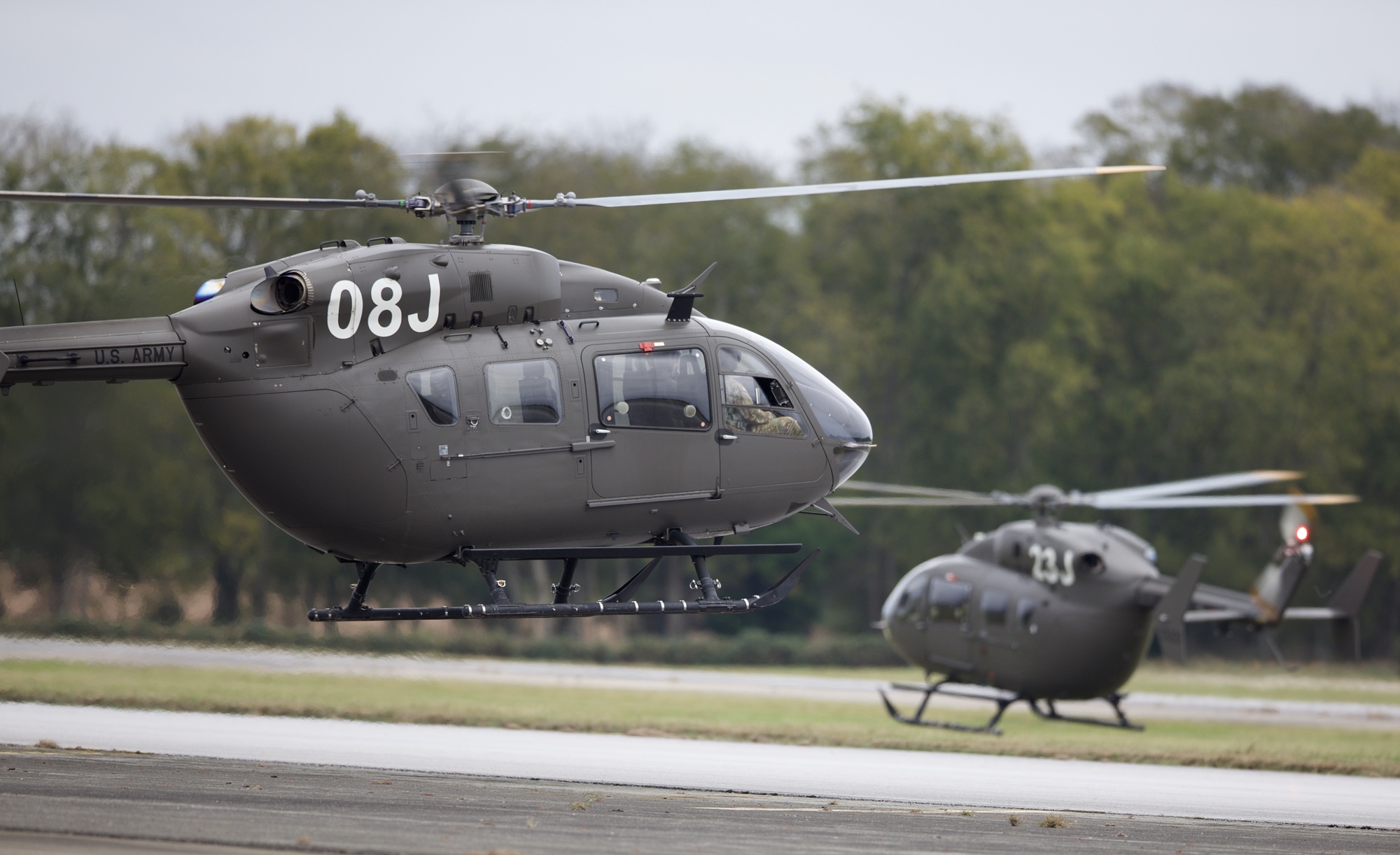
The new helicopter will replace the Airbus UH-72 Lakota, which became the primary training aircraft at Fort Rucker in 2015 and in December 2025 surpassed one million flight hours supporting the IERW training program. Initially, the Army decided to move from a single-engine trainer – the Bell TH-67 Creek – to a modern, twin-engine aircraft that more closely resembles the flight characteristics of an operational aircraft.
Now, Army officials said the Lakota is too advanced and too expensive for the training role, attributing this in part to its dual-engine design. Airbus however refuted the Army’s comments.
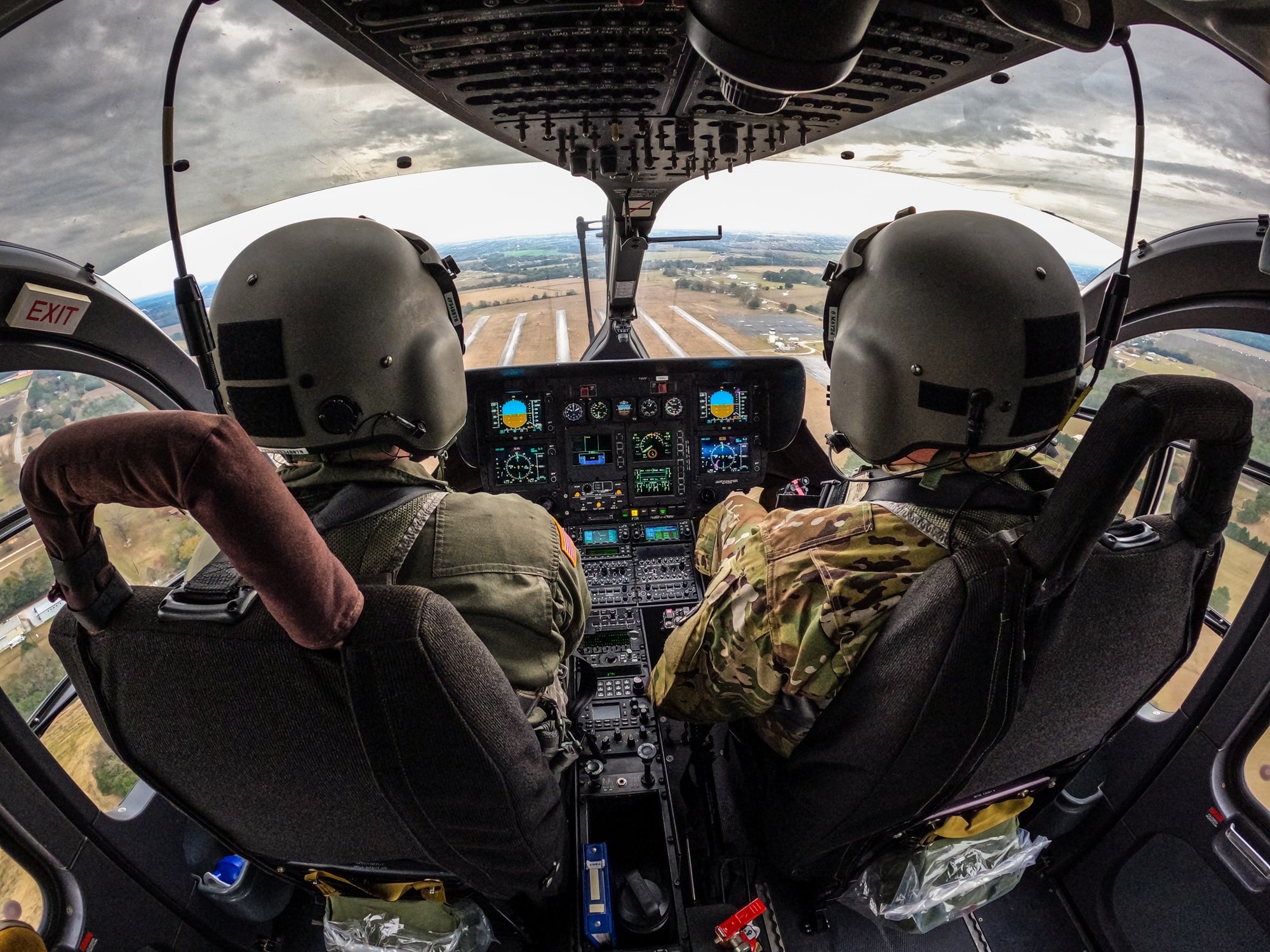
Anyway, the call for solutions now mentions among the first requirements that the new helicopter needs to be a single engine design. The helicopter will need to accommodate a flying student pilot, an observing student pilot and an instructor, as well as be able to support night operations, with Night Vision Google (NVG) being a desired but not mandatory requirement.
Among the requirements are also with Mode S Transponder and Automatic Dependent Surveillance-Broadcast (ADS-B) In and Out, and UHF and VHF radios.
M1 Support Services’ proposal
M1 Support Services took part in the competition as prime contractor in partnership with Robinson Helicopters. M1 is already working within the Army’s training, as it provides flight training, simulation and maintenance for AH-64, UH-60, CH-47 and UH-72 helicopters, as well as the Air Force’s TH-1s.
Their solution for Flight School Next is based on the Robinson R66 helicopter, the company’s first turbine helicopter based upon the piston-engined R44. In production since 2011, the helicopter saw wide success with over 1,500 R66s in service worldwide.
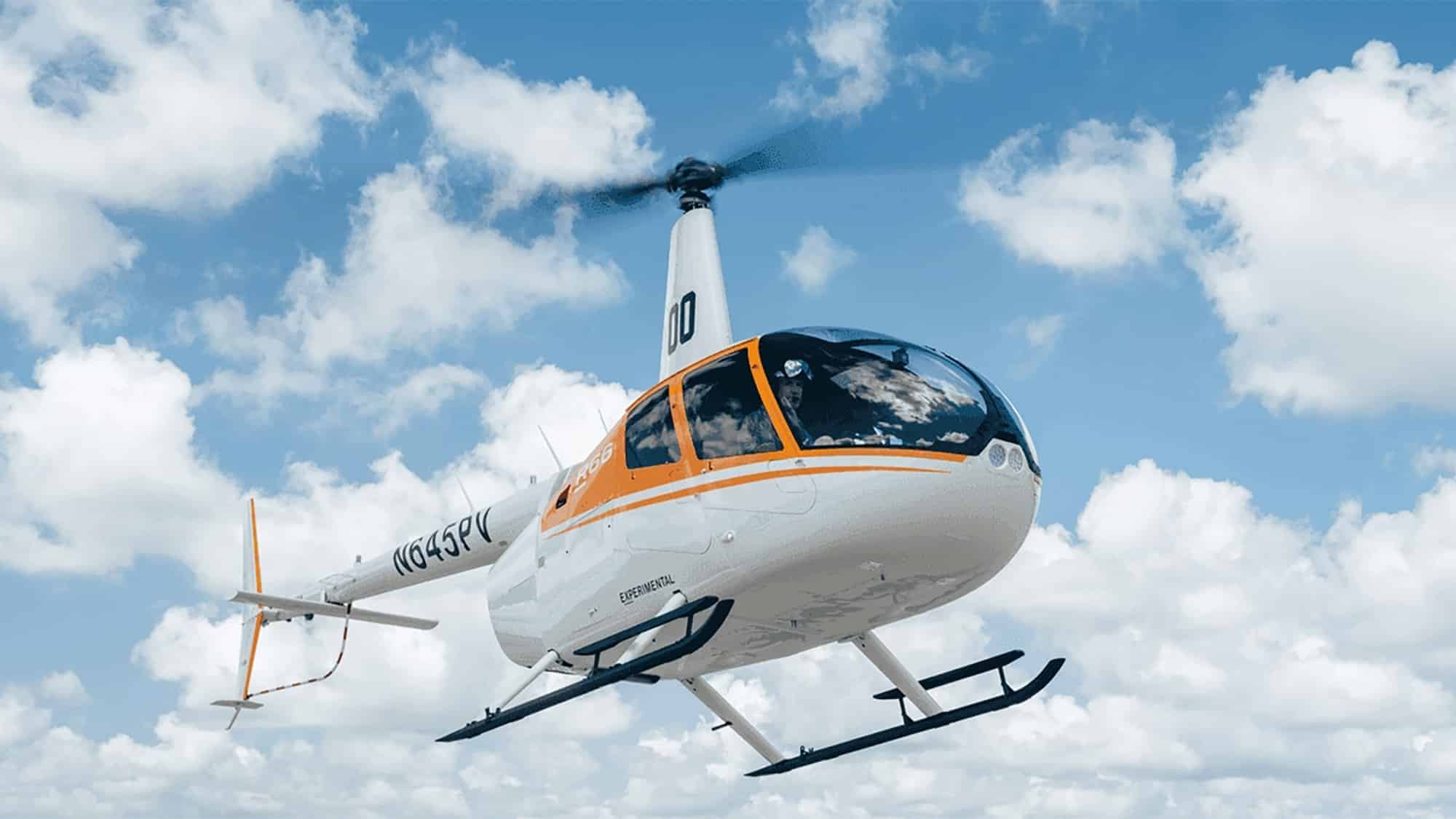
“More than 1,900 Robinson helicopters are used for civil and military flight training programs worldwide,” said earlier this year Lt. Gen. Doug Gabram, U.S. Army (Retired), M1 Strategic Advisor. “Safe, rugged, and reliable, it’s the perfect training aircraft for the Army and offers lower operating costs than any competitor.”
“In addition to R66 helicopters, our holistic solution for Flight School Next features innovative training and simulation technologies that are truly transformative,” added George Krivo, CEO of M1 Support Services. “M1 will provide high-quality pilot training at a more affordable cost for our partners.”
In the latest press release, following the selection, M1 described its proposal, called Flight School First, as “a comprehensive training and simulation ecosystem, integrating an AI enabled adaptive learning environment, advanced simulation platforms, immersive virtual training, proficiency based instruction, and safe, reliable R66 helicopters.”
M1 and Robinson highlight an “ideal balance of safety, performance, and affordability” with this helicopter. Among the features are a full glass cockpit with NVG compatibility and integrated 4k cockpit camera for debriefing students.