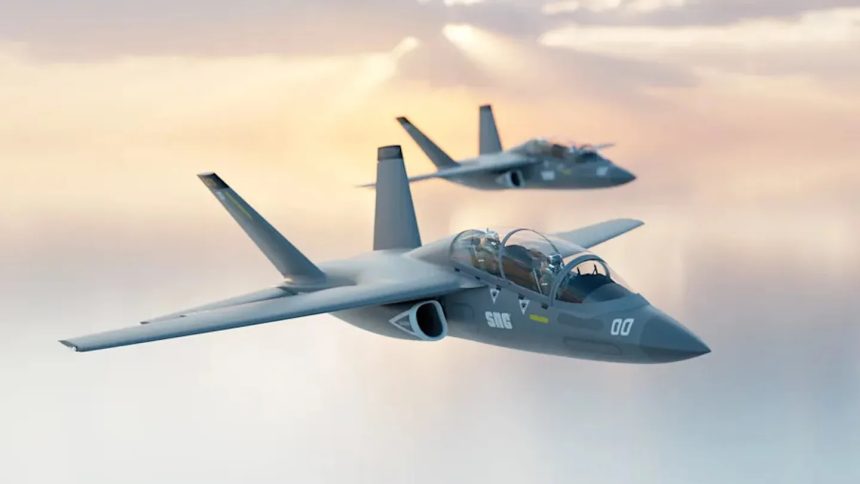
SNC decided to not bid for the U.S. Navy’s UJTS program, leaving the Textron/Leonardo team with the M-346N as the only competitor for the replacement of the T-45 Goshawk.
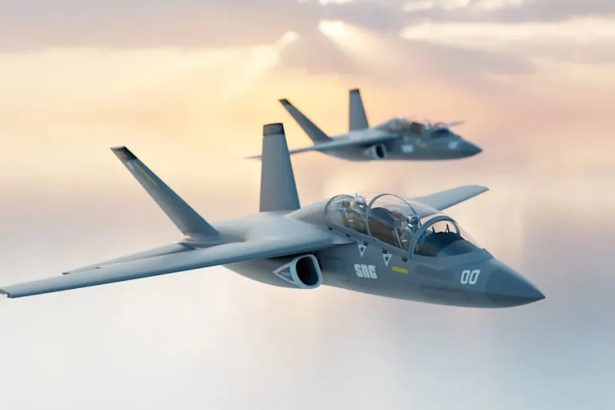
A few days after the deadline for bids for the U.S. Navy’s Undergraduate Jet Training System (UJTS), Sierra Nevada Corporation (SNC) has confirmed that it is no longer participating in the competition. The news, first reported by Breaking Defense, leaves now the Textron Aviation Defense/Leonardo team and their Beechcraft M-346N as the only remaining competitor for the replacement of the T-45 Goshawk.
According to a statement published by Breaking Defense, SNC said it “could not responsibly bid the UJTS program under the current contract structure.” However, the company also added that it remains “committed to naval jet training and stand ready to re-engage if the approach is revisited.”
The publication also obtained confirmation that did submit its offering to the Navy. SNC and the Textron/Leonardo team were the only two competitors left in the run for the Navy’s new jet trainer after others pulled out earlier this year.
EXCLUSIVE: SNC pulls out of Navy’s trainer jet competition https://t.co/y75tLZGAJY
— Breaking Defense (@BreakingDefense) November 3, 2026
Lockheed Martin was the first to leave the UJTS competition in April 2026. The company was proposing a modified variant of the jet trainer it produces with Korea Aerospace Industries, called the TF-50N.
In June, Boeing similarly announced that it would not bid for UJTS. The company said it determined that its T-7A Red Hawk did not meet the Navy’s requirements and informed the service it would not take part in the competition.
The last in chronological order was Northrop Grumman, which confirmed the decision in September. In February, the company partnered with SNC to offer the latter’s Freedom jet trainer, a clean-sheet design unveiled in August 2025.
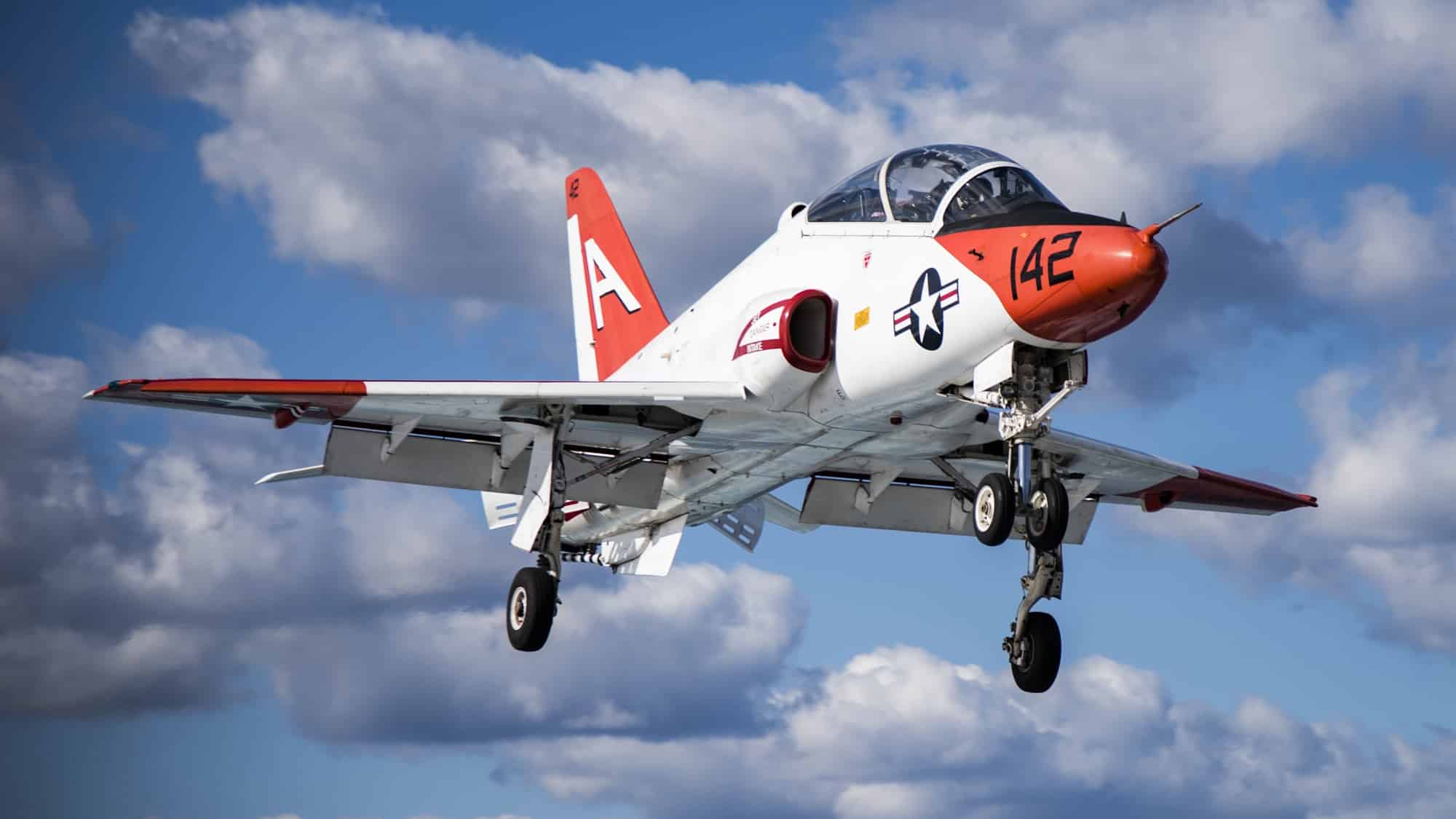
The Navy is now planning to award the UJTS procurement contract in the fourth quarter of Fiscal Year 2027 (4QFY2027). The award was initially planned for March 2027, and later shifted to July, before the latest change.
Freedom Trainer
Sierra Nevada Corporation (SNC) unveiled its Freedom jet trainer, a clean-sheet, purpose-built aircraft designed to replace the aging Boeing T-45 Goshawk, at the 2025 Tailhook Symposium in Reno, Nevada. The company framed its offering as a solution with “zero compromise,” combining modern performance, low lifecycle costs, and robust carrier-representative landing capabilities.
According to SNC’s press release, the Freedom jet trainer is the centerpiece of the company’s new Freedom Family of Training Systems, developed specifically with naval aviation in mind. The aircraft features a tandem two-seat cockpit with Martin-Baker Mk18 ejection seats, and an advanced modular open systems architecture designed to ease integration of future upgrades.
Visualizza questo post su Instagram
A major point of distinction is Freedom’s ability to perform carrier touch-and-go landings and Field Carrier Landing Practice (FCLP) to touchdown, capabilities SNC has repeatedly emphasized. The company highlights a reinforced trailing-link landing gear and a 16,000-hour service life airframe, allowing the jet to withstand the stresses of repeated carrier-style landings.
This feature is noteworthy because the Navy has moved away from requiring FCLP-to-touchdown in the UJTS program. In fact, in March 2025, the service announced that FCLP would be required only to the point of wave-off, with virtual training systems filling the gap.
The Navy also previously dropped the requirement for actual carrier landings, citing cost and complexity. Despite this shift, SNC argues that retaining the ability to conduct authentic carrier-representative training provides the Navy with flexibility, should requirements change again in future, even after the fielding of the new aircraft.
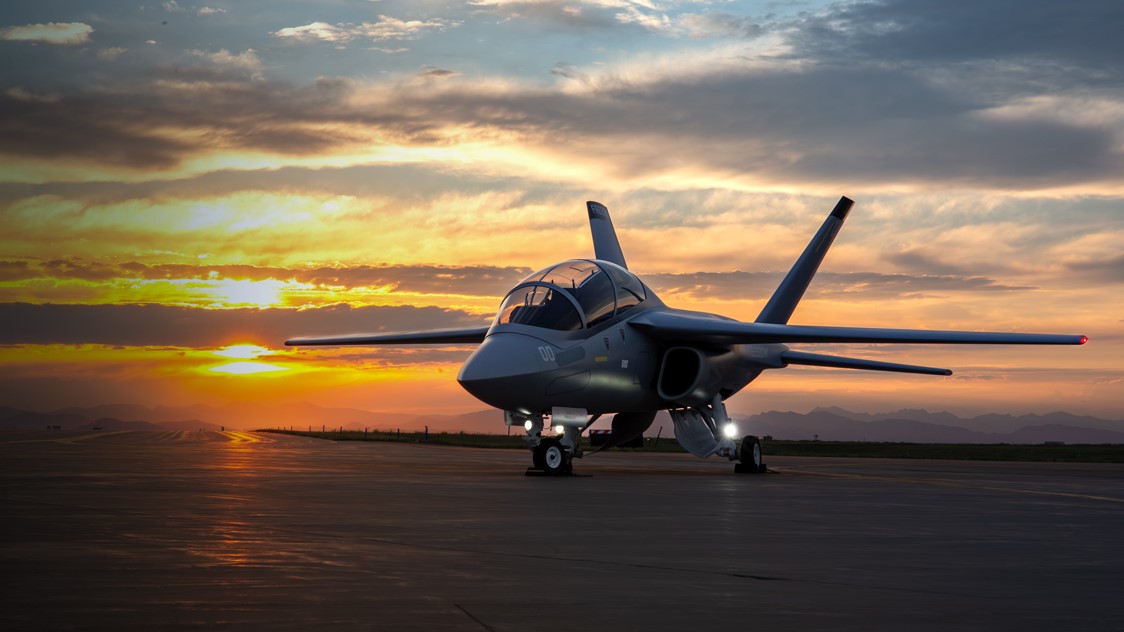
This is in direct contrast with the other competitors, which would require significant redesign to meet carrier landing stresses. In fact, in addition to a tail hook and catapult launch bar, the structural design would need to be revised to account for the stresses of carrier operations.
Alongside its carrier training credentials, SNC emphasized the aircraft’s projected affordability. The company claims 40% lower engine-related expenses than the T-45 and half those of comparable land-centric trainers, in addition to the 16,000-hour structural lifespan intended to avoid costly mid-life extension programs.
Textron Aviation Defense’s and Leonardo’s Offering
Both Textron Aviation Defense and Leonardo have been working in the flight training sector for a long time, with Textron specifically working with the U.S. Navy for over 70 years. In fact, through Beechcraft, Textron provided the Navy with many turboprop trainers and, recognizing the maturity of the M-346, has decided to add a jet aircraft to its lineup.
Visualizza questo post su Instagram
The Beechcraft M-346N jet is being offered as a “ready-now” solution to satisfy the Navy’s needs for the training of future naval aviators. The platform is already operationally proven and will be assembled in the U.S. at the company’s plant in Wichita, Kansas, if selected by the Navy as successor to the T-45C Goshawk.
Leonardo and Textron Aviation Defense are counting on the experience maturated with more than 100 M-346 in service and over 150,000 flight hours logged worldwide, training pilots for 4th and 5th generation aircraft. The M-346 and its Integrated Training System have demonstrated exceptional performance and reliability in meeting the rigorous training demands of 20 global users, says Textron.
The aircraft is at the center of the globally renowned International Flight Training School in Italy, managed by Leonardo and the Italian Air Force. Notably, the IFTS is now also training U.S. Air Force pilots.
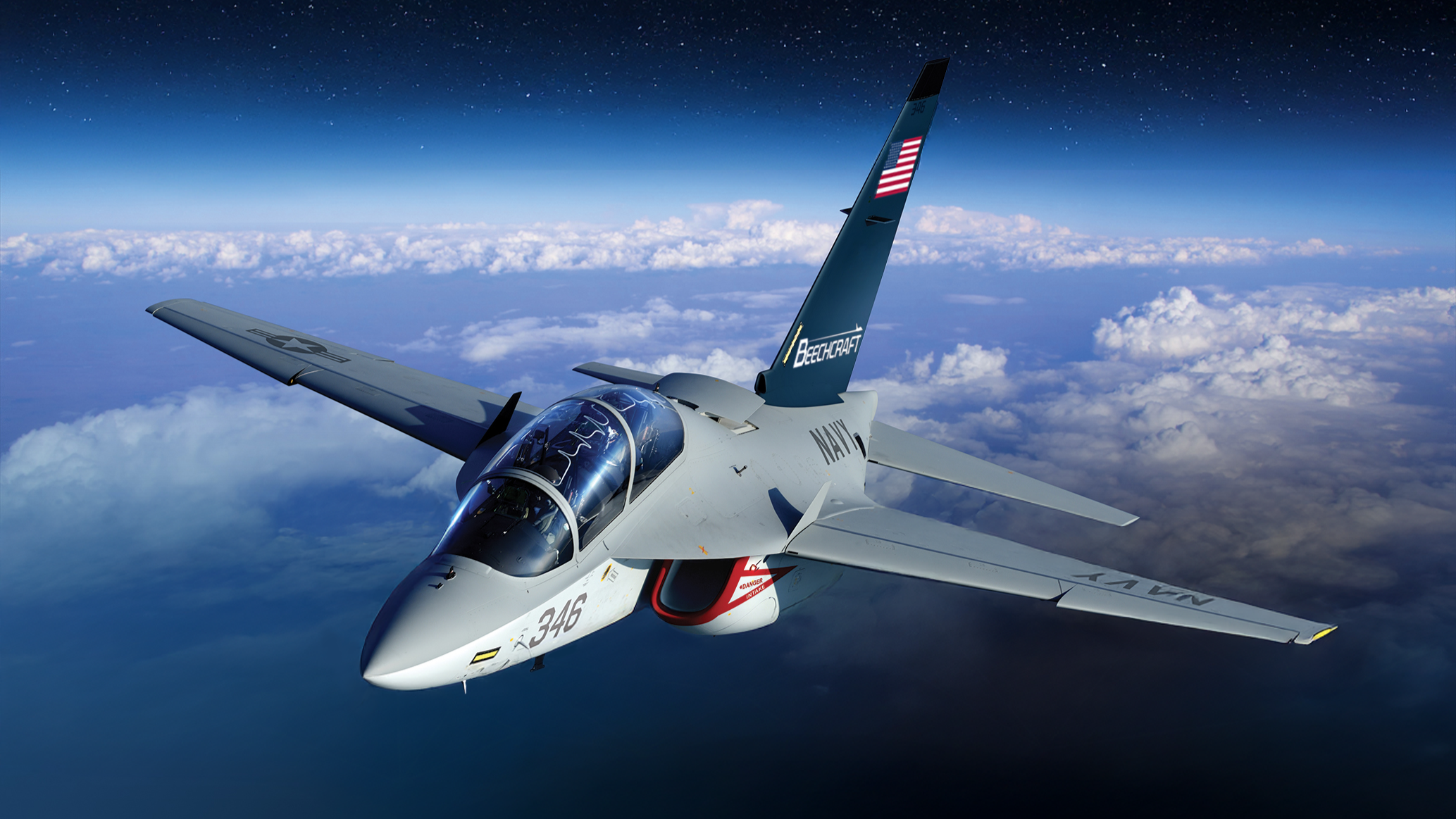
The new M-346N is being developed on the proven integrated training system based on the original M-346. As Textron noted, the aircraft is already meeting the demanding student pilot training needs for 4th and 5th gen aircraft worldwide.
Obviously, the M-346N will be adapted to the Navy’s needs with specific features required to prepare in the best way the new naval aviators for the high-performance world of carrier-based fighter operations. Among the features of the M-346N will be the Live Virtual and Constructive (LVC) system, which will challenge the students throughout the training by merging the real and virtual worlds.
UJTS Program
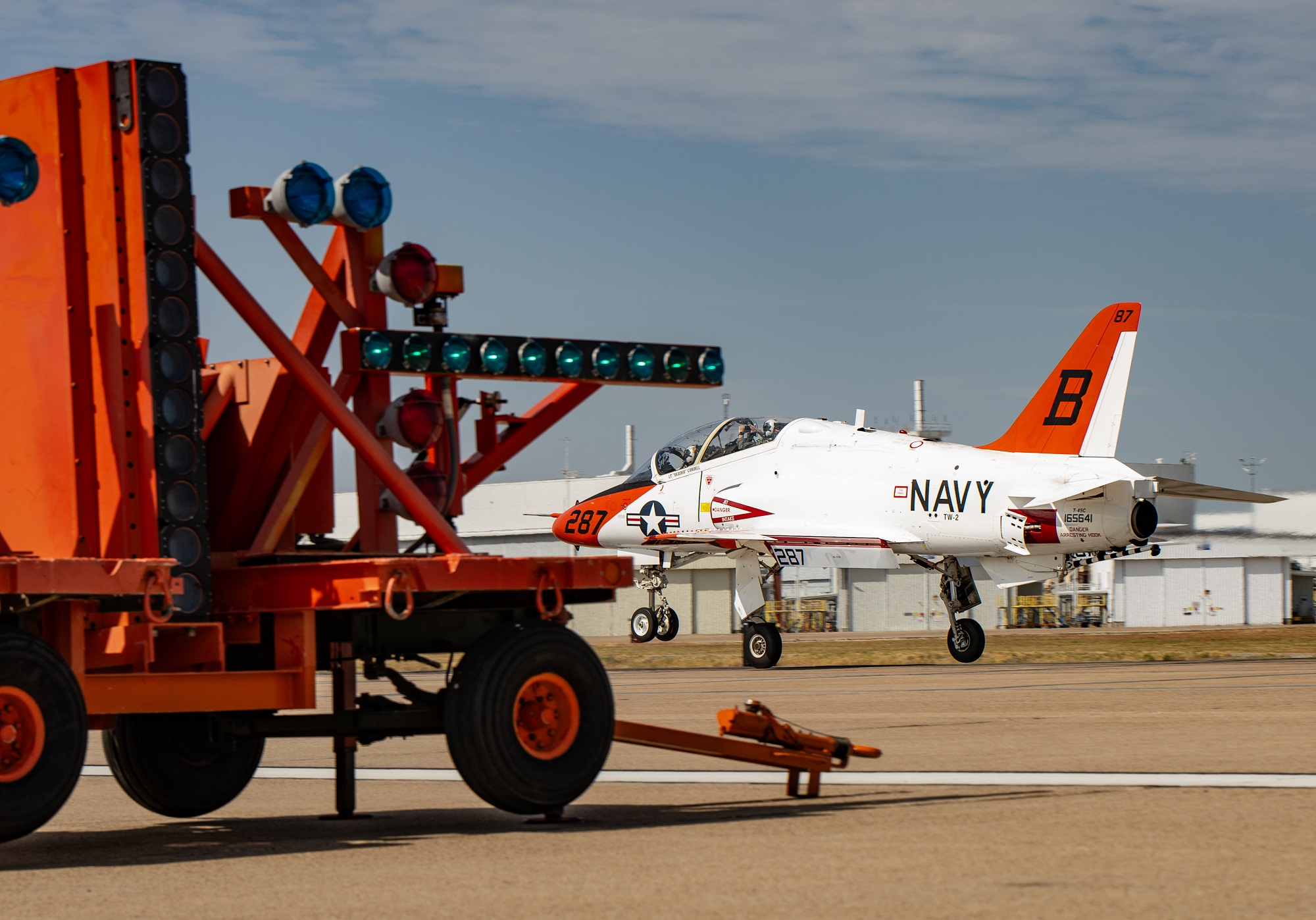
The U.S. Navy launched the Undergraduate Jet Training System (UJTS) to replace the aging T-45 Goshawk fleet in 2020. The service is looking to acquire a new aircraft on an “accelerated procured timeline” as it keeps facing problems with the T-45, which has been in service since 1991.
Visualizza questo post su Instagram
The new aircraft will notably be used in a much different way compared to the T-45, which has been used to train future naval aviators to land on aircraft carriers. In fact, the Navy said “the UJTS air vehicle will only be required to conduct Field Carrier Landing Practice (FCLP) to wave off.”
As we previously reported, a good portion of the training command’s syllabus is centered around the FCLP, which allows new pilots to train on land bases for the entire approach and landing maneuver as performed on the aircraft carrier, just short of the arrested landing. With the new requirement, future student pilots will only perform the approach phase of the current FCLP, going around once reached the minimums, without touching down on the runway.
The Navy says that this decision, which sets a completely different route compared to the T-45 Goshawk and, previously, the T-2 Buckeye, is “due to advancements in operational platform landing modes and in ground-based simulation.” This means the new naval aviators will rely more on automation and perform complete FCLPs only in the flight simulator.
This has sparked controversy, as the service is now planning to move this part of the training to the Field Replacement Squadrons (FRS), where the newly appointed naval aviators transition to their assigned aircraft. That would seem counterproductive as FRSs fly much more expensive aircraft, thus increasing the cost of training.
However, this choice has also reflections on the timeline. In fact, removing the FCLP portion of the training program from UJTS allows a much quicker fielding of the new aircraft, which could now be also an already operational type.
Thus, the new trainer aircraft will not require complex and lengthy structural modifications to be adapted to the new role. Normally, an aircraft that has to trap on the carrier and launch from a catapult, or at least conduct FCLPs, has to be designed from the ground up on that premise because the structural design needs to account for very significant stresses during carrier operations.
Visualizza questo post su Instagram
With the UJTS, the Navy also plans to field an extensive Ground Based Training System (GBTS). The service is “contemplating a four-tiered GBTS product line, consisting of Operational Flight Trainers (OFT), Unit Training Devices (UTD), Cockpit Procedural Trainers (CPT), and Desktop Avionics Trainers (DAT),” complete with “Live/Virtual/Constructive (LVC) integrated training.”
The attributes requested for the cockpit feature the safety and environmental characteristics common to all modern aircraft, with a cockpit configuration which mirrors the Navy’s newest fighters. In fact, both the F-35C Lightning II and the F/A-18E/F Super Hornet Block III feature Large Area Displays (LAD) and thus the service is looking for the same configuration in the new trainer.
As for the performance, the Navy is looking for an aircraft capable of a speed of at least Mach 0.9/450-500 KIAS, sustained AoA over 20 deg, sustained load factor of at least 6 G, operating ceiling of at least 41,000 ft and turn rate of at least 12 deg/sec. The RFIs also mentioned wing and/or wingtip pylons for stores carriage, which in the attachment are better specified as external fuel tanks, luggage pod and PMBR (Practice Multiple Bomb Rack) with six MK-76 type practice bombs.
The new UJTS aircraft is also required to integrate the new Precision Landing Mode (PLM), which is now on F/A-18s and F-35s and will eventually be the standard method for approaching the aircraft carrier for all naval aircraft. The PLM is expected to drastically reduce the number of corrections required during the final approach to the aircraft carrier.