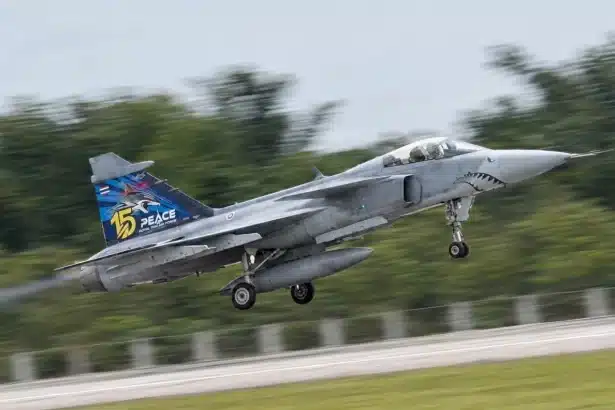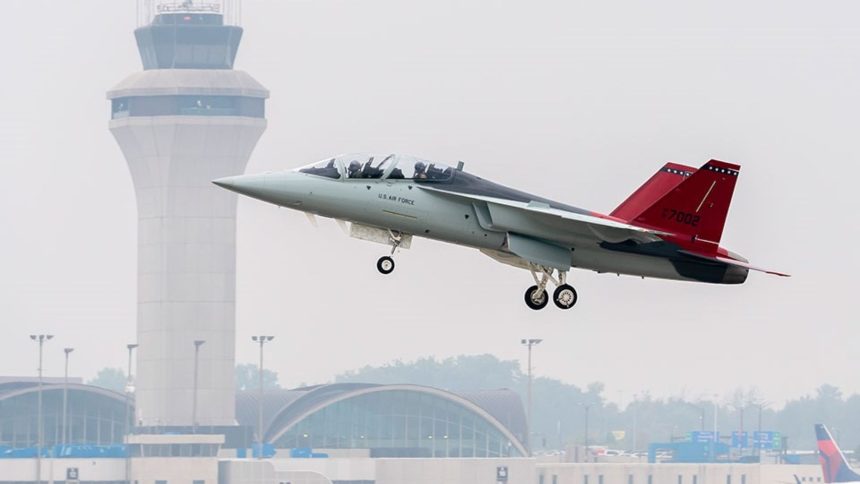
Boeing determined the T-7A does not meet the U.S. Navy’s Undergraduate Jet Training System requirements and thus decided to not bid for the T-45’s replacement.
In a surprise move, Boeing has decided to not take part in the competition that will select the successor of the T-45 Goshawk. The company said in a short statement on June 12, 2026, that its T-7 Red Hawk does not meet the requirements of Undergraduate Jet Training System (UJTS), leading to the decision.
Here is the full statement:
“Boeing is focused on meeting our commitments, and we bid for programs where we believe we can provide the right solution tailored to our customers’ needs and requirements. After careful evaluation, we have determined the T-7A does not meet the U.S. Navy’s Undergraduate Jet Training System requirements. We have therefore informed the Navy that we will not bid on the current RFP. We remain committed to delivering the T-7A as a modern, growth-oriented training solution for 4th, 5th and 6th generation pilots as requirements evolve. We look forward to providing and sustaining both current and future capabilities for the Navy.”
The company did not disclose which requirements were not met. However, Aviation Week and Breaking Defense reported that, according to a company spokesperson, the T-7’s F404 engine would need long-cycle development to meet UJTS engine qualification requirements, which would hamper Boeing’s ability to quickly reach initial operational capability.
It should be noted that the Navy knows well that engine, as it is the same that powers the F/A-18 Hornet and served as the base for the F414 engine that powers the F/A-18E/F Super Hornet. Boeing is now the second company to leave the UJTS competition.
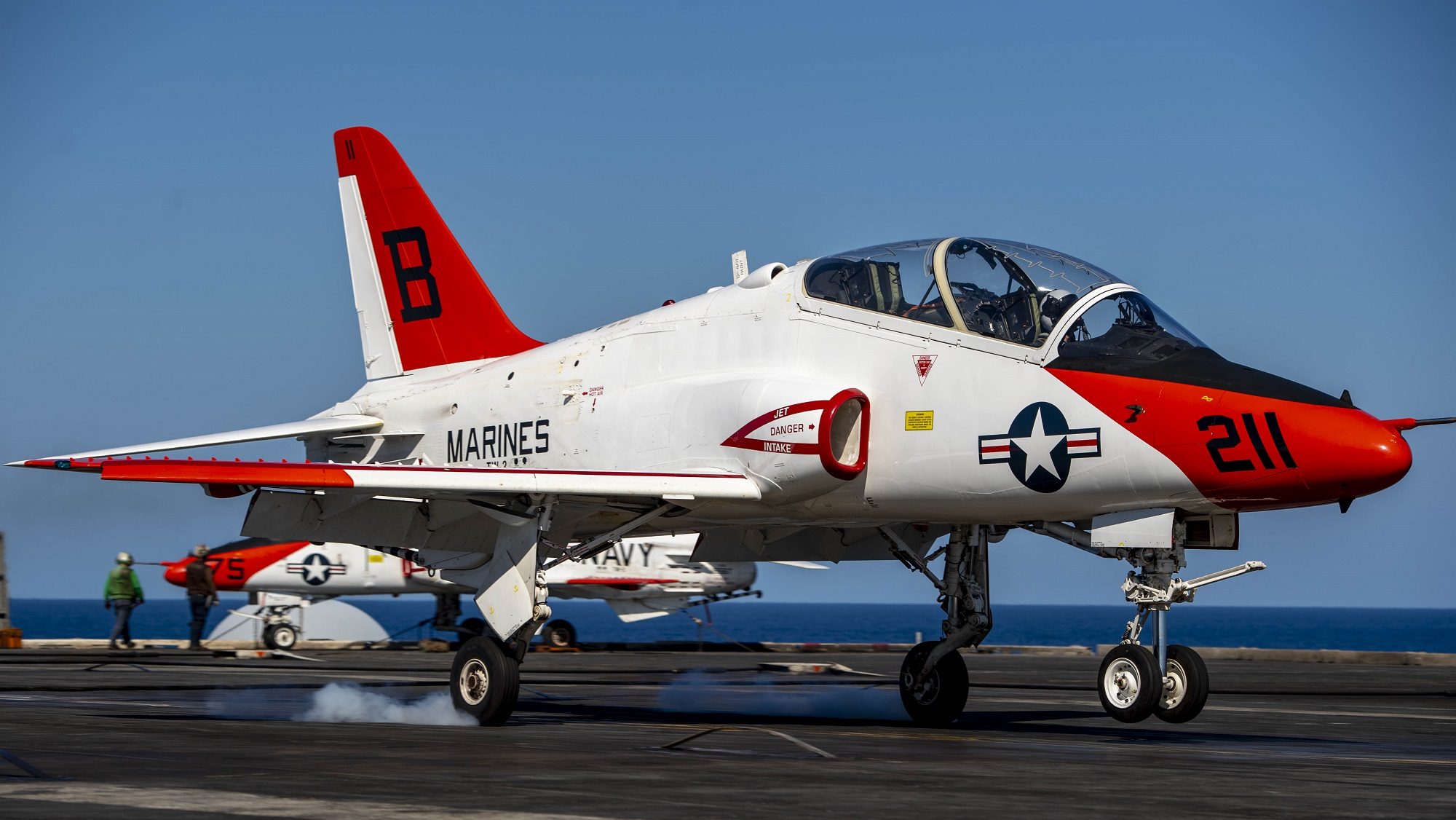
In fact, in March 2026, Lockheed Martin notified the U.S. Navy the decision to not pursue the bid after it determined the TF-50N “would not be the best solution for this program due to the required level of U.S. content and other reasons.” Notably, the TF-50N uses the same F404 engine.
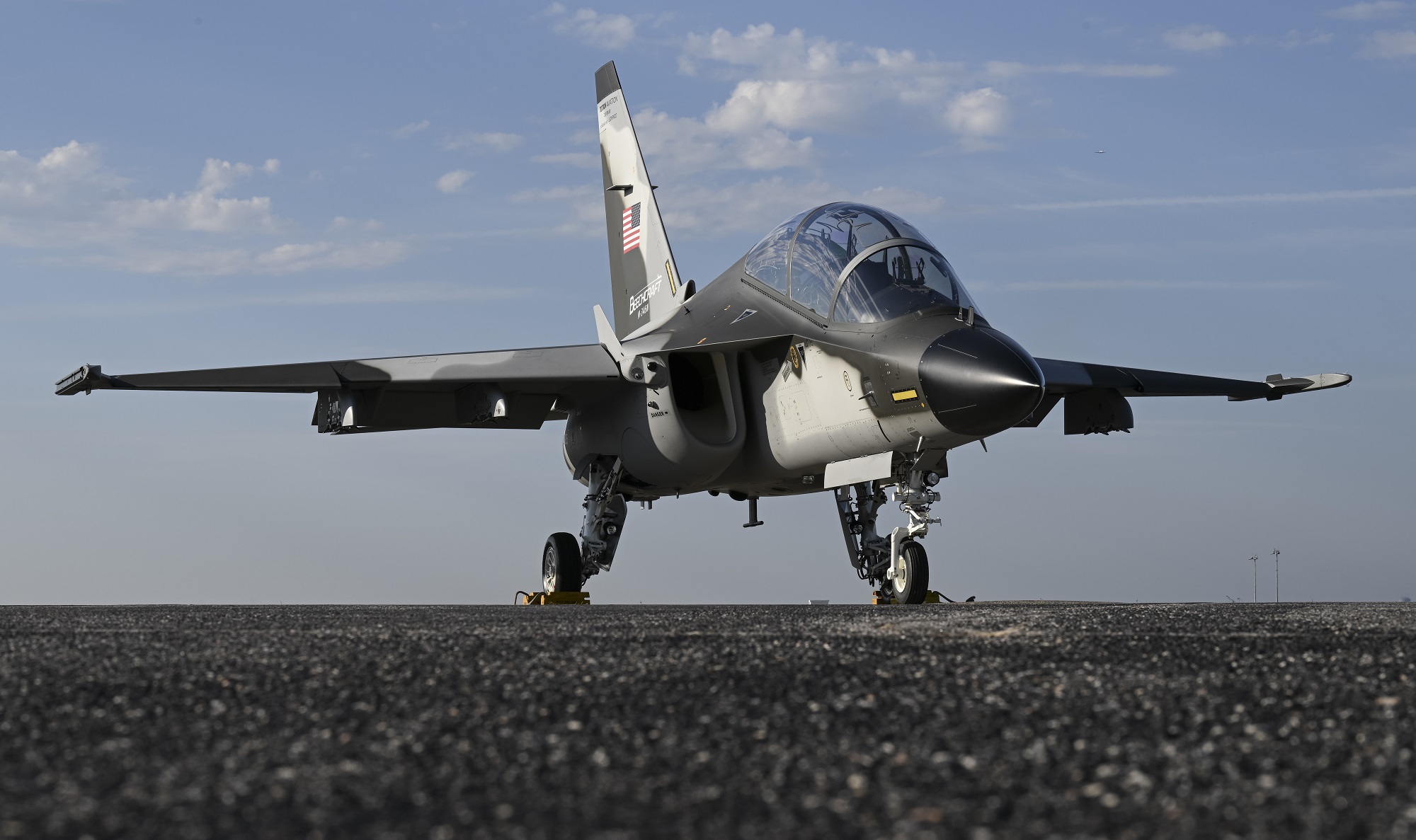
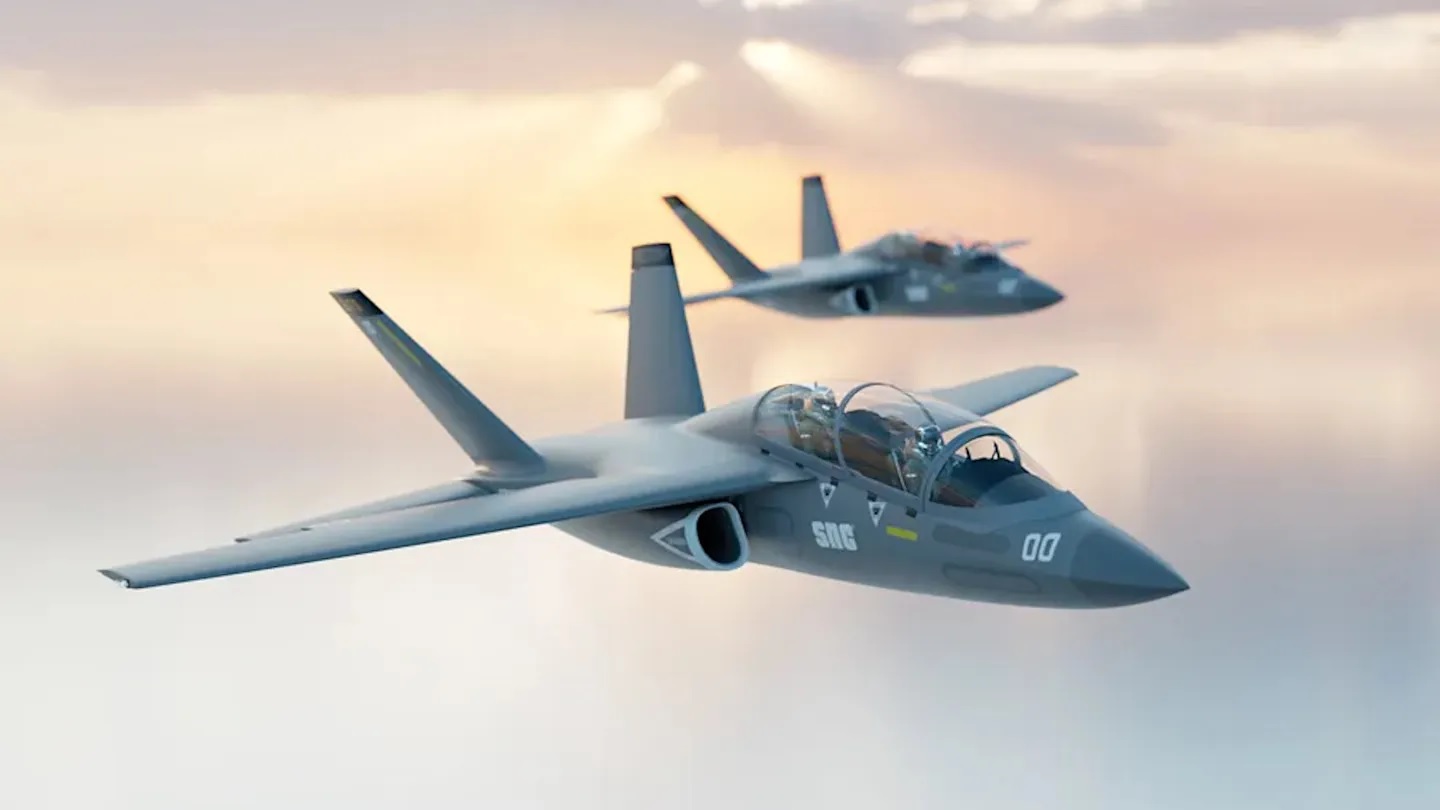
This now leaves only SNC and Beechcraft in the competition. SNC is offering its Freedom trainer with Northrop Grumman and General Atomics, while Beechcraft is offering the M-346 through a partnership of parent company Textron Aviation Defense and Leonardo.
SNC’s proposal is described as a clean-sheet design also able to conduct carrier operations, although it is still on the drawing board. On the other hand, the M-346N is a variant of the M-346 trainer that has been flying operationally since 2015 for over 100,000 flight hours.
The Navy released the long-waited Request for Proposal (RFP) in March 2026. The RFP confirmed once again that the service does not plan for the new trainer jet to land on aircraft carriers or to conduct Field Carrier Landing Practice (FCLP) to touch down.
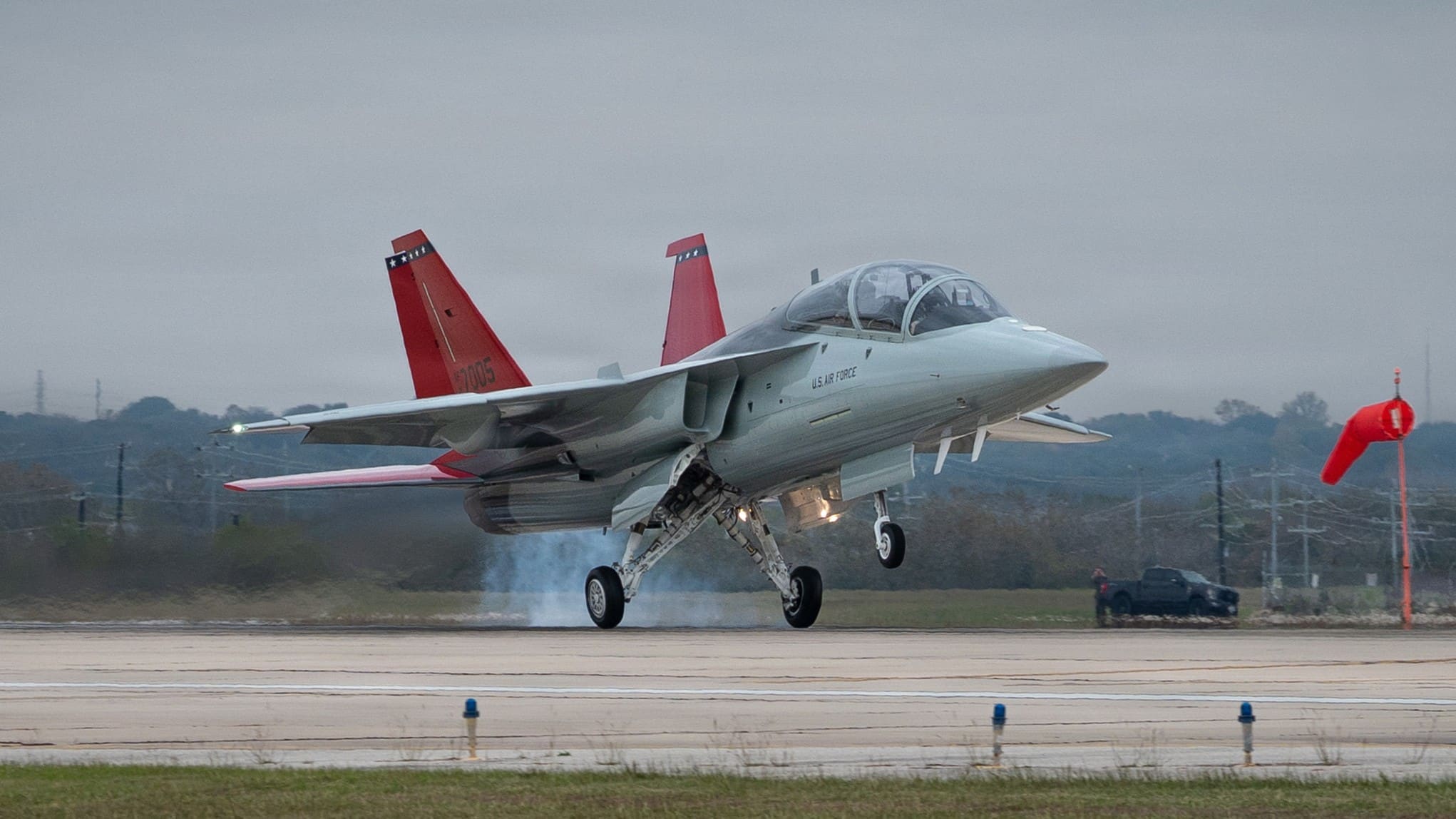
Later on, in May 2026, the Navy raised the cost ceiling for the Engineering and Manufacturing Development phase by about $1 billion. The decision was based on feedback received after the release of the RFP, according to statements.
The RFP
The U.S. Navy has released on Mar. 26, 2026, the final Request for Proposals (RFP) for the Undergraduate Jet Training System (UJTS) program, which will replace the aging T-45 Goshawk trainer fielded in 1991. The service is looking to acquire a new aircraft on an “accelerated procured timeline” as it keeps facing problems with the T-45.
The RFP covers the Engineering, Manufacturing, and Development (EMD) phase, as well as the procurement of the first lot of Low-Rate Initial Production (LRIP) aircraft, Ground-Based Training Systems (GBTS) and Interim Contractor Logistic Services (I-CLS). The contract’s award is expected in March 2027.
An estimated fielding schedule attached to the RFP confirms that the service intends to procure 216 aircraft, with the first lot of seven LRIP aircraft to be delivered in 2032. The production would then increase to 12 aircraft in 2023 and 20 in 2034, before a full-rate production of 25 aircraft per year from 2035.
These aircraft will be divided among three locations, with Naval Air Station (NAS) Meridian, Mississippi, receiving 95 aircraft starting in 2033, NAS Kingsville, Texas, receiving 95 aircraft from 2039, and the remaining 26 aircraft going to NAS Pensacola, Florida, from 2042.
The cost will be also an important part of the selection process. Key parameters in the cost evaluation will consider if the price is reasonable and realistic, said the service.
The new aircraft will notably be used in a much different way compared to the T-45, which has been used to train future naval aviators to land on aircraft carriers. In fact, the Navy said “the UJTS air vehicle will only be required to conduct Field Carrier Landing Practice (FCLP) to wave off.”
As we previously reported, a good portion of the training command’s syllabus is centered around the FCLP, which allows new pilots to train on land bases for the entire approach and landing maneuver as performed on the aircraft carrier, just short of the arrested landing. With the new requirement, future student pilots will only perform the approach phase of the current FCLP, going around once reached the minimums, without touching down on the runway.
The Navy says that this decision, which sets a completely different route compared to the T-45 Goshawk and, previously, the T-2 Buckeye, is “due to advancements in operational platform landing modes and in ground-based simulation.” This means the new naval aviators will rely more on automation and perform complete FCLPs only in the flight simulator.
This has sparked controversy, as the service is now planning to move this part of the training to the Field Replacement Squadrons (FRS), where the newly appointed naval aviators transition to their assigned aircraft. That would seem counterproductive as FRSs fly much more expensive aircraft, thus increasing the cost of training.
However, this choice has also reflections on the timeline. In fact, removing the FCLP portion of the training program from UJTS allows a much quicker fielding of the new aircraft, which could now be also an already operational type.
Thus, the new trainer aircraft will not require complex and lengthy structural modifications to be adapted to the new role. Normally, an aircraft that has to trap on the carrier and launch from a catapult, or at least conduct FCLPs, has to be designed from the ground up on that premise because the structural design needs to account for very significant stresses during carrier operations.