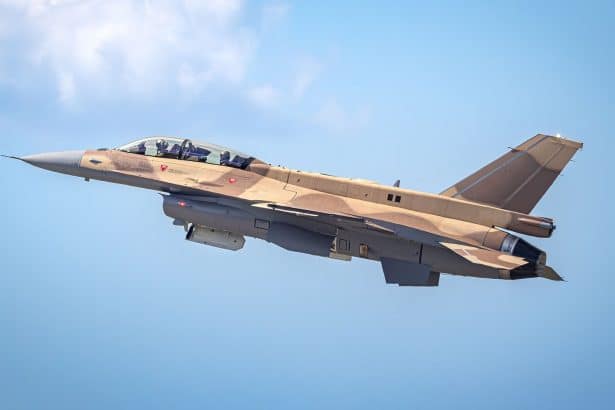
Romanian F-16s deployed as part of the Baltic Air Policing shot down a rogue drone, possibly of Ukrainian origin, which entered Estonian airspace from Russia.
The Estonian Defense Forces have announced that Romanian F-16 Fighting Falcons have shot down a drone which entered Estonian airspace. Estonia says that the drone, which arrived from Russian airspace, was “likely of Ukrainian origin” and that “conditions of heavy electronic warfare, including GPS spoofing and jamming, by Russia” were reported.
The Romanian F-16s are currently deployed to Lithuania as part of the NATO Baltic Air Policing mission. According to the statement, the aircraft were already in flight for a routine training sortie when they were retasked for the intercept.
Romanian Air Force fighter jets F-16, based in Lithuania, were conducting a routine training flight under the Baltic Air Policing mission, and intercepted the drone South of Põltsamaa town. The jets fired a single missile to neutralize the threat, downing the unmanned aerial…
— Estonian Defence Forces | Eesti Kaitsevägi (@Kaitsevagi) May 19, 2026
The drone was detected at 12.00PM local time, entering “Estonian airspace from Russian airspace in the South-Eastern corner of Estonia, heading towards North-East.” The fighters intercepted the drone “South of Põltsamaa town.”
According to the statement, air surveillance units were monitoring the drone as it approached Estonian airspace. Following visual identification, “the jets fired a single missile to neutralize the threat, downing the unmanned aerial system at 12.14PM local time.”
🇷🇴 Romania swaps its MiG-21s for F-16Cs – boosting NATO Air Policing from Câmpia Turzii ✈️
This adds to the 53rd Fighter Squadron at Fetești and the 🇩🇪 German Air Force Eurofighter detachment from Mihail Kogălniceanu
🔗 https://t.co/7PHKganyKp pic.twitter.com/OUQ8a53tTz
— NATO Air Command (@NATO_AIRCOM) October 28, 2025
No details have been provided about the weapon used for the engagement. Romanian F-16s deployed for the Baltic Air Policing usually fly with two AIM-120C AMRAAM missiles and two AIM-9X Sidewinder missiles.
The Estonian Defense Forces added that the intercept operation was led by the Latvian Control and Reporting Center (CRC). The Estonian Internal Security Service has now initiated a criminal investigation, under the paragraph of an attack against air traffic safety, says the statement.
The authorities did not release photos of the incident and it is thus unclear what type of drone intruded into Estonian airspace. The Estonian Defense Forces mentioned that this was possibly a Ukrainian drone which, during an attack against Russia, lost control due to jamming and went off course.
Ukraine later issued a public apology for the incident, calling it “unintended” and saying the drone was redirected in the Baltic region by electronic warfare. The country also confirmed, as mentioned previously by the Baltic states, that neither Estonia, nor Latvia, Lithuania, of Finland have ever allowed to use their airspace for strikes against Russia, and that Ukraine has never requested such a use.
Russia continues to redirect Ukrainian drones into the Baltics with the use of its electronic warfare. And Moscow does this on purpose, together with intensified propaganda.
We apologise to Estonia and all of our Baltic friends for such unintended incidents. We have been and… https://t.co/MBltV6ngg6
— Heorhii Tykhyi (@SpoxUkraineMFA) May 19, 2026
According to the Estonian MoD, the drone crashed in a swampy area, reportedly in the Kablaküla area. A spokesperson for the Security Police confirmed some pieces of the drone have been found at the crash site.
Estonian Foreign Minister Margus Tsahkna defended Ukraine’s actions, saying that the country has every right to attack Russian military targets. He further noted that, as Estonia has not allowed its airspace to be used for the attacks, the incident is “related to Russian interference.”
Baltic Air Policing
The Romanian Air Force deployed six F-16s to Šiauliai Air Base, Lithuania, together with 100 personnel. The aircraft replace the Spanish Air Force detachment which was previously in the Baltic region.
The F-16s are deployed alongside a detachment of Rafales from the French Air and Space Force, which operate from the same base. Both detachments are integrated within NATO’s Command and Control structures to maintain Quick Reaction Alert and safeguard Allied airspace.
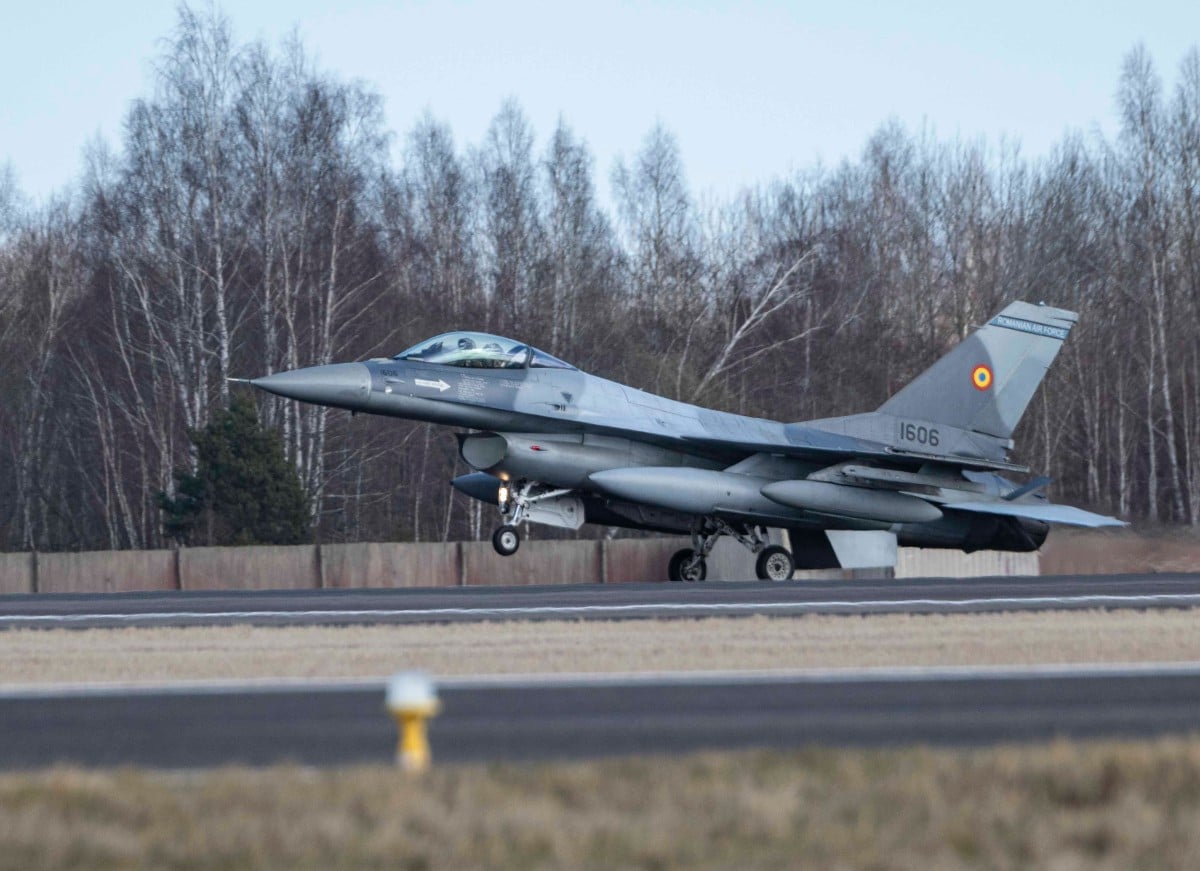
Romania’s deployment marks the fourth time the Romanian Air Force has contributed to NATO’s Baltic Air Policing mission from Lithuania, said NATO’s Allied Air Command in a statement on Mar. 30, 2026. Similarly to the latest deployment in 2025, the Carpathian Vipers Detachment of the Romanian Air Force will operate in the Baltic region from April to July 2026.
Previously, Romania first deployed for the Baltic Air Policing mission in 2007 with the MiG-21 LanceR, and returned to the Baltic Sea region in 2023 with the F-16. The F-16 replaced the MiG-21 after the type was retired by the Romanian Air Force in 2023.
Precedents
The incident follows last year interceptions over Poland, when F-16s and F-35s intercepted and shot down Russian drones which violated its airspace during a large-scale strike on Ukraine. The incident happened in the night between Sep. 9 and 10, 2025.
On that occasion, according to Polish Prime Minister Donald Tusk, a “huge number” of Russian drones crossed into Polish skies during the assault. He added that the drones posing an immediate threat were neutralized by fighter jets, with no casualties reported.
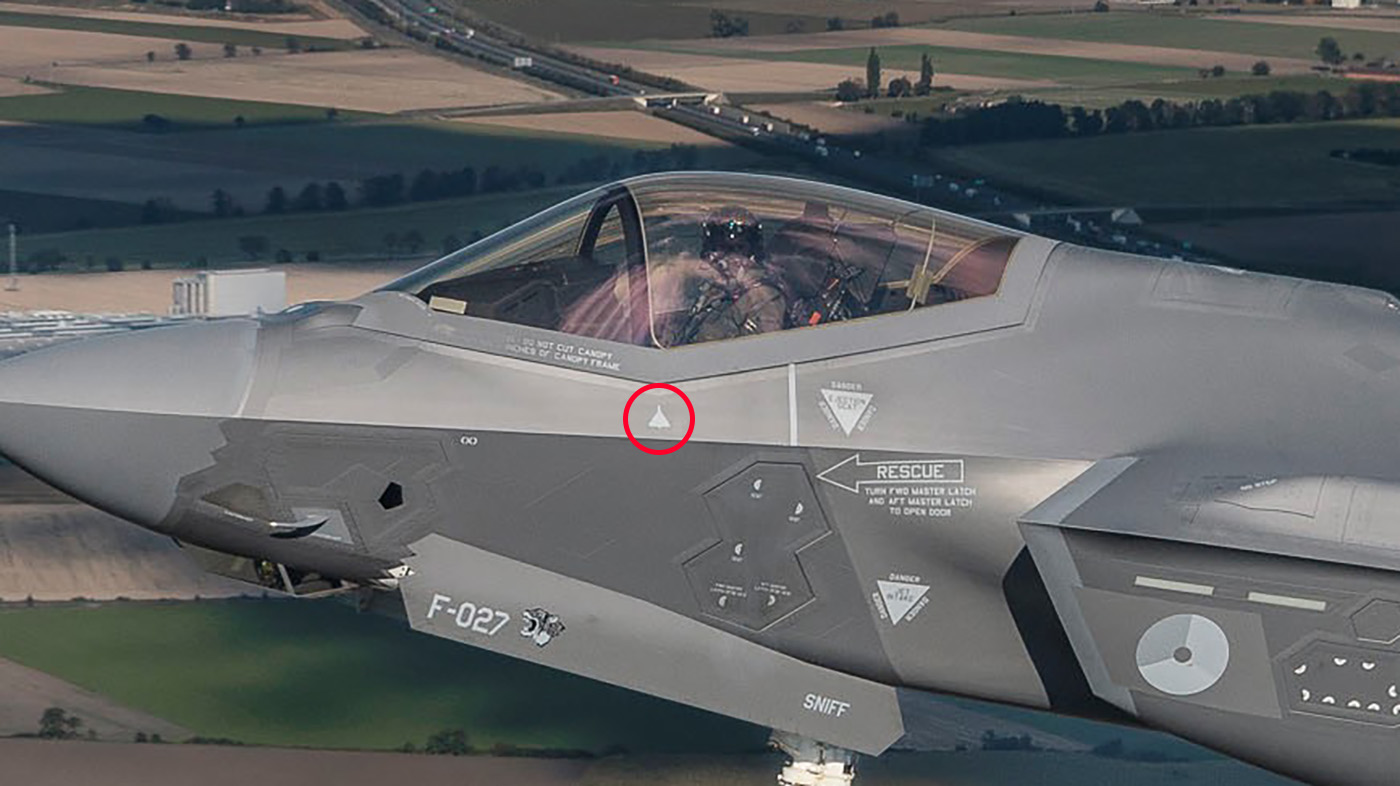
Polish and allied fighter jets were scrambled while ground-based air defense and radar systems were placed on the highest state of readiness. The operation involved both Polish aircraft and NATO assets, including Dutch F-35s, at the time deployed to Poznan Krzesiny airbase for NATO’s Air Policing mission, and German Patriot units deployed in Poland.
Notably, a Polish Saab 340 AEW&C (Airborne Early Warning and Control) aircraft was spotted in flight for nine hours to support the defenses. A NATO MMF A-330 MRTT was also orbiting in the area.
Following the attack, Ukraine’s Air Force reported that Russia launched one of its largest aerial assaults in months, deploying 415 drones, 42 cruise missiles, and a ballistic missile. Ukraine also added that at least eight Shahed-type drones crossed into Poland’s direction, some penetrating Polish airspace.