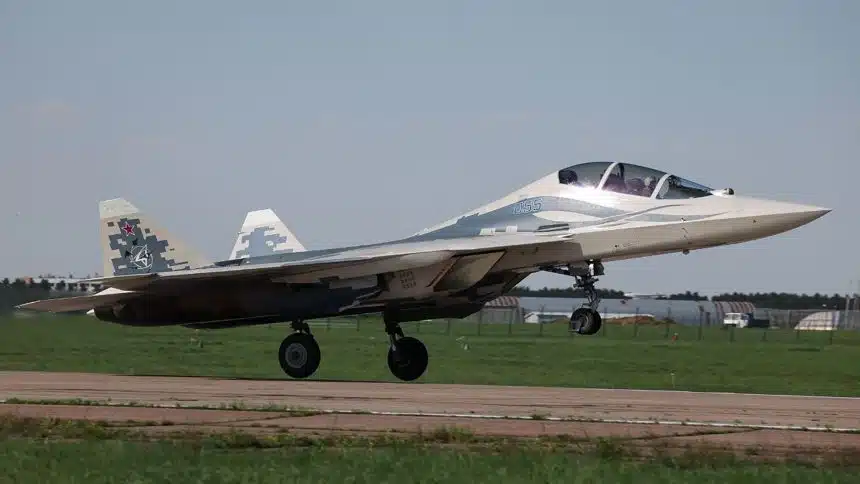
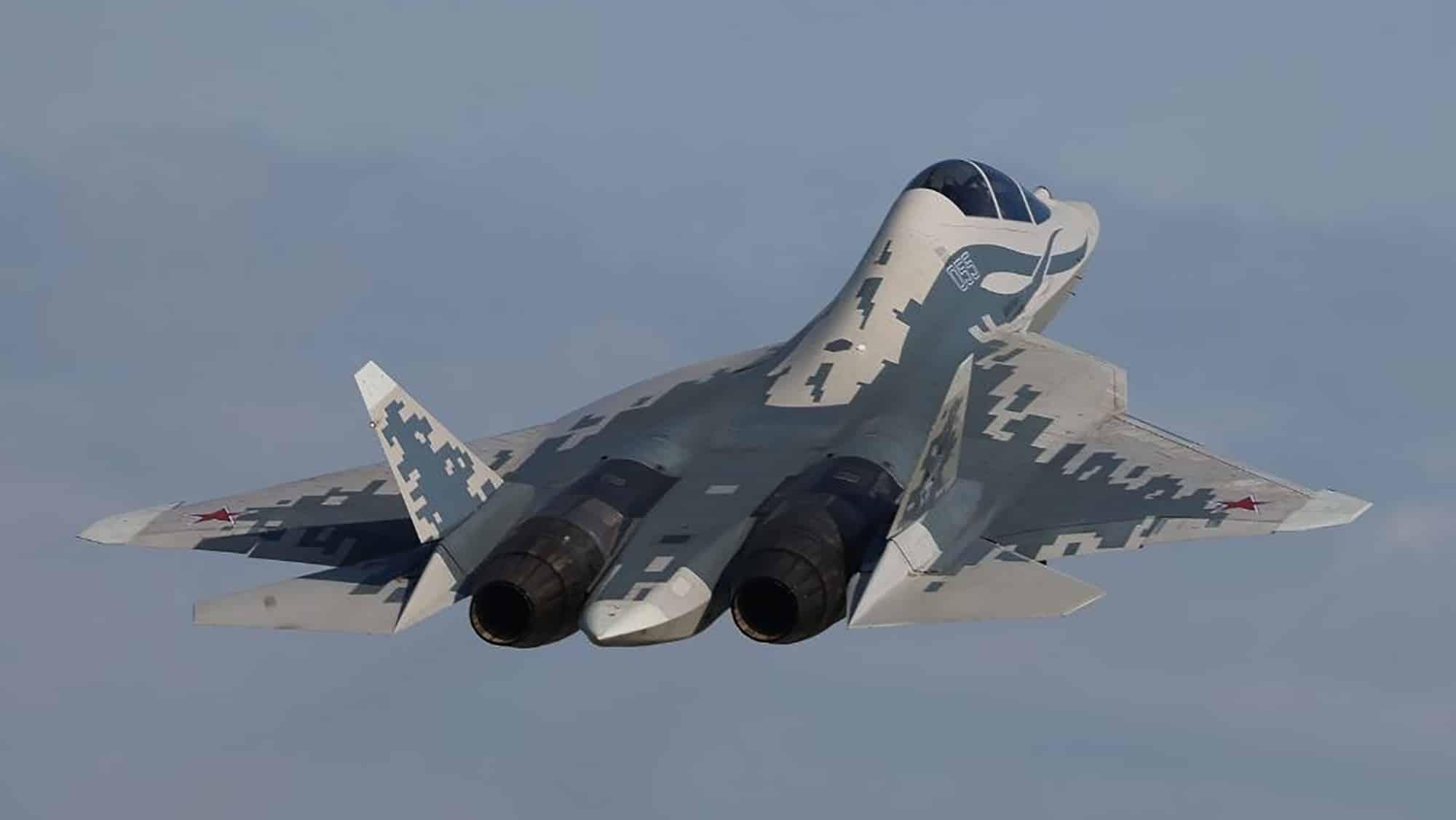
After questions were raised about the authenticity of the first leaked image, official photos and footage have now provided the first confirmed look at the two-seat variant of the Su-57 Felon fighter.
Footage of the two-seat Su-57 prototype performing its maiden flight in Russia recently was eventually released by TV Zvezda, the media outlet of the Russian Ministry of Defence, on May 19, 2026.
According to the details released by Rostec (Russia’s state defense-industrial giant) the aircraft was flown by Sukhoi Design Bureau Chief Pilot and “Hero of Russia” test pilot Sergei Bogdan. The takeoff proceeded as planned, in accordance with the flight mission requirements.
/Su-57D/
Video of the first flight
Source: https://t.co/lmgl0sieVv pic.twitter.com/20isiasVVS
— George N. (@GeorgeN28581) May 19, 2026
“Flight tests have begun on the prototype of the Su-57 fifth-generation two-seat fighter. This aircraft, developed proactively by our aircraft manufacturers, will boast unique combat capabilities, as well as the capabilities of a combat trainer and combat control aircraft,” noted First Deputy Prime Minister of Russia Denis Manturov.
“Today, our aircraft manufacturers are producing unprecedented volumes of aircraft in demand by the military and are continuously working on the development of modern aviation systems. The two-seat version of the Su-57, developed by specialists at the Sukhoi Design Bureau, can be used not only for pilot training but also for organizing and managing combat operations of a joint group of manned and unmanned aircraft, creating a unified information and control space,” Rostec said.
“We continue to work on improving and expanding the functionality of our most advanced fifth-generation aircraft system. I am confident that the two-seat version of the aircraft will significantly contribute to its success in international markets,” said UAC CEO Vadim Badekha.
Rostec pitches the Su-57 as a multirole aircraft, designed to perform a wide range of combat missions: “It is capable of engaging air, ground, and sea targets. The aircraft can be used around the clock, including in adverse weather conditions and challenging jamming environments. Its low observability allows it to destroy targets even against modern air defense systems.”
As we reported in a previous article that you can find here, claims had emerged on May 16, 2026, that a two-seat variant of the Su-57 Felon was undergoing taxi trials. The information was first shared by the well-known Russian Telegram account FighterBomber, which has links to several Russian Aerospace Forces units and is known, among other things, for supplying crowdfunded military accessories and equipment to frontline personnel.
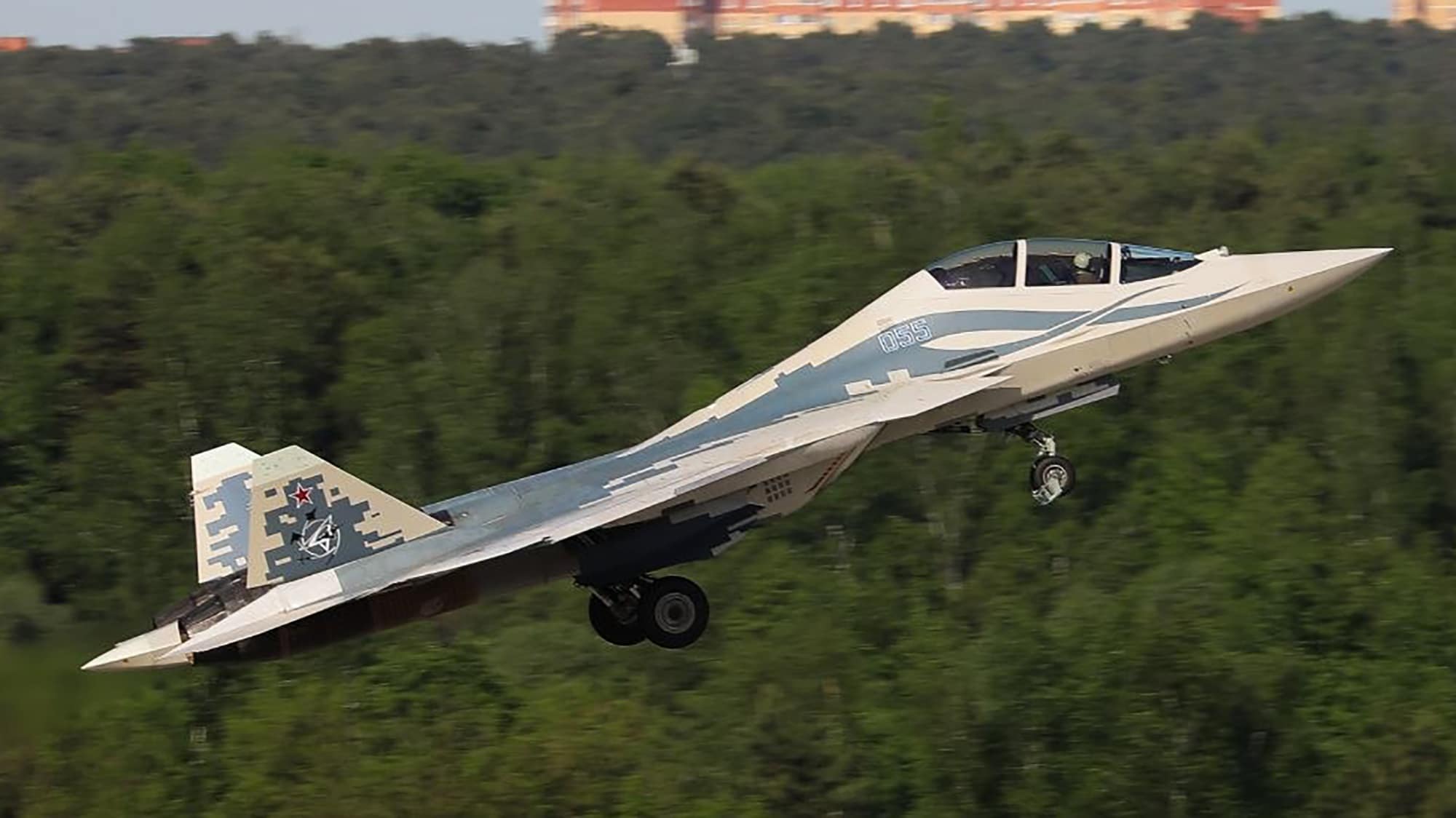
A day later, the same channel published a photo said to show the actual aircraft involved in the test. The authenticity of the image was disputed prompting FighterBomber to post another image of the aircraft, taken from the other side.
Fighterbomber disregarded the claim, in his way ofc.
Also, they showed another picture of the same prototype from a different angle.
Picture is real. https://t.co/7bjGkTk0f2 pic.twitter.com/1NJn4V3uFy
— yassine (@notyassine900) May 19, 2026
On the very same day, Rostec and Zvezda released the first official imagery of the new variant of the Su-57, the second fifth-generation fighter to receive a two-seat version, following China’s J-20S, first seen in 2021.
Some analysts call the new variant the Su-57D, although the official designation is still unknown.
The cockpit layout is somewhat reminiscent of the Su-30, although the difference in height between the front and rear seats appears more pronounced on the Su-57. This arrangement would likely provide the rear crew member with improved forward visibility.
A new logo is also visible on the tail, featuring the silhouettes of both the Su-57 and the S-70 Okhotnik unmanned combat aircraft. A similar marking had already appeared on a previous Su-57 prototype, although it remains unclear whether this points to a possible role for the two-seat Felon in the control or coordination of unmanned aircraft.
Quickly and crudely drawn emblem from “Su-57D” prototype rudder. https://t.co/SdKTksGHN1 pic.twitter.com/XrYCjAGxku
— George N. (@GeorgeN28581) May 18, 2026
No other major external differences are immediately visible compared to the single-seat Su-57. However, internal changes can be expected, as systems would likely need to be relocated to accommodate a second crew member. Structural modifications would also be required to integrate the additional cockpit position.
The role of the second crew member remains unknown. The extra seat could be used for an instructor pilot or for a weapon systems officer, although the description contained in a 2023 patent suggests the latter may be the more likely focus.
In May 2023, a patent was filed with Russia’s Federal Service for Intellectual Property for a “multifunctional two-seat low-observable tactical aircraft,” which was later registered on Nov. 17, 2023. As we already explained, the design described in the document appears reminiscent of the Su-57’s aerodynamic configuration, while also drawing conceptual comparisons with the Su-30 family, the only fully multirole twin-seat fighter currently in Russian Aerospace Forces service.
According to the patent, the aircraft would be intended to detect and destroy air, surface and ground targets at both supersonic and subsonic speeds, across a wide range of altitudes, while also acting as an airborne command post for network-centric operations involving mixed groups of aircraft.
The patent places particular emphasis on advanced communications, high-speed data links, satellite-enabled connectivity and the ability to exchange information with different types of aircraft, including in degraded environments. It also describes the analysis of data received from onboard systems and external sources, followed by the issuing of recommendations to the crew or commands to the wider group of aircraft, language that appears to point toward a sensor-fusion and battle-management role. While this is consistent with the possible use of a second crew member as a weapon systems officer or mission commander, it remains unclear whether the aircraft described in the patent is directly related to the two-seat Su-57.
It might also be a separate future stealth aircraft, or a study intended to preserve design options and shorten development times if the Russian Ministry of Defense and the Russian Aerospace Forces decide to pursue such a capability at a certain point. Still, we can’t but underline the similarities with the Su-57’s general layout, including the integral aerodynamic configuration, twin engines, all-moving horizontal tails and twin vertical fins.
HQ versions 3/3 pic.twitter.com/sf40jV1SCj
— George N. (@GeorgeN28581) May 19, 2026