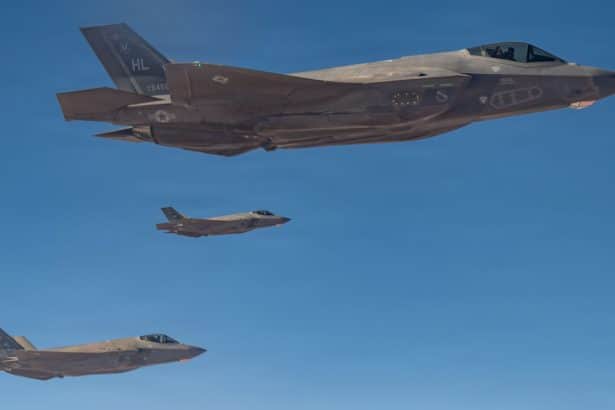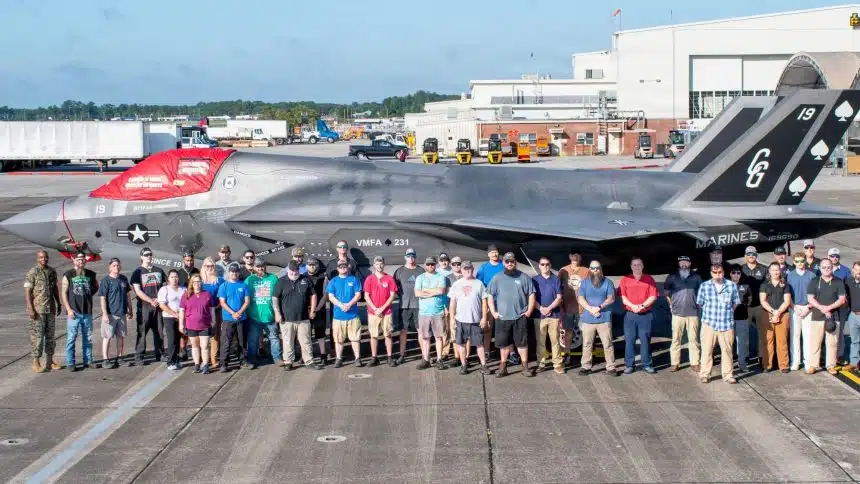
The Fleet Readiness Center East completed the conversion of its first F-35Bs from the TR-2 to the TR-3 configuration, which will support the future Block 4 upgrades.
A major milestone was reached for the F-35B Lightning II as the U.S. Navy’s Fleet Readiness Center (FRC) East at Marine Corps Air Station (MCAS) Cherry Point, North Carolina, completed the Technology Refresh-3 (TR-3) upgrade on its first aircraft. The TR-3 lays the foundation for the future upcoming Block 4 hardware upgrades.
Airframes BF-105 and BF-88 were delivered on May 14 and May 21, while “BF-81 is projected to complete its conversion in July,” the Jun. 2, 2026, press release from the F-35 Joint Program Office (JPO) said. The image of BF-105 capturing FRCE members standing before it after the TR-3 upgrades show that the airframe is assigned to the Marine Fighter Attack Squadron-231 (VMFA-231) “Ace of Spades,” part of the 2nd Marine Aircraft Wing’s (2nd MAW) constituent unit Marine Aircraft Group 14 (MAG 14).
The U.S. Marine Corps is the only U.S. service using the F-35B and, along with the carrier-launched F-35C, operates a total of 122 F-35s. Other foreign users of the Short Take Off and Vertical Landing (STOVL) variant of the F-35 include the U.K., Italy and Japan. The release also mentioned FCRE as among four other global depots for F-35 maintenance repair and modifications, which include Hill AFB and Ogden in Utah, Cameri in Italy and Williamstown in Australia.
Leveling up the Lightning! ⚡️
The JPO has hit a major milestone by beginning the first-ever retrofits of operational F-35B Lightning II aircraft from the TR-2 to the advanced TR-3 configuration.
This massive hardware and software upgrade equips the jets with a substantial boost… pic.twitter.com/8rTN1GpD0b
— F-35 Lightning II Joint Program Office (@theF35JPO) June 3, 2026
The development comes close on the heels of a delay in the TR-3 program for all the three F-35 variants, seeing a stopgap simpler version being rolled out until the technical issues are fixed.
TR-3 work at FRCE
The Technology Refresh 3 (TR-3) is the “backbone” supporting the future Block 4 upgraded hardware covering 75 major systems. The major and leading upgrade is a powerful AN/APG-85 radar replacing the APG-81 as the primary sensor, while others include a new electronic warfare suite, an improved Electro-Optical Tracking System (EOTS), a new cockpit display, navigation and communication systems, and a next-generation Distributed Aperture System (DAS).
A new integrated core processor chip would provide the computing and fuse the data from these sensors. An Engine Core Upgrade (ECU) to the Pratt & Whitney F135 fifth generation supercruise engine in turn would produce the massive power required for the Northrop Grumman APG-85 radar and the other electronics.
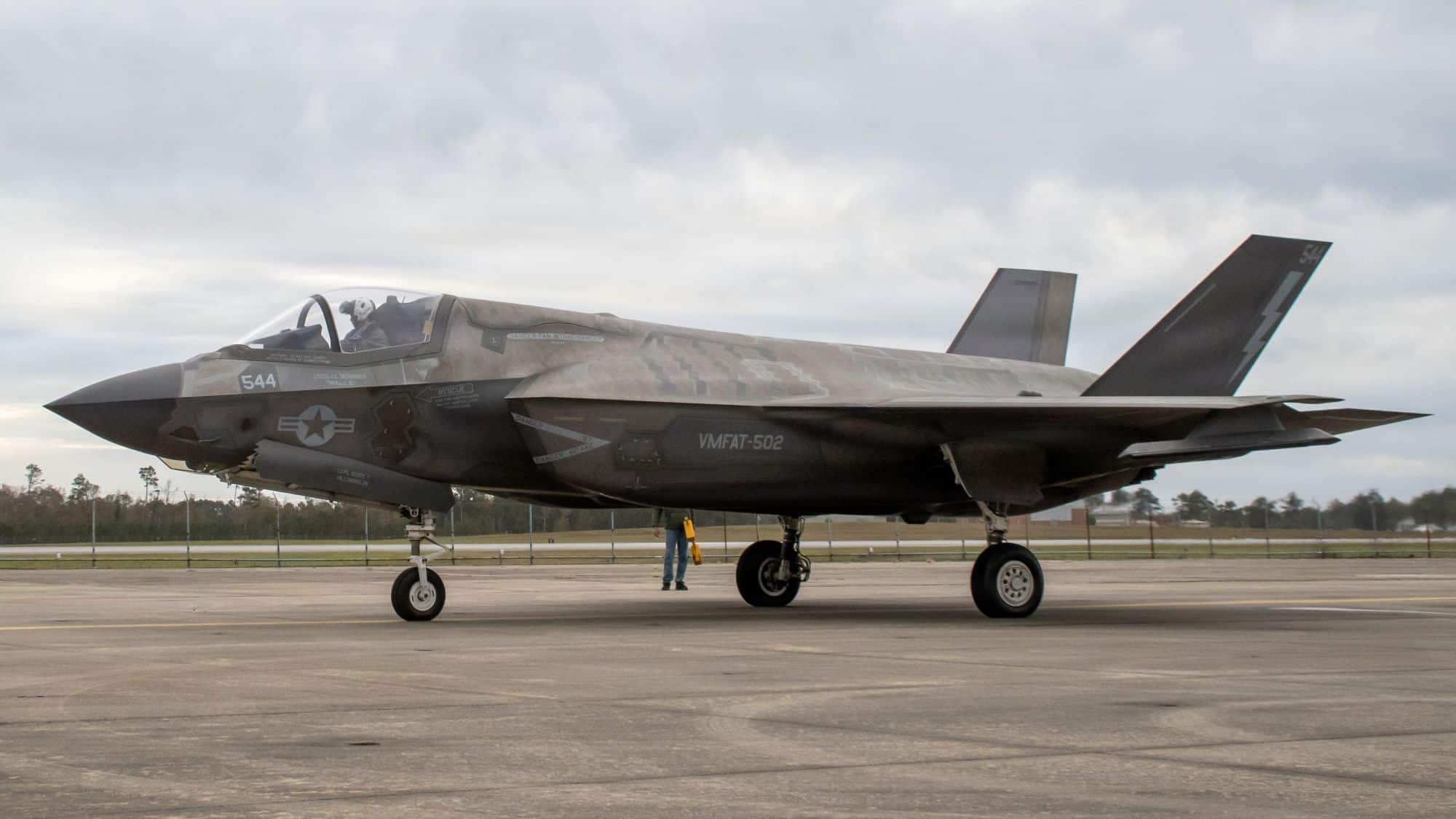
Materiel leader for F-35 mods/retrofits within the F-35 JPO, U.S. Air Force Lt. Col. Matthew Hawkins, talked about the massive retrofit accelerating from the “700 aircraft already fielded […] year after year […] across the fleet,” with the initial conversions helping refine the full-rate processes.
Hawkins touched upon the mammoth fast-paced work ahead that supports the F-35’s tactical orientation. “The faster we can upgrade jets, the more capable the warfighter will be. This isn’t just an engineering milestone. It’s an operational one. TR-3 is what allows the F-35 to remain the quarterback of the battlespace in the next decade,” he said.
Engineered for dominance. ⚡
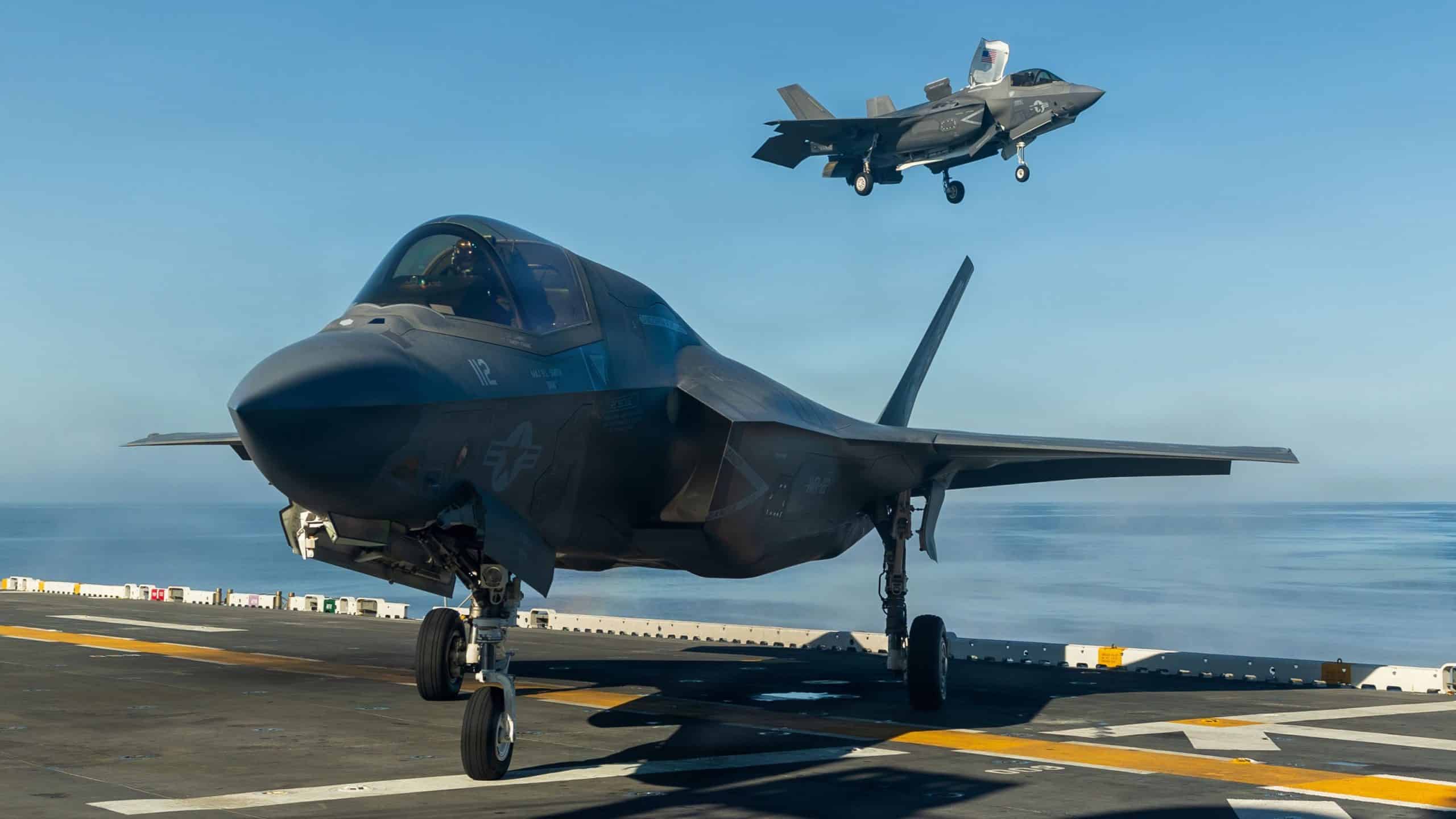
An F-35B Lightning II, attached to Marine Fighter Attack Squadron (VMFA) 121, prepares to take off from the flight deck of the America-class amphibious assault ship USS Tripoli (LHA 7). pic.twitter.com/faPMYgLAqk
— F-35 Lightning II Joint Program Office (@theF35JPO) June 5, 2026
TR-3 Block 4 delays
Technical issues with the TR-3 considerably delayed the F-35 program. This triggered a halt in deliveries from July 2023 to July 2024, seeing up to 100-120 airframes piling up at Lockheed Martin’s facility in Fort Worth, Texas. With the Pentagon, JPO and Lockheed Martin agreeing on a “truncated” version of the software, deliveries resumed in 2024 and the company reported clearing the backlog by May 2025.
The scaled-down variant, a mix of TR-3 and TR-2 features that do not affect the aircraft’s safety or airworthiness, however limited the fullest extent of the aircraft’s high-end capabilities. However, the recent Director, Operational Test and Evaluation (DOT&E) report said none of the 158 TR-3 F-35s delivered to the U.S. services delivered until September 2025 were combat capable jets, putting a question mark on the delivery backlog cleared in May 2025.
By the end of 2025, a total of 191 F-35s had been delivered, with the report putting the overall number of Lightning IIs delivered to the U.S. services at 812 aircraft (any configuration). Of these, a total of 541 are F-35As.
Technical developmental issues with the APG-85 radar had also reportedly led some F-35s entering service without a radar installed. The Air Force’s FY 2027 budget requests $1.7 billion to retrofit 181 aircraft from the Lot 17 and prior with the APG-85.
F-35B engine works at FRCE
The FRCE has also reported other milestones involving the repair, overhaul and assembly of the F-35B’s distinct F135 engine with the lift fan and its intricately engineered parts over the years. In September 2023, the FRCE announced the first successful assembly of the F-35B’s lift-fan clutch, becoming the first within the Department of Defense (DoD) to perform this task outside of the original manufacturer’s facility.
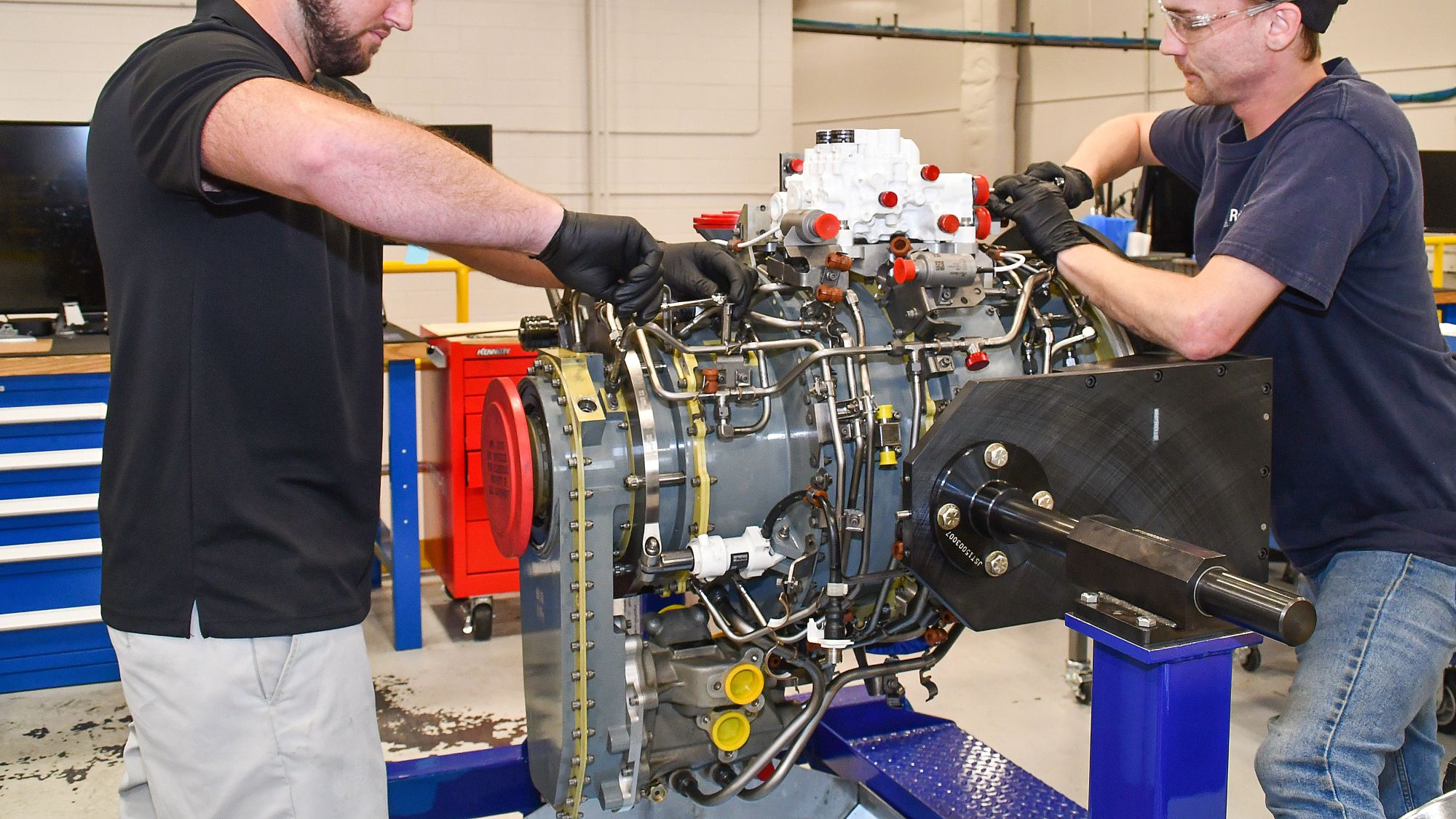
Made by Rolls-Royce for the Pratt & Whitney F135 engine, the lift fan gives the F-35B its unique STOVL capability. FRCE personnel revealed exhaustive theoretical and practical training involving going over tens of thousands of engineering drawings and blueprints, and studying the manufacturing and assembly process at Rolls-Royce LiftWorks facility in Indiana.
The FRCE then announced in August 2025 the completion of the first repair and overhaul of the F-35B’s three-bearing swivel module (3BSM). The 3BSM is a swiveling jet pipe that allows F-35B pilots to redirect engine thrust downward to create the rear vertical lift needed for the STOVL operations.
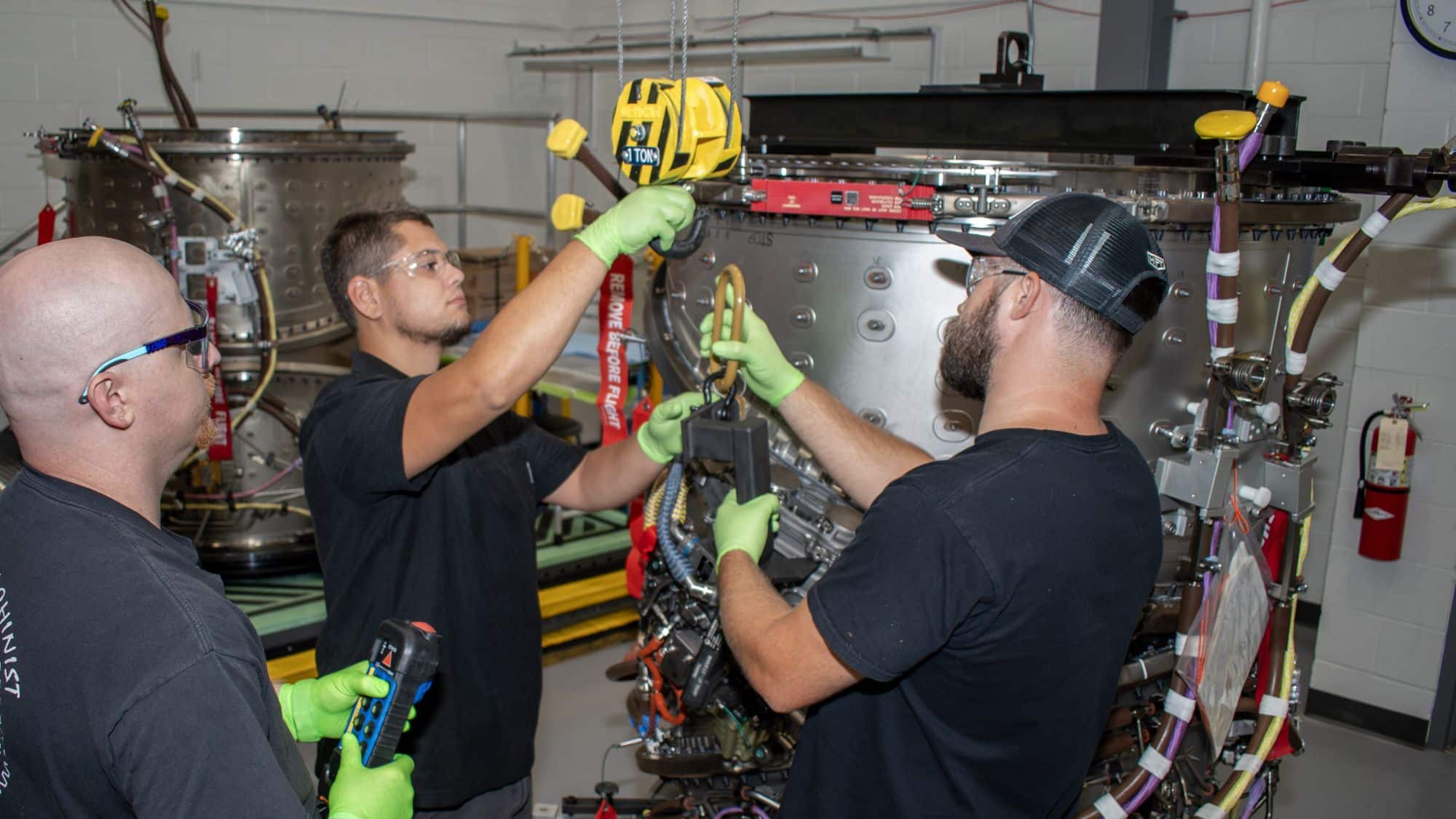
The completed 3BSM marks the first time the depot has returned this component to the F-35 global supply chain that supports U.S. forces and international partners.