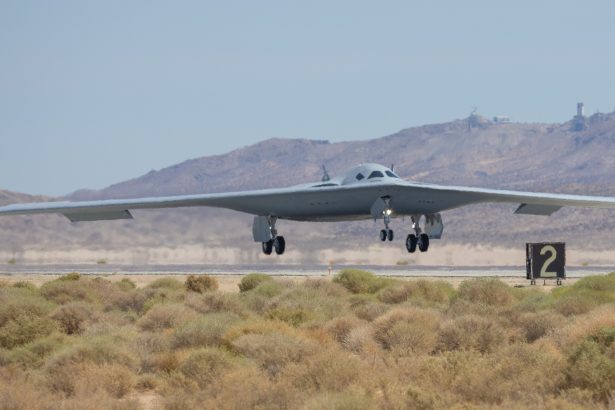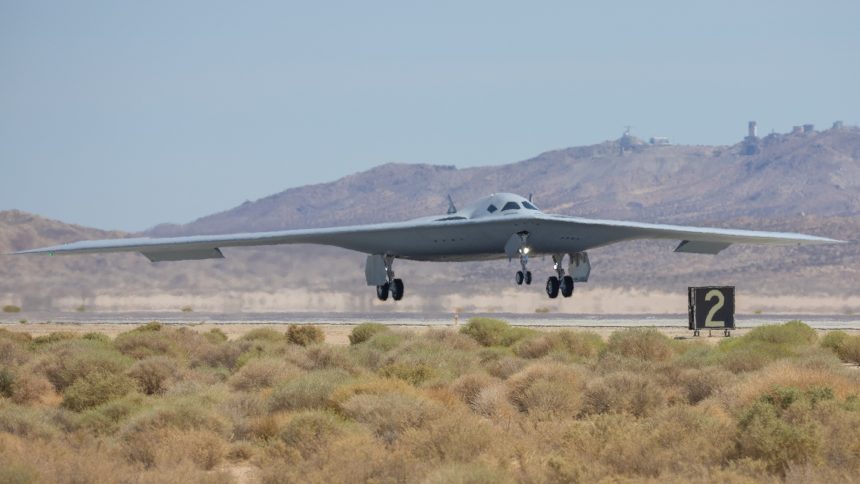
The new final assembly line will support a planned 25% increase in annual B-21 production capacity as the U.S. Air Force prepares receive the first operational Raiders in 2027.
The U.S. Air Force and Northrop Grumman have broken ground on a new final assembly line for the B-21 Raider at Air Force Plant 42 in Palmdale, California. The new facility, part of the effort to increase the annual B-21 production capacity by 25%, will add approximately one million square feet of production space.
The groundbreaking ceremony took place on Sept. 29, 2026, and was announced by the Air Force and Northrop Grumman a week later. The expansion is part of a broader effort to accelerate manufacturing and deliver the Raider to operational units more quickly, with the first aircraft scheduled to arrive at Ellsworth Air Force Base, South Dakota, in 2027.
The B-21 isn’t the only thing taking off. We’re accelerating its production, with over 1M sq ft at Plant 42 dedicated to building the aircraft the @USAirForce needs for the future.
— Northrop Grumman (@northropgrumman) October 6, 2026
“This groundbreaking represents more than construction; it represents a sustained commitment to delivering the capability our nation needs at the speed the security environment demands,” said Gen. Dale White, director, Critical Major Weapon Systems and Direct Reporting Portfolio Manager to the Deputy Secretary of War. “The B-21 Raider is foundational to the Air Force’s future long-range strike capability, and this investment strengthens the industrial capacity required to field that capability faster.”
The expansion comes as the bomber continues its flight test campaign at Edwards Air Force Base, California, while the Air Force prepares the infrastructure and personnel needed to introduce the aircraft into service. Work is already ongoing at Ellsworth to build the required facilities and prepare to receive the new aircraft, and personnel will soon start to familiarize with the bomber in order to be ready for its induction in service.
Expanding B-21 production capacity
The new facility follows an agreement announced in February 2026, when the Air Force and Northrop Grumman outlined a plan to increase annual B-21 production capacity by 25%. The effort is supported by $4.5 billion in funding authorized and appropriated under fiscal year 2025 reconciliation legislation.
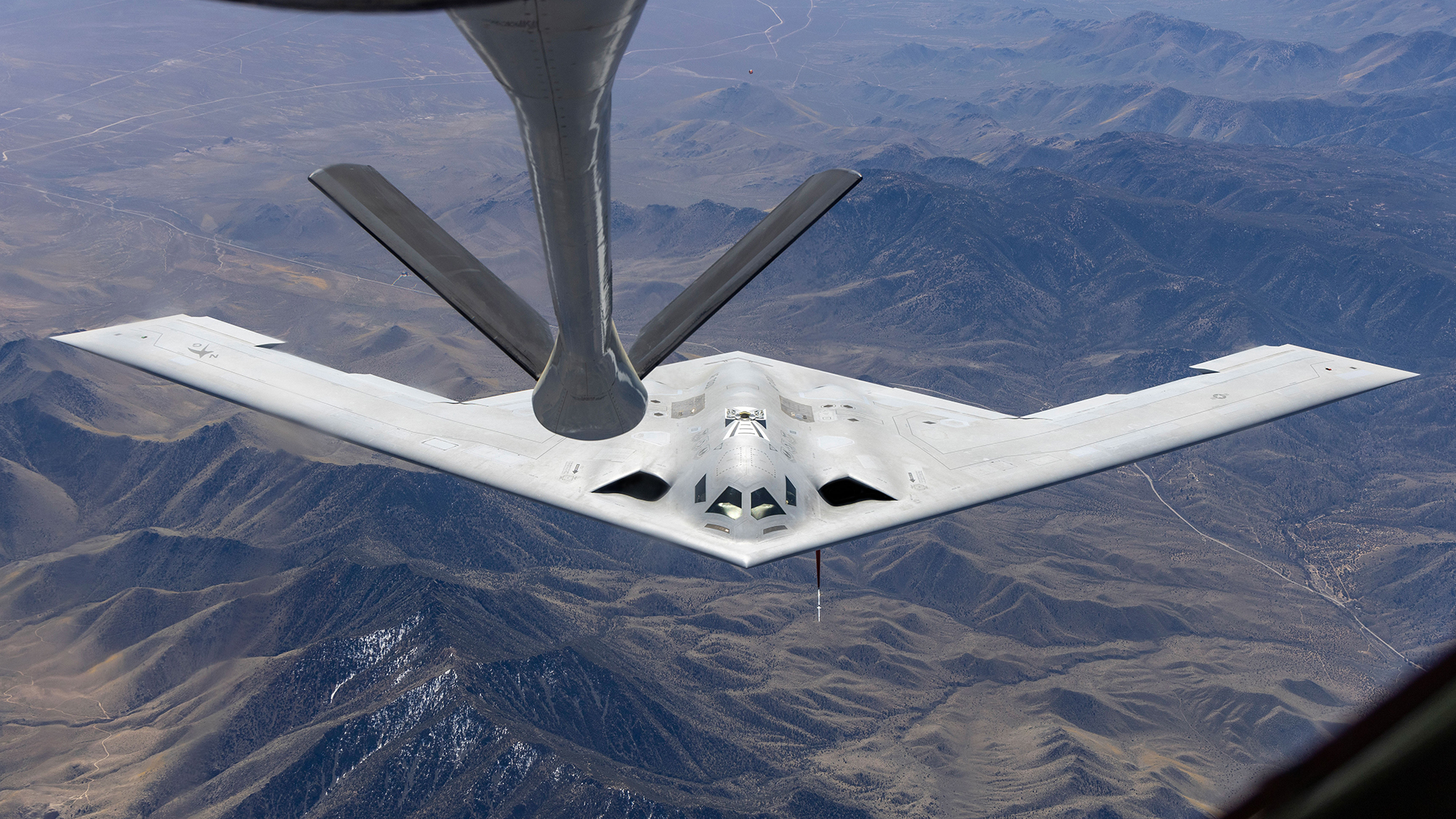
Northrop Grumman is also investing its own resources in expanding the program’s manufacturing infrastructure. The company’s CEO, Kathy Warden, disclosed a $2.5 billion company investment in additional B-21 production capacity during an earnings call with investors in April 2026.
The new facility will expand the infrastructure already used to manufacture the Raider at Plant 42, where multiple aircraft are currently in various stages of production. As we previously reported, the program of record currently envisions the procurement of 100 new bombers.
“The B-21 team has established the foundation to accelerate production responsibly,” said Col. Nicholas Jordan, B-21 Systems program director, Rapid Capabilities Office. “This investment in Palmdale will provide the infrastructure, workforce and manufacturing capacity needed to deliver the Raider to the Air Force at an increased rate.”
The additional capacity could provide the service with greater flexibility as it considers the future size of its bomber fleet. In fact, U.S. officials have expressed interest in acquiring more than 100 B-21s.
However, any increase of the procurement plan is independent from the construction of the new facility. In fact, the Air Force has not formally committed to increasing its planned procurement beyond the program’s current minimum of 100 bombers.
Ellsworth prepares for the Raider
The Air Force is continuing to prepare for the arrival of the first operational B-21s, expected in 2027. As we already reported, Ellsworth AFB will become the B-21’s first main operating base.
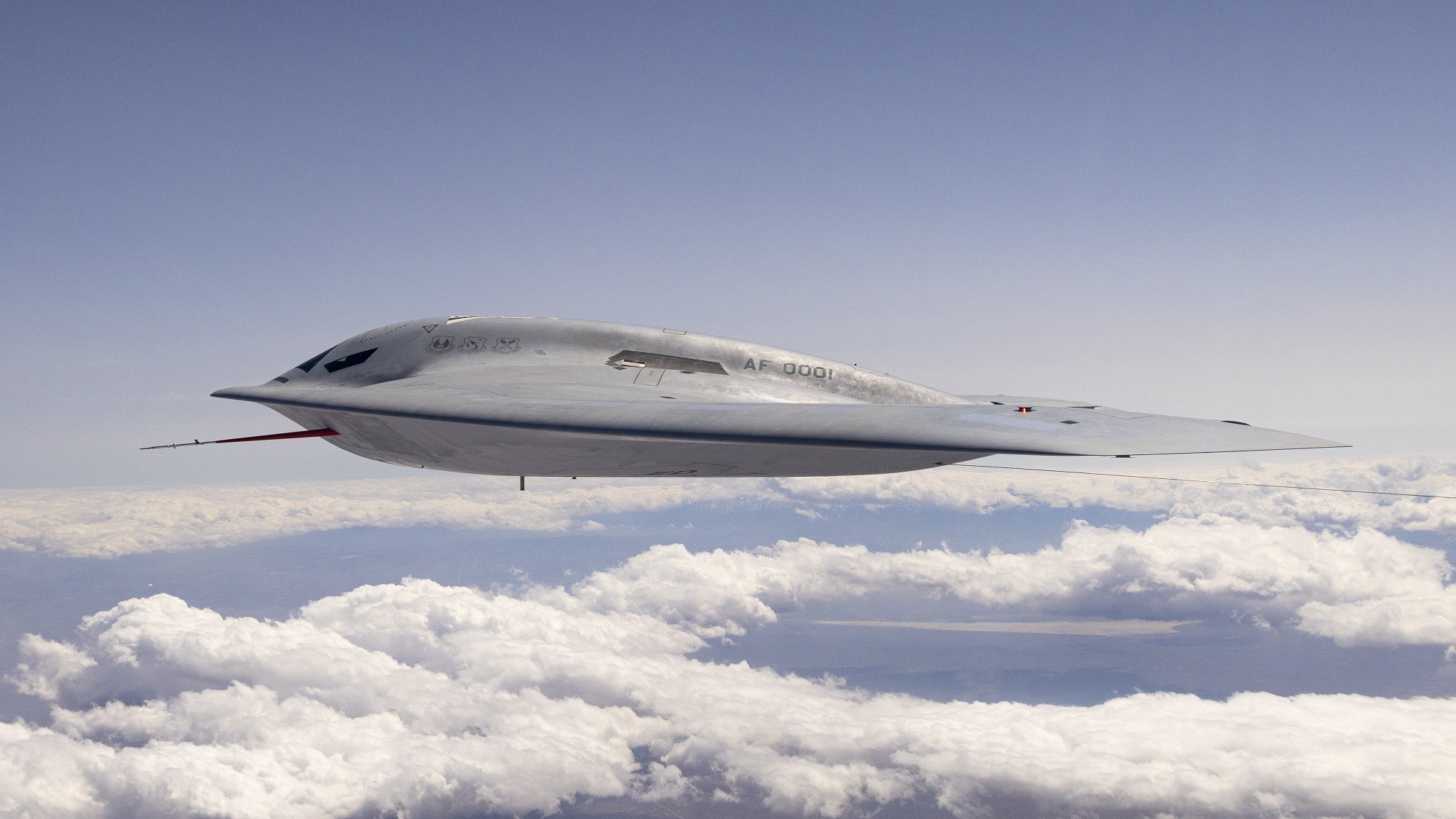
On Sept. 9, the Air Force activated the B-21 Integration Detachment 1 at Ellsworth, “dedicated to coordinating, synchronizing and executing the complex integration of the B-21 Raider.” Lt. Col. Joshua Dawkins assumed command of the detachment during a ceremony presided over by Maj. Gen. Ty Neuman, commander of Eighth Air Force.
“Team Ellsworth faces a combination of demands – sustaining an operational legacy bomber force while preparing to receive the B-21 and building the nuclear community to employ it,” said Neuman. “The activation of Detachment 1 takes some of the responsibility from the 28th Bomb Wing allowing them to focus more fully on the operational B-1 mission and establish a command accountability for uniting thousands of individual actions, decisions, and construction projects into a single operational combat capability.”
Ellsworth is currently being transformed in the hub for the next-generation bomber’s operations. The service described the works as “a phased, deliberate process tightly coupled with operational requirements,” with construction, communications setup, and crew training moving simultaneously to “minimize transition lag and establish a highly functional combat ecosystem.”
“This is a monumental task,” added Neuman, “but I am confident Col. Dawkins is the right leader to write this playbook, one that will ensure Ellsworth [AFB] pays the learning cost once so that future B-21 beddowns at Whiteman and Dyess [Air Force Bases] can execute seamlessly.”
“Detachment 1 ensures we have a commander whose single, dedicated focus every day is solving the integration challenge,” said Col. Erick Lord, 28th Bomb Wing commander. This is particularly important because Ellsworth, as mentioned by Neuman, must prepare for the Raider while continuing to operate its existing B-1B Lancer fleet and maintain its operational responsibilities.
“This methodology directly incorporates hard-learned lessons from legacy bomber transitions, avoiding past pitfalls by ensuring that logistics, training pipelines, and maintenance infrastructure are robustly established before the first B-21 arrives on the flightline in the coming years,” said Neuman.