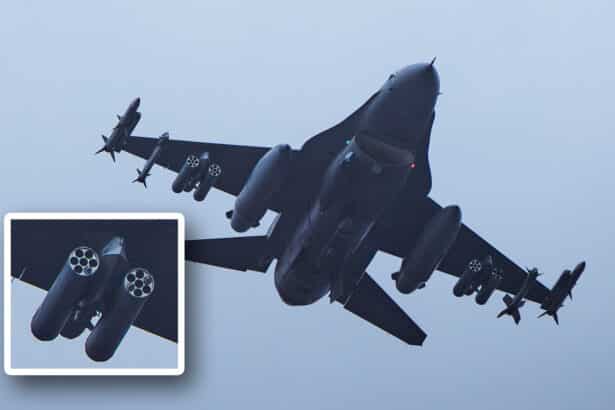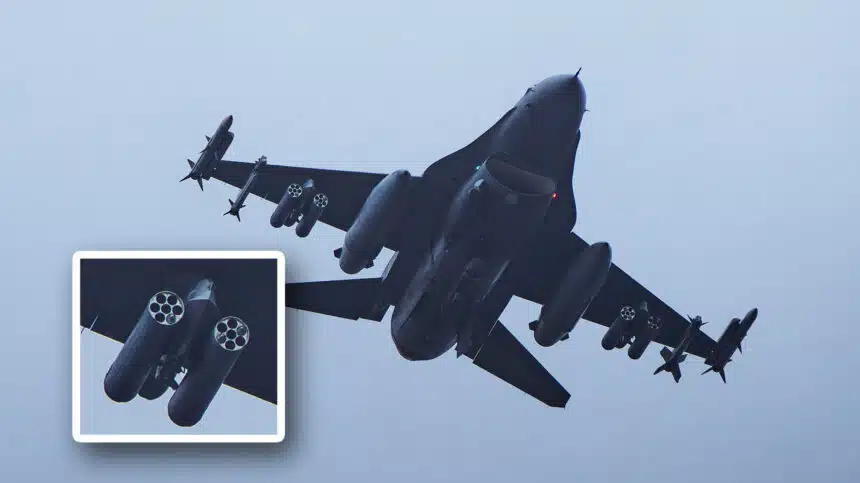
Belgian Air Force F-16s, deployed to Šiauliai Air Base in Lithuania since late October, were seen carrying FZ275 laser guided rockets during a flypast over Riga, Latvia on Nov. 18, 2026.
The presumably live loadout of laser guided rockets, paired with AIM-9M and AIM-9X Sidewinders, AIM-120 AMRAAMs, an AN/ALQ-131 electronic countermeasures (ECM) pod, and a Sniper targeting pod, is the first time we’ve seen Belgian F-16s deployed operationally with FZ275s following trials earlier in 2026.
They were seen fitted to two of Belgium’s six forward deployed F-16s as they took part in a flypast over Riga for Latvia’s 108th Independence Day celebrations.
Happy Independence Day, Latvia! 🇱🇻 https://t.co/cbtp6Jq5ZF
— estokene 🇪🇪 (@estokenee) November 18, 2026
As well as the F-16s and Latvian state and military helicopters, the occasion featured flypasts by U.S. Army UH-60 Black Hawks, Canadian CH-146 Griffons, and an AirBaltic Airbus A220 airliner.
View this post on Instagram
Belgium is one of a number of nations that have worked quickly to integrate smaller, lower cost guided rockets like the FZ275 and the more well known APKWS II to specifically counter the emerging threat from large swarms of small one-way attack drones.
Russia’s extensive use of attack drones like the Geran-2 (also known as the Shahed 136) against Ukraine, as well as its accused use of a number of types of drones to harass NATO member states, means that NATO aircraft deployed on to the Baltic need to be more prepared than ever before to counter the asymmetric threat. Previously, most of these deployments focused on monitoring Russian military traffic to and from the exclave of Kaliningrad – now attention is turned firmly towards the border itself following breaches that Russia usually claims were unintentional.
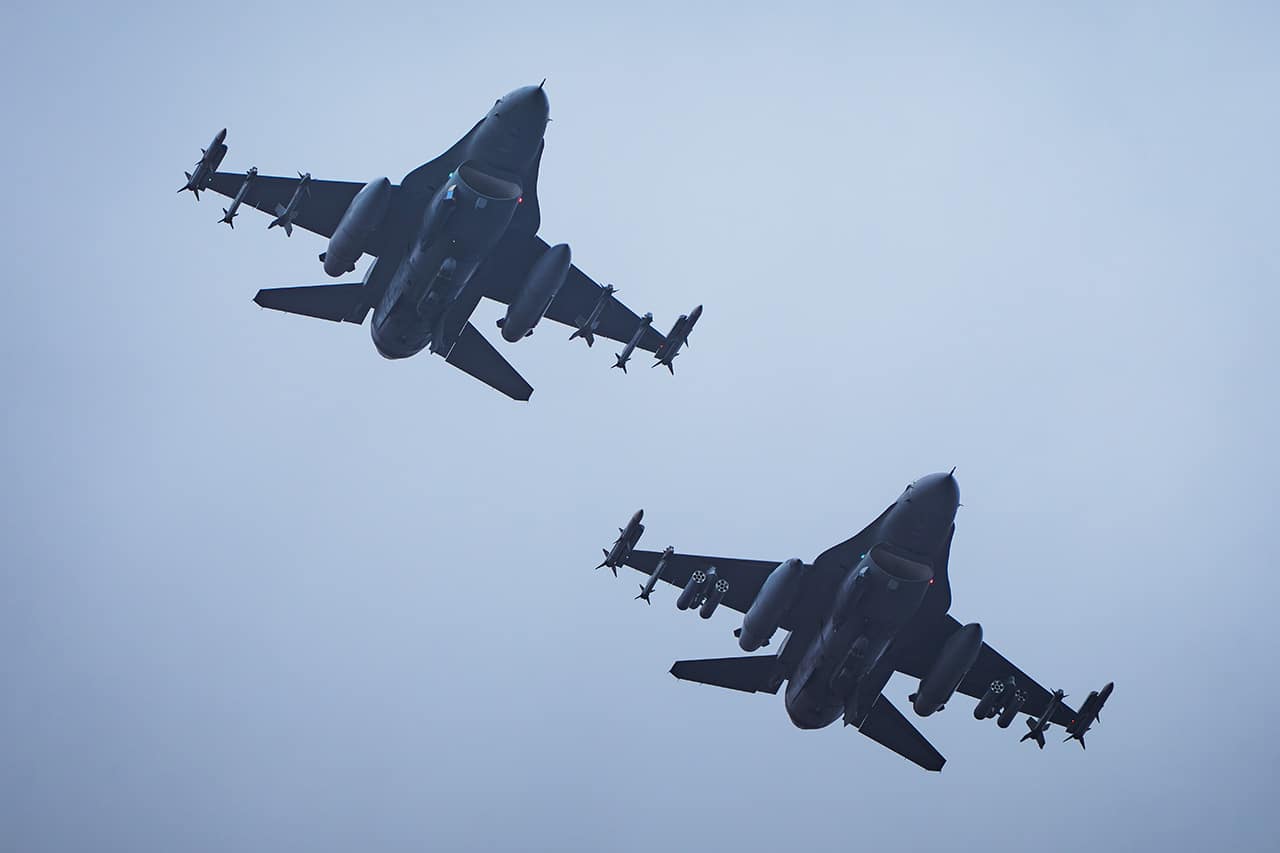
This year, the mission itself – long known under the name Baltic Air Policing – was redesignated as Baltic Air Defence. The name change itself places a greater emphasis on the critical nature of the deployments, but internally the switch from an air policing to an air defence mission increases the mandate granted to pilots and the chain of command above them in terms of how they respond to perceived threats.
Since August, 🇹🇷Turkish Air Force is defending #Baltic skies with F-16s, operating for the 1st time from 🇪🇪 Ämari Air Base. Following @NATO Summit in Ankara, the 22-year Baltic Air Policing mission has now transformed into NATO Baltic Air Defence Mission.
🇹🇷🤝🇪🇪 #WeAreNato https://t.co/4HQtbKfDgV
— MoD Estonia (@MoD_Estonia) August 6, 2026
Under air policing, which is intended for peacetime, jets would be launched to identify, monitor, and escort target aircraft. For the air defence mission, there is a stronger focus on conducting actual intercepts, and in some cases engagements, of hostile aircraft.
The mixed loadout of infrared-guided Sidewinders, radar-guided AMRAAMs, and laser guided FZ275s offers a scaleable response that can be adapted to counter a number of different types of threat during the same sortie.
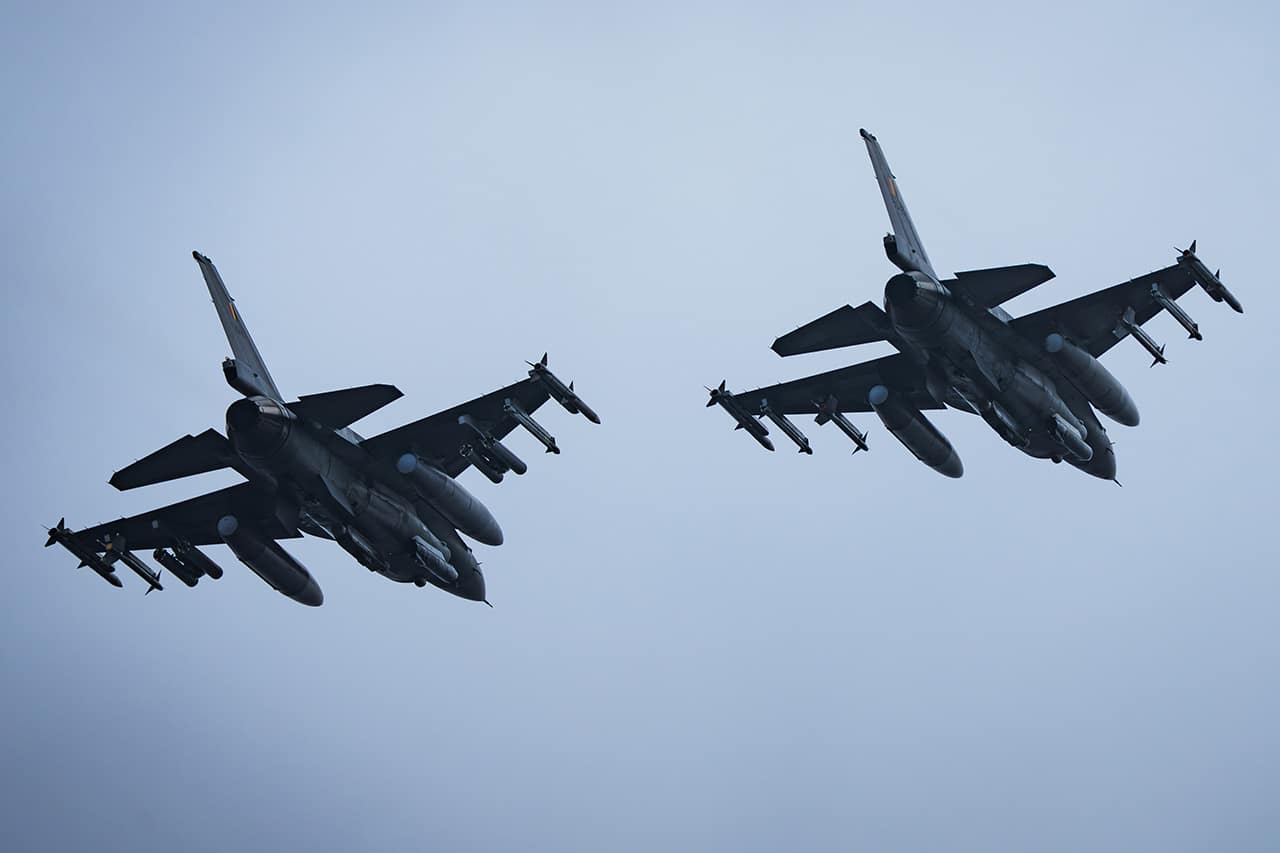
Combining AIM-9M and the newer AIM-9X Sidewinder variants in the same payload may seem odd, though it has been seen before with other operators. It has been noted that the AIM-9M may be better suited than the AIM-9X in some very specific scenarios, though the exact details are unknown. More simply, carrying AIM-9Ms allows for a greater payload while placing a lower burden on the generally more capable AIM-9X stockpile – even missiles have flight hours limitations.
The AIM-9Ms can be seen with the significantly larger guidance fins, with the AIM-9X having much smaller fins for lower drag, adding thrust vectoring to maintain maneuverability.
Many thanks to our friend Gustavs Gailitis (@gustavs_g_photography) for contributing these images.