Footage from THE WATCH: America’s Nuclear Mission shows how demanding tanking is for B-52 crews, just as the B-52J’s new engines are about to change the way the bomber responds to the throttles.
The B-52 episode of THE WATCH: America’s Nuclear Mission, the six-part documentary series created and produced by our friend and contributor Jeff Bolton of NFN Productions, follows a crew of the 5th Bomb Wing from Minot Air Force Base, North Dakota, callsign CHILL 42, through a full nuclear proficiency sortie, with additional footage filmed with the 2nd Bomb Wing at Barksdale Air Force Base, Louisiana.
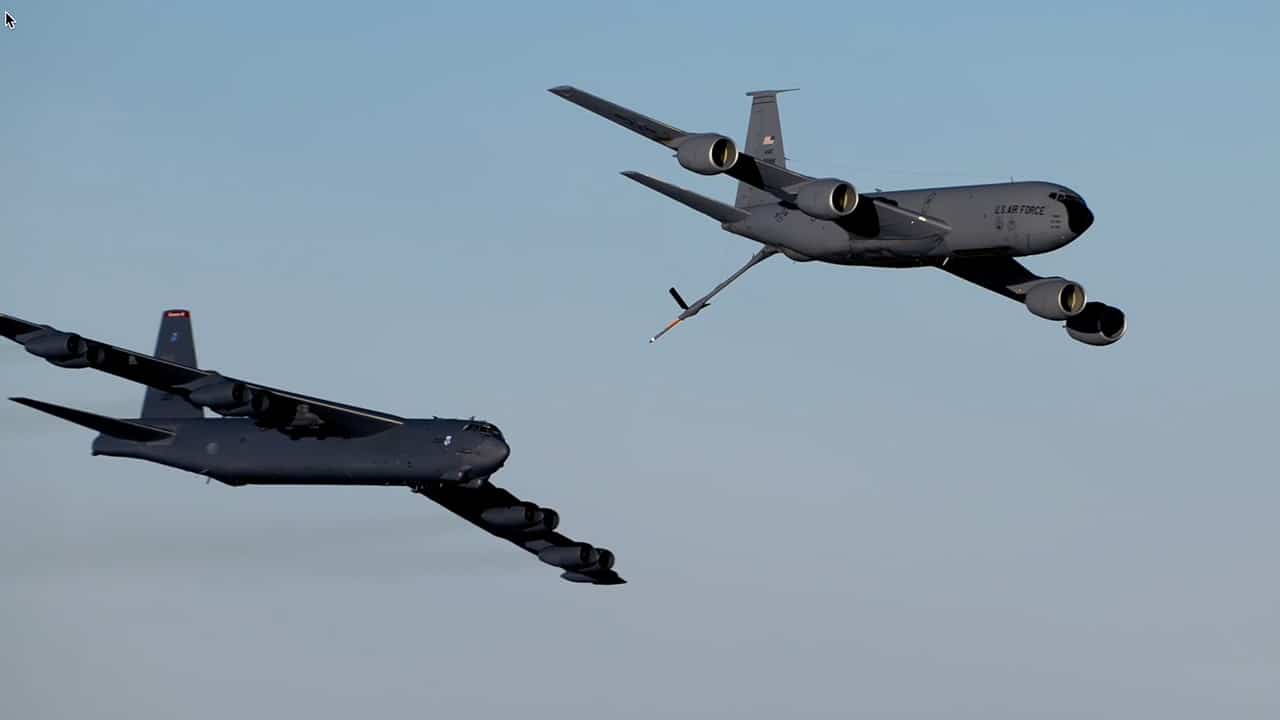
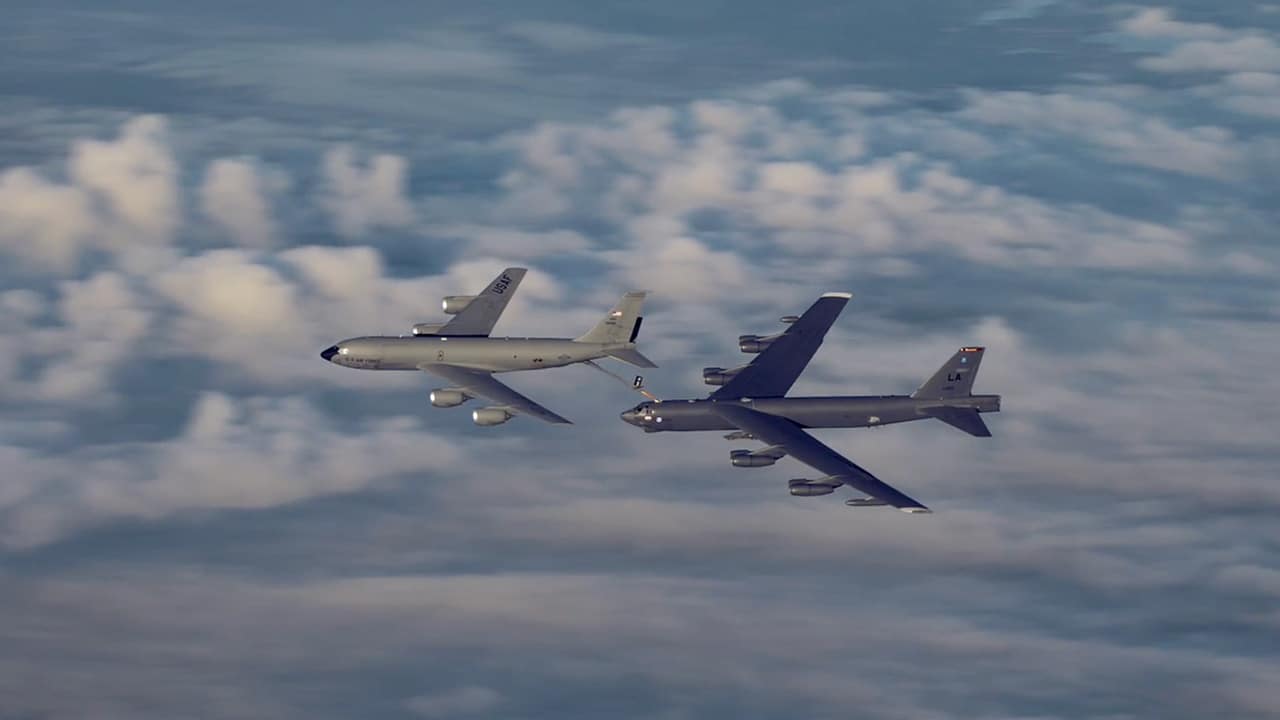
Among the sequences filmed on the flight deck, there is one that anyone interested in how the BUFF (Big Ugli Fat Fellow) is actually flown will appreciate: a complete air-to-air refueling with a KC-135 Stratotanker, shot from the pilots’ seats.
Tanking is a key part of the bomber mission, as one of the pilots explains in the episode: “If we can’t get gas to make it to the launch point, then the mission doesn’t matter.”
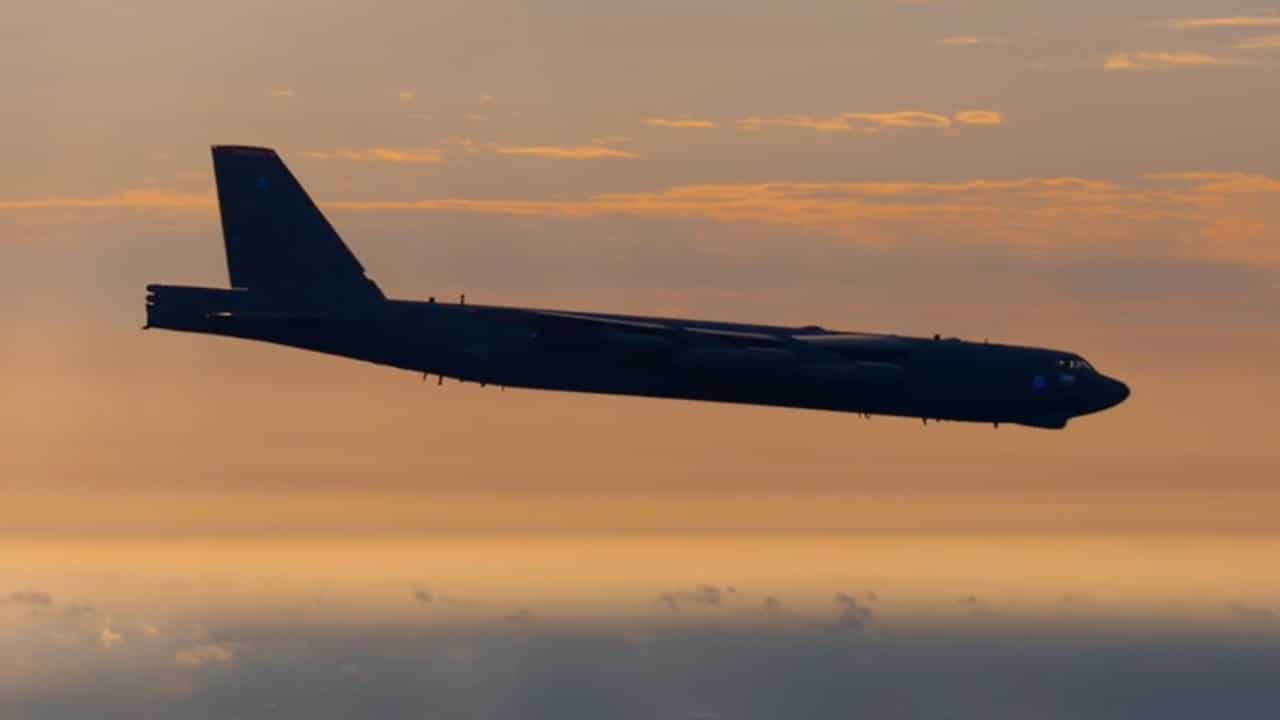
Inertia and spoilers
One of the pilots interviewed compares tanking to endurance sports, describing every B-52 refueling as “the most challenging physical activity I have ever undertaken.” The reason, according to the crew, is inertia: the aircraft is so big that each input takes some time to have an effect, so the pilot has to make a correction and, at the same time, plan the next one to counter it.
Interestingly, the B-52 adds a quirk of its own. The bomber has no ailerons and rolls using spoilers, panels that rise on the upper surface of one wing to reduce the lift on that side. Therefore, as a former crew member notes in the documentary, every turn also slows the aircraft down: one more variable to manage while holding position under the boom.
The U.S. Air Force is well aware of how steep the learning curve is. As we reported last month, B-52 student pilots at Barksdale now train on EARL, a VR (Virtual Reality) air refueling trainer: in a study of 233 students, those who followed the structured VR syllabus needed about 1.7 fewer sorties to reach proficiency. Lt. Col. Brandon Wolf, who helped develop the trainer, described the task as parking a half-million-pound aircraft in a twelve-foot box.
Eight throttles, two pilots
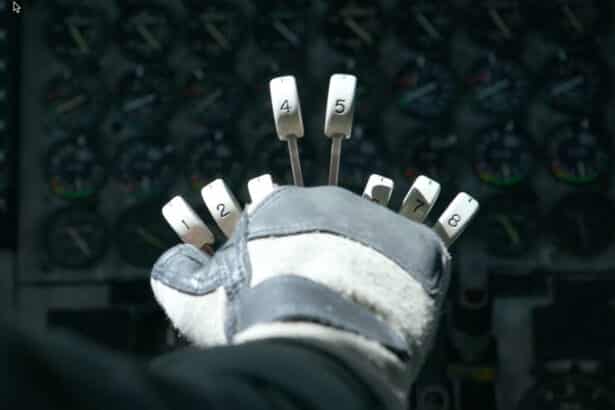
THE WATCH also shows a detail that is rarely explained: how the crew handles the eight throttle levers. During takeoff and the most demanding phases of flight, the pilot flying pushes them roughly where they need to be, while the other pilot fine-tunes each one so that all eight engines are set properly. With eight TF33s, small differences in spool-up time add up, and the crew is basically managing the thrust engine by engine.
Today, according to Aviation Week, those levers are connected through cables and pulleys to the mechanical engine controls of the TF33s.
This will change with the B-52J: Boeing is rewiring the bomber so that the levers send a digital signal to the FADEC (Full Authority Digital Engine Control) of the Rolls-Royce F130.
This has implications that go beyond maintenance. NASA flight research has shown that precise tasks such as close formation flying and aerial refueling are strongly affected by the engine response to the throttle, and that digital engine control software can be used to tune that response. In other words, the way the B-52J responds to the throttles behind the tanker will depend, at least in part, on how the FADEC is programmed.
A lesson from Palomares
Dealing with throttle response, the history of the B-52 includes a well-known precedent. On Jan. 17, 1966, a B-52G collided with a KC-135 during an air refueling off Palomares, Spain: seven airmen were killed and four nuclear weapons fell, three on land and one in the sea. Maj. Larry Messinger, the relief pilot who was flying from the left seat, later recalled that they came in behind the tanker “a little bit fast” and started to overrun it.
In THE WATCH, Mr. Herb Henderson, Chief of Strategic Combat Operations, 92nd Air Refueling Wing says that the pilot used to the different response of another engine applied the throttle input his muscle memory expected, and the bomber accelerated into the tanker. According to the accident reports, the pilot closed in on the KC-135 too quickly and, after being warned of the overrun by the tanker’s boom operator, he reflexively extended the B-52’s airbrakes. On the BUFF, deploying the airbrakes causes a strong nose-up pitch: without enough forward yoke to counter it, the bomber pitched up into the tanker.
Flight testing
As we reported, the B-52J CERP (Commercial Engine Replacement Program) passed its CDR (Critical Design Review) in May 2026, clearing the way for the modification of the first two bombers. The IOC (Initial Operational Capability) of the B-52J, with both the F130s and the new AN/APQ-188 radar, is expected in 2033.
Several aspects will have to be assessed by the test community at Edwards AFB, California, and by the FTU (Formal Training Unit) at Barksdale: how the F130 and its FADEC will be tuned for formation flying and air refueling, whether the eight-lever, two-pilot technique shown in the documentary will still be needed, and how long it will take for crews trained on the TF33 to adapt to the new engines. As far as we know, it’s not been officially confirmed whether air refueling handling qualities are among the objectives of the B-52J flight test campaign, although this seems highly likely given the critical importance of this aspect.

The B-52 is expected to remain in service into the 2050s and, as the crews in THE WATCH like to say, the last B-52 pilot may not have been born yet. Still, when they gets behind a tanker, the eight throttle levers will still be there, commanding the FADECs of eight F130s.