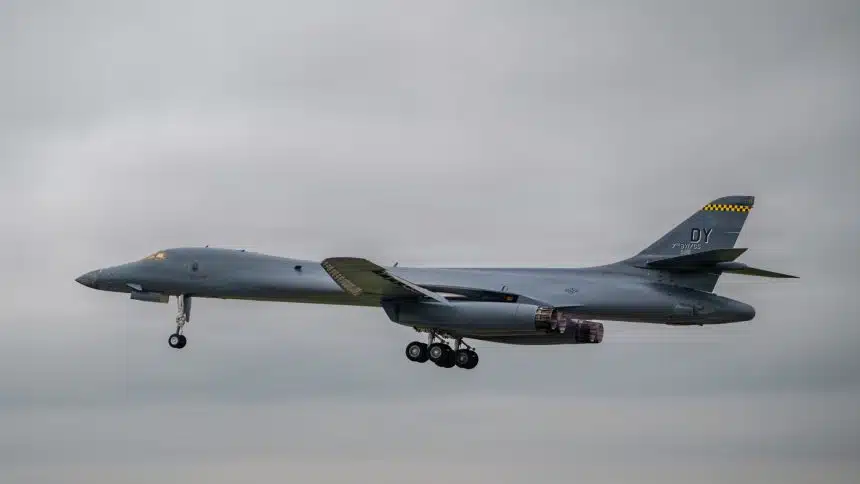
The B-1B 86-0115, now renamed “Apocalypse II,” returned to service at Dyess AFB after being previously retired in 2021.
The U.S. Air Force announced on May 6, 2026, that a regenerated B-1B Lancer bomber has returned to service after a nearly two-year restoration effort that began in July 2024 at Tinker Air Force Base, Oklahoma. The aircraft is the serial number 86-0115, known as “Rage,” that we wrote about in July 2024 when it was pulled from storage at the 309th Aerospace Maintenance and Regeneration Group (AMARG) at Davis-Monthan AFB, Arizona – also known as the “Boneyard.”
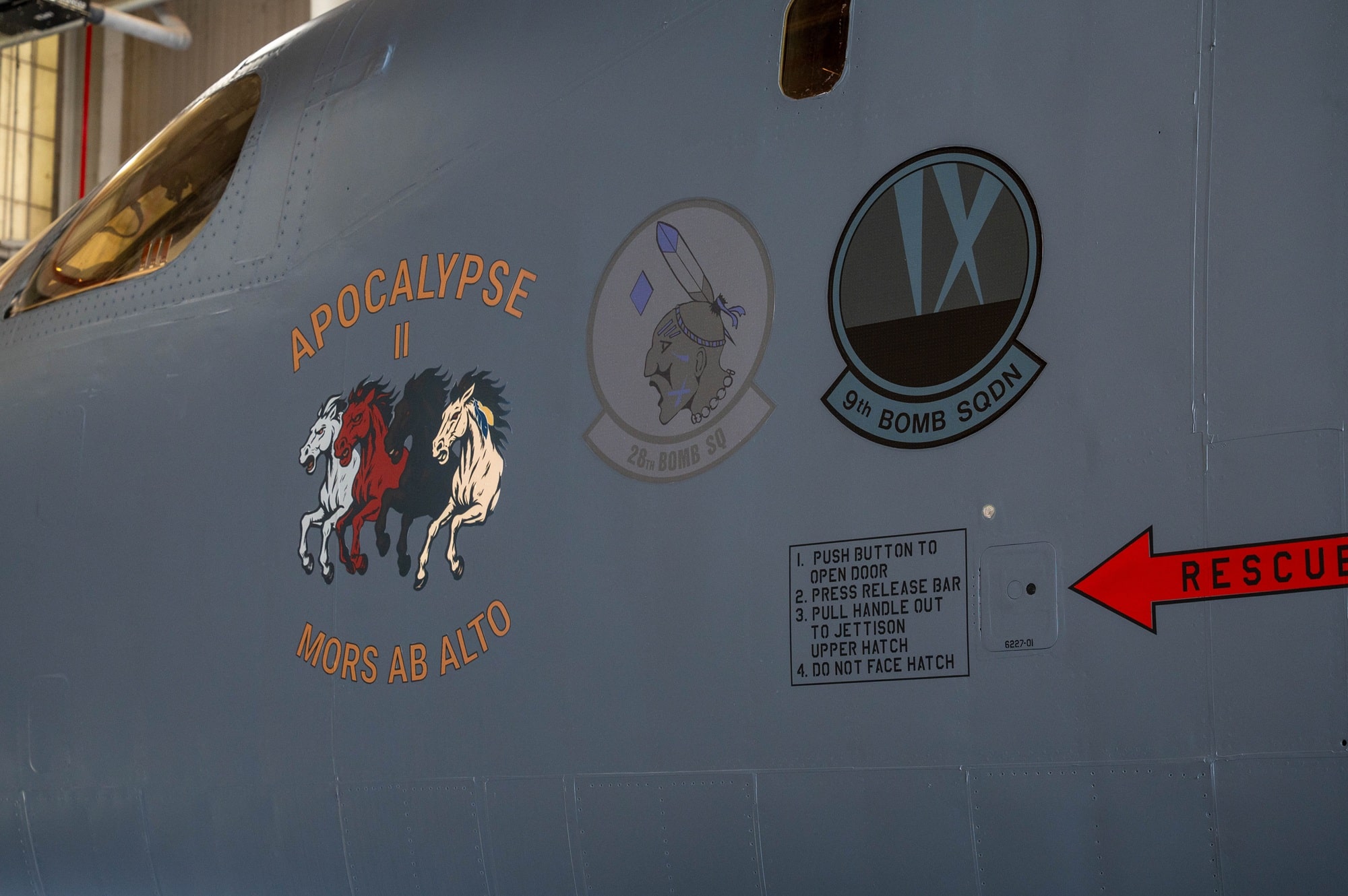
The bomber rejoined the fleet on Apr. 22 at Dyess AFB, Texas, home to the 7th Bomb Wing (7th BW) and its constituent 28th Bomb Squadron (28th BS), where it has received a new name, “Apocalypse II,” and a nose art marking its restoration. This is the second B-1B in the last two years to have been restored back to service after being initially retired, and is coincidentally coming amid a new postponement of the type’s retirement.
This airframe was originally kept in Type 2000 storage at AMARG. It first arrived at the boneyard in 2021 after the retirement of 17 B-1Bs, meant to reduce operational costs and redirect funds towards the B-21 Raider.
Type 2000 is a recallable storage, which keeps the aircraft, covered with silicone-looking spraylat sealant to cover gaps, engines, and glass, available as a source of spare parts for the fleet or for a future regeneration to flying condition. Type 2000 is just a level below the flyable Type 1000 storage.
A bomber retired to the Arizona desert is flying again. ✈️✨
From stripped-down test flights to fresh paint and final launch, #TeamTinker maintainers, engineers and artisans proved once again why sustainment is combat power.
Read the full story 👉 https://t.co/vEWw9ahPdn pic.twitter.com/cjQc0TOsZ9
— Tinker AFB (@Team_Tinker) May 6, 2026
Restoration effort
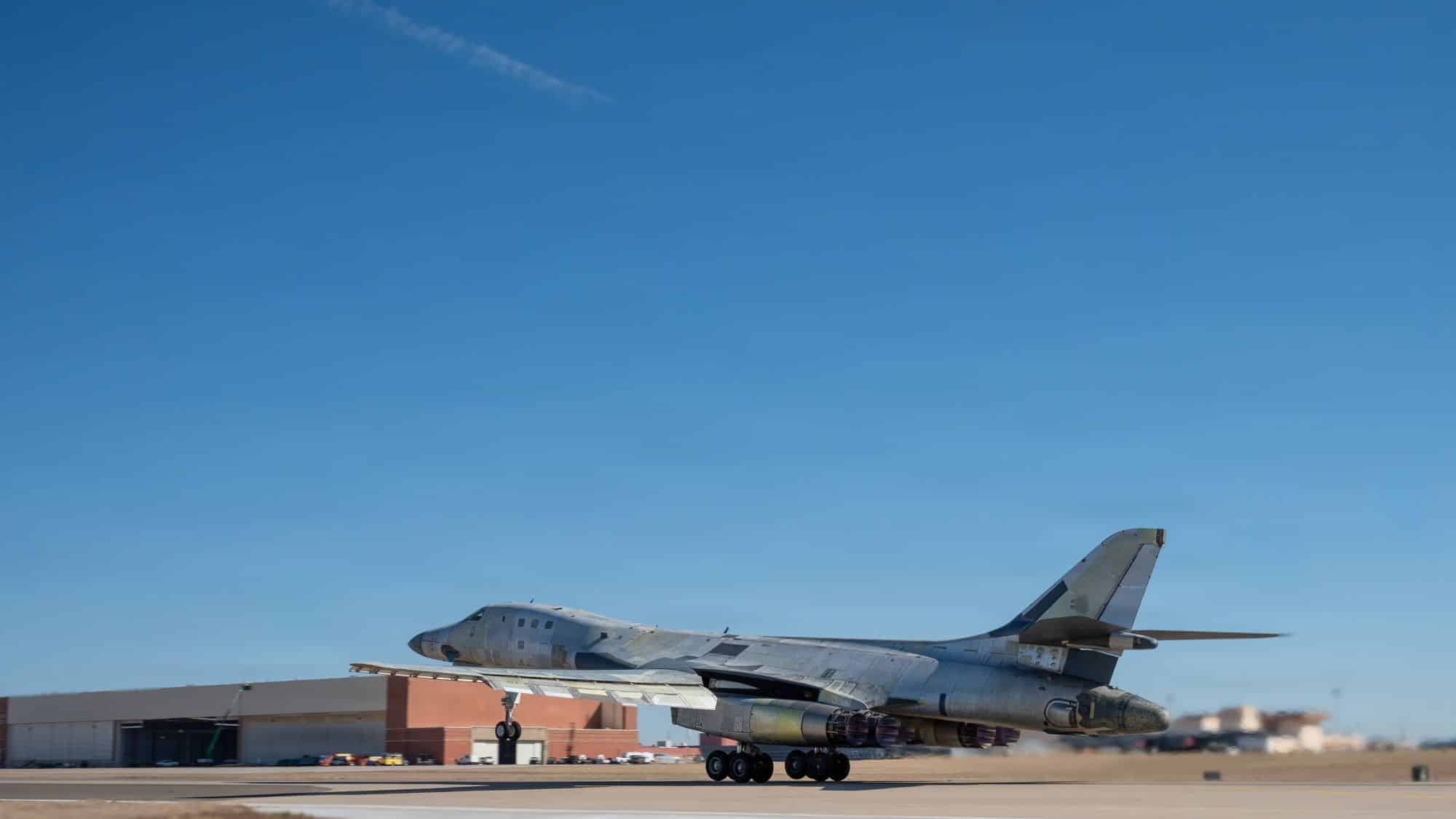
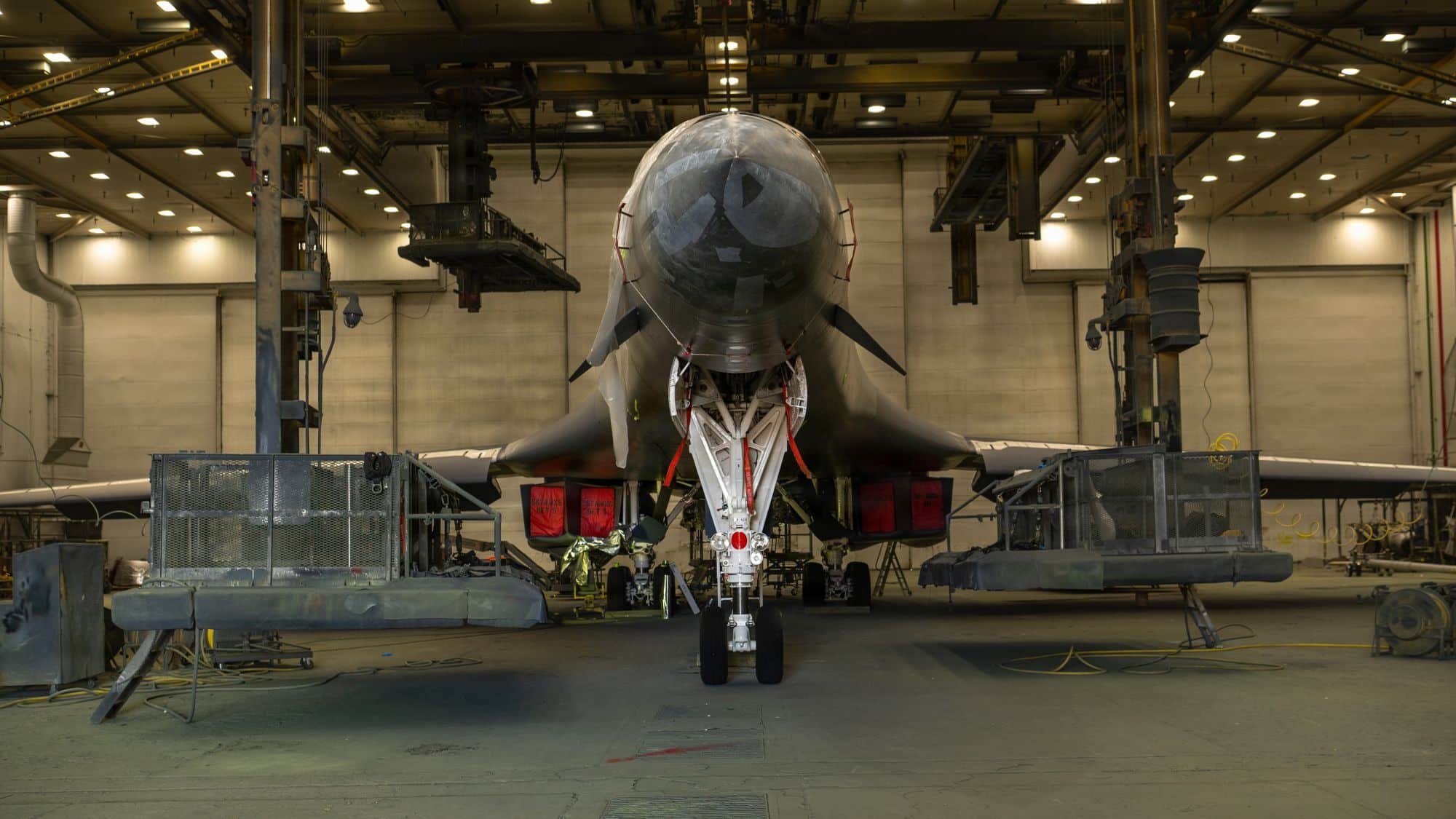
Images on the DVIDS network posted on May 6, 2026, show 86-0115 in a bare-metal configuration, completely stripped of its paint, at Tinker AFB on Feb. 26. At that time, the bomber was undergoing taxi trials and a functional check flight to validate its systems following depot maintenance.
Notably, on the same day, the aircraft was also photographed from the ground during its functional test flight. The aircraft was venting fuel, possibly as part of the fuel systems checks, with its bare metal look making it an uncommon sight.
View this post on Instagram
Subsequent images taken on Apr. 15 and 20 show that the aircraft received its new paint, with a new tail flash making it the 7th Bomb Wing’s flagship. The BONE (from B-One, as the bomber is commonly nicknamed by the crews) finally took off from Tinker AFB on Apr. 22, and headed to Dyess AFB, Texas, notably with its serial number obscured, possibly for Operational Security (OPSEC) reasons.
The press release by the 72nd Air Base Wing at Tinker AFB said that over 200 Airmen and civilians from the 567th Aircraft Maintenance Squadron (567th AMXS) “worked extended shifts completing system overhauls and structural repairs, replacing more than 500 components.” This was followed by the test flights by pilots from Tinker’s 10th Flight Test Squadron.
The service explained that, once the bomber passed the test flights, it was certified as Fully Mission Capable and moved to the paint facility to complete the regeneration process. “Three rotating teams worked around the clock to prepare the aircraft for final delivery,” mentioned the release.
567th AMXS master scheduler Steven Mooy credited the maintainers and technicians for the successful restoration. “They overcome so many obstacles and work together to accomplish repairs that nobody else in the bomber community could do,” said Mooy.
The service also said that “the regeneration effort comes as the Air Force continues modernizing its bomber fleet while sustaining legacy platforms critical to current operations.” The B-1B’s retirement has been recently postponed to at least 2037, and the bomber fleet is at the center of a modernization program which sees upgrades for the B-1 and B-52 Stratofortress and the introduction of the new B-21 Raider.
Other B-1Bs regenerated by the USAF
The U.S. Air Force has already regenerated B-1B bombers from storage at AMARG in the past, with this being the second in the last two years. A major case involved serial number 85-0081 “Lancelot” that began the restoration effort in April 2024 to replace 85-0089 of the 7th Bomb Wing, which experienced a catastrophic engine failure on April 20, 2022 at Dyess AFB.
Tinker AFB was also involved in the restoration, since it is the largest depot repair complex in the Air Force. That was the first time in 20 years that a BONE was put back in service after being retired, following the retirement of 33 B-1s in 2003 and the return of seven of them to service the next year.
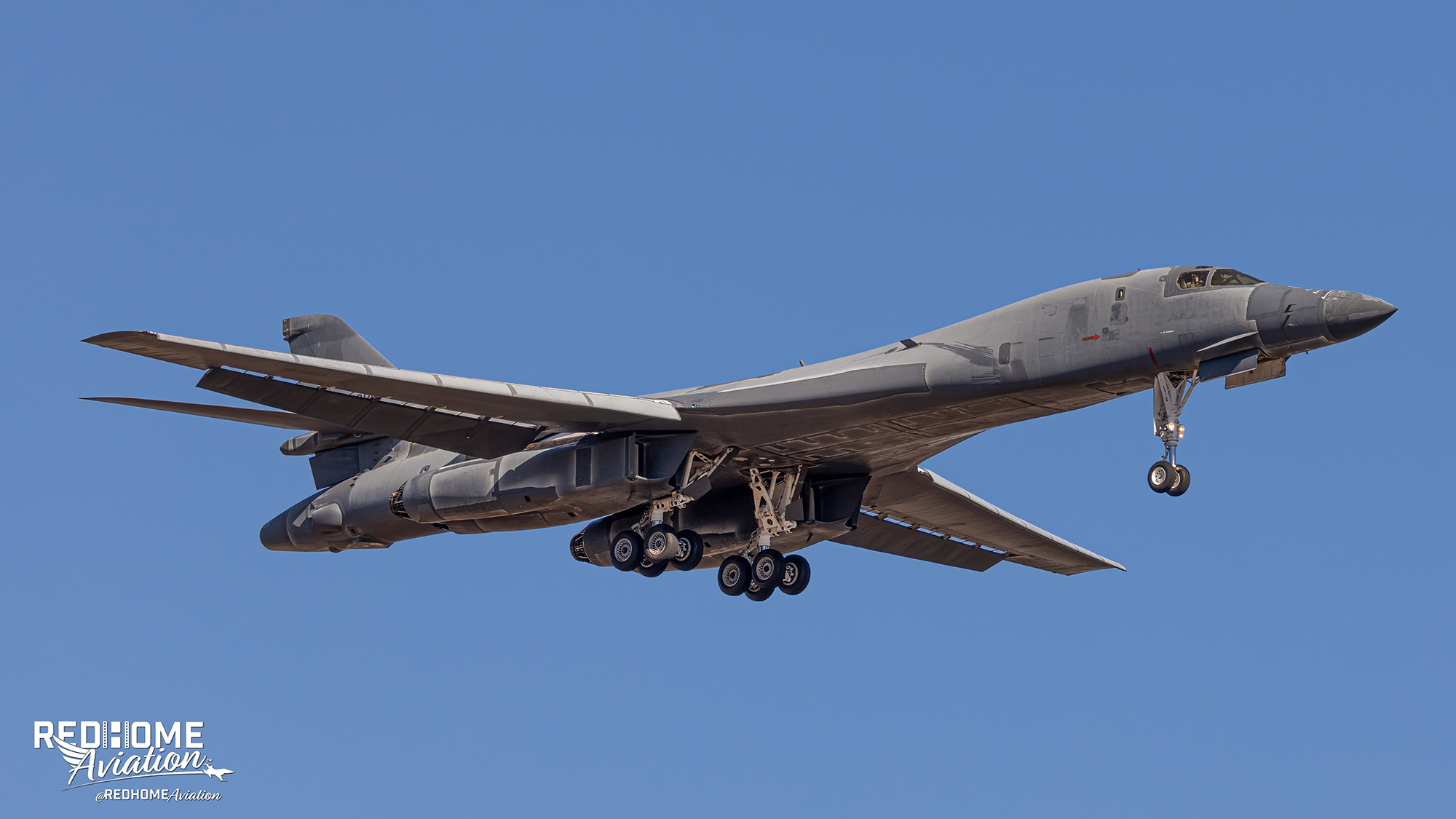
“Lancelot” was then followed by 86-0115 “Rage,” which flew from the boneyard to Tinker AFB on July 2, 2024, to begin the restoration. Retired in 2021, “Rage” was recalled to duty to bring the fleet back to the Congressionally mandated 45 B-1Bs, and is now again in service.
The U.S. Air Force currently has 40 B-1B bombers in service, as per the 2026 World Air Forces report that counted figures until December 2025. The B-1B will remain the mainstay of the Air Force’s long-range conventional strategic strike platforms, delivering both standoff and direct attack munitions.
The latest upgrade for the bomber is the integration of the AGM-183 Air-Launched Rapid Response Weapon (ARRW) hypersonic missile. This will help keep the bomber relevant until the arrival of the B-21 Raider, which will replace both the “BONE” and the B-2 Spirit.