The Canadian government has announced that it is entering into discussions with Saab for the supply of the GlobalEye AEW&C aircraft, beating out the American Boeing and L3Harris.
On May 27, 2026, Canadian Prime Minister Mark Carney announced at the CANSEC exposition, Canada’s largest defence and security trade show, that Canada would procure the GlobalEye AEW&C aircraft. For any readers who are James Bond fans, Carney did mistakenly call the aircraft “Saab’s Goldeneye,” though he quickly corrected himself before explaining the GlobalEye’s capabilities and their suitability to Canada’s needs, both industrial and military.
To this end, the partnership between Canada and Saab aims to continue the production of the Global 6500 aircraft for integration with Saab’s Erieye radar system, with “no less than one-third of the projected fleet of GlobalEyes” to be built in Canada. This means that “at least 40 aircraft” are to be built in Canada, for Canada and its allies over the next 15 years.
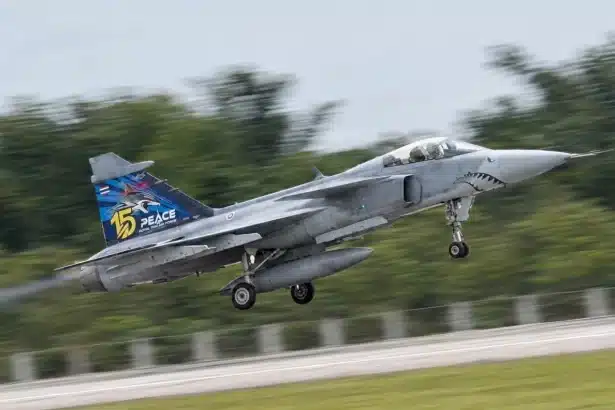
Saab is aiming for the GlobalEye to be the replacement for a number of AEW&C aircraft around the world, with many states operating older variants based on the Saab 340 turboprop aircraft. Currently no firm order has been signed, but this still marks a significant step forward in Canada’s desired acquisition of an AEW&C capability, with the Royal Canadian Air Force expressing an intention to operate six aircraft based on the operational requirements and expected serviceability rates of the aircraft.
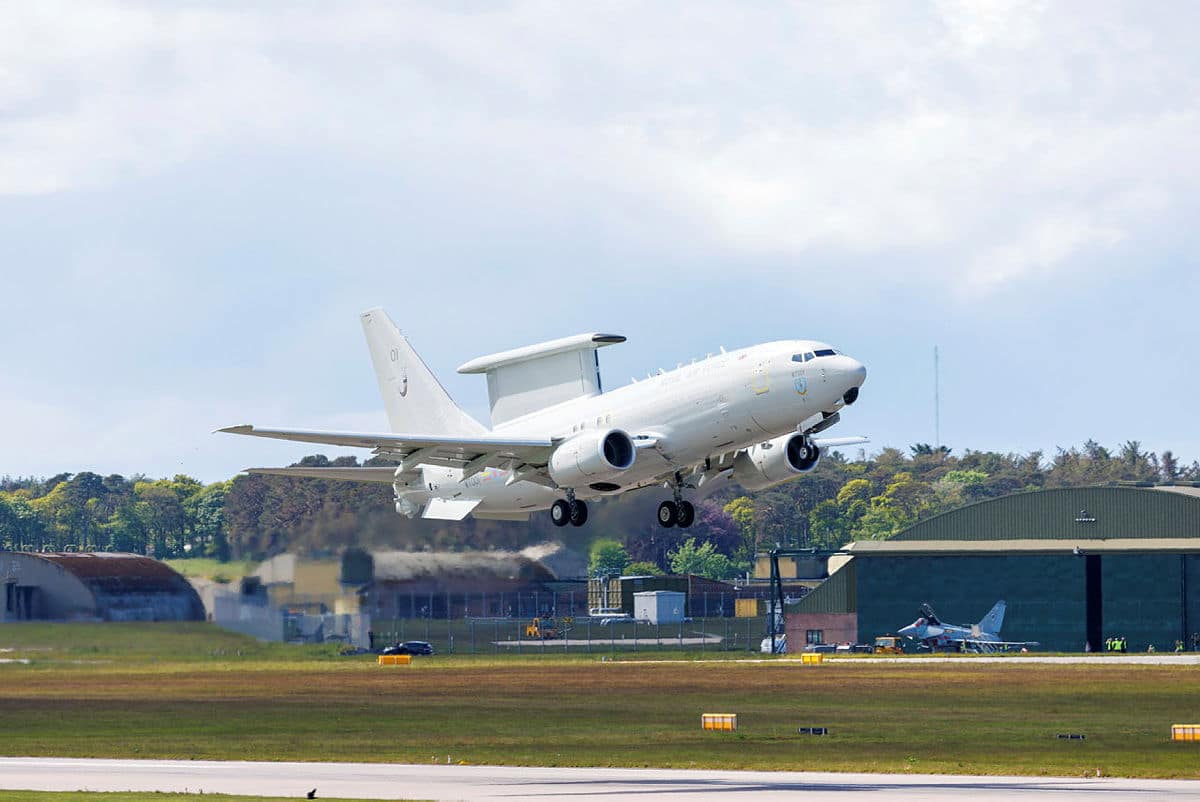
This announcement is significant as it beats out both American options, notably the E-7 Wedgetail built by Boeing, as well as the AERIS X produced by L3Harris, which is also based on the Global 6500 airframe. Despite the E-7 being an extremely powerful and successful AEW&C aircraft, with Australia’s being in high demand for supporting NATO and Ukraine, the aircraft has suffered from procurement woes in recent years.
On board systems obsolescence, in part due to an inactive production line prior to Britain’s order in 2019, alongside problems within Boeing have delayed the delivery of aircraft to the United Kingdom. As well as this, U.S. government plans to use space based AEW&C systems almost killed the American order of aircraft, with uncertainty around American support leading to NATO cancelling their order of Wedgetails.
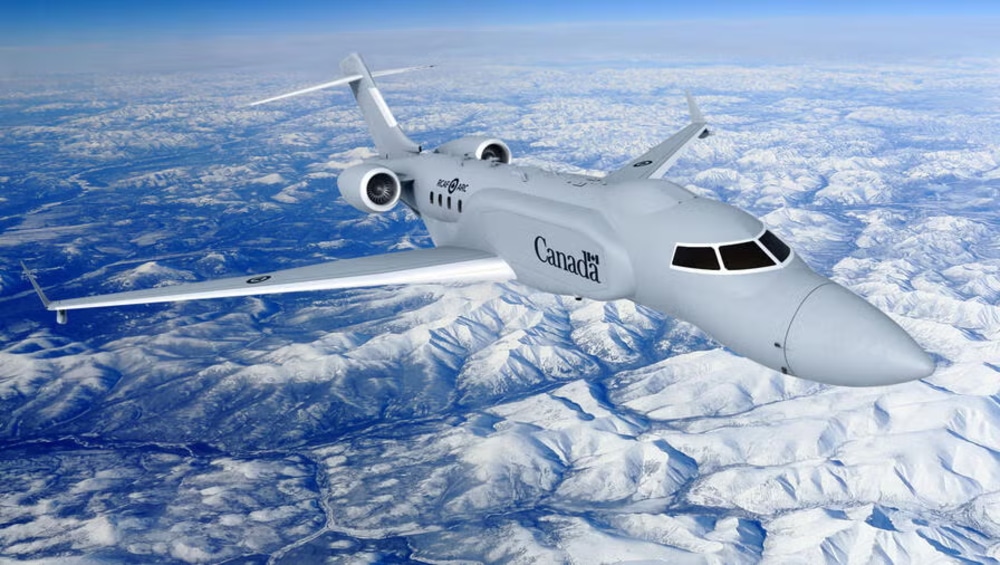
Whereas, L3Harris’ design looked a more likely option due to its use of a Canadian aircraft and American on board systems, allowing for a better integration with NORAD, as well as its proposed air-to-air refueling capability. However, the GlobalEye is a proven design that represents closer integration within Europe’s defence ecosystem, which Canada desires, following threats from the Trump administration over Canada’s sovereignty, in addition to the significant number of tariffs placed on Canada by the U.S.
Interestingly, press releases by the Canadian government highlight the aircraft as a boost to Canada’s contributions to the North American Aerospace Defence Command (NORAD), likely aimed at placating some of the Trump administration’s ire. Yet the deal still marks a significant step away from the U.S. in the defence sphere.
Great news for Canadian jobs. The majority of the Canadian-made Saab/Bombardier GlobalEyes will be for export & eligible for CCC/EDC financing. Making the GlobalEye even more attractive to smaller nations currently flying legacy Saab turboprop AEW aircraft. https://t.co/ng37pN6hN7 pic.twitter.com/e8YHiLRS5a
— Alex McColl (@AlexRMcColl) May 27, 2026
On the proposed procurement, Prime Minister Carney stated that:
“The first job of the government is to keep Canadians safe. Our government is protecting Canadians and supporting our Allies with an approach that transforms defence procurement. With our new strategy, we are building our economy and creating careers in the skilled trades, science, and engineering. The GlobalEye procurement will help us secure our North and build our economy at once.”
GlobalEye would provide the Royal Canadian Air Force with advanced airborne surveillance capabilities allowing the nation to better detect, track, and respond to threats at long range, in the Arctic region of Canada’s North.
Micael Johansson, President and CEO of Saab, stated that:
“We welcome Canada’s decision to enter into discussions with Saab as the preferred supplier of the future Canadian AEW&C capability. GlobalEye offers proven capability for the Royal Canadian Air Force, sovereign ownership for Canada and comprehensive and skilled work for Canadian industry.”
Alongside this announcement, Saab has announced that it is expanding its relationship with Canadian defence company CAE, which produces flight simulators to airlines and the military. With the AEW&C aircraft talks, Saab and CAE will work together on producing training systems to allow the aircraft to enter into service smoothly.
To this end Matt Bromberg, President and Chief Executive Officer of CAE, stated that:
“CAE’s world-class defence expertise will be critical to enabling a high-performance AEW&C capability for Canada…Building on our longstanding collaboration and trust with Saab, this agreement reflects our shared commitment to delivering innovative, integrated solutions that strengthen operational performance and support Canada’s defence priorities.”
GlobalEye AEW&C
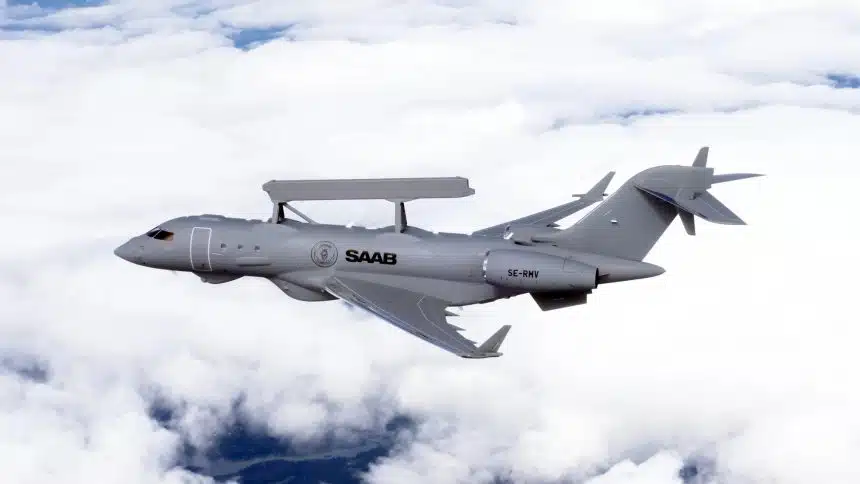
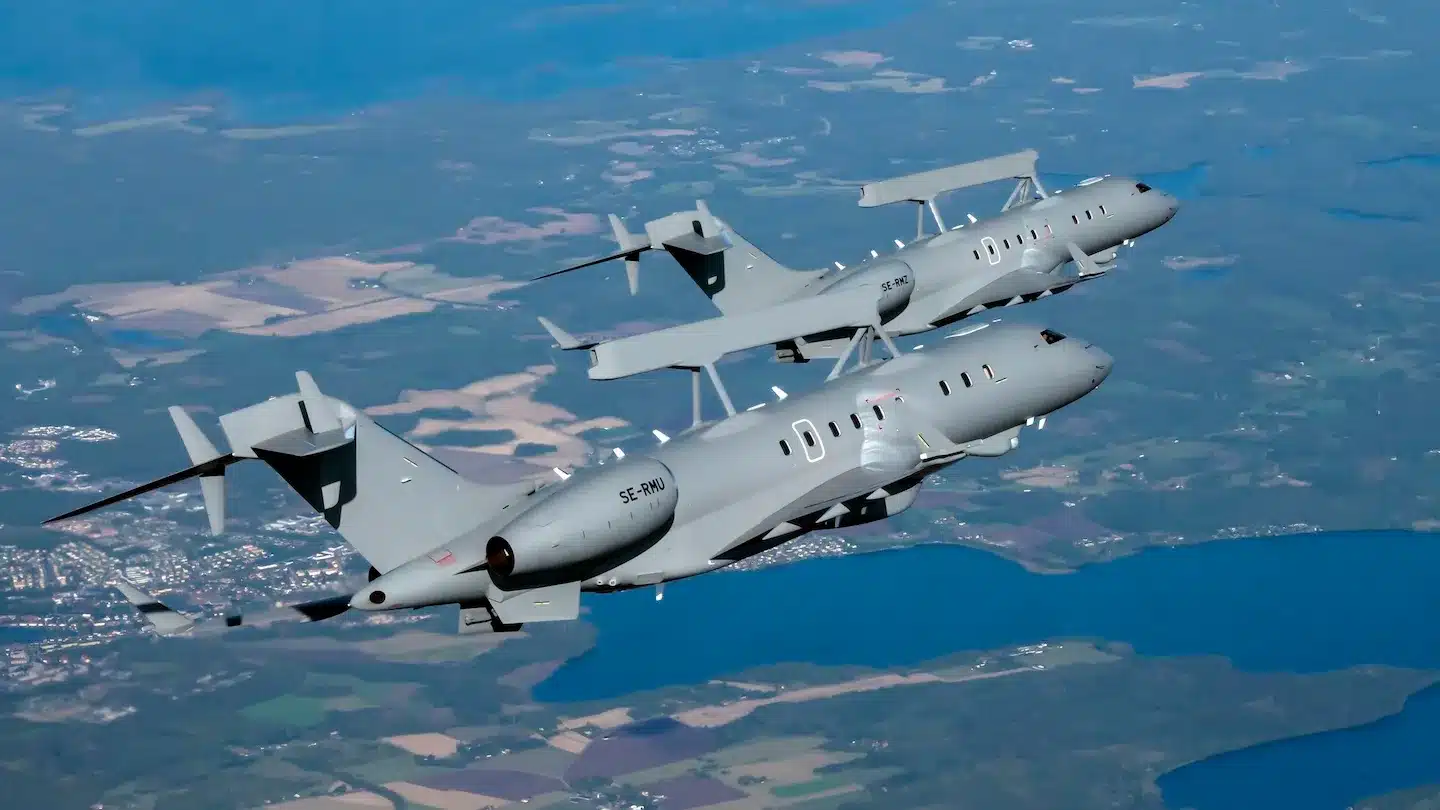
Saab’s GlobalEye is built on the Canadian-manufactured Bombardier Global 6500 aircraft, supporting domestic Canadian production, and it is fitted with Saab’s Erieye radar system that has exploded in popularity on the international market. Saab AEW&C products are in service across the world, with Poland, Thailand, Sweden, Ukraine, Pakistan, Saudi Arabia, Brazil, Greece, Mexico and the UAE currently operating them, with some nations having used them in combat. In addition, France has recently ordered two GlobalEye aircraft, with the platform also a strong contender for replacing the E-3A Sentry in use by NATO.
According to Saab the GlobalEye is the only AEW&C aircraft on the market that can provide “long-range air, sea and land surveillance in real time, from a single platform.” However, other AEW&C aircraft with multi-role radars can also perform ground and maritime surveillance functions, even if in a more limited capacity.
The GlobalEye is fitted with the Leonardo Seaspray 7500E maritime surveillance radar that utilises synthetic-aperture radar and ground-oriented moving target indication modes allowing for effective maritime tracking. Alongside this, the aircraft also carries an electro-optical/infrared sensor, allowing for visual tracking of hostels, making the GlobalEye an effective all round surveillance platform.
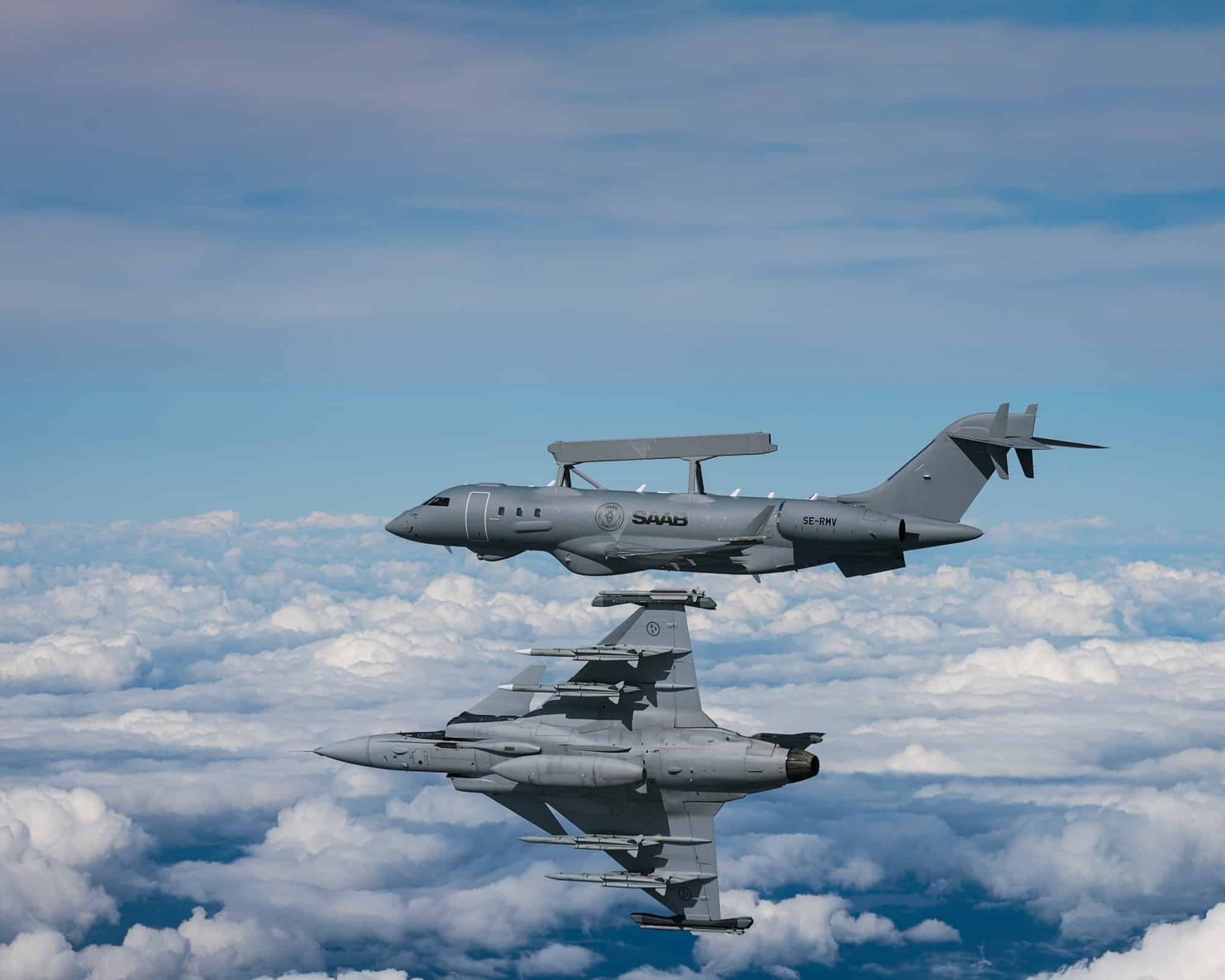
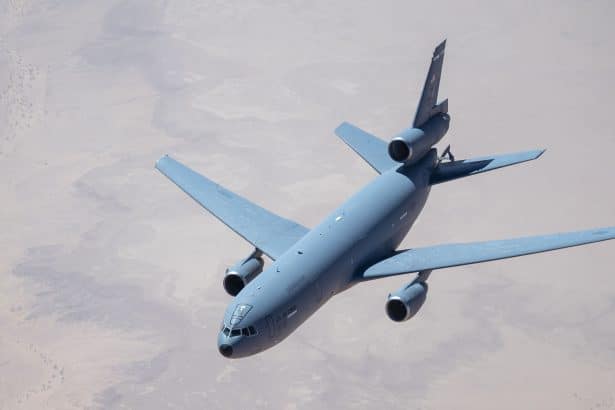
It does come with some disadvantages in comparison to the larger E-7 Wedgetail, for example, lacking the ability to perform air-to-air refueling (AAR), which is essential for AEW&C aircraft during long operations. AAR of AEW&C aircraft was essential for NATO’s air campaign over Libya, allowing E-3 Sentries to stay on station providing AWACS support for longer mission durations. The GlobalEye has a 12 hour endurance, whilst the Wedgetail has flown combat missions in excess of 17 hours, thanks to its AAR capability.
The Wedgetail also uses the Northrop Grumman MESA electronically scanned radar, providing full 360-degree coverage and a detection range exceeding 600 kilometers allowing the aircraft to detect aircraft and maritime craft with the same radar. GlobalEye lacks a full 360 degree view as the fore and rear 30 degree arcs are blind to the aircraft. This is a severe vulnerability that adversaries can exploit if the aircraft is not managed carefully, as approaching aircraft and missiles could stay in the aircraft’s blind spot to score a kill from long range.
Carney government in talks to buy GlobalEye spy planes from Swedish Saab to defend our Arctic, rejecting US bids. Speculation is growing that Canada will buy Saab Gripen jets over American F-35s.
Canada is reducing reliance on the USA and asserting independence. pic.twitter.com/OQKch8FKXC
— Riley Donovan (@valdombre) May 27, 2026
The GlobalEye also has a lower number of mission consoles in comparison to the E-7, being equipped with between five and seven, in comparison to the ten on the Wedgetail. Command and control is the most important role of the AEW&C aircraft, with on board air battle managers responsible for deconfliction of aircraft in their area, assigning missions and providing early warning of oncoming threats. The smaller number of mission consoles for this role does limit the effectiveness of the GlobalEye in providing this capability, though it is just one of many trade offs that come with a cheaper and smaller platform.
Canada has decided to move forward with Saab GlobalEye as its new airborne capability for Airborne Early Warning and Control. I look forward to welcoming Canada into the GlobalEye family.
GlobalEye is a highly modern and capable system that now has earned the trust of a fourth…
— Ulf Kristersson (@SwedishPM) May 27, 2026
A small number of AEW&C aircraft cannot be in two places at once, and the overall early warning capability can be hampered by maintenance troubles taking aircraft out of operation. A large number of GlobalEyes in comparison can make up for this, providing more coverage as a collective group, in comparison to the larger aircraft. As with all platforms used by every military in the world, capabilities are trade-offs, and Canada in seeking the GlobalEye is making the best decision based on its military and political needs.
An Abridged History of Canadian AEW&C
Canada has had involvement with AEW&C projects prior to this announcement, having been a key player in NATO’s use of the E-3A Sentry. NATO commanders had desired an AEW&C platform to monitor the Inner German border and provide early warning of Soviet aircraft approaching, so that NATO fighters could scramble and intercept them. There was also a requirement for an aircraft that could provide a limited maritime patrol capability, to secure Europe’s communications to the United States and Canada.
NATO AWACS callsign NATO029 (Boeing E-3A Sentry, reg LX-N90453) has been holding in continuous oval racetrack orbits over eastern Turkey near Konya airbase (KYA) for more than 8 hours now… steady at ~35,000 ft . Not a short CAP; this is extended loiter.
long-duration orbits… pic.twitter.com/2yGDfqeNsT
— Fahad Naim (@Fahadnaimb) March 14, 2026
As a result, NATO went to Boeing for the E-3A Sentry, with the price of 18 airframes split between the U.S., West Germany, Italy, Belgium, Denmark, Norway, Turkey, Luxemburg, Portugal, Greece and of course Canada. These aircraft, based at Geilenkirchen in Germany, are manned by crews from all the participant nations. They formed NATO’s Airborne Early Warning and Control Force (NAEW&CF) and were eventually joined by seven E-3D aircraft from the UK, increasing the potency of the overall force.
Canadian E-3A operators would serve on the aircraft throughout the closing years of the Cold War and into the early 2000s, with Canadians providing an essential service during NATO’s Libya intervention, Operation Unified Protector (OUP). Canadian air battle managers on numerous occasions successfully vectored NATO aircraft to targets in Libya that were targeting civilians and rebel positions.
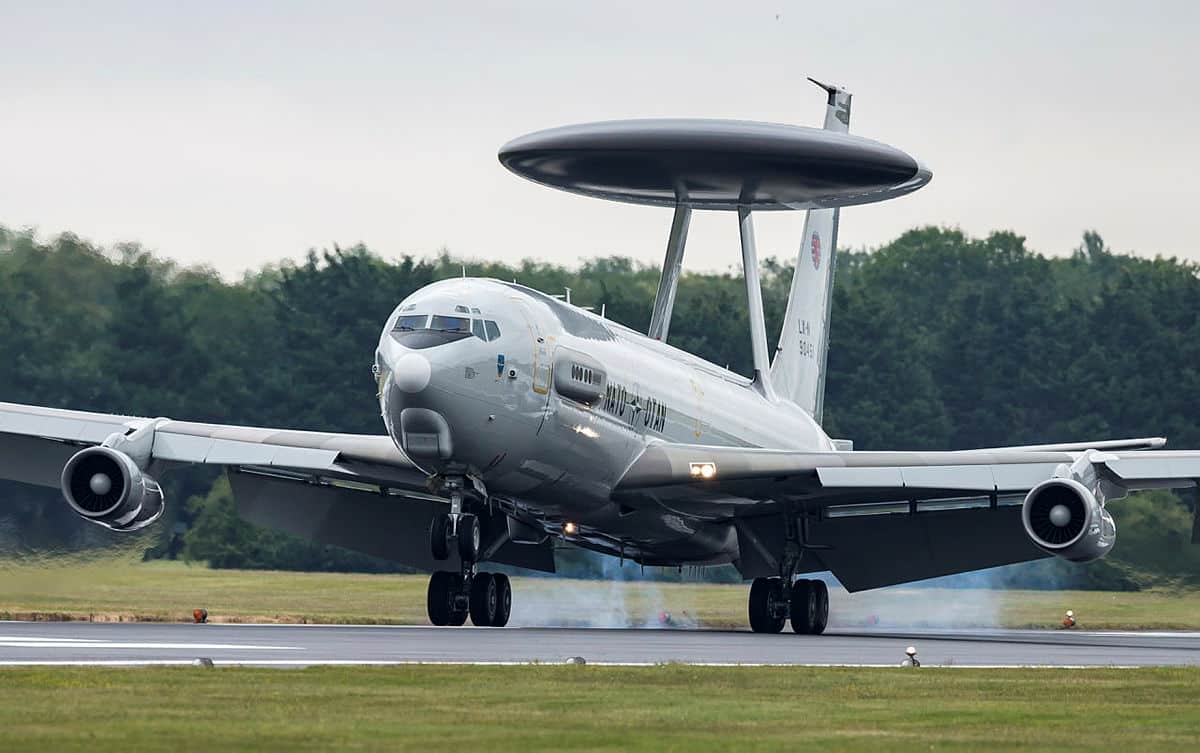
On one such occasion, the Canadian frigate HMCS Charlottetown detected evidence of Gaddafi’s forces attacking civilians near the city of Misrata. The warship then forwarded this information to the Canadian weapons controller on an E-3A AWACS aircraft, who ordered two Royal Air Force Tornados and four Canadian CF-188s to successfully prosecute the target.
On another occasion, on May 30, 2011, the Charlottetown once again identified a threat to Misrata, this time from a loyalist vehicle firing rockets into the city, and much like the previous engagement, relayed the information to a Canadian AWACS controller. Once again, the threat was engaged by CF-188s, which ended the rocket threat to the city. Overall, during the 221 days of OUP from March 2011 to October 2011, Canadians contributed 1,961 days in theatre in direct support of the campaign.
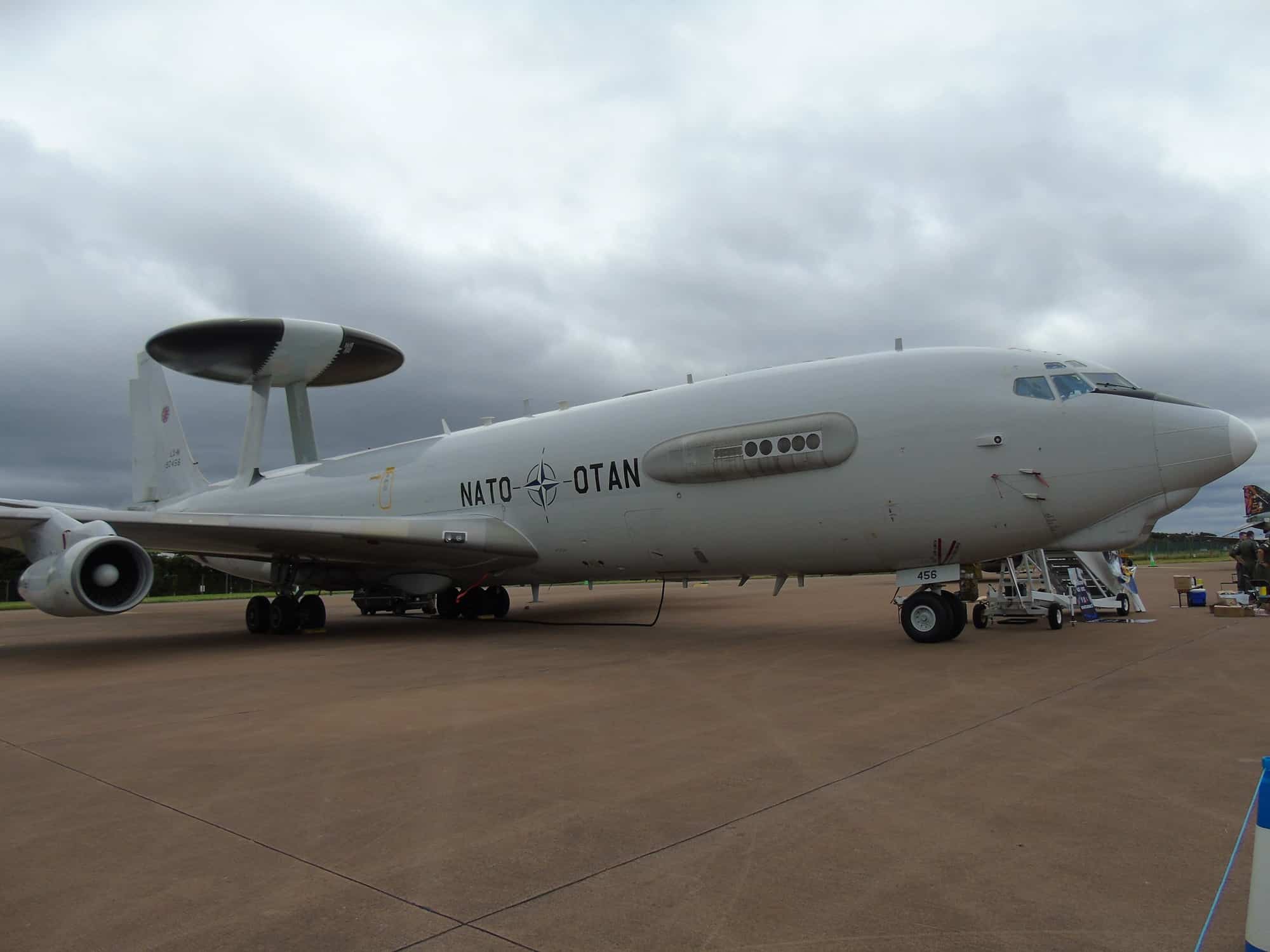
However, that same year the Canadian government decided to withdraw itself from the NAEW&CF citing a lack of value for money. More specifically, Canadian officials were angered when they had requested the use of NATO AWACS to monitor the airspace of the 2010 Vancouver Olympics.
They felt snubbed that as a paying partner they could not use the aircraft when they felt it essential to protect Canadian lives during the international event. The fear of aircraft being used to disrupt the games was a genuine threat following the 9/11 attacks a few years prior. In comparison, the UK flew multiple air surveillance sorties during its hosting of the 2012 summer Olympics.
As a result, the Canadian government fully withdrew the nation from the program saving $60 million a year, with the last flight crew leaving Geilenkirchen in 2014. This was not the end of the story though, as four years later a new Canadian government reversed the decision to end Canada’s involvement in the program.
From 2018 onwards Canada began contributing again but at a reduced cost that gave them less influence over AWACS decision making. Canada is still building up its involvement in the NAEW&CF and it is against this backdrop that the decision was made in 2024 for Canada to seek its own aircraft, for its own needs outside of the NATO force. This will allow Canada to better defend its vast airspace from the threat posed by the Russian Federation, whilst giving Canada an all aspect detection aircraft, ideal for monitoring the high North.