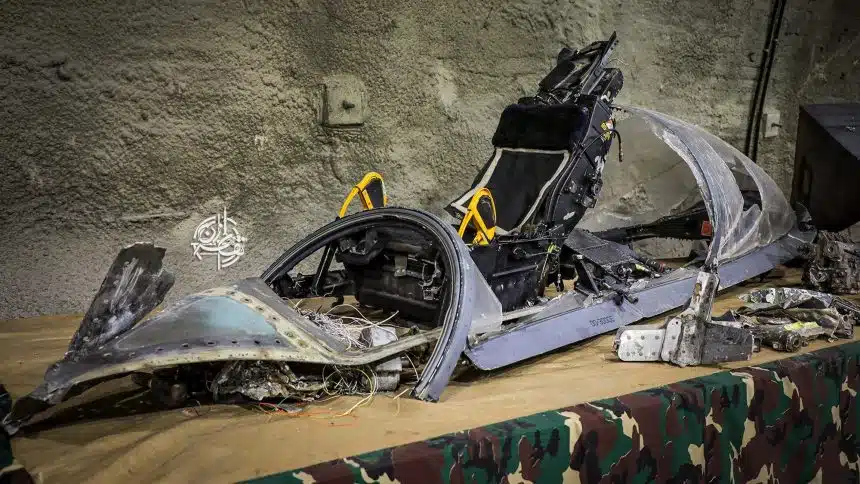
Iranian state media has released images of a display of aircraft wreckage from the U.S.-Iran war, including remnants of DUDE 44, an F-15E Strike Eagle which can now be confirmed without doubt as airframe 00-3000.
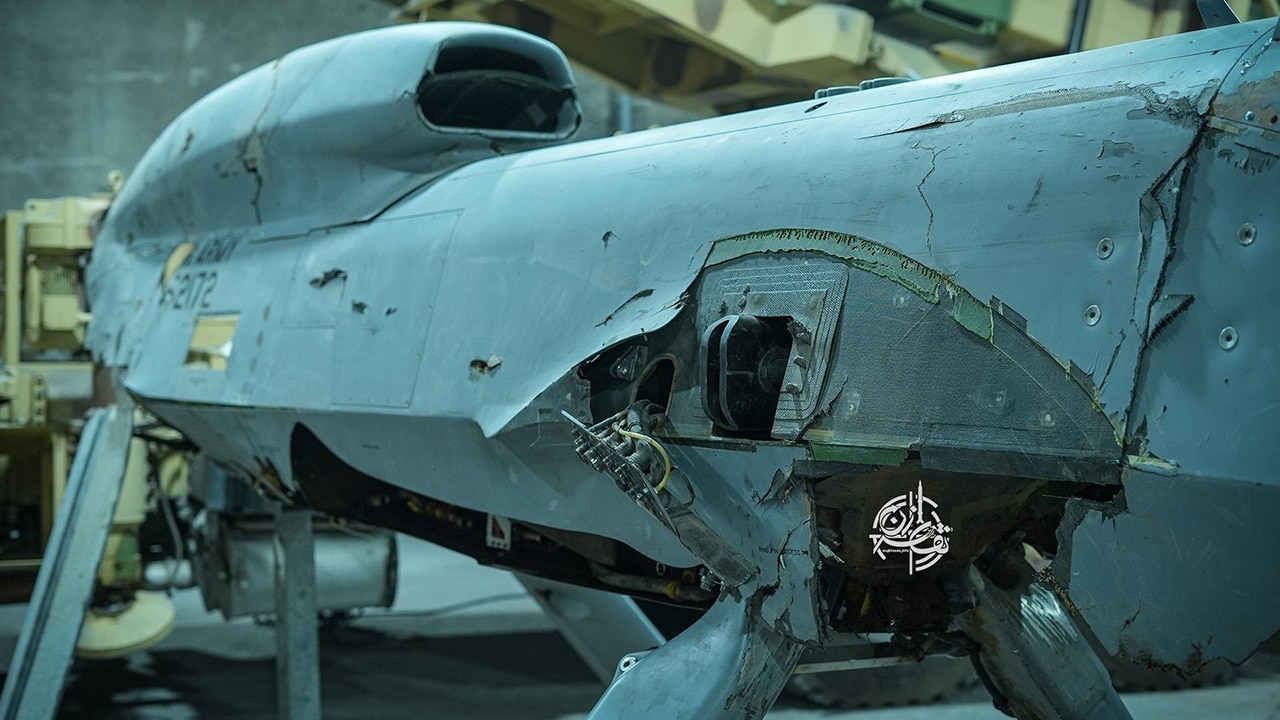
The aircraft remains have been arranged on display in underground chambers, and alongside the F-15E Strike Eagle the ‘exhibition’ also includes wreckage of MQ-1 Predators and MQ-9 Reapers.
Many U.S. MQ-9s have been lost throughout Operation Epic Fury, putting strain on the wider fleet. They have been called the U.S. Air Force’s ‘most valuable’ asset in the war, but their slow speed and lack of any significant self-protection features make them easy prey for even simple air defence systems. Losses of MQ-1s involved the U.S. Army’s MQ-1C Gray Eagle variant.
One of the larger sets of debris comprises the canopy and ejection seat from F-15E Strike Eagle 00-3000, a serial which can now be confirmed based on markings visible in these images. 00-3000 has been featured on The Aviationist previously, having tallied at least nine drone kills with AIM-9X Sidewinders during a 2023-2024 deployment.
Wreckage displaying tail number 00-3000, an “LN” marked F-15E Strike Eagle.
Photo @havoc_aviation (26/09/2025) https://t.co/ttxuqP4tTZ pic.twitter.com/nHzbVlCKvw
— Armchair Admiral 🇬🇧 (@ArmchairAdml) August 7, 2026
From IRGC images.
Remains of Lakenheath-based 🇺🇸 USAF F-15E 00-3000 #AE178B, callsign DUDE44, which was shot down April 3rd over Iran.
DVIDS image from 2014 of F-15E 00-3000 over Afghanistan in 2008. pic.twitter.com/oAugzvAAyi
— Evergreen Intel (@vcdgf555) August 7, 2026
These are from DUDE 44, which was shot down over Iran in early April. Unsurprisingly, of all the debris, the ACES II ejection seat – which would have descended with a parachute – is one of the most intact pieces shown.
The Iranians have found the Advanced Concept Ejection Seat II (ACES II) ejection seat system employed in U.S. Air Force F-15E Strike Eagle fighter jet that crashed in Iran this morning.
The whereabouts of the F-15E’s two crew-members are still unknown. pic.twitter.com/Q2Fz558TBr
— Status-6 (War & Military News) (@Archer83Able) April 3, 2026
As had been suggested previously, the jet belonged to the 48th Fighter Wing (FW) at RAF Lakenheath, UK. Lakenheath dispatched more than half of its active combat jets, including F-15E Strike Eagles and F-35A Lightning IIs, for Operation Epic Fury.
Reportedly, remains of the C-130s ditched during the rescue mission for the weapon systems officer (WSO) of DUDE 44 are also included, though they are not immediately identifiable in the images. These aircraft were intentionally destroyed by U.S. personnel alongside MH-6/AH-6 Little Birds after they became stuck at a makeshift landing ground.
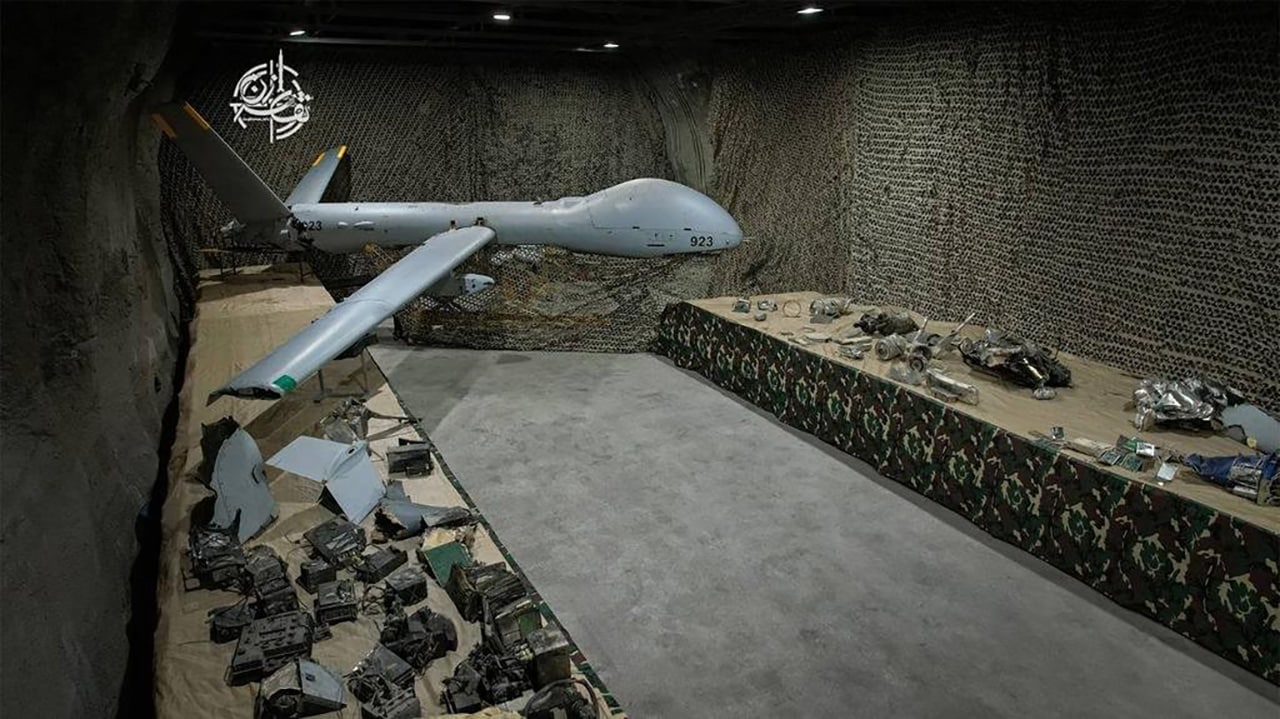
Israeli Hermes drones also feature as exhibits, with one example of a Hermes 900, serial 923, appearing quite intact. This aircraft was downed in March, complete with its weaponry.
Downed Israeli Hermes 900 along with several Israeli Mikholit bombs. https://t.co/OEk0gg0Pnf pic.twitter.com/auUewPEpBb
— Trevor Ball (@Easybakeovensz) March 3, 2026
In many cases, where possible, downed aircraft which may contain sensitive equipment or documents are themselves targeted by airstrikes. Given the amount of U.S. airpower over Iran during the conflict, this is likely to have taken place, with particular regard being paid to any electronics equipment that might have survived an impact with the ground to a degree that would allow Iran to reverse engineer it. However, regardless of the efforts taken to prevent it, there will almost always be a certain level of intelligence an adversary could gain from an aircraft’s wreckage.
One such example comes from the MQ-9 Reaper wreckage, which includes a four-bladed propeller. Regular MQ-9s use a three-bladed prop, while four-bladed examples are used by the more capable MQ-9 ER (Extended Range). The ER variant improves upon the already excellent endurance of the Reaper by increasing the total flight time up to 34 hours.
Iran has a notable history of flaunting captured military technology, with the most famous example being the public display of the RQ-170 Sentinel that Iran claims was brought to the ground through cyberwarfare.