The U.S. Air Force awarded Boeing a procurement contract for GBU-75 JDAM Long Range kits, clearing the initial production for the U.S. Navy.
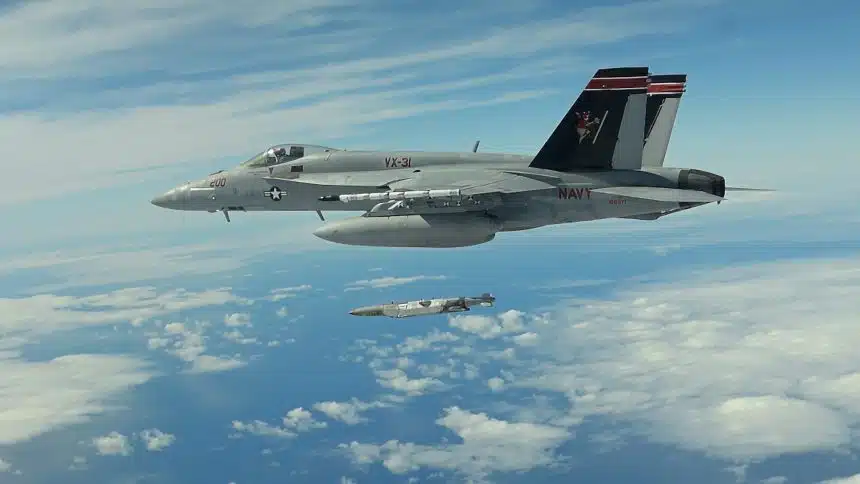
Boeing has announced that it has been awarded a $75 million Undefinitized Contract Action (UCA) to acquire the BSU-111/B Payload Delivery Unit (PDU) for the GBU-75 Joint Direct Attack Munition Long Range (JDAM LR). The weapon was first tested by the U.S. Navy in April 2026.
The UCA now clears the production of the new weapon, developed with a nearly $100 million internal investment by Boeing, for the U.S. Navy. The BSU-111/B PDU includes a wing kit and a compact turbojet engine, allowing the weapon to travel over 300 nautical miles with a 500-pound class (226-kilogram) payload.
Almost $100 million in Boeing investment. Affordable, mass producible, adaptable long-range capability. Proud to partner with the U.S. Air Force and U.S. Navy.
More: https://t.co/aziVr5Z9m5
📸: U.S. Navy pic.twitter.com/blhB82hzZD
— Boeing Defense (@BoeingDefense) August 5, 2026
As noted in the opening, while the weapons will go to the Navy, the UCA was awarded by the Air Force. In fact, the JDAM program is jointly managed by the Air Force and Navy, with the Air Force being the lead service and thus also managing acquisitions.
“This first production contract is a major milestone for the JDAM LR program, demonstrating our ability to deliver long-range precision-strike capability at a significantly lower cost,” said Bob Ciesla, vice president of Boeing Precision Engagement Systems. “Scaling production of the GBU-75 will provide the fleet with an affordable, sustainable solution designed to eliminate long-range land and sea-based threats to U.S. and international forces and enable them to safely and effectively operate in a contested battlespace.”
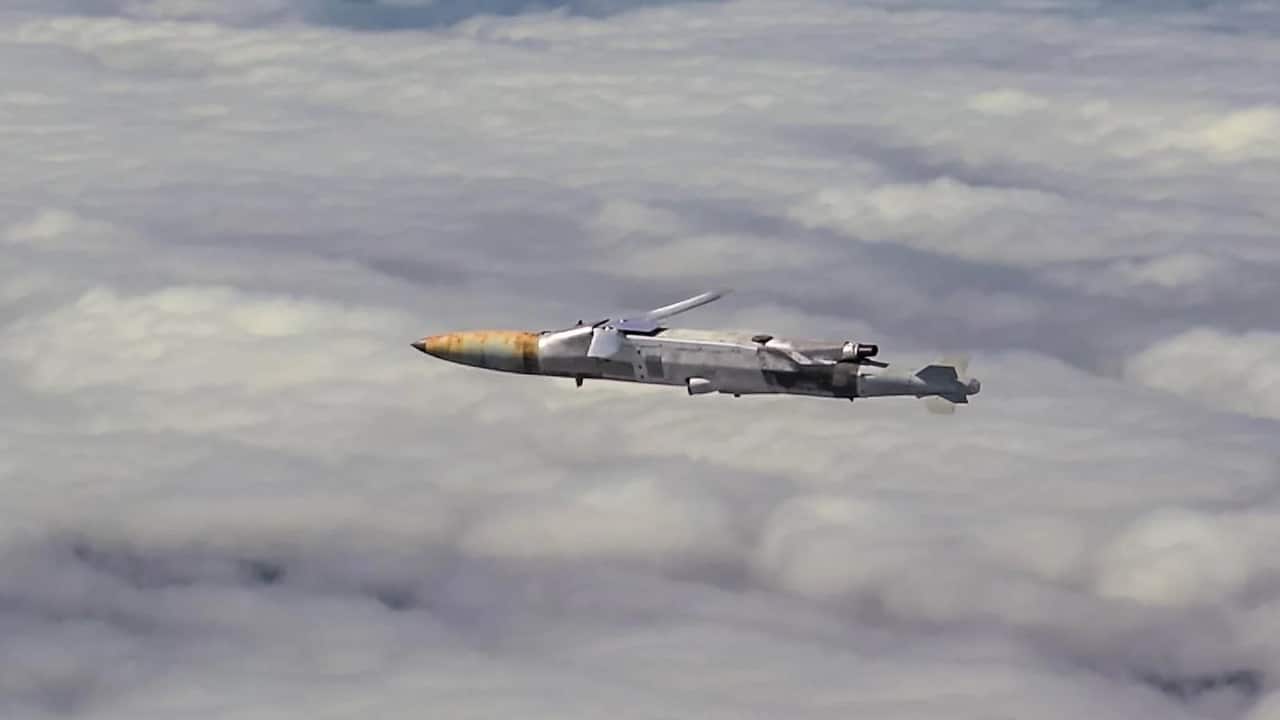
Compared to previous JDAM variants, the new GBU-75 will provide the ability to strike targets at standoff ranges, and out of the range of adversary air defenses. The weapon can also outperform weapons such as the AGM-84H/K SLAM-ER, AGM-154 JSOW and the baseline AGM-158 JASSM, but at a fraction of the cost.
“JDAM LR gives operators an affordable, mass-producible option for striking targets from beyond the effective range of enemy defenses,” said Ciesla. The Navy previously described the JDAM LR as a game-changer.
The JDAM-LR
The JDAM Long Range was initially known as Powered JDAM (PJDAM), with reports about the weapon’s development going as far back as 2010. The weapon has surfaced again in 2020 as a possible low-cost stand-off weapon.
The Navy explained in a short video on social media that the addition of a small turbojet engine transforms the standard JDAM in a low-cost, high-precision cruise missile. In a recent product card, Boeing confirmed the engine as the TDI J85 by Kratos Defense already announced for the PJDAM.
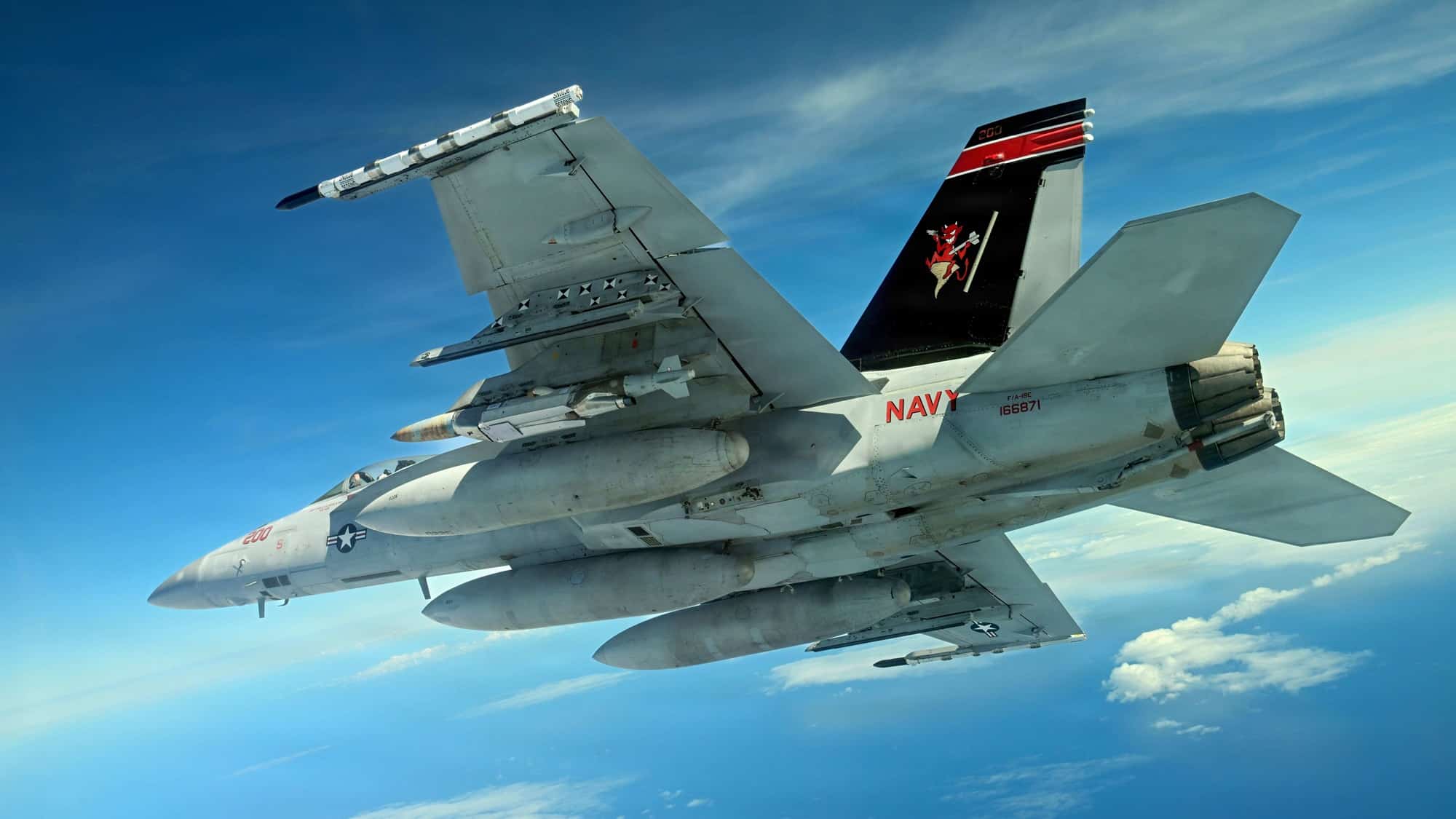
The company says that the weapon could be able to reach a 300+ NM range, or 700+ NM if the Mk-82 500 lb bomb is replaced by a “low-cost decoy fuel tank.” Quickstrike and Maritime Strike variants are also shown during wind tunnel testing.
Compared to the JDAM Extended Range (ER), the new weapon uses a different body which includes the standard JDAM tail kit, the ER’s wing kit and the turbojet engine. The warhead is also partially enclosed in the new body, with approximately half of it protruding in the front.
The JDAM-LR uses the existing aircraft interface and In-Weapon Launch Acceptable Region (LAR) of the standard JDAM, allowing for a quicker integration. This would allow for the aircraft which were already cleared to employ the standard JDAM to use also the new variant.
The new weapon has been designated as GBU-75, according to a statement by Boeing. The company has also explained that the tests were conducted on Apr. 1 and 3.
The first test demonstrated safe separation, engine start, cruise and guidance through terminal flight and impact in water, within meters of its planned target, after a 34-minute flight. The second test saw a similar flight profile, this time successfully incorporating altitude changes and weapon maneuvering.