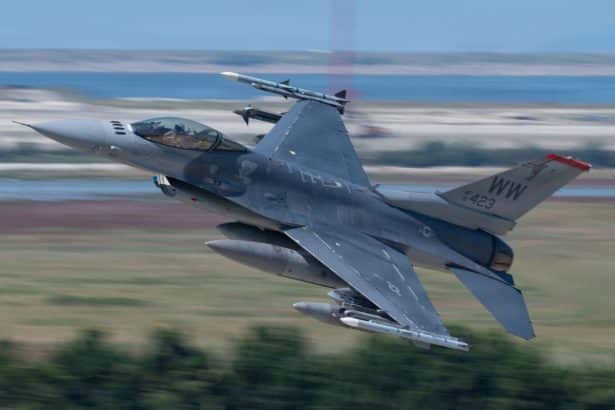
BAE Systems’ AN/APX-127(V)1 IFF system has completed AIMS certification, clearing the way for F-16 integration and platform-level testing.
BAE Systems announced it has completed the Allied Identification Mark System (AIMS, sometimes also referred to as Air Identification and Monitoring System) certification of its new AN/APX-127(V)1 Combined Interrogator Transponder (CIT), which allows the U.S. Air Force to proceed with platform-level testing of the system on the F-16 Fighting Falcon. The company describes the development as an important step toward fielding the next-generation Identification Friend or Foe (IFF) system.
According to BAE Systems, the certification establishes compliance with the U.S. and NATO-interoperable standard and makes the system ready to be integrated onto the F-16. Speaking to The Aviationist, BAE Systems clarified that the certification covers the system at the box level, while additional testing will now be conducted at the aircraft level.
“BAE Systems has completed our certification and testing at the box level which allows the U.S. Air Force to move forward with their platform level testing,” the company said.
A next-generation replacement for legacy F-16 IFF systems
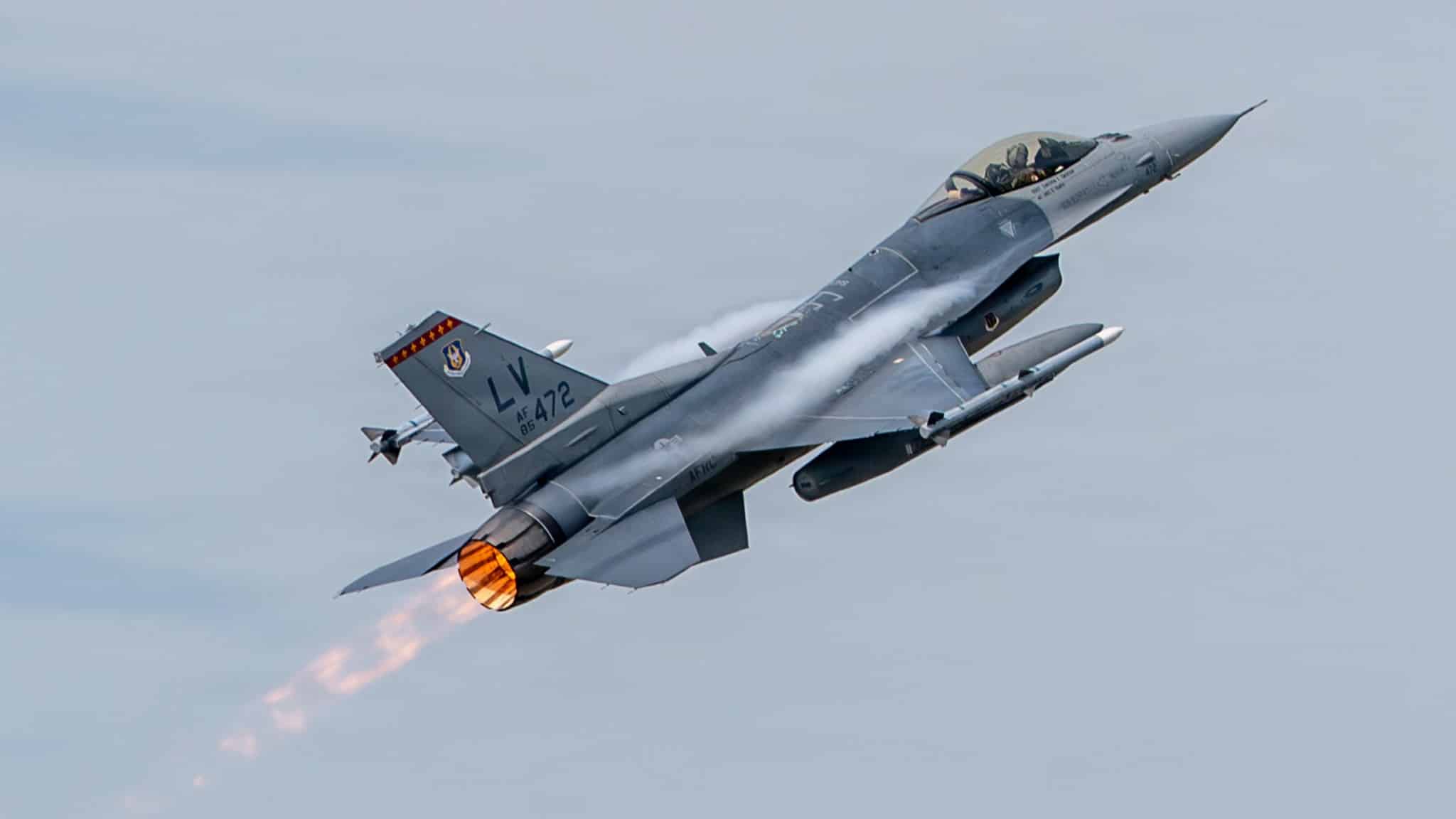
The AN/APX-127(V)1 is intended to replace several Combined Interrogator Transponder (CIT) systems currently installed on F-16s, including the AN/APX-113(V), AN/APX-125(V), and AN/APX-126(V). These systems are currently operated on multiple F-16 blocks and derivative aircraft in both U.S. and international service.
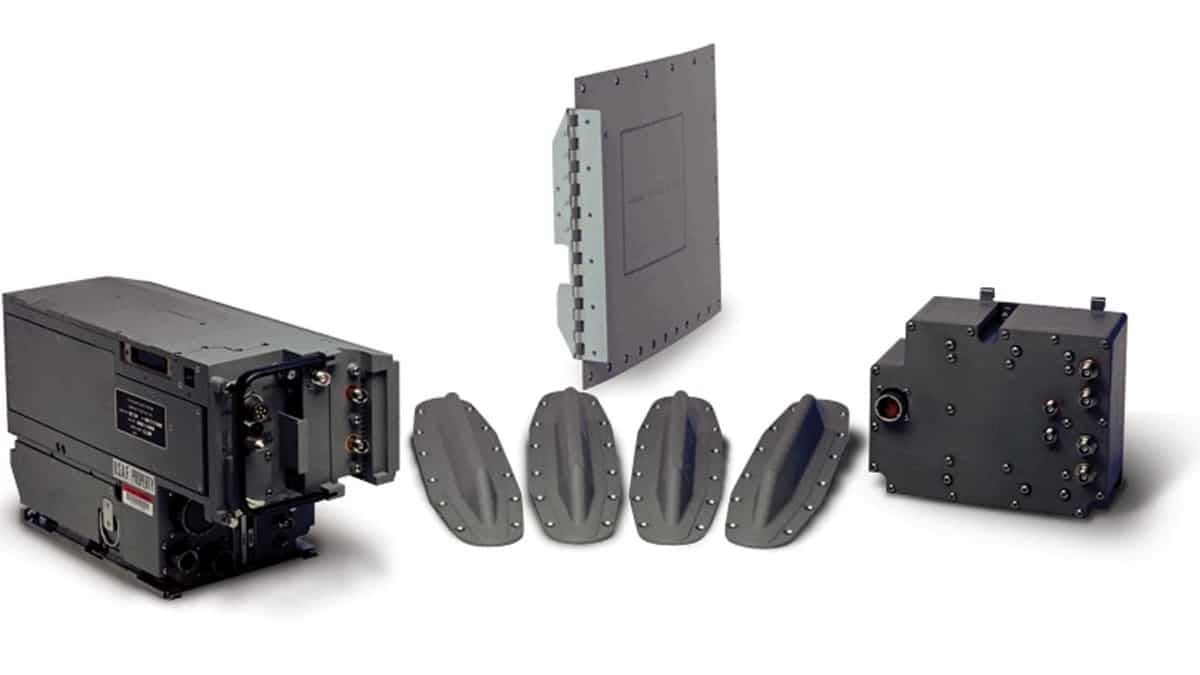
BAE Systems says the system maintains the same physical form factor as its predecessors. This allows it to function as a drop-in replacement, reducing the modifications required to upgrade aircraft already equipped with legacy CITs.

“While it maintains the same form factor as its predecessors – allowing for a drop-in replacement – it introduces several critical technical upgrades,” BAE Systems told The Aviationist. “It is a complete Mark XIIB identification system in one unit, advancing IFF and situational awareness.”
Among the changes is a modern Ethernet interface, which BAE says “allows the IFF system to communicate more efficiently with other aircraft electronics and makes it much easier to integrate the system into newer, more complex platforms.” The open-system architecture is also intended to facilitate future upgrades.
This approach is intended to address not only current requirements but also future obsolescence issues, while avoiding additional hardware changes where possible.
Passive Mode 5 identification and ADS-B
One of the capabilities highlighted by BAE Systems is the system’s ability to support passive Mode 5 Level 2 acquisition. Traditional IFF operates primarily as a question-and-answer system: an interrogator transmits a query and an appropriately equipped transponder responds.
The addition of passive Mode 5 Level 2 capabilities allows the AN/APX-127(V)1 to acquire information from friendly forces without relying exclusively on an aircraft actively interrogating another platform.
“By incorporating Mode 5 Level 2 capabilities, the AN/APX-127(V)1 enables the passive acquisition of friendly forces,” BAE Systems said. “This provides pilots with a more accurate understanding of the battlespace.”
The capability is particularly relevant as combat aircraft increasingly operate as part of interconnected formations rather than as isolated platforms. The architecture can thus contribute to the broader picture available to the pilot and other systems onboard the aircraft.
Additionally, the AN/APX-127(V)1 supports ADS-B In/Out, providing an additional source of cooperative surveillance information. BAE Systems says ADS-B can provide additional surveillance data that can contribute to the pilot’s situational awareness.
The company also places the new IFF system within the broader architecture of networked combat operations. The IFF would work alongside data links, sensors and other systems to connect military assets across different domains.
“IFF plays a key role in the C2 part of the Joint All Domain Command and Control (JADC2) strategy,” BAE Systems said. “It allows joint forces to sense and make sense.”
Cyber resilience and contested environments
Another major focus of the new CIT is cybersecurity. BAE Systems says the AN/APX-127(V)1 supports the latest cryptographic and cybersecurity-resilience requirements and has been designed to accommodate current and foreseeable requirements without requiring additional hardware changes.
The company did not disclose specific details of the cryptographic architecture or the mechanisms used to implement those requirements. However, it also says the system has been designed to operate in contested electromagnetic environments.
“By utilizing Mode 5 and secure crypto, the AN/APX-127(V)1 provides a more secure method of identification making it extremely difficult for adversaries to spoof or exploit,” the company said. “Our IFF technology has anti-jam techniques to operate in a contested environment.”
These characteristics are increasingly important as modern combat aircraft face adversaries capable of electronic attack and attempts to interfere with navigation, communications and identification systems. Jamming and spoofing are becoming increasingly common, with multiple episodes reported both in combat zones and contested areas.
Beyond the F-16
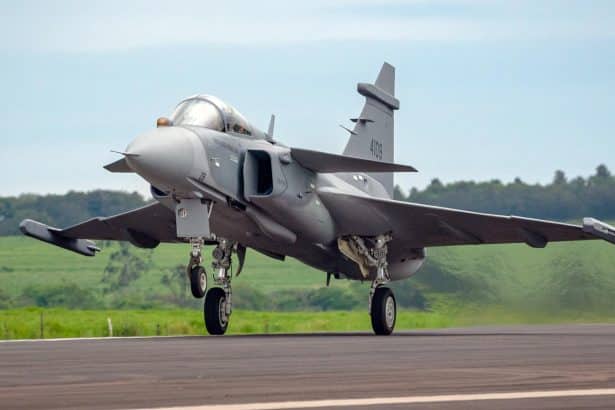
Although the AN/APX-127(V)1 was developed for the F-16, its application is not limited to this aircraft. BAE Systems said the system is intended for both existing and new U.S. and international platforms, and confirmed that it is already moving toward integration on another modern fighter.
In fact, the company has been awarded a contract by Korea Aerospace Industries (KAI) to integrate the AN/APX-127(V)1 onto the KF-21 Boramae. Additionally, BAE Systems said the system is also being considered for “many U.S. and International platforms.”