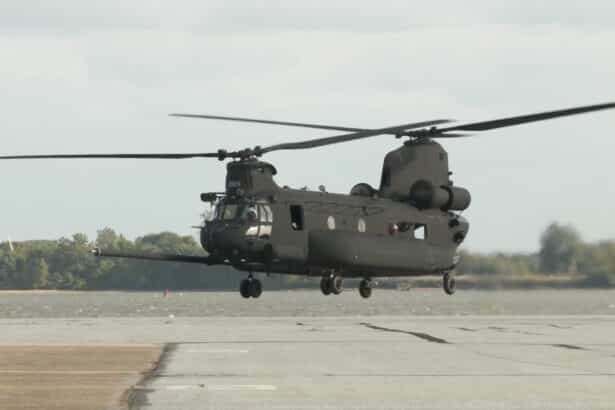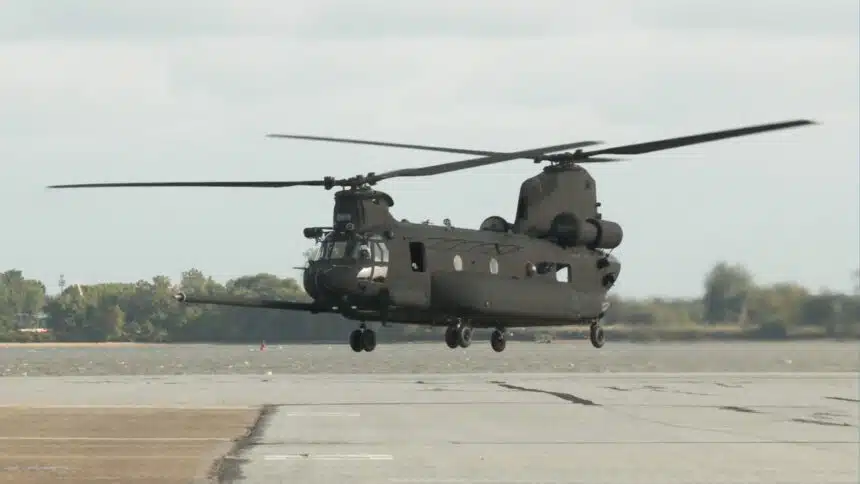
The first H-47ER Chinook – modeled on the U.S. Army’s MH-47G – for the Royal Air Force, the first overseas customer to get Block II Chinooks, took to the skies at Boeing’s facility in Philadelphia.
Video footage showing the aircraft lifting off from the tarmac shows even more clearly than previously released images how closely these Chinooks are configured to the MH-47G Chinook variant flown by the U.S. Army 160th Special Operations Aviation Regiment (Airborne), commonly known as 160th SOAR or SOAR(A).
You’ve seen it in production, now see it fly.
The UK’s first H-47 Extended Range Chinook has taken to the Philadelphia skies for the first time with Active Parallel Actuator System (APAS), which works similar to lane assist for cars.
This is the first flight of APAS on an international operator.
— Boeing UK (@BoeingUK) November 13, 2026
The final configuration and paint scheme of the aircraft may be adapted before or after delivery to the Royal Air Force, but at present the aircraft carries the distinctive matte black livery favoured by the 160th SOAR as well as fairings for specialised mission equipment like the AN/APG-187 Silent Knight radar.
It is understood that the aircraft will be delivered with the full air to air refueling capability installed, and the long refueling boom that is otherwise unique to the MH-47 variant, although the Royal Air Force does not presently practice helicopter in-flight refueling (HIFR) nor does it operate any fixed wing aircraft equipped to deliver fuel to rotary wing aircraft. When the service operated Merlin HC3s, also built to allow HIFR, the refueling capability was never utilised.
However, the presence of the U.S. Air Force’s 352nd Special Operations Wing (SOW) at RAF Mildenhall with MC-130J Commando II aircraft could allow RAF Chinook aircrew to train for and be cleared on HIFR for the purposes of potential joint operations. When MH-47G Chinooks from 160th SOAR deployed to the UK for training and familiarity exercises in 2024 they notably took part in low altitude refueling drills with these Mildenhall units.
On Sept. 9, in cooperation with the UK 7th SOS, elements of the 160th Special Operations Aviation Regiment (Airborne), conducted a flyover in Chinooks along London’s Heli-Lanes as part of interoperability exercise Dark Lightning 24.
@USAinUK @RoyalAirForce https://t.co/oGDJALDjQ7
— US Spec Ops Europe (@US_SOCEUR) September 10, 2024
The designation of these aircraft in RAF service has yet to be confirmed, though logic would suggest they would take the name Chinook HC7. This is not guaranteed however – the AH-64E Apache in British service is referred to using this U.S.-style model designation, rather than taking on the UK-style Apache AH2 name.
Boeing notes that the RAF’s new Chinooks will be the first overseas examples fitted with the Active Parallel Actuator System (APAS), which it compares to the lane assist feature now common in cars. Developed in collaboration with BAE Systems, APAS will provide real-time feedback and alerts regarding the aircraft’s flight envelope to the pilot before performance limits are exceeded, while still allowing and protecting the ability for pilots to push boundaries to achieve mission capability where necessary.
Fourteen H-47ERs have been ordered for the RAF, and their arrival will coincide with the phased withdrawal of some of the service’s oldest Chinook airframes. Until a follow-on order for additional airframes is confirmed, this will result in a fairly significant cut to what was once the largest non-U.S. Chinook force in the world.
Notably, as well, these older model Chinooks are treated as ‘general purpose’ aircraft and do not include the ‘fat tank’ Chinook HC5s which are favored for special operations. Whether these HC5s will be cascaded down and used in a more generalised role when these new Chinooks arrive is unclear.
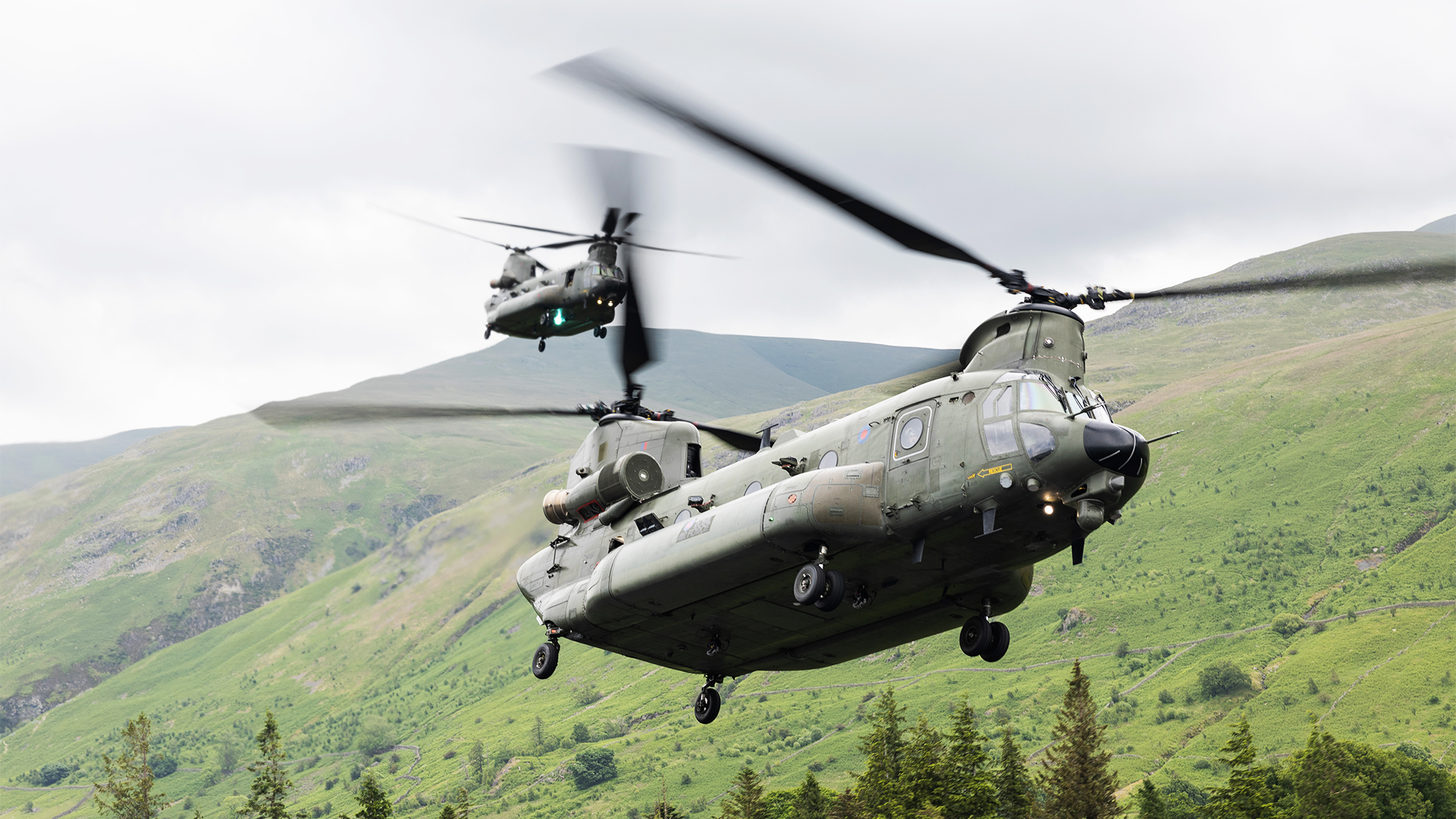
The HC5s were delivered as HC3s in the early 2000s as part of an earlier and much less successful attempt to operate a special operations-tailored Chinook modeled on the MH-47. When delivered, intended as a simplified version of the MH-47E, the type was plagued by certification problems relating to the installed avionics.
A later program to install the already certified avionics package from the RAF’s Chinook HC2s onto the HC3 fleet was completed and produced its first flying aircraft in 2009. They were subsequently included in the scope of Project Julius, integrating digital flight deck systems from Thales, seeing Chinook HC2s become HC4s and Chinook HC3s becoming HC5s.
The Aviationist understands that the first of these new Chinooks could arrive in the UK by sea in early 2027, with formal delivery and entry into service penned in for later in 2027 or in 2028. Deliveries will run through until approximately 2032.