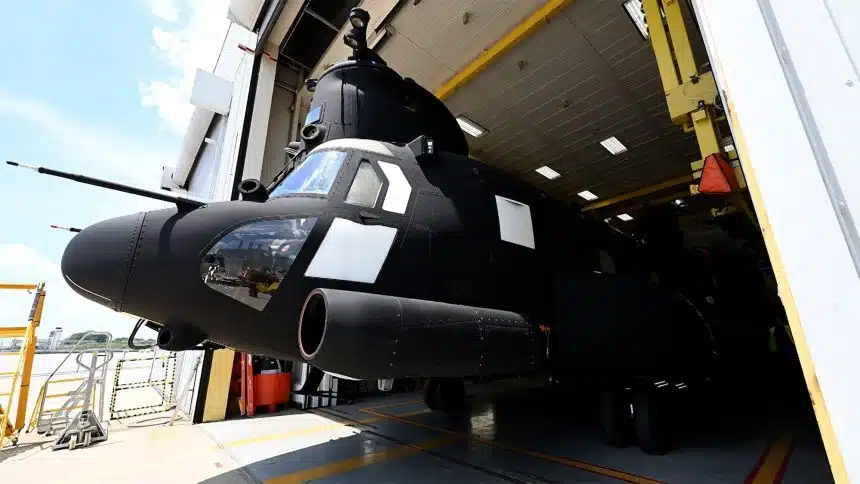
Images released by Boeing of the Royal Air Force’s next batch of Chinook helicopters confirm long-standing reports of their similarity to the U.S. MH-47G variant.
The new-build Chinooks will supplant some of the oldest examples currently in RAF service, some of which date back to the early 1980s.
The H-47ER specification Chinooks are the first Block II Chinooks to be sold overseas and are the RAF’s second foray into a ‘fat tank’ special operations variant after the Chinook HC3 (now upgraded to HC5). When delivered in the early 2000s, intended as a simplified version of the MH-47E, the type was plagued by certification problems relating to the installed avionics.
Exclusive: photos of the UK’s first H-47 Extended Range Chinook at our factory in Philadelphia.
With 14 on order, the @RoyalAirForce will be the first international operator of a Block II Chinook, helping the UK fly farther and carry more in support of its missions. pic.twitter.com/NAOlQgBXA6
— Boeing UK (@BoeingUK) July 21, 2026
.
A later program to install the already certified avionics package from the RAF’s Chinook HC2s onto the HC3 fleet was completed and produced its first flying aircraft in 2009. They were subsequently included in the scope of Project Julius, integrating digital flight deck systems from Thales, seeing Chinook HC2s become HC4s and Chinook HC3s becoming HC5s.
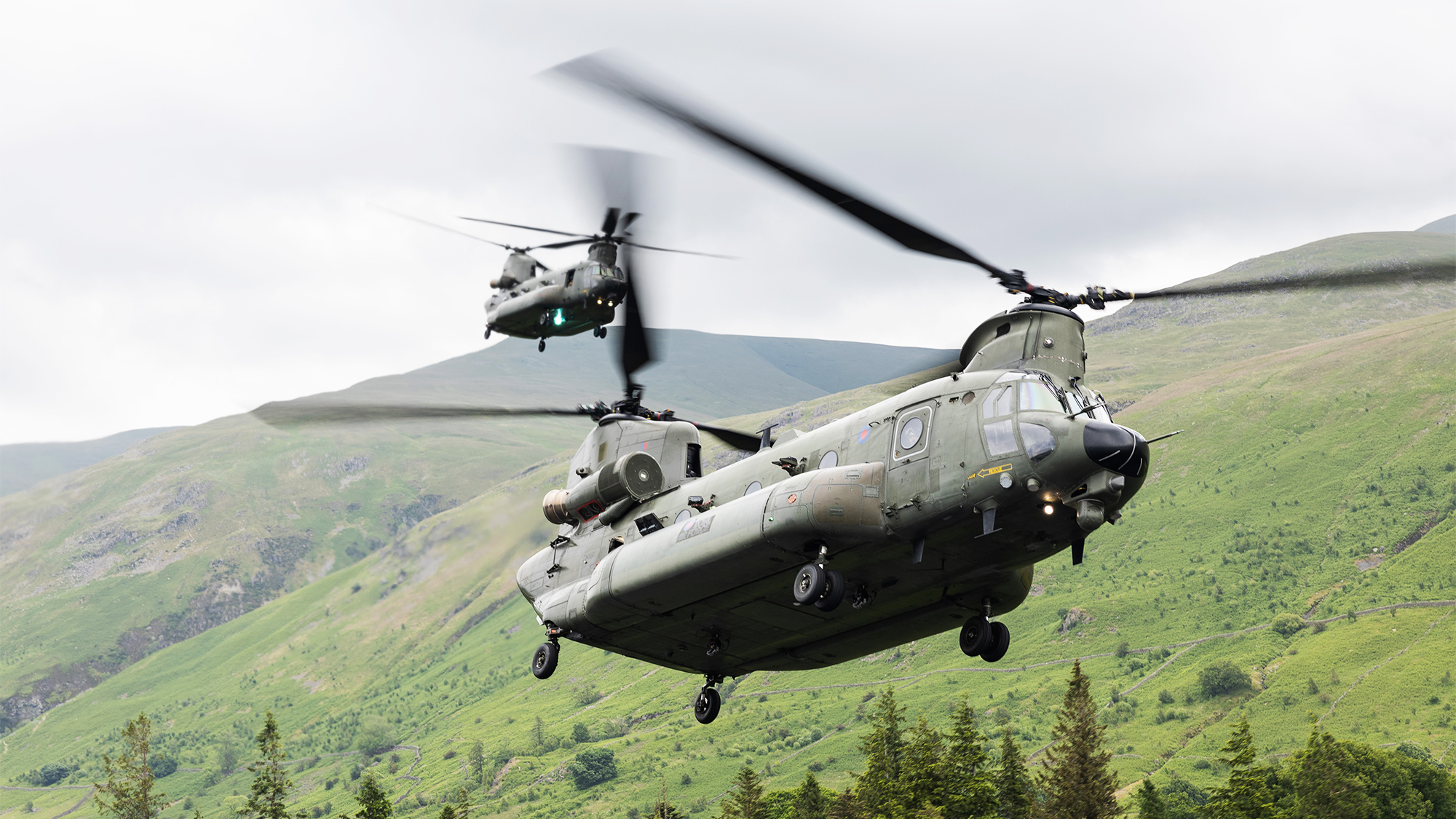
Curiously, although these helicopters are specified to be replacing the RAF’s oldest Chinooks (designated HC6A), their equipment and the paint scheme would suggest their dedication to special operations missions, like the HC5s, rather than as general purpose airframes, like the HC6As. This, alongside overall reductions in the once 60-strong fleet of RAF Chinooks, would lead to a significant loss in rotary wing airlift. While these highly equipped aircraft could be used for general purpose missions, it would add to the overall flight hours of these more capable, exquisite airframes and risk their temporary or permanent loss from the active fleet due to mishaps or other damage.
As the finer details of the UK #DIP continue to come out in the wash, MoD tells @JanesINTEL that #Chinook numbers will temporarily but significantly drop over the coming few years as all 29 remaining older HC6As are to be retired by 2030. Will overlap with introduction of 14 H-47… pic.twitter.com/yHfOc3Wz0h
— Gareth Jennings (@GarethJennings3) July 2, 2026
The official designation for the new variant in UK service has yet to be announced, with all official comment leaning further towards the manufacturer’s H-47ER designation. Depending on its pathway into operational service, it could join other American types like the AH-64E Apache Guardian and C-17A Globemaster III in not having a true UK military designation.
Previous comment by the UK Ministry of Defence suggested the first deliveries are expected in 2027. Given that the Chinook airframe we are seeing is presumably one of the first, which were confirmed to be in production only last year, this estimate may still hold true but more likely will be pushed back slightly.
14 aircraft are currently on order from Boeing. A further order of Chinook aircraft is expected in the coming years, according to the Defence Investment Plan, but it is too early to say what form the next batch will take.
The Chinooks will be equipped with Northrop Grumman’s Common Infrared Countermeasures (CIRCM) system for self defence. In the images there is also noticeably the sponson and empty space for the Raytheon AN/APQ-187 Silent Knight radar, used by MH-47Gs for terrain following at low level at all times of day and all weathers.
A second Chinook buy will sustain UK heavy lift beyond 2040, the MoD says, though lift capacity faces a temporary dip while older fleets are replaced. Click image for more.https://t.co/Uun2rlxcN8
— UK Defence Journal (@UKDefJournal) July 14, 2026
The aircraft in production will also feature the MH-47G’s ability to refuel in the air, although the UK does not at present operate a suitable tanker aircraft to make use of this capability. Whether they will be fitted or flown with the MH-47G’s signature refueling probe is unclear – notably, the UK’s Merlin HC4 fleet were delivered new as HC3s with refuelling probes but outside of testing these have spent most of their lives stored in a warehouse.
Pictured
A Royal Navy Merlin helicopter with an inflight refuelling probe pic.twitter.com/3rybWb2a3W
— Think Defence (@thinkdefence) October 31, 2025
Aerial refuelling adds significant capability to the Chinook for special operations roles, allowing the aircraft to extend its combat radius deep beyond the frontlines to enable deep insertions of special forces or the recovery of captured personnel and downed pilots.
The UK may seek to at least partially utilise the aerial refuelling capability by using allied tankers during joint missions. Such an arrangement may additionally benefit the U.S. Air Force, as their MC-130J Commando II special operations support aircraft based at RAF Mildenhall would be the logical choice to support training and currency flights. These aircraft rarely get the chance to rehearse refueling Chinooks, instead they work most closely with the co-located CV-22B Ospreys.