The U.S. Air Force initiated the Fighter Squadron Reset to return F-16s to Kunsan Air Base after the Super Squadron experiment at Osan, with the 35th Fighter Squadron transitioning from Block 40 to Block 50 aircraft.
The story was updated to include the confirmation by a U.S. Air Force spokesperson confirming that the F-16 Block 50 aircraft formerly assigned to Misawa Air Base are now being assigned to Kunsan Air Base.
The U.S. Air Force is implementing once again a major reorganization of its F-16 force in South Korea as part of the Fighter Squadron Reset. This includes the return to a three-squadron structure, with a number of F-16s now returning to Kunsan Air Base.
The move follows the conclusion of the U.S. Air Force’s Super Squadron experiment, which temporarily consolidated F-16 units at Osan in an effort to evaluate whether a larger fighter squadron could improve combat-force generation and operational efficiency. With the reset, the 36th Fighter Squadron remains at Osan Air Base and the 35th and 80th Fighter Squadrons return to Kunsan Air Base.
The photos of the aircraft involved in the move, released on the DVIDS network on Sept. 28, show an additional development: at least some of the F-16s assigned to the 35th FS appear to be Block 50 aircraft previously assigned to the 13th FS at Misawa Air Base, Japan.
We contacted Kunsan’s 8th FW for more information about Fighter Squadron Reset and a confirmation about the Block 40 to 50 transition. Our questions were deferred to PACAF, with a spokesperson confirming the transition:
“The aircraft formerly assigned to the 35th Fighter Wing at Misawa Air Base were Block 50 F-16s, which are transferring to the 8th Fighter Wing at Kunsan Air Base as Misawa transitions to the F-35A. This move supports the Air Force’s planned recapitalization of fighter capability in the Pacific. Separately, Kunsan’s Block 40 aircraft are programmed to upgrade other units.”
This represents a significant change for the 35th FS, which has traditionally operated F-16 Block 40s. Last year, the service said these Block 50 aircraft would be permanently assigned to Osan, without disclosing which unit they would be assigned to.
From Super Squadron back to three squadrons
The Fighter Squadron Reset will return the F-16 units to the locations they were assigned before the experiment began in 2024. The experiment saw two year-long phases.
The U.S. Air Force temporarily consolidated F-16s and personnel from Kunsan with the 36th Fighter Squadron at Osan to create what became known as the Super Squadron. The enlarged unit, which gained nine aircraft and the saw the total of its assigned aircraft increasing from 22 to 31, was intended to test whether concentrating aircraft, personnel and support resources could generate combat power more efficiently.
The experiment entered a second phase in 2025, when additional F-16s and personnel from Kunsan were moved to Osan for a second 31-aircraft squadron. Both the 35th and 80th Fighter Squadrons assigned to Kunsan were involved in the initiative.
However, in April 2026, Pacific Air Forces announced that the Super Squadron effort had concluded and that the Air Force would return to a three-squadron F-16 structure distributed between Osan and Kunsan. PACAF said the decision was informed by lessons learned during the experiment and was intended to provide greater operational flexibility while preserving the ability to generate combat power rapidly.
F-16s begin returning to Kunsan
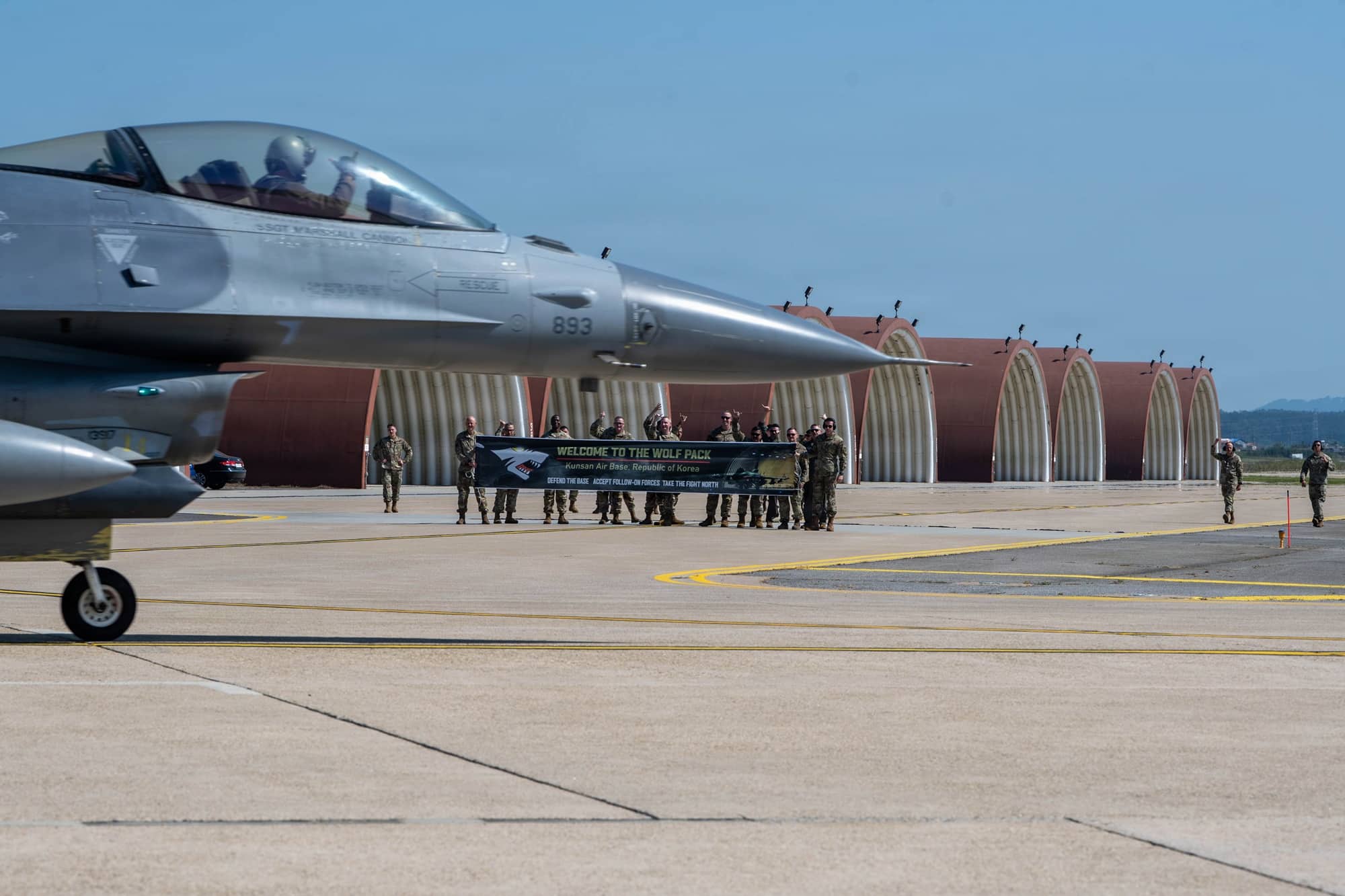
U.S. Air Force imagery released through DVIDS shows F-16s arriving at Kunsan as part of the transition. Although released on Sept. 28, 2026, the photos were captured on Sept. 15, two weeks earlier.
The Air Force described the aircraft as being relocated to Kunsan for reintegration into the 8th Fighter Wing. Among the pilots involved in the movement was Lt. Col. Mark “Fire” Marshall, commander of the 35th Fighter Squadron, who flew an F-16 from Osan back to Kunsan.
The posts on social media additionally confirmed that the photos indeed show the 35th FS returning to Kunsan following its temporary relocation to Osan for the Super Squadron experiment. The Air Force has not publicly disclosed the precise number of aircraft moving between the two bases, and is thus unclear how many are now back in Kunsan.
Which F-16s are returning to Kunsan?
The photos of F-16s associated with the move show aircraft that differ from the Block 40s traditionally associated with the 35th and 80th Fighter Squadrons. In fact, the aircraft in the photos are F-16C Block 50s that previously served with the 13th Fighter Squadron at Misawa Air Base.
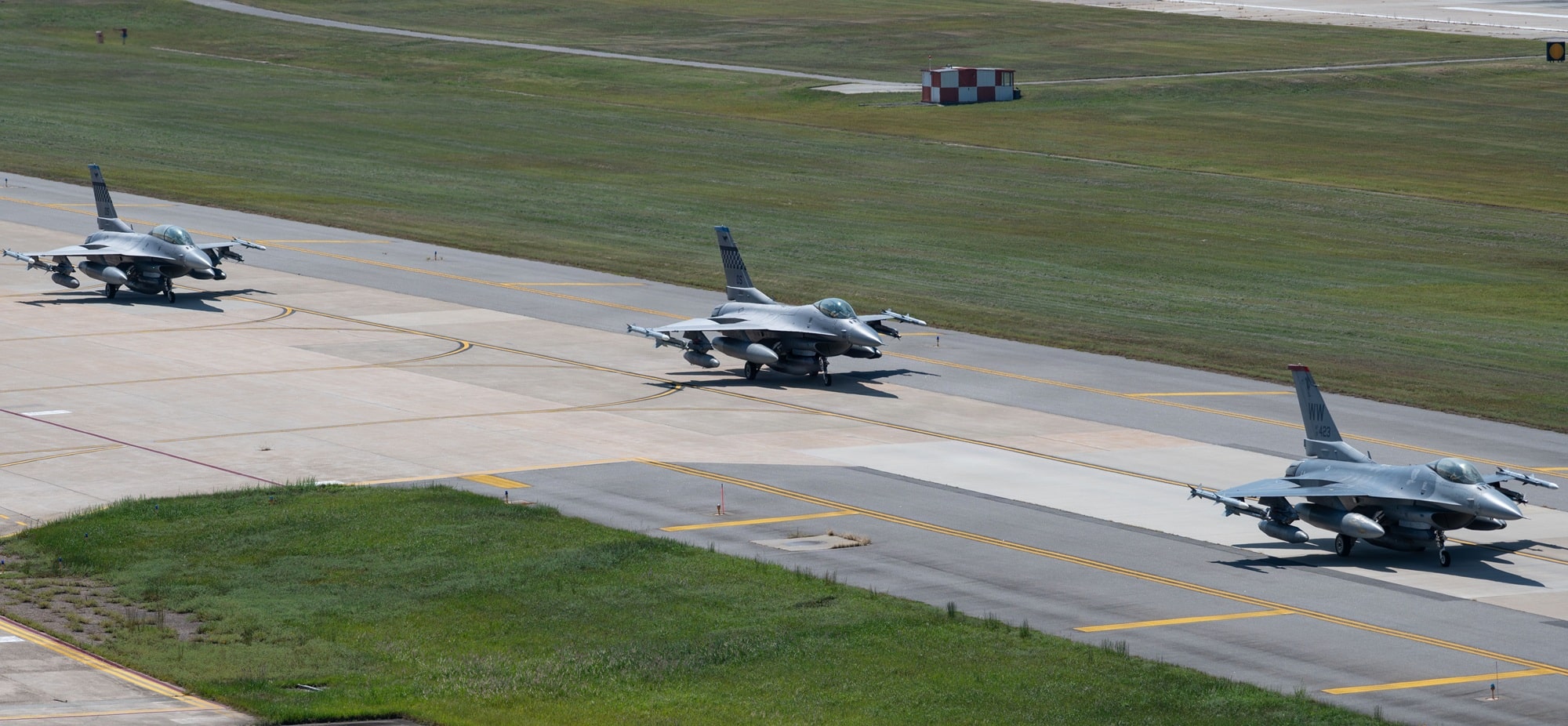
The 13th FS was one of the F-16 units at Misawa before the base began transitioning to the F-35A. As part of that transition, some of its F-16s were transferred to the 51st Fighter Wing at Osan.
The Air Force previously confirmed that F-16s from Misawa were permanently transferred to Osan, but their precise squadron assignments were not initially disclosed. Now, however, some of these aircraft have received markings associated with the 35th Fighter Squadron.
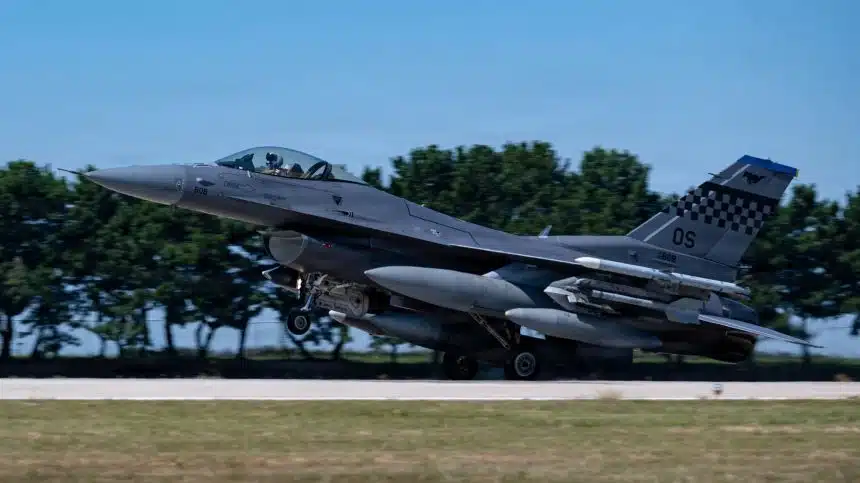
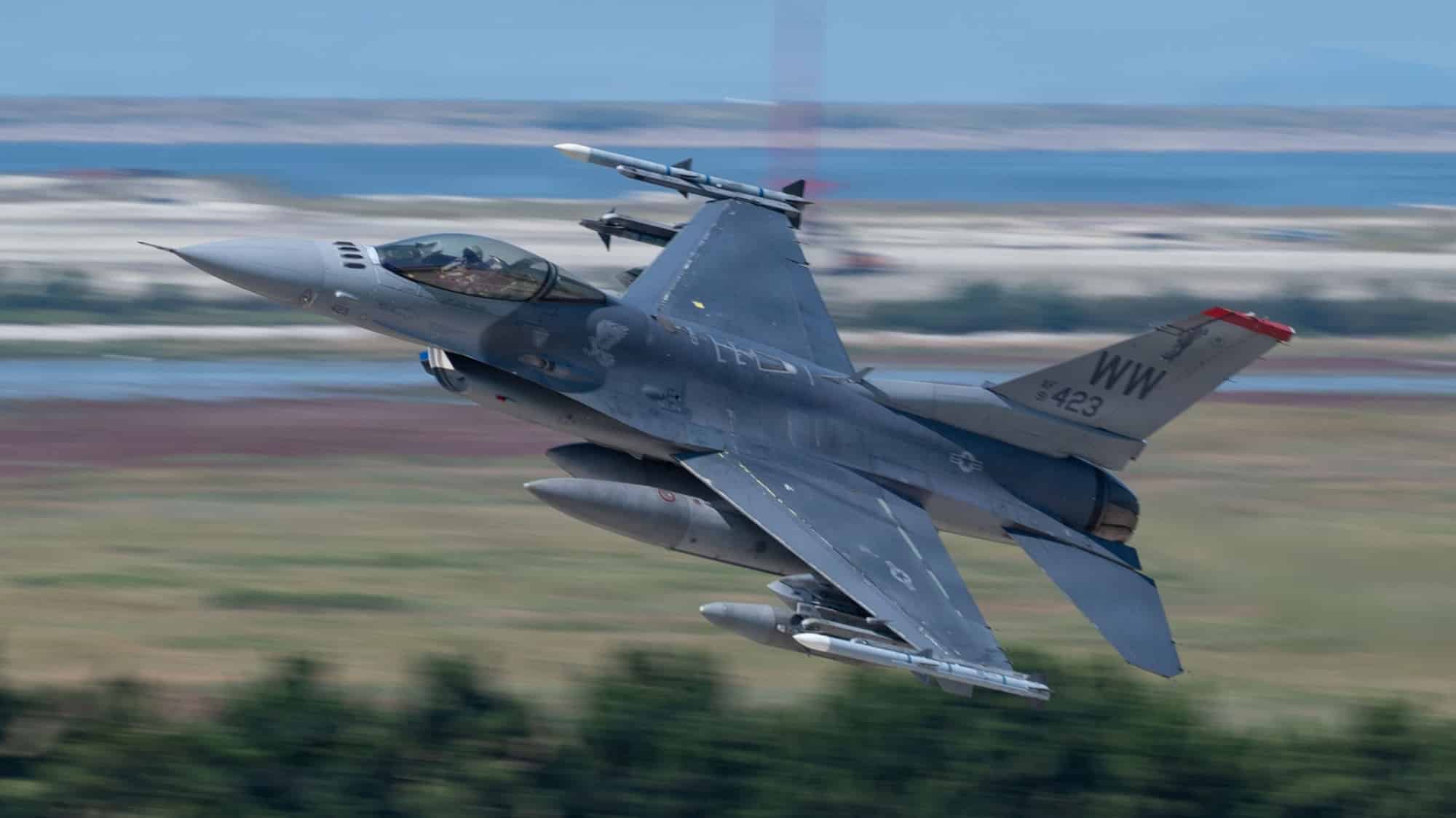
In fact, while some retained their original markings, including the ‘WW’ tail flash and the red stripe of the 13th FS, some have received the checkered tail and the ‘OS’ tail flash of Osan’s 51st FW, as well as the blue stripe of the 35th FS. The serial numbers, upon check with open-source records, indeed identify them as aircraft previously belonging to Misawa Air Base.
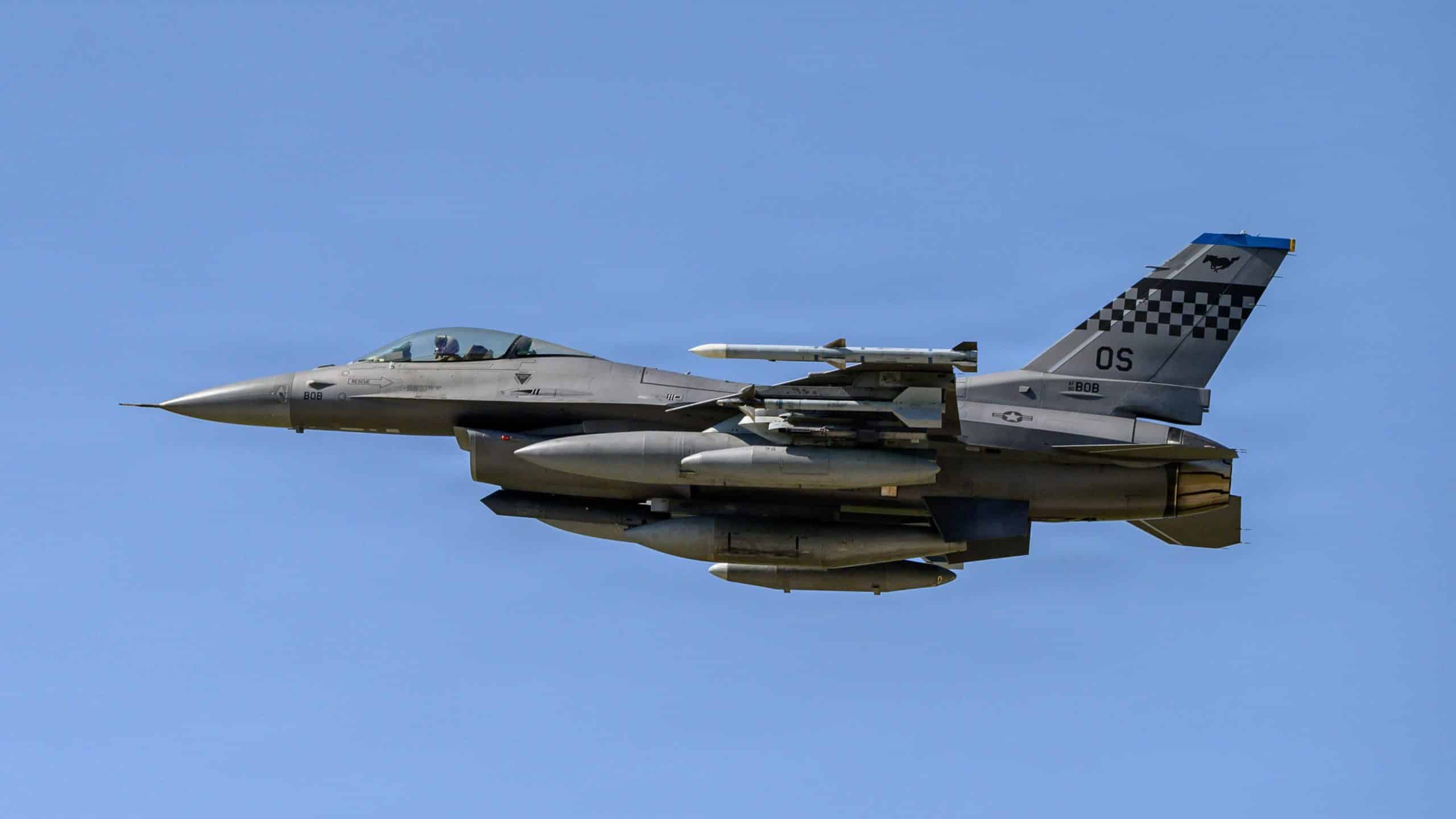
Interestingly, among the aircraft in the photos is the F-16 with the serial 90-0808, the first Block-50 F-16 in the entire Air Force inventory to hit 10,000 hours. The 29-year-old airframe is affectionately known as “BOB,” and the serial number painted on the jet has been modified from ‘808’ to ‘BOB’ to reflect the nickname.
Photos from aircraft spotters show that some of Misawa’s F-16s were transferred to other F-16 Block 50 bases, including Shaw AFB, South Carolina, and Spangdahlem Air Base, Germany.
Visualizza questo post su Instagram
Additionally, some Block 40 aircraft with the markings of the 35th FS have also been transferred to other units, including the Arizona Air National Guard’s 162nd Wing.
Visualizza questo post su Instagram
An important fleet modernization
With the 35th FS indeed transitioning to Block 50 aircraft, the 8th FW will receive new capabilities which would exceed the ones of the Block 40. The F-16 Block 50 incorporates a more powerful engine and its primary mission set is the Suppression/Destruction of Enemy Air Defenses (SEAD/DEAD).
Additionally, the former Misawa aircraft have received upgrades as part of the U.S. Air Force’s continuing F-16 modernization efforts, called PoBIT (Post Block Integration Team). F-16s upgraded trough PoBIT have new radar, computers and electronic warfare systems.
That would potentially give the 35th FS access to a different capability set after returning to Kunsan. At the same time, it is also worth noting that the U.S. Air Force has not disclosed plans to base more advanced aircraft, such as the F-35s or F-15EXs, in South Korea.