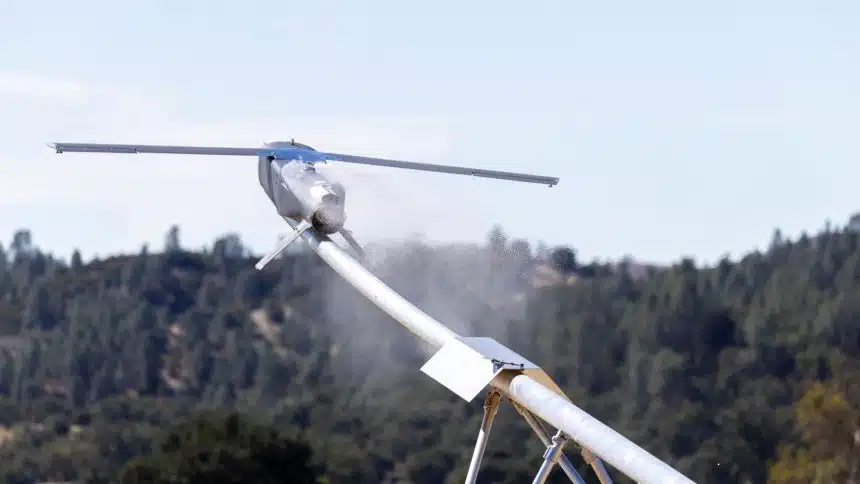
The Lumberjack UAS flew with SandboxAQ’s AQNav magnetic navigation system during a GPS-denied flight test this summer, demonstrating alternative resilient PNT navigation for autonomous operations.
Northrop Grumman and SandboxAQ have successfully flight-tested quantum-enabled magnetic navigation aboard the Lumberjack Group 3 uncrewed aircraft system, the two companies announced. The test demonstrated an alternative positioning, navigation and timing (PNT) capability intended to allow autonomous aircraft to continue operating when GPS is unavailable or unreliable.
The companies said that SandboxAQ’s AQNav magnetic navigation technology had been integrated onto Northrop Grumman’s Lumberjack and successfully demonstrated in a GPS-denied environment. SandboxAQ described the event as the first reported test of a magnetic navigation (MagNav) system on an attritable platform, as well as the first reported instance of MagNav being paired with a visual navigation system on an attritable, one-way-attack platform.
The demonstration is significant because GPS denial is increasingly becoming a constant presence on the battlefield, which represents a problem for military aircraft and uncrewed systems. An autonomous aircraft that loses access to GPS must be able to maintain a sufficiently accurate navigation solution using other sources, otherwise it would not be able to continue its mission.
Northrop Grumman’s Lumberjack® UAS and @SandboxAQ have completed a novel integration of quantum-sensing #MagNav and #VisNav on an attritable Group 3 Unmanned Aircraft Solution (UAS). Learn more: https://t.co/emzfJhc1r7 https://t.co/K6QRTxIxsn
— Northrop Grumman (@NGCNews) September 9, 2026
AQNav is intended to provide one such source by using variations in Earth’s magnetic field to determine an aircraft’s position without relying on GPS, satellite constellations or ground infrastructure, the company explained. For Lumberjack, the test with AQNav represents another step in the demonstration of its ability to operate in contested environments.
The Aviationist subsequently spoke with Jim Stroup, Head of Growth at SandboxAQ, and Michael Bastin, Director of Distributed Systems at Northrop Grumman, to obtain additional details about the flight test, AQNav’s integration with Lumberjack and the future development of the platform.
Lumberjack: A modular Group 3 UAS
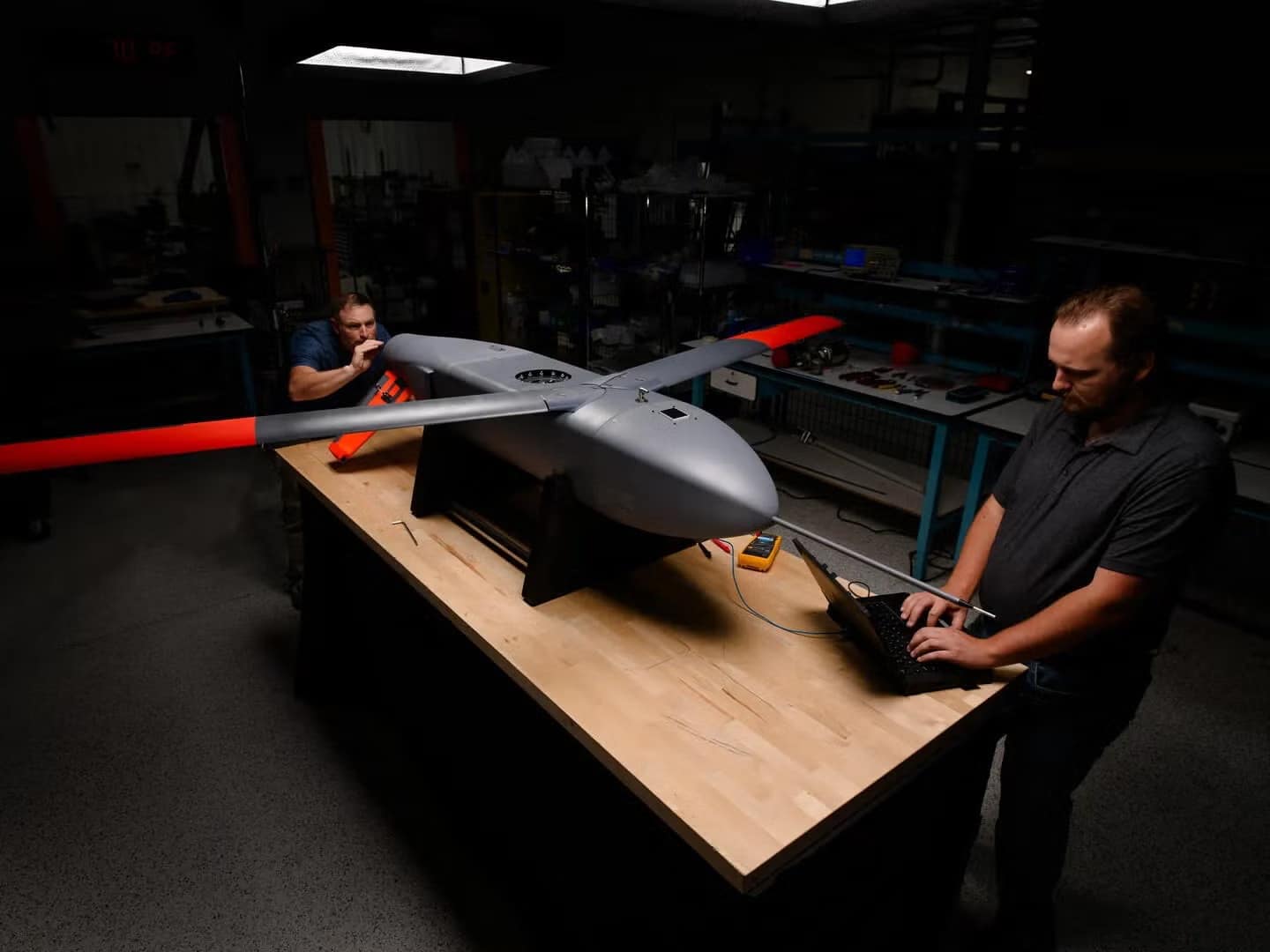
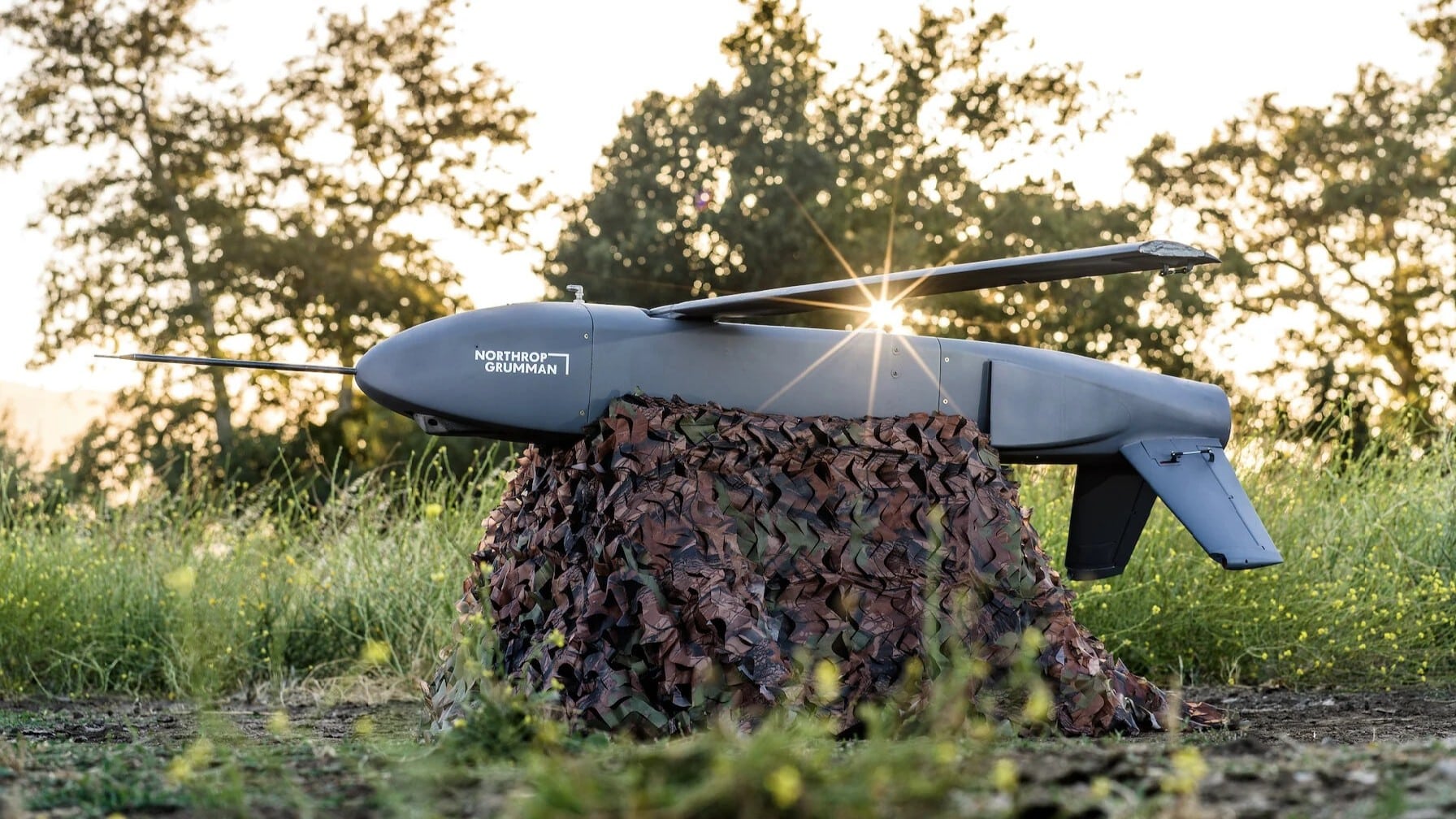
Lumberjack is Northrop Grumman‘s new Group 3 uncrewed aircraft system, designed around a modular architecture that allows the aircraft to be configured for different missions. The company describes Lumberjack as a modular and customizable, AI-enabled UAS designed for joint operations and one-way-attack missions.
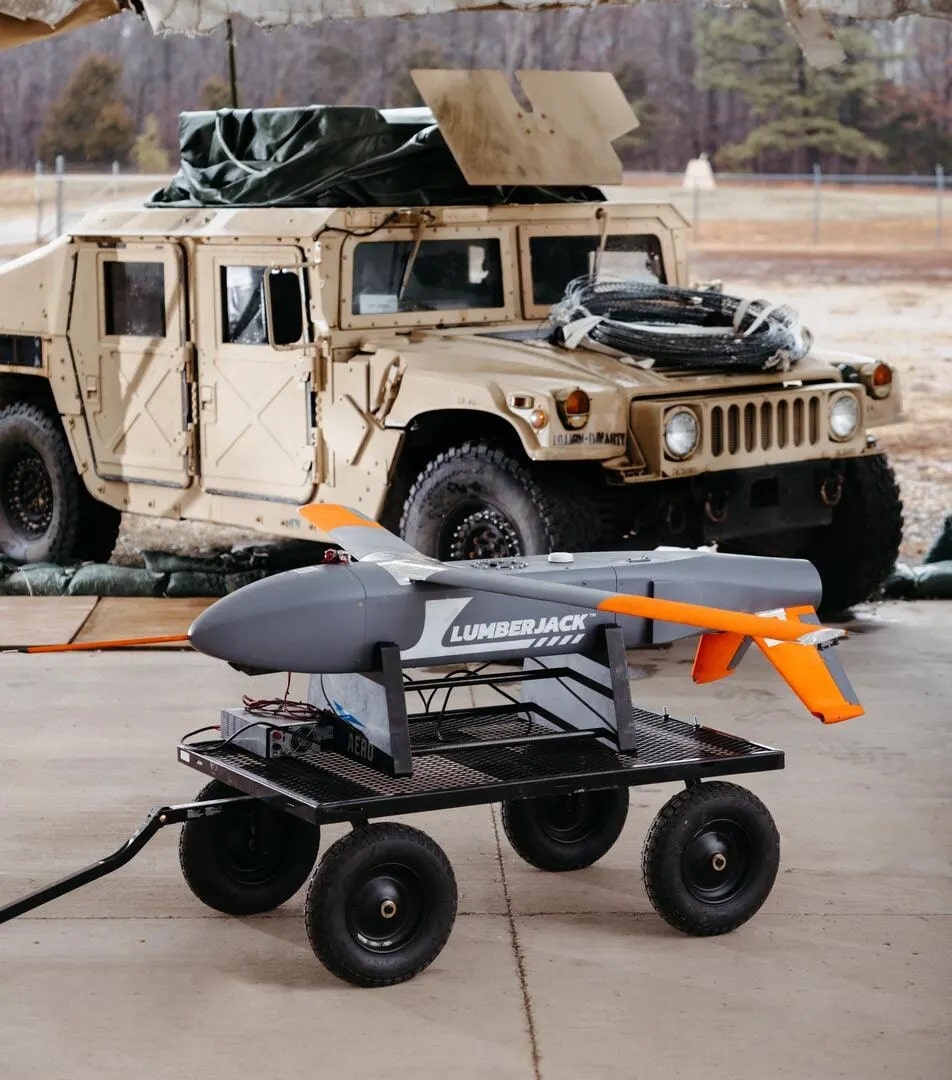
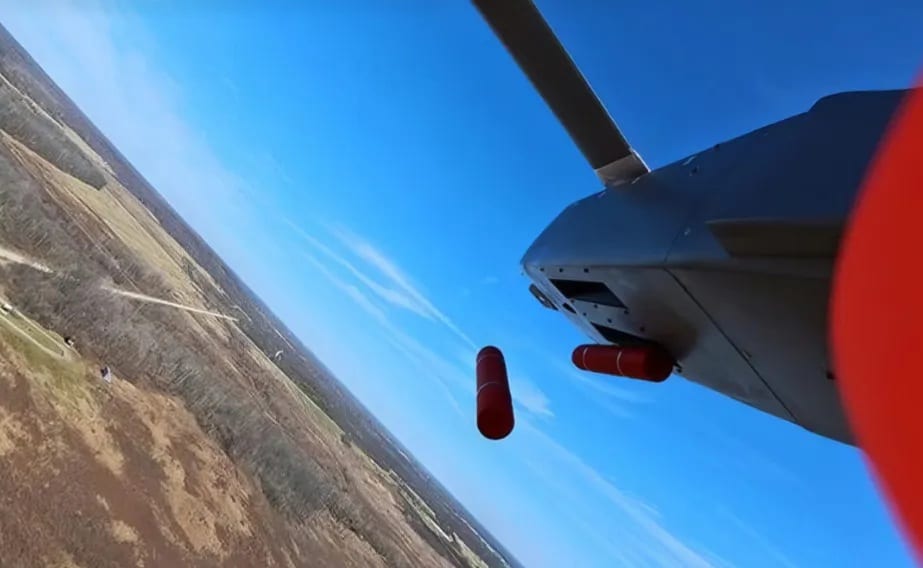
The aircraft combines autonomous capabilities with systems intended for sensing and engaging threats. Northrop Grumman has publicly highlighted electronic warfare, tactical data links, intelligence, surveillance and reconnaissance capabilities and precision-strike functions as part of the platform’s mission set.
Additionally, the company says Lumberjack is designed for joint operations and swarming tactics, seamlessly teaming with crewed platforms and other uncrewed assets. Lumberjack can be launched from both air and ground platforms, although so far the demonstrations only saw ground-launched assets.
Lumberjack was developed on a relatively compressed timeline, with the company saying it progressed from concept to first flight in less than 14 months. Similarly, the AQNav demonstration was conducted approximately one month after establishing an objective to fly this capability on Lumberjack.
🇺🇸 SandboxAQ (@SandboxAQ) and Northrop Grumman (@NGCNews) has successfully completed the world’s first reported test of a magnetic navigation (MagNav) system on an attritable system (Lumberjack).
“Leveraging our proven MagNav technologies and drone platform expertise, the flight test with Northrop Grumman further demonstrates the ease by which our AQNav software can be integrated into unmanned systems at the speed and scale required by leading defense organizations.”
– Luca Ferrara, General Manager of Navigation at SandboxAQ
Lumberjack:
A modular and customizable, AI-enabled UAS from Northrop Grumman, designed for joint operations and one-way-attack missions.
Learn more >> https://t.co/vz9zPr5G70
— Counter Unmanned Systems (@CUAS_NEWS) September 10, 2026
What is AQNav?
AQNav is SandboxAQ’s quantum-enabled magnetic navigation technology. The system uses magnetic sensors to detect variations in Earth’s magnetic field and processes the resulting data to determine the aircraft’s position.
This means that, unlike GPS, it does not require an externally transmitted navigation signal. SandboxAQ describes AQNav as a passive navigation capability that can operate independently or complement other navigation sources, including inertial, visual and satellite-based systems.
The company highlighted the ability of AQNav to operate over open water, feature-limited terrain and other environments in which conventional visual navigation can become difficult. The technology is part of the broader effort to develop alternative PNT capabilities for military systems operating in GPS-contested environments.
SandboxAQ has been flight-testing AQNav with military, government and commercial aerospace partners since 2023, including Airbus and Boeing. The company has also worked with the U.S. Air Force on flight testing aboard C-17 Globemaster III and C-130J Super Hercules aircraft and has participated in NATO’s Defence Innovation Accelerator for the North Atlantic (DIANA) program.
Testing Lumberjack without GPS
According to SandboxAQ, the Lumberjack flight tests were conducted using profiles representative of the way the aircraft is intended to operate in GPS-denied environments.
“Each flight test was flown with profiles representative of how Lumberjack is deployed in GPS-denied environments,” Jim Stroup told The Aviationist. “We’re unable to detail specific performance data or test profiles for U.S. military systems under development.”
We showcased our cost-effective Lumberjack™ Uncrewed Aircraft System with advanced autonomous and AI capabilities at the @USArmy’s Operation Lethal Eagle. Discover how we’re shaping the future of defense: https://t.co/SdVsHUFRf3 https://t.co/cxxZAcua6O
— Northrop Grumman (@NGCNews) March 31, 2026
AQNav was also tested independently of Lumberjack’s GPS system, instead of complementing it. “AQNav was tested aboard Lumberjack independently of the platform’s GPS system to replicate the GPS-denied paradigm in which Lumberjack was designed to operate,” Stroup said.
SandboxAQ says AQNav “significantly outperformed inertial-only navigation” solution under the GPS-denied conditions representative of Lumberjack’s operational environment. According to the company, this happened because AQNav addresses a common problem of inertial platforms.
“That matters because an inertial solution’s positional error grows exponentially the longer it flies without GPS,” said Stroup. “AQNav continuously snaps the inertial system back to reality, using a means of navigation that is fully independent of GPS, satellite constellations and ground infrastructure.”
Magnetic navigation as another source of PNT
AQNav is not necessarily intended to replace the aircraft’s existing navigation systems, but rather to provide another navigation source that can be combined with information from inertial, visual and satellite-based systems. Thus, the navigation sources installed on the aircraft can work in parallel to navigate precisely even in degraded scenarios.
“Depending on how it’s integrated, AQNav can provide a position estimate along with a confidence estimate,” Stroup said. “The platform’s navigation system can then weigh AQNav’s positioning against its other onboard sources.”
The exact mechanism used by Lumberjack to prioritize its different navigation sources was not disclosed. However, the next stage of testing is expected to provide more insight into how AQNav interacts with other navigation modalities.
We’re fast-tracking innovation with Lumberjack™! 💥 In less than 14 months, this scalable and launch agnostic Group 3 UAS, went from concept to flight-tested, reinforcing our commitment to delivering advanced capabilities with speed. ⏩ https://t.co/j5QJSdtK8w
— Northrop Grumman (@northropgrumman) October 23, 2025
“Upcoming flights will integrate AQNav with adaptive sensor-fusion in GPS-denied flight tests,” Stroup said. This could hint at a more dynamic use of magnetic navigation alongside inertial and visual navigation during an autonomous mission.
One of the challenges associated with magnetic navigation is the need to distinguish Earth’s magnetic-field variations from magnetic interference generated by the aircraft itself. In fact, motors, electrical systems, wiring and payloads can all potentially affect the magnetic environment around a sensor.
SandboxAQ says AQNav’s accumulated testing has demonstrated the ability to address these effects. Furthermore, the company says the testing previously conducted with other platforms resulted in a platform- and tail-agnostic navigation product that removes environmental, platform and payload noise at the sensor level.
From navigation system to autonomous mission capability
For Northrop Grumman, the demonstration allows to continue improving the autonomy of Lumberjack, making it jam-proof and recoverable. The company is incorporating different navigation modes, including magnetic and vision-based navigation, into the aircraft’s modular autonomy stack.
“Resilient alternative positioning, navigation and timing (PNT) gives Lumberjack a trusted sense of position when GPS is degraded or denied,” Michael Bastin, Director of Distributed Systems at Northrop Grumman, told The Aviationist.
Similarly to Stroup, Bastin noted how an autonomous aircraft cannot depend indefinitely on inertial navigation after losing GPS, and how alternative PNT can correct the drift of the inertial system. According to Northrop Grumman, this allows Lumberjack to remain accurate and operationally relevant in contested environments while maintaining the positioning needed for precision effects and ISR missions.
“Lumberjack is built around a modular, payload agnostic design, but navigation is core to how the autonomous system plans, coordinates and executes missions,” said Bastin. “By integrating capabilities like magnetic and vision-based navigation directly into the autonomy and mission-systems stack, we’re treating resilient PNT as a foundational feature of the platform.”
More Lumberjack flights are planned
Northrop Grumman says it already has additional flights of Lumberjack planned for this year and into next year. The company declined to disclose exactly what will be tested during those flights, but said the upcoming events will expand on the capabilities currently offered by Lumberjack.
“We plan to expand on all these current capabilities offered on Lumberjack and will be testing those at upcoming demos and customer engagements,” Bastin said.
Northrop Grumman also says it has already successfully flown Lumberjack in operational settings to test navigation capabilities. Among these is the test conducted during the U.S. Army 101st Airborne Division (Air Assault)’s Operation Lethal Eagle exercise in March 2026.
The company also demonstrated the platform to potential customers, and plans to test new capabilities they think valuable for stakeholders. Bastin told us there are ongoing conversations with interested customers, although the details can’t be released at this time.