The Accident Investigation Board found that a trainee OA-1K pilot inadvertently shut off fuel, with task saturation, communication issues and crew resource management shortcomings being contributing factors.
The U.S. Air Force Special Operations Command (AFSOC) has released last week the Accident Investigation Board (AIB) report into the Oct. 23, 2025 loss of an OA-1K Skyraider II. The board concluded that the aircraft was destroyed after the pilot inadvertently activated the engine fuel shutoff valve instead of the fuselage fuel tank valve during a training flight.
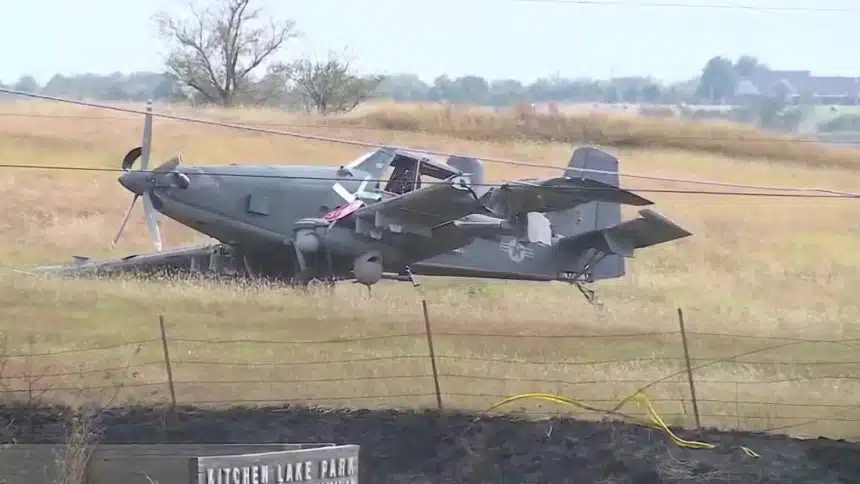
The accident occurred near Oklahoma City while the aircraft, callsign ‘ZORRO 75’ and assigned to the 17th Special Operations Squadron under the 492nd Special Operations Wing, was conducting an Initial Qualification Training sortie from Will Rogers Air National Guard Base. As we reported at the time, the OA-1K went down near SE 119th Street and Sooner Road, striking two power poles, road signs and fencing, and causing a small grass fire.
Both crew members escaped without injury following the forced landing. However, the aircraft was deemed a write-off, with damage estimated at approximately $17.9 million.
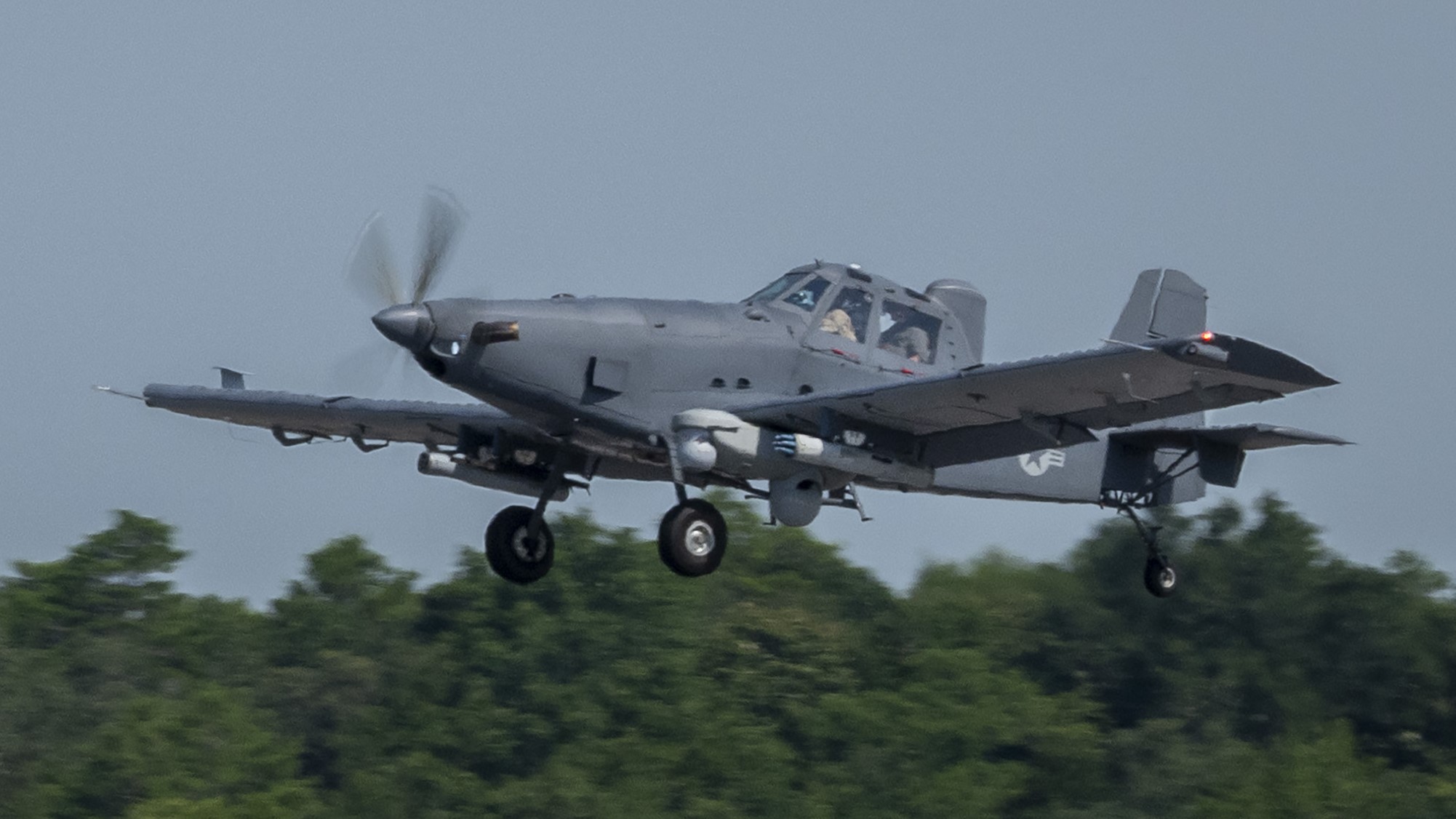
According to the AIB, the mishap resulted from the unintended activation of the fuel shutoff valve, which immediately isolated the engine from its fuel supply and caused a complete loss of power. The board also identified three contributing factors: pilot task saturation, communication challenges combined with ineffective crew resource management (CRM), and ineffective task prioritization after the engine failure.
The mishap
The mishap aircraft, serial number 23-000009, departed Will Rogers International Airport shortly after 2:35 p.m. local time. The planned Initial Qualification Training mission included instrument approaches at Shawnee, Chickasha and El Reno regional airports.
The student pilot in the front cockpit was an active-duty service member while a civilian contractor was the instructor pilot in the rear cockpit. After departure, the crew leveled at 3,500 feet MSL and began the standard cruise checklist.
As part of that checklist, the instructor directed the student to momentarily open the fuselage fuel tank valve to check its functionality. However, the student “inadvertently turned the fuel shutoff valve handle clockwise to ‘OFF’ instead of pulling the fuselage fuel tank valve backward to ‘ON’.”
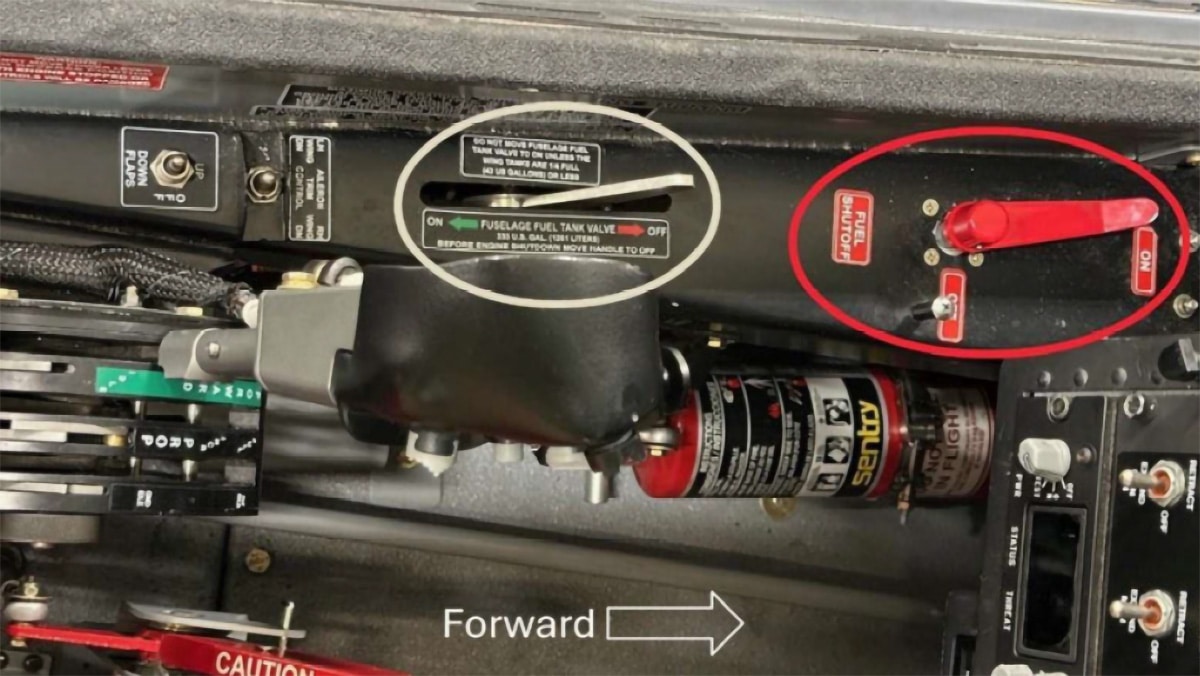
That action immediately interrupted fuel flow to the Pratt & Whitney PT6A turboprop engine. The pilot noticed the error “approximately four to five seconds later,” turned the valve back on but did not notify the instructor.
The instructor took control of the aircraft in response to the power loss. However, the crew “failed to accurately assess the cause of power loss and prioritized overriding the fuel control unit, made a ‘mayday’ distress radio call, and prepared for an emergency landing.”
Similar-looking cockpit controls
One of the report’s findings concerns the physical arrangement of the cockpit controls. Investigators explain that the fuselage fuel tank valve lever, painted in silver, and the fuel shutoff handle, painted in red, are located only about five inches apart in the front cockpit.
The fuel tank valve is operated by pulling and pushing the lever, while the fuel shutoff requires rotating the red handle. Additionally, on the OA-1K Block 1 involved in the accident, investigators noted that the fuselage fuel tank valve is also partially obscured by the aircraft’s larger power lever, potentially making identification more difficult than in earlier Block 0 aircraft.
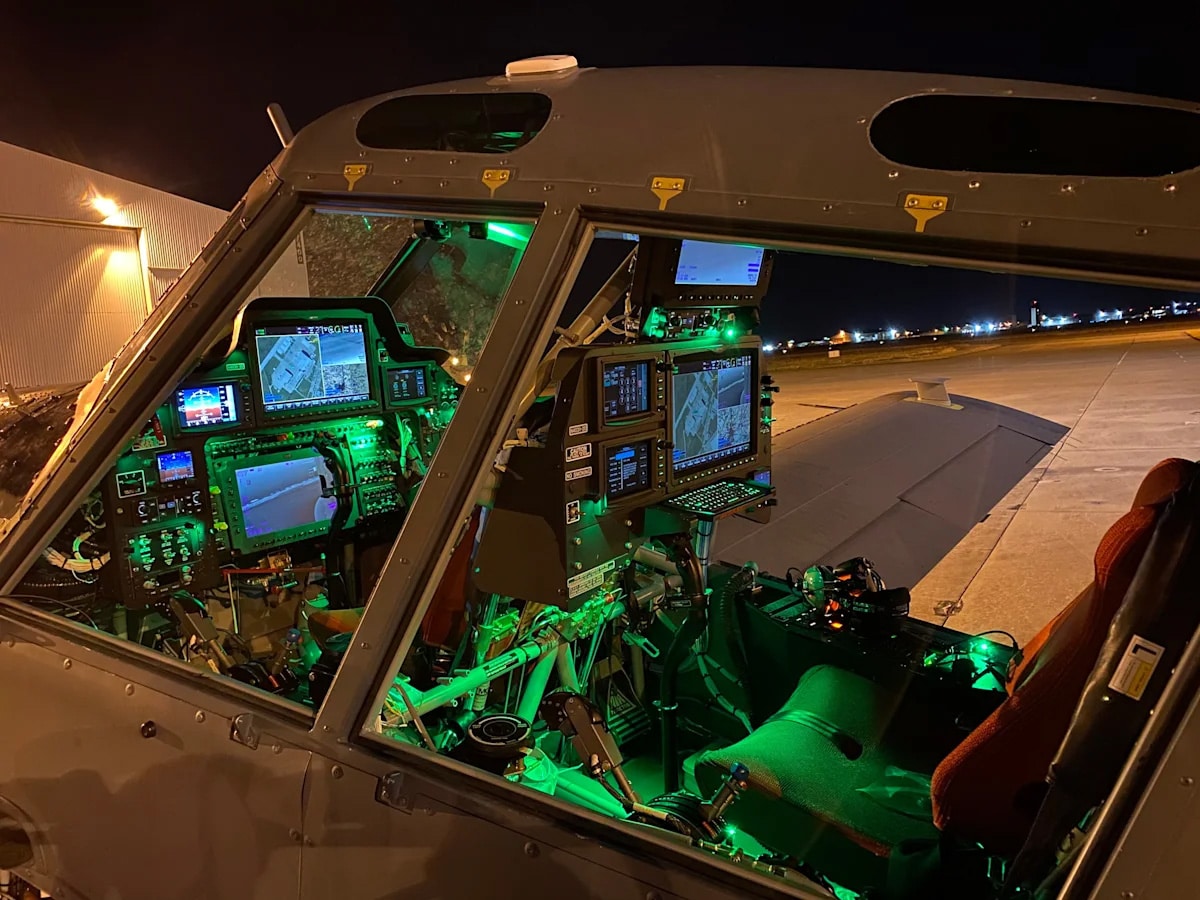
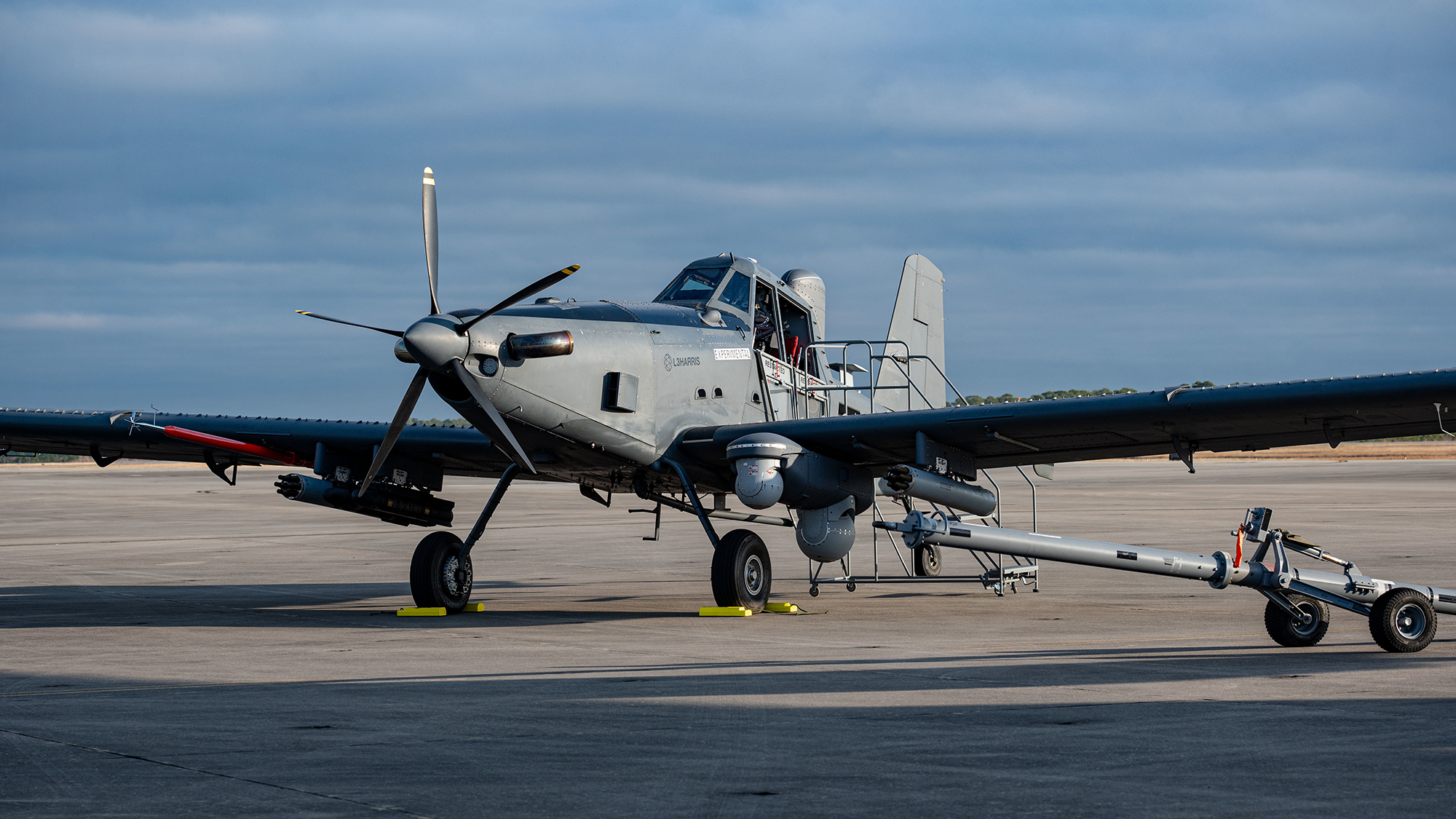
For context, the OA-1K Block 0 is the unmodified variant used for initial training, likely referring to the AT-802U trainer aircraft delivered in 2024. The OA-1K Block 1 is the missionized variant equipped with the Garmin 3000 glass cockpit and also used for training, delivered in 2025.
The AIB concluded that the student pilot identified the wrong control while performing the checklist, unintentionally shutting off fuel to the engine. The report also mentions that after the valve activation, the pilot “immediately redirected his attention to the other side of the aircraft to troubleshoot his communications issues.”
The report further mentions that investigators found no evidence of mechanical malfunction, contamination or maintenance deficiencies that contributed to the accident. Analysis conducted by L3Harris, Air Tractor and Pratt & Whitney determined that all aircraft systems were functioning normally before the inadvertent shutdown.
Human factors
As mentioned in the opening, investigators determined several human factors contributed to the mishap. These prevented the attempt to recover the aircraft before the crash.
The student pilot was simultaneously managing multiple cockpit tasks during the climb, including communications, autopilot engagement, cruise checks and troubleshooting an intercom problem that made it difficult to hear the instructor over engine and wind noise. The report classified this as task saturation.
Communication issues compounded the problem. The student pilot did not tell the instructor about his difficulty hearing cockpit communications, nor did he report that he had reopened the fuel shutoff valve after realizing his mistake. As a result, the instructor never developed an accurate understanding of the cause of the power loss.
Finally, investigators concluded that once the instructor took control of the aircraft, the crew prioritized overriding the fuel control unit, declaring an emergency and preparing for the forced landing instead of immediately executing the published Critical Action Procedures intended to restart the engine and, if necessary, feather the propeller to maximize glide performance. According to the report, the aircraft still had approximately 2,300 feet above ground level – sufficient altitude to attempt those memory procedures.