Russian bombers intrude into the U.S. air defense zone, no interceptor scrambled after them

May 04 2015 - 17 Comments

The interesting part of the news is that the Tu-95 bombers near Alaska were not intercepted.

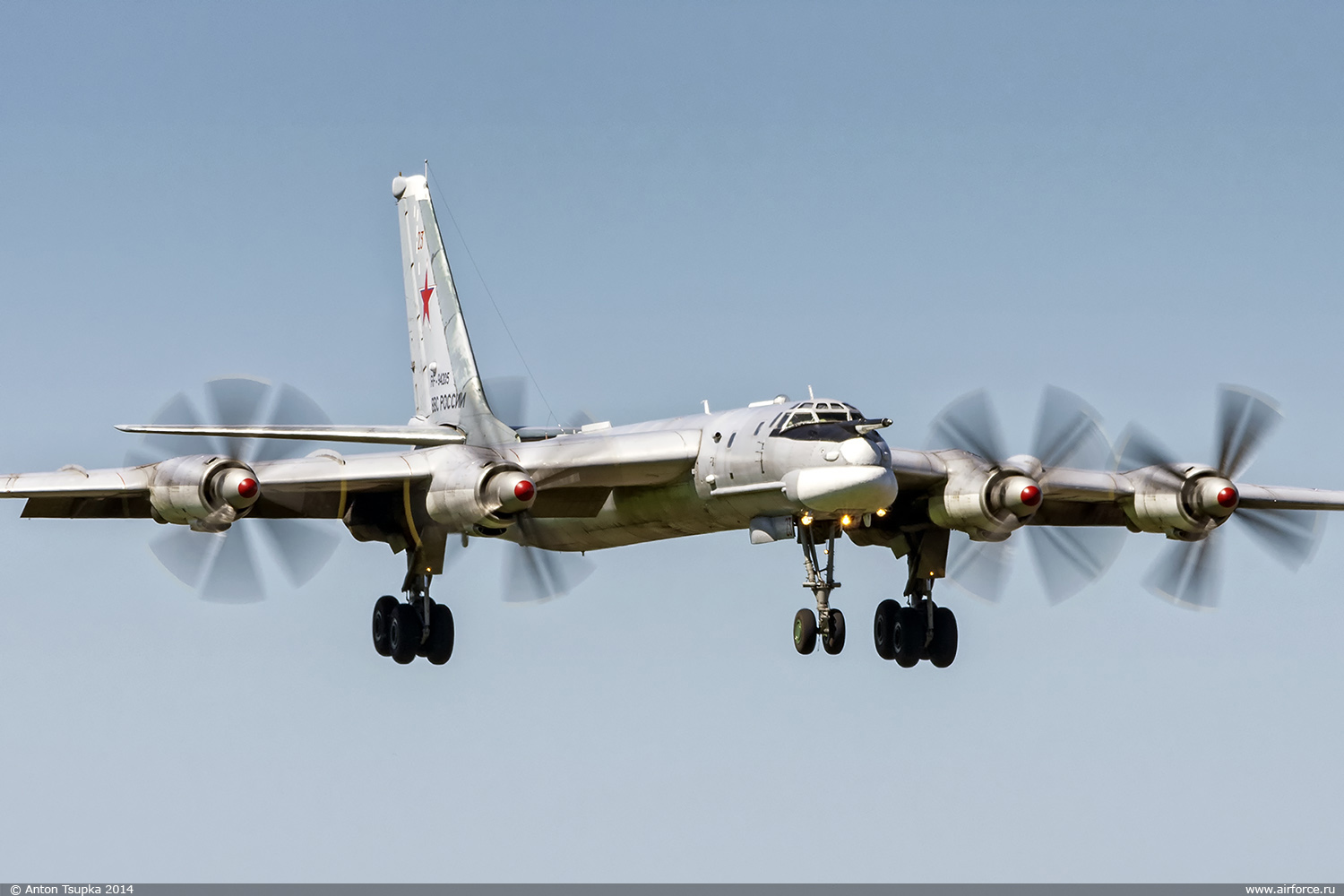
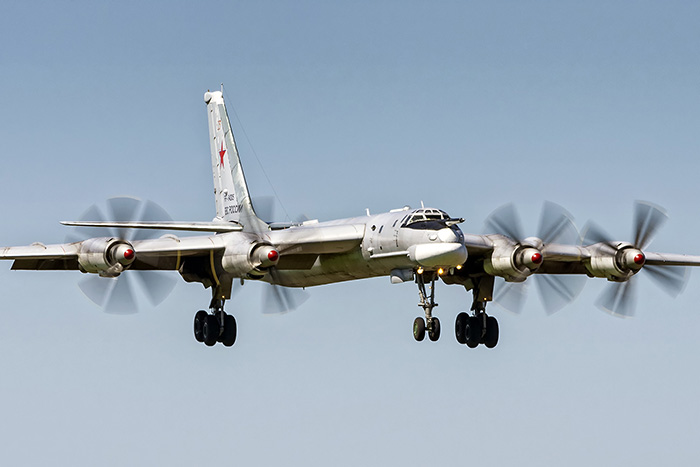
On Apr. 22, two Russian Tu-95 Bear H bombers flew into the U.S. Air Defense Identification Zone (ADIZ), in what was the first such incursions since the beginning of the year: pretty routine, except that no U.S. or Canadian fighter jet were launched to intercept the “zombies.”

Quoting U.S. Northern Command and North American Aerospace Defense Command (NORAD) spokesman Capt. Jeff Davis, Washington Free Beacon reported that unlike most of the earlier incursions, U.S. aircraft were not dispatched against the strategic bombers.

In fact, it seems that most but not all the Russian Bears flights near North America cause a scramble by the U.S. or Canadian QRA (Quick Reaction Alert) jets: last year only 6 out of 10 incursions saw U.S. or Canadian aircraft intercept Moscow’s long-range attack aircraft.

The reason may be that the Tu-95s (flying in international airspace) were still quite far from U.S. or Canadian sovereign airspace and/or just briefly transitioned inside the ADIZ. Still it’s a bit unusual that the Russians were not intercepted considered that, for instance, in northern Europe, all the Bear or Backfire flights cause a scramble by the QRA fighters.

The ADIZ is an airspace surrounding a nation or part of it where identification, location, and control of aircraft over land or water is required in the interest of national security. This means that any aircraft flying in these airspaces without authorization may require identification through interception by fighter aircraft in QRA (Quick Reaction Alert).

The North American ADIZ (just like any other ADIZ around the world) extends well beyond the boundaries of the national airspace above territorial waters, but any civil aircraft that enters such closely monitored airspace is tracked and requested to provide its planned course, destination and any additional details that may help its identification.

Military aircraft that do not intend to enter the national airspace are not required to identify themselves or otherwise comply with ADIZ procedures but it is a common practice that any foreign (namely Russian) military aircraft flying close to the U.S. or Canada airspace, within the ADIZ, is intercepted, identified and escorted.

Image credit: Anton Tsyupko / Airforce.ru


  • Frith

    Extend US patrols over the entire Arctic short of the Russian ADIZ. They’ll be pissed because they claim almost the entire Arctic now. If they bitch, tell them we went to the moon and that the moon is US territory since we planted our flag on it. Yeah, its ridiculous.

    • Jan Schmidt

      planting the flag is easy, keeping it is hard. empires came and went, mainly because they were overextended. also arrogance and complacency played a major part. as for the moon, read the outer space treaty: “outer space, including the Moon and other celestial bodies, is not
      subject to national appropriation by claim of sovereignty, by means of
      use or occupation, or by any other means” and also i recommend robert heinleins book “the moon is a harsh mistress” before you wave any flag on the moon :)

      • Paul

        The space treaty is a perfect illustration of the point Frith was making – He’ll be happy, I’m sure, to see me thanking you for arguing against your own point for him.

        All kidding aside, I assume your implication is that the
        Russians have the obligation to perform these provocative flights because at the
        moment our leadership can’t figure out whether we’re in a war in the Middle East
        or not? Your political stance is pretty clear there, but the much more important question raised in the article is what is the risk here, and if these flights are somehow is going to make either side feel more secure if there is an incident, intentional or otherwise?If

        If for some reason the F-22s or the TU- escorts perceive a
        threat, both sides feel justified – That is a very dangerous scenario being
        played out right now because Russia feels obligated to push their interests
        outside of the participants in a major war – If U.S. can’t decide what to do,
        Russia should assist, this is a perfect opportunity for the sides to fight for
        a common goal – Get rid of ISIS.
        Because, bottom line, even if Russia succeeds in propping up Assad, they
        are now embroiled and any withdrawal or standdown against ISIS has serious
        implications – The US can attest to that – So, you see, there IS something US
        and Russia have in common, if we can just get past the egos and the power – No small
        task, unfortunately. Propping up rebels
        and keeping Assad, without addressing ISIS is a fool’s
        bet, and Russia
        hopefully wants to show the US
        that it is there to stabilize, and then get about eradicating ISIS
        with coalition

  • Roland Lawrence

    Not bad for your $25m a piece 50+ year old plane! Shame these beasts wont ever get the Progress D27 propfan engine replacement though. Would have loved to have seen that. https://www.youtube.com/watch?v=tSVtYib8StY

  • InklingBooks

    These intercepts are an expensive nuisance, which is probably Russia’s intent. This may be a move in the right direction. Perhaps we should respond to these flights not with intercepts but by sending an inexpensive-to-operate aircraft into their air defense zone a few days later, one giving every appearance on radar of being as large as these Bears.

    They’d be stuck with the cost of their harassment flights and intercepts while we would only have to cost of a lone weather flight. Each exchange of flights would cost them perhaps ten times what our cost was. We could keep that up for a lot longer than they.

    I once won a legal dispute in part because I managed to keep my costs down to a tiny fraction of what my much more deep-pocketed opponent was paying. He may have had far more money than I, but proportionally, his pain was far greater. Of course, in the end I won because I had the better case, but establishing that difference in costs enabled me to not be bullied into giving up too soon.

    • petrovic dusan

      Well, yes, but Russia has 2nd richest oil reserves on Earth, so actually,it costs nothing to send an airplane, and young aviators are just thrilled to fly it even without any pay!

      • NHPatriot

        Exactly why our government should open offshore drilling leases for oil & gas. We should doing everything we can to keep oil at $50bbl. Putin needs oil to be $100+ to cover costs of the kelptcracy masquerading as a government. Time to bankrupt Putin’s corrupt crime organization.

    • NHPatriot

      We should send the Global Hawk or the new X-47B drone to intercept them.

      • PugilistProdigy

        Good luck shooting it down in worst case… with your Global Hawk.

  • Don Bacon

    Apparently it is no longer a common practice. ho-hum

    • tim robinson

      :) maybe the saw your definition of ‘intercept’ and adopted your logic??

    • Roland Lawrence

      From what ive read its way down on cold war numbers still.

  • TheRedLeaf

    Considering it take a nice bit of cash just to make one round trip on a fighter or bomber, since these “zombies” and interceptions are made on a regular basis in the Pacific or Euro-theatre, I’d think it would accumulate to some noticeable price and strategy. Any idea why they’re doing this so often and besides testing “blue” air-force reaction?

    • Roland Lawrence

      Forget western style metrics for this one. This aircraft is a pretty ingenious low tech solution. If you have ever seen a video with a guy with a wooden mallet taking to bashing a few items under an engine cover one must assume servicing costs are going to be low. Crews wages in Russia will be lower too & might as well count in the fuel as basically free as Russian Armed Forces dont pay pump price last time I looked. Id guess our anti Russian stance and meddling in Eastern Europe was the cause of resuming these flights.

  • Jan Schmidt

    look here for alaska adiz map:
    http://upload.wikimedia.org/wikipedia/en/d/d8/Alaskan_ADIZ.jpg

    and here for usa and canada adiz map:
    http://upload.wikimedia.org/wikipedia/en/4/46/ADIZ_Boundaries.jpg

    alaska radar systems:
    http://media.defenceindustrydaily.com/images/GEO_Alaska_Radar_System_Map_lg.gif

    the tu-95 can fire kn-55 cruise missiles (over 2500 km range, that is 1300 nm), they are about 50 bombers combat ready. same as the b-52, they do “bomber diplomacy” and “morale boost” to show off and show they can do it. the usa does the same, china was buzzed in 2013 by 2 b-52s over the Senkaku/Diaoyu islands in the East China Sea. but do not worry, radars and other detectors watch the sky, f-22 scramble and intercept from Joint Base Elmendorf-Richardson.

  • John McElroy

    This story is slightly wrong. No intercept by Jet Fighters. But it was intercepted.

  • tjohn6041

    I am not sure, but I am assuming that they probably did not think they could get to them in time so why waste the flight. I know when China established its ADIZ, the U.S. Sent B-52s to fly just inside the outer edge. The Chinese did not intercept because they knew that the B-52s would leave before the fighters got there