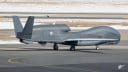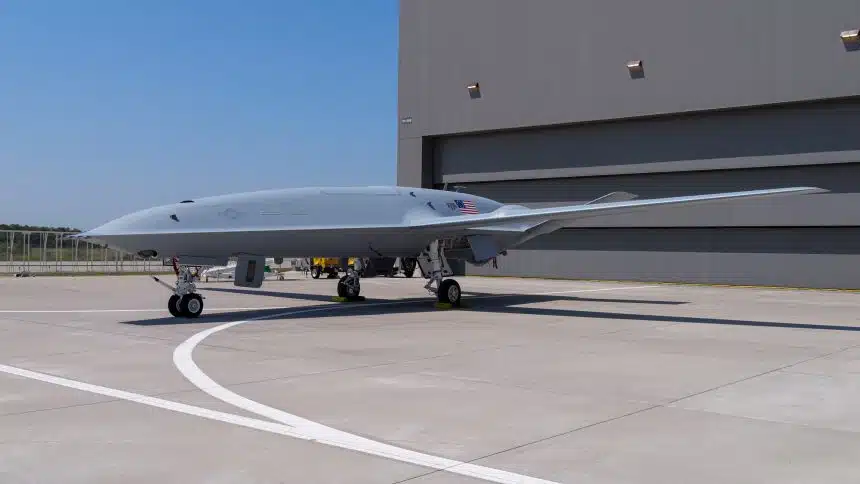
The U.S. Navy has awarded Boeing a contract for the Lot 1 of the Low-Rate Initial Production of the MQ-25 Stingray unmanned tanker, which includes three aircraft.
The U.S. Navy has awarded Boeing the contract for the Lot 1 of the MQ-25A Stingray’s Low-Rate Initial Production. The Fixed Price Incentive contract, valued at $562 million, covers the production of three aircraft, which join the other 11 already contracted for testing.
The service says that the initial deliveries from Lot 1 are expected to begin in 2029. According to Boeing, the Lot 1 will validate the design, production processes and supply-chain readiness.
From sea to shining sea. 🇺🇸
Thank you, @USNavy, for a contract to deliver three additional MQ-25A Stingray™ — 14 now under contract. It’s another step toward bringing critical unmanned aerial-refueling capability to Navy aircraft carriers.
More: https://t.co/sRb0236Xxo pic.twitter.com/U6uxoQCIFL
— Boeing Defense (@BoeingDefense) September 14, 2026
“Awarding this first LRIP contract marks a pivotal transition from development to operational reality and is a testament to the focused effort of our joint government and industry teams,” said Capt. Daniel Fucito, Unmanned Carrier Aviation program manager (PMA-268). “MQ-25A will deliver the advanced reach, lethality, and survivability our warfighters need to outpace evolving threats and dominate the future battlespace.”
The contract award follows the announcement in May 2026 of the Milestone C approval to move the MQ-25 program into the Production and Deployment phase. The milestone’s announcement arrived less than a month after the first flight on Apr. 25, 2026.
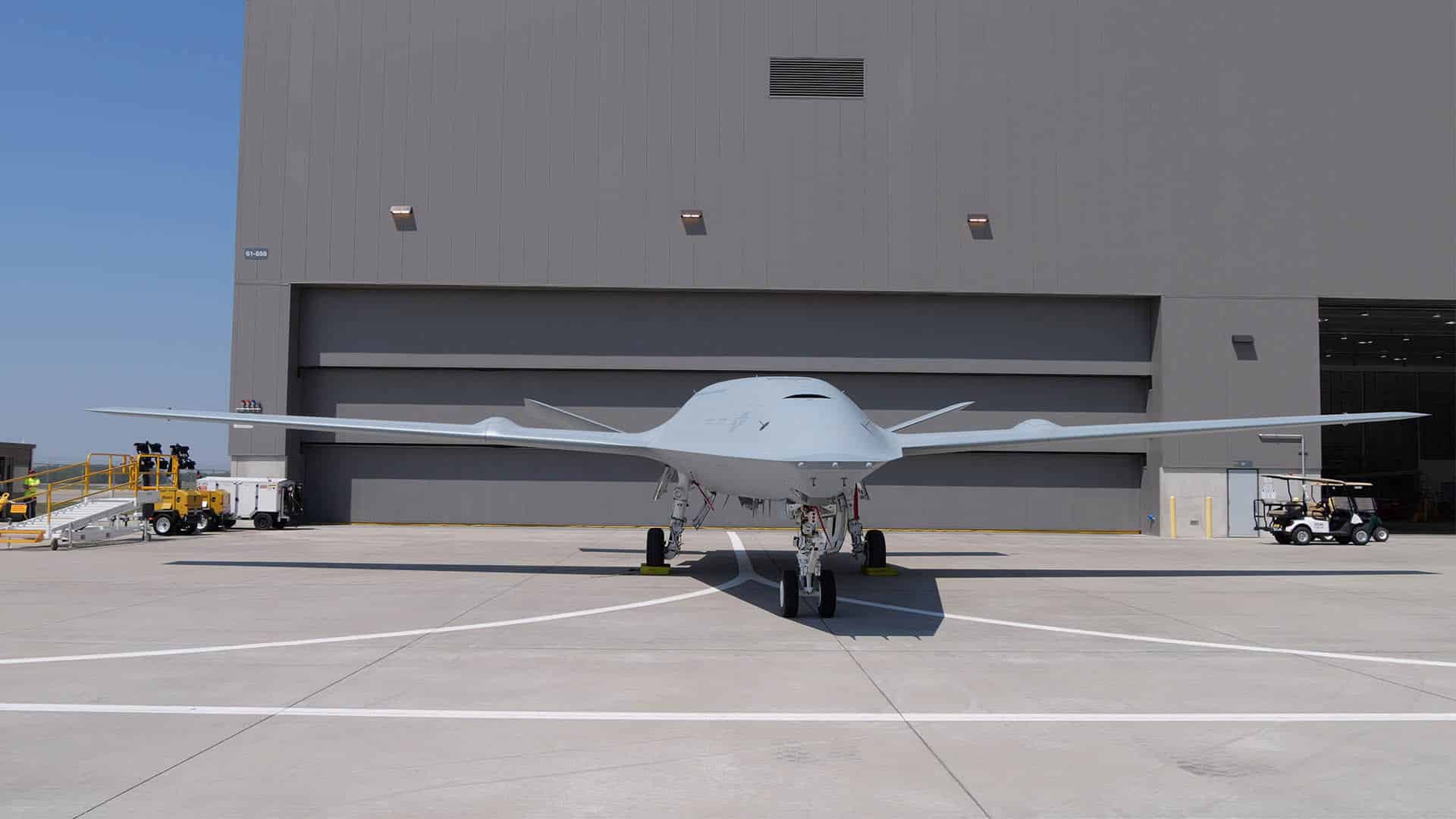
The contract covers also advanced acquisition of long lead components to support three LRIP Lot 2 MQ-25As. The Lot 2 contract is planned to be awarded in 2027.
The Lot 1 LRIP brings to 14 the number of aircraft under contract. Currently, as part of the Engineering and Manufacturing Development (EMD) phase, a total of 11 aircraft have been contracted, including four Engineering Development Model aircraft, five System Demonstration Test Articles and two ground test articles for static and fatigue testing.
The MQ-25 Stingray
The Boeing MQ-25 Stingray is an aerial refueling drone that resulted from the Carrier-Based Aerial-Refueling System (CBARS) program, which grew out of the earlier Unmanned Carrier-Launched Airborne Surveillance and Strike (UCLASS) program.
The genesis of the MQ-25 Stingray traces back to the U.S. Navy’s imperative for a carrier-based unmanned aerial vehicle (UAV) capable of providing aerial refueling to carrier strike groups’ assets. The primary mission of the MQ-25 is to deliver on-demand refueling support, significantly extending the endurance and operational flexibility of carrier-based aircraft.
The MQ-25 Stingray carried out the first ever air-to-air refueling operation between an unmanned tanker and a manned receiver aircraft in 2021. The milestone was achieved by the Boeing-owned MQ-25 T1 test asset employing the Cobham Aerial Refueling Store (ARS), the same used by F/A-18s, to perform the refueling operation.
The U.S. Navy is planning to procure 76 MQ-25, including the Engineering Development Model aircraft and System Demonstration Test Article aircraft. These will replace the F/A-18E Super Hornets in the aerial refueling role they currently have as part of the Carrier Air Wing, resulting in more fighters available for operational missions.
The genesis of the MQ-25 Stingray traces back to the U.S. Navy’s imperative for a carrier-based unmanned aerial vehicle (UAV) capable of providing aerial refueling to carrier strike groups’ assets. The primary mission of the MQ-25 is to deliver on-demand refueling support, significantly extending the endurance and operational flexibility of carrier-based aircraft.
The MQ-25 Stingray carried out the first ever air-to-air refueling operation between an unmanned tanker and a manned receiver aircraft in 2021. The milestone was achieved by the Boeing-owned MQ-25 T1 test asset employing the Cobham Aerial Refueling Store (ARS), the same used by F/A-18s, to perform the refueling operation.
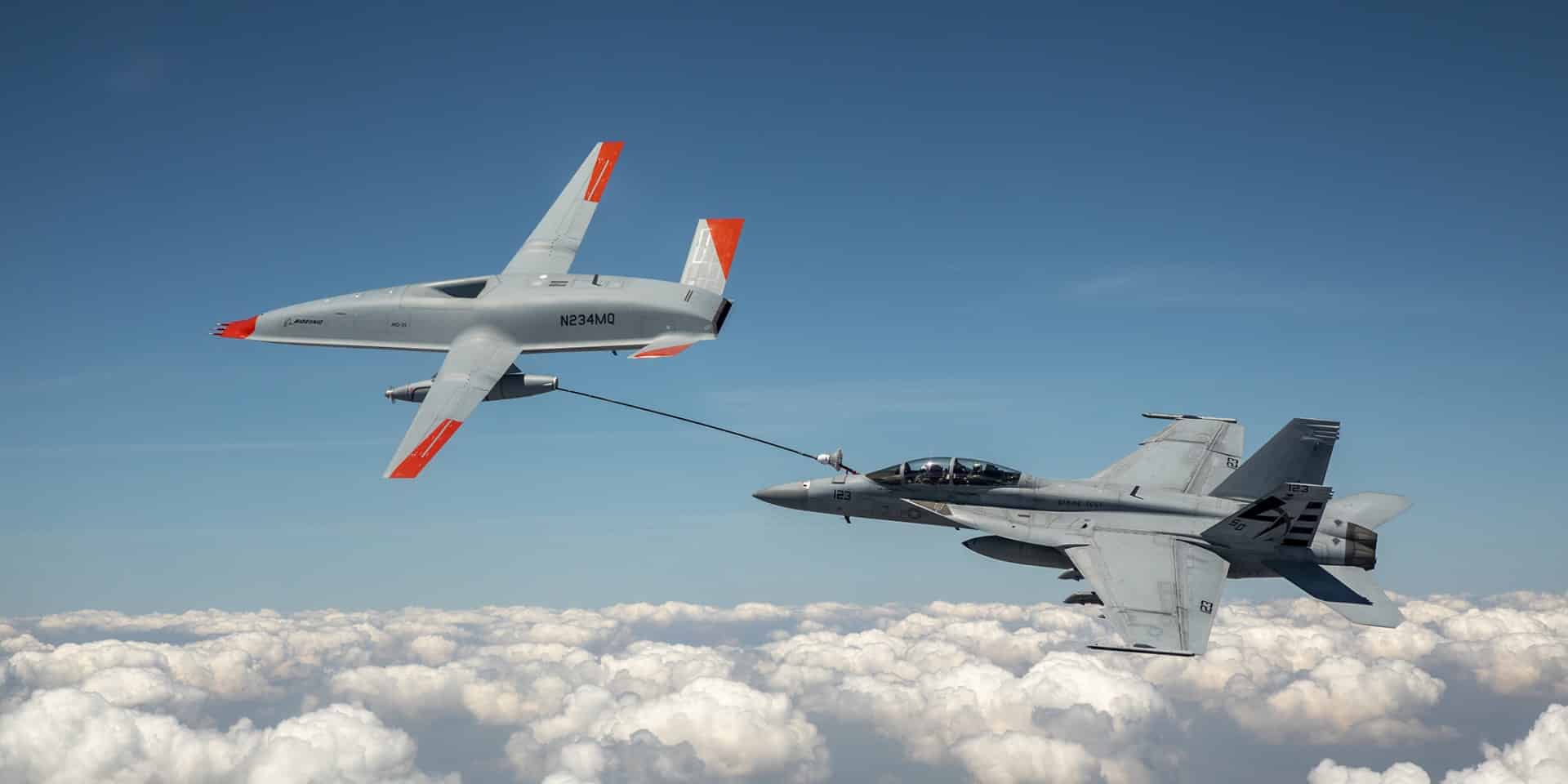
The U.S. Navy is planning to procure 76 MQ-25, including the Engineering Development Model aircraft and System Demonstration Test Article aircraft. These will replace the F/A-18E Super Hornets in the aerial refueling role they currently have as part of the Carrier Air Wing, resulting in more fighters available for operational missions.
Recent progress
After years of wait, Apr. 25, 2026, saw the first test flight of a production representative operational MQ-25A Stingray unmanned tanker. The Aviationist was the first and only outlet to report about the milestone soon after the aircraft landed back at MidAmerica St. Louis Airport in Mascoutah, Illinois.
The MQ-25A flew for approximately two hours, with both Boeing and Navy Air Vehicle Pilots (AVPs) controlling the aircraft from the Unmanned Carrier Aviation Mission Control System (UMCS) MD-5 ground control station, which integrates Lockheed Martin’s MDCX system. As we noted in our previous reporting, the first flight of the production representative MQ-25 comes almost seven years after the first flight of the T1 test asset on Sept. 19, 2019.
The maiden flight demonstrated the MQ-25’s ability to autonomously taxi, take off, fly, land and respond to commands from the GCS. The aircraft involved is the first of four Engineering Development Model (EDM) aircraft that will be delivered to the Navy under an $805 million contract awarded in 2018.
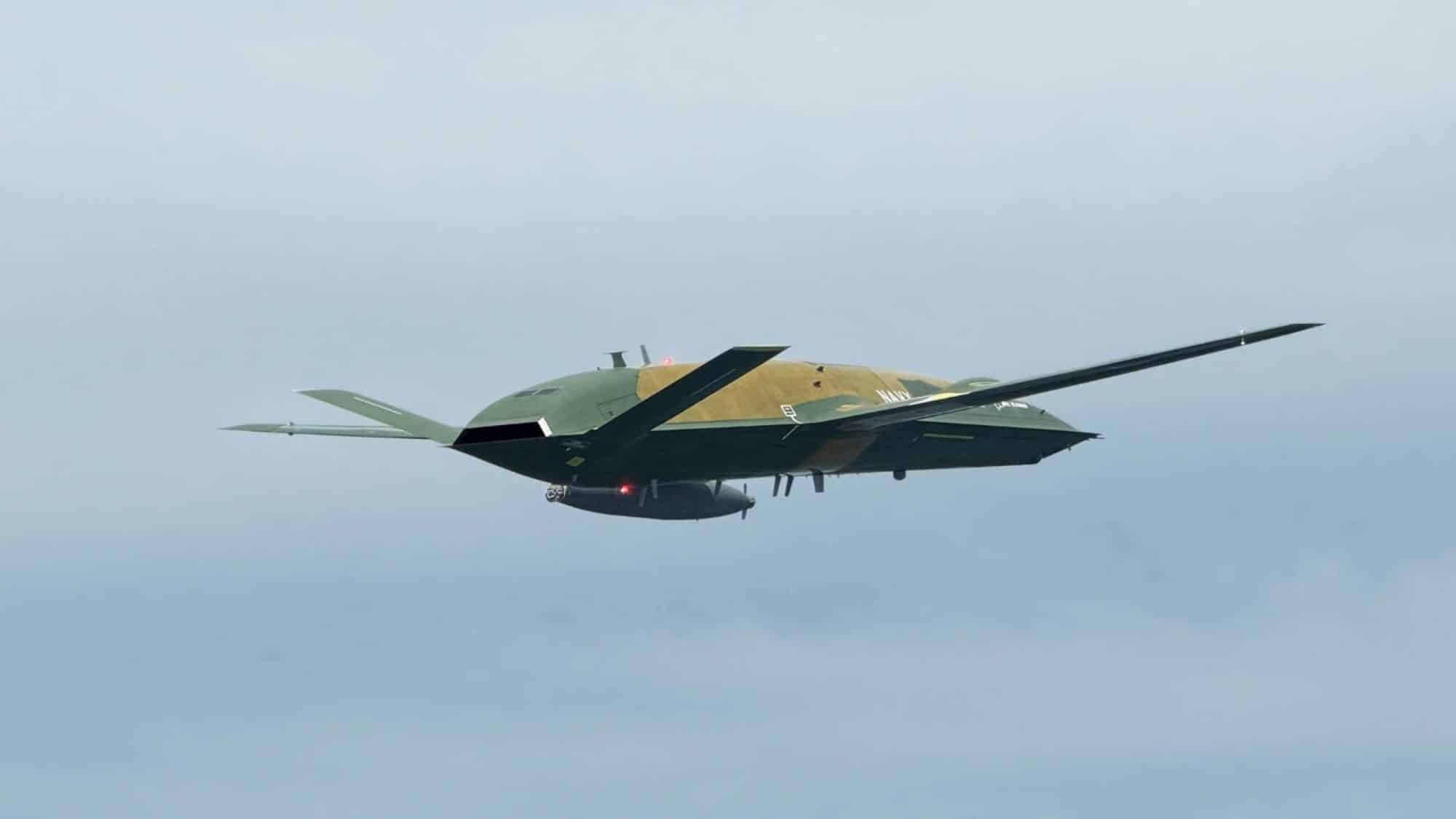
The aircraft completed another test flight over two months later, on June 10, 2026. The flight featured for the first time landing gear cycles, following the first in a landing configuration with gear down, as is customary for the maiden flight of a new aircraft.
Additionally, the aircraft featured a new software load to support future flight envelope expansion tests. Boeing noted the MQ-25 autonomously managed the propulsion, subsystems, guidance and flight controls necessary to achieve both landing gear up and landing gear down phases of the mission plan.
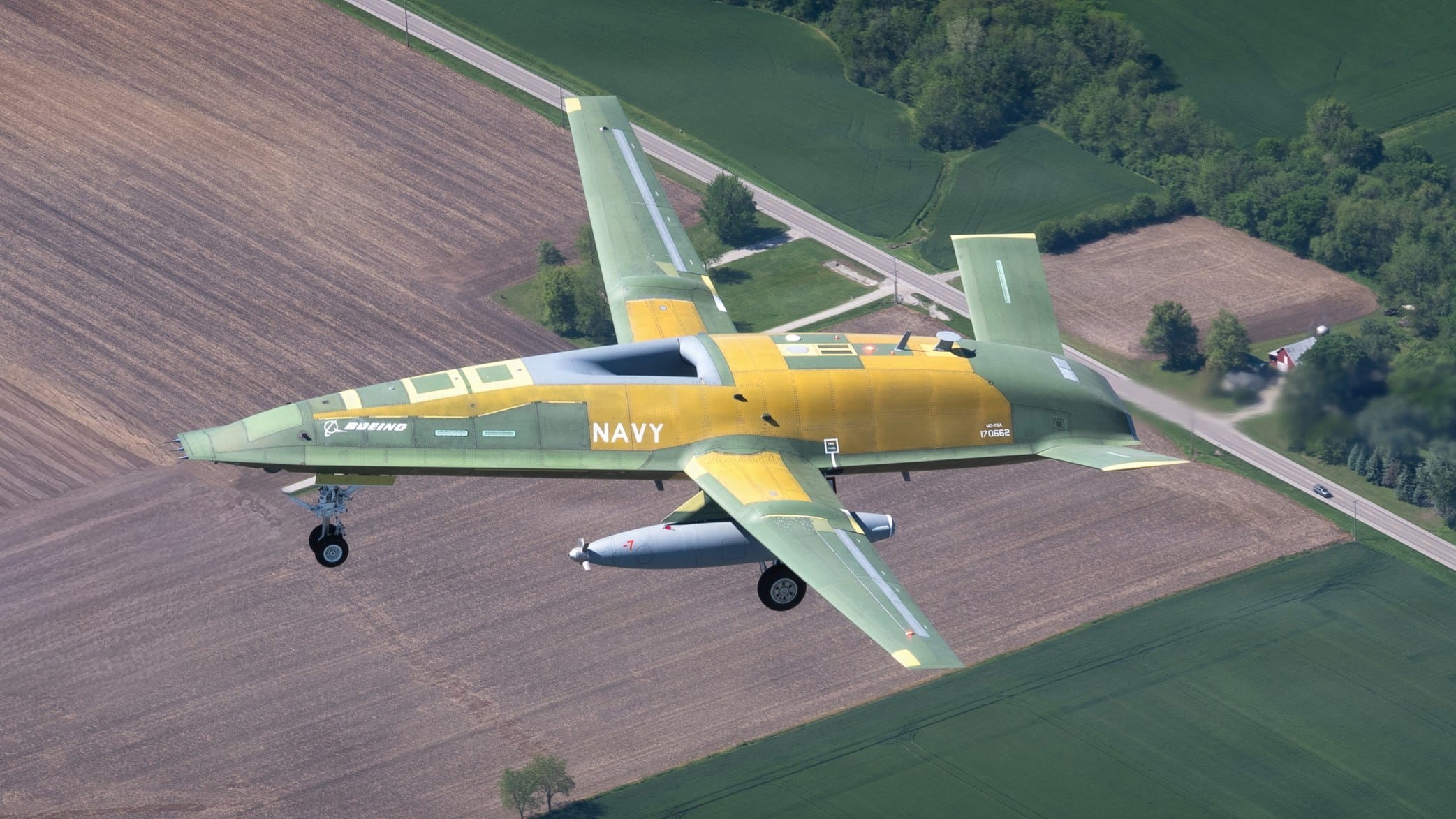
In preparation for carrier operations, the MQ-25 is set to continue the flight test campaign and expand its flight envelope. Following the second flight, the aircraft has also received its U.S. Navy livery.
Meanwhile, the T1 demonstrator, the same that flew in 2019, has been embarked on the USS Nimitz (CVN 68) aircraft carrier during the Fleet Exercise (FLEETEX) 250. The MQ-25 was lined up on the deck between four F/A-18E Super Hornets during a photoshoot.
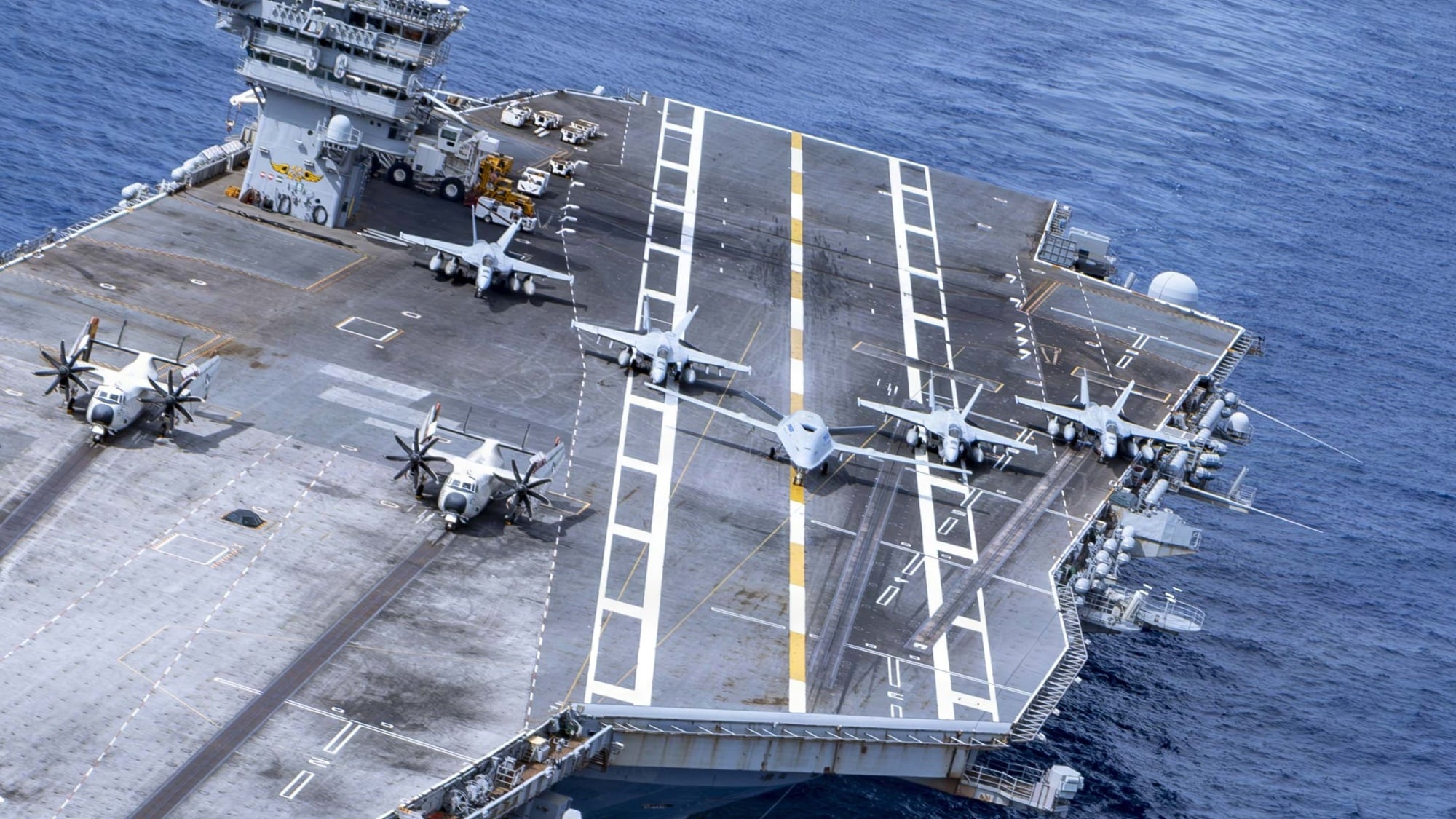
It is unclear if the aircraft was used for testing activities on deck during the exercise. However, it should be noted that this was not the first time an MQ-25 has been aboard an aircraft carrier, as Boeing and the Navy conducted in December 2021 a flight deck demonstration, which allowed to test the remote control system and ensure the MQ-25 can move around the deck just like other aircraft.