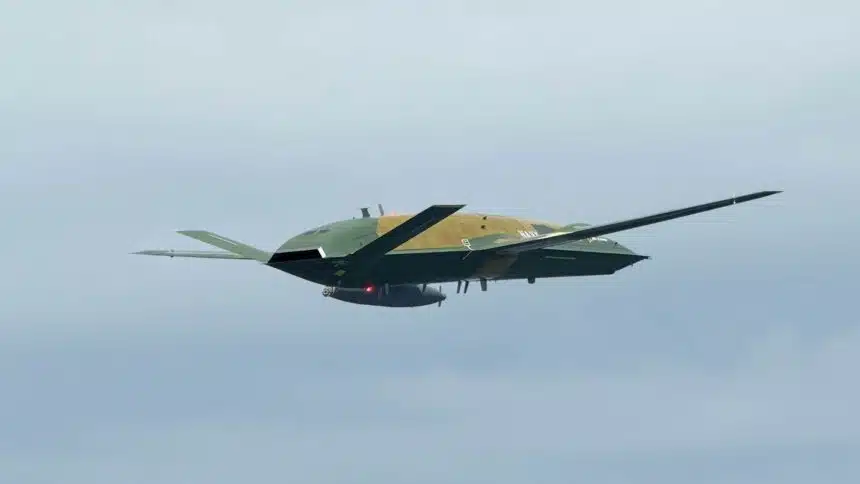
The MQ-25 Stingray resumed testing with its second flight, in anticipation of the expansion of the flight envelope and validation of the autonomous flight control code ahead of carrier operations.
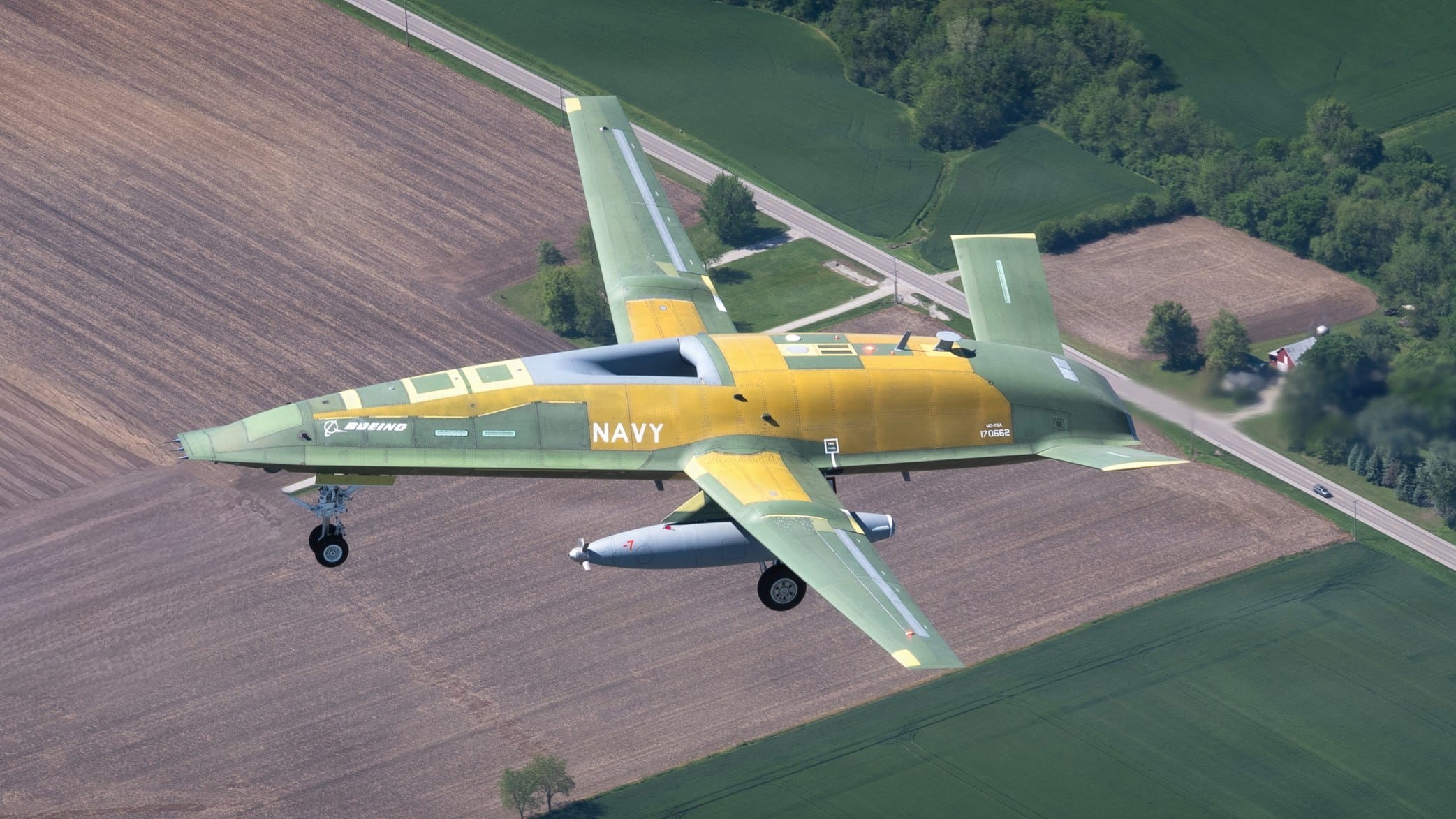
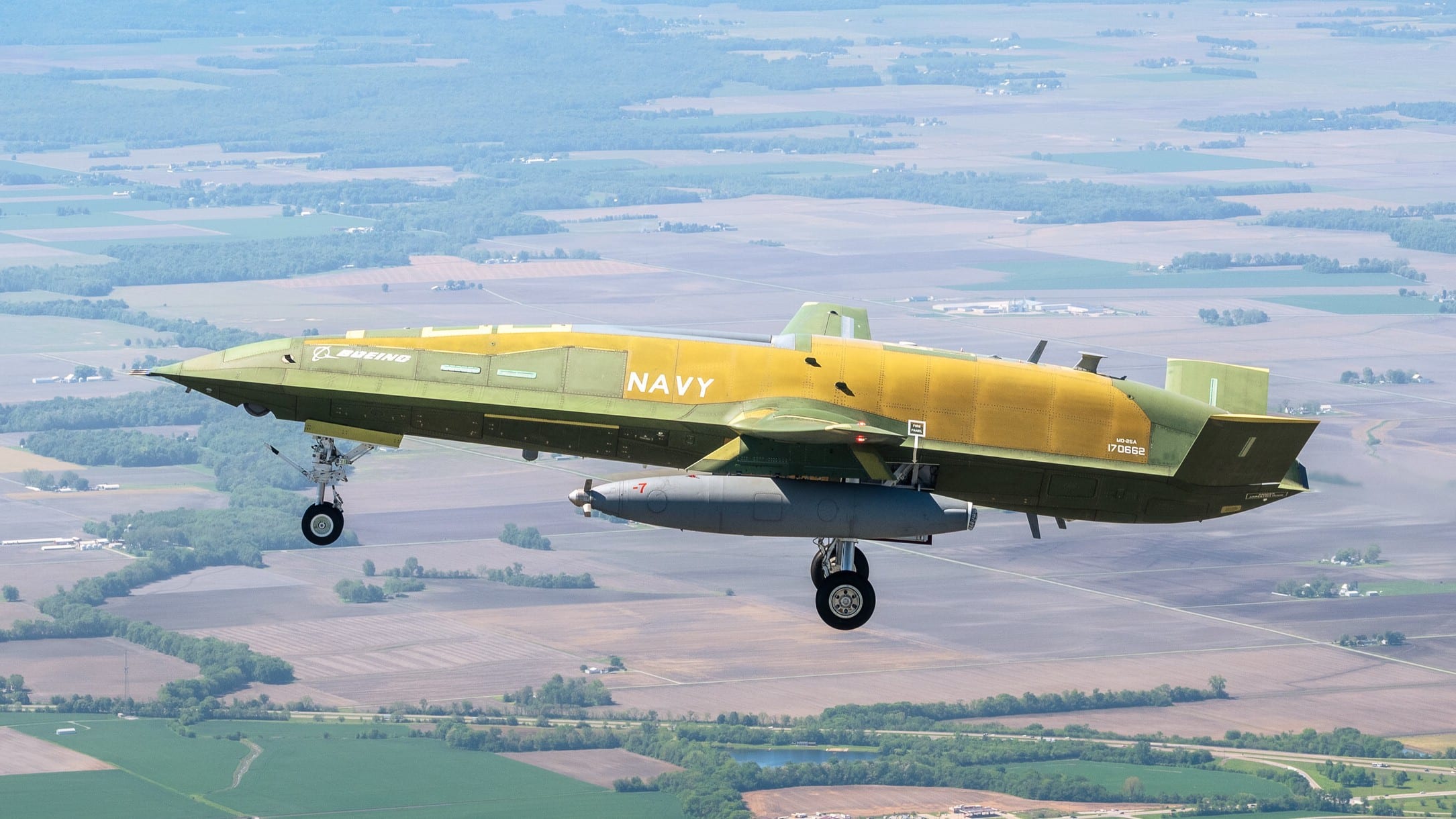
The U.S. Navy’s production-representative MQ-25A Stingray unmanned aerial refueller conducted its second flight test, Boeing announced on Jun. 10, 2026. This comes well over two months after the first flight on Apr. 25, 2026 from MidAmerica St. Louis Airport, Illinois.
Boeing noted the flight featured for the first time landing gear cycles, following the first in a landing configuration with gear down, as is customary for the maiden flight of a new aircraft. Additionally, the aircraft featured a new software load to support future flight envelope expansion tests.
Boeing’s release said that the plane “autonomously managed the propulsion, subsystems, guidance and flight controls necessary to achieve both landing gear up and landing gear down phases of the mission plan.” The aircraft was commanded through the Unmanned Carrier Aviation Mission Control System (UMCS) MD-5 Ground Control Station (GCS) at MidAmerica.
As is standard, the MQ-25A is carrying the Cobham Aerial Refueling Store (ARS) under the left wing. The system, already used by the F/A-18, hosts the hose-and-drogue system employed for the fuel transfer.
The first @USNavy MQ-25A Stingray™ completed its second test flight, featuring the aircraft’s first airborne landing gear cycles. The milestone further validates the autonomous flight controls and performance capabilities, moving it closer to carrier operations. pic.twitter.com/UmqXk6Wufl
— Boeing Defense (@BoeingDefense) July 10, 2026
In preparation for carrier operations, the MQ-25 is set to continue the flight test campaign and expand its flight envelope. The Stingray is also set to receive the official U.S. Navy livery.
A month after the MQ-25A’s first flight on Apr. 25, the U.S. Navy approved the uncrewed tanker’s move into the Low-Rate Initial Production (LRIP). More recently, the Boeing-owned T1 demonstrator, that flew for the first time in 2019, was seen embarked on the flight deck of the USS Nimitz aircraft carrier in official photos released by the U.S. Navy.
Boeing in June has also explained exactly which aspects engineers are testing during the ground and flight tests. Testing is particularly centered around the autonomous flight control code, and the various scenarios the MQ-25 is rigorously put through when the Air Vehicle Pilots (AVP) are not involved.
Second flight
Boeing said in its press release that the second test flight by the company’s and the U.S. Navy’s AVPs “further validates the aircraft’s flight controls and performance, moving it another step closer to carrier operations.” They proceeded to check the landing gear cycles by building upon the “success of the first flight.”
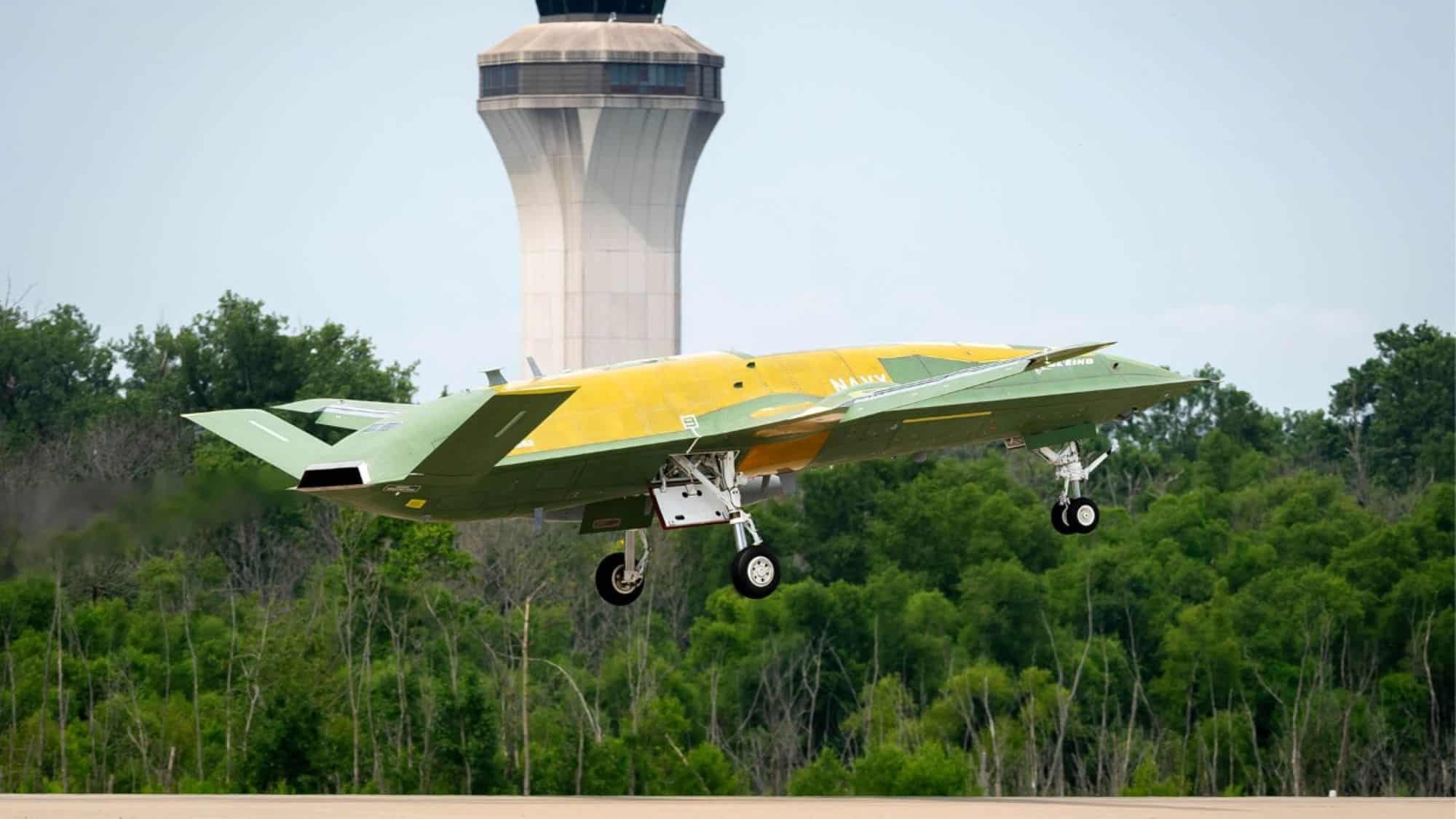
More importantly, Boeing and U.S. Navy teams also installed a new software that will support future flight envelope expansion tests. The new software “included vehicle management system and mission computer improvements,” explains Boeing.
The video released by the company shows a member of the test team activating the auto taxi and auto take-off commands, with the aircraft autonomously performing the operations while the ground team oversees them.
What happens before and during a MQ-25 test – Lab trials
In a Jun. 10 release, Boeing quoted its engineers who spoke about the autonomous flight control software, which was “built and tested […] through years of exhaustive verifications […] before the Stingray ever left the ground.” The Stingray has 600,000 lines of code, governing flight control and flight safety, which has undergone 200,000 hours of lab tests and over 1,000 hours of ground tests on the first flight aircraft.
AVPs in the UCAMCS MD-5 GCS do not control the autonomous Stingray “via a traditional stick and throttle,” which “presents distinct and novel challenges.”
“AVPs establish waypoints and flight paths the aircraft will fly,” explains the company. “They then send commands, with the press of a button, such as taxi, takeoff and land to the Stingray from a Ground Control Station known as the Unmanned Carrier Aviation Mission Control System (UMCS). The Stingray’s onboard autonomy translates commands and manages all onboard systems including propulsion, subsystems, guidance and flight control,” the Boeing release added.
The current MQ-25A Stingray is vastly different from the Boeing-owned T1 test asset that first flew in 2019, and is “equipped with a more advanced autonomy software and contingency management system.” According to MQ-25 Mission Systems Integrated Product Team leader Mark Dunn, the new software specifically helps the “MQ-25A safely integrate seamlessly with the carrier air wing.”
Engineers separated and isolated the software and hardware checks. The software tests commenced in a lab “three years before the first flight” on the exact computers installed inside the aircraft – the Vehicle Management System Computers (VMSCs).
The team then “added aircraft components into the lab setup,” including the “real actuators on the airplane’s hydraulic and electrical systems.” This step assessed if the VMSCs ran the autonomy software and contingency-management system correctly.
Tests on the aircraft
Following the successful lab work, the aircraft received the same VMSCs. Juan Cajigas, MQ‑25 chief engineer, said they had to induce all “possible [emergency] scenarios the aircraft could experience in flight and ensure the airplane would autonomously react as we intended.”
Celebrating America 250 🇺🇸
To honor the United States’ 250th anniversary, the MQ-25A T1 prototype is aboard the USS Nimitz, offering a glimpse of the Navy’s carrier air wing of the future. The special “Boeing Backs America” mark highlights our support for U.S. aviation. pic.twitter.com/hbFYXtCxfK
— Boeing Defense (@BoeingDefense) June 29, 2026
“In the lab, engineers deliberately introduced failures” like “loss of GPS navigation, engine failure or loss of communication with the AVPs” to check how the autonomy software and contingency management system responded. In one specific test, deliberately injected a situation where the Stingray lost communication with the AVPs, and checked if the system triggered the “return-and-land behavior”, designed to direct the aircraft to autonomously return and land at its departure airfield.