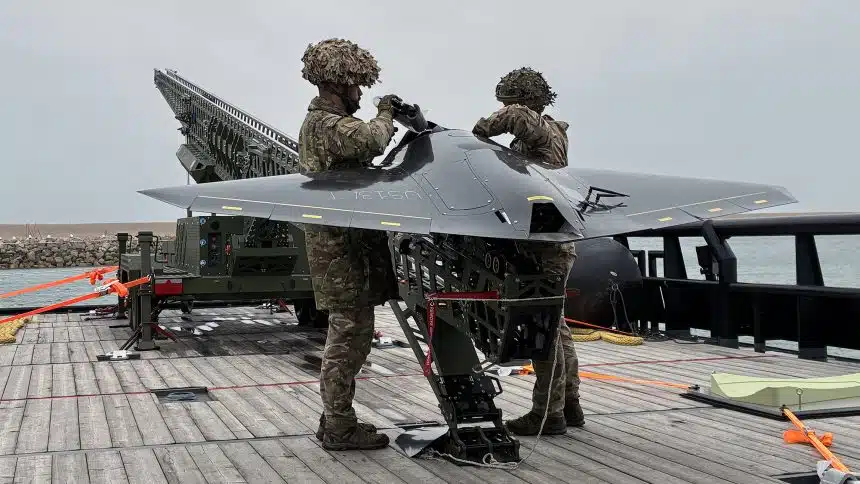
A Nyan One Way Effector (OWE) was launched from the experimental testbed vessel XV Patrick Blackett while the ship was underway off the south coast of England.
The trial, which according to image data took place in early June 2026, is billed as the next step towards the operational integration of one way effector (OWE) drones into the British military. The Nyan OWE, designed by BAE Systems subsidiary Callen-Lenz, was previously tested from land by British Army personnel in Estonia.
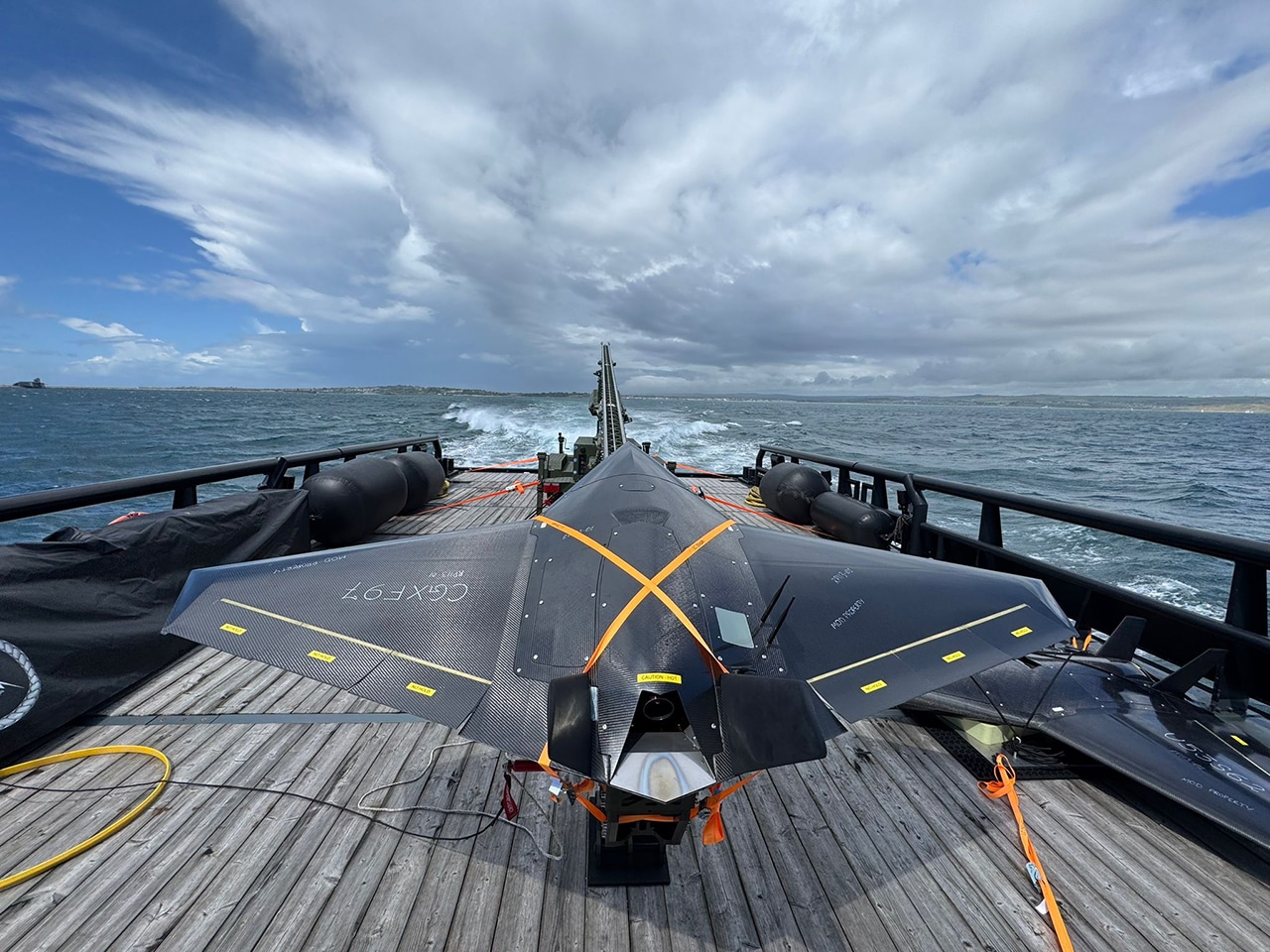
Organised under Operation Neptune Reach, the launch brought together personnel from the Royal Navy, Royal Air Force, and the British Army. Launching an OWE drone from a Royal Navy vessel has been listed as the first goal of Project VANTAGE, with latter stages focused on spreading OWE launch capability to vessels across the fleet, up to and including the Queen Elizabeth class aircraft carriers. This is a key part of the Ministry of Defence’s aim to transform the Royal Navy into a ‘hybrid navy’, leveraging a tailored blend of crewed and uncrewed systems with the mantra ‘crewed where necessary, uncrewed wherever possible‘.
.@BAESystems @callenlenz Nyan One-Way Effector launched from @XVPTBK https://t.co/KR68KfHm3I pic.twitter.com/VA8vH69274
— Navy Lookout (@NavyLookout) July 3, 2026
Lieutenant Commander David Burton, Maritime OWE capability sponsor, Royal Navy, said: “This trial makes a significant step forward in delivering Maritime One-Way Effectors at pace.
“Under Project Vantage we are planning to integrate these capabilities into the Hybrid Navy, combining crewed platforms with uncrewed systems to expand reach, increase tempo and enhance lethality. Working closely with our army colleagues, this activity demonstrates how we are accelerating Atlantic Strike concepts into practical, deployable capabilities of the Fleet,” he added.
Luke Pollard MP, Minister of State for Defence Readiness and Industry, said: “Britain is serious about the transition to a Hybrid Navy with new, powerful drones at the heart of the Royal Navy. By bringing together Army and Navy expertise to field strike drones from a ship at sea, we are accelerating the capabilities our forces need to stay ahead of our adversaries.”
View this post on Instagram
The Nyan OWE, designed for precision strike missions, is powered by a small ‘microturbine’ jet engine, and has a wingspan of 2.9 metres. In a February 2026 direct award contract notice, the MoD noted it as the only off-the-shelf product of its type registered with the UK Military Aircraft Register, stating: “it is the only feasible option to bring into service in the near term on the grounds of safety and legality”.

Matt Foster, CEO of BAE Systems’ Callen-Lenz, says over 1,000 Nyan units have been produced so far, and it has proven itself during land-based trials. “Now it has successfully demonstrated its ability to add real value in a maritime environment too. These trials reflect strong collaboration across the services and industry, highlighting the pace at which we can deliver innovation to advance the UK’s integrated, multi-domain defence capability.”
The drone was launched from a rail installed on the Patrick Blackett’s rear deck, and then directed towards a pre-designated target. Data from the test is now being analysed by a specialist Royal Navy team as well as the Royal Air Force’s Air and Space Warfare Centre (ASWC).
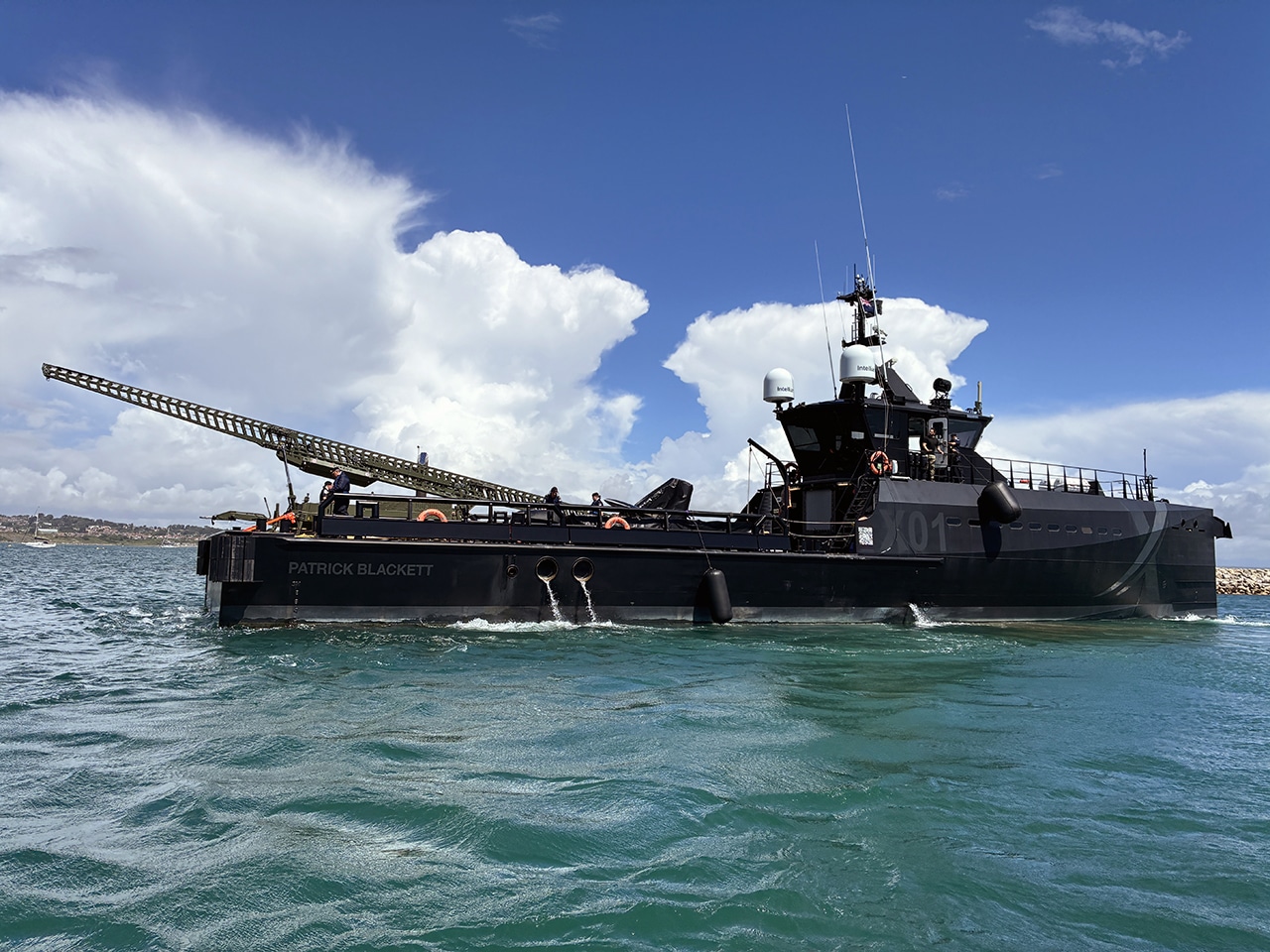
XV Patrick Blackett
The futuristic all-black trials vessel XV Patrick Blackett was acquired by the Royal Navy in 2022, and officially began acceptance trials in February 2023. Although not a commissioned Royal Navy vessel, it is crewed by Royal Navy personnel and is wholly owned by the UK Government.
Its primary role is supporting trials of uncrewed surface and sub-surface vessels, which are in line to become a major part of the Royal Navy’s overall fleet structure in the coming years.
Confimation of the new RN construction plan, as radical as Fisher’s new navy. These were revealed in the recent Frazer-Nash NDP renders (below).
Type ?? Common Combat Vessel, smaller crewed command hub (possibly AH140 based?) to be in-service by early 2030s.
Type 91 – uncrewed… https://t.co/NJcFFPFeE3 pic.twitter.com/l2mpWVInfI
— JamesFennell MBE (@FennellJW) June 29, 2026
The ship’s large, open rear deck area is ideal for frequent configuration changes to support different programs. In this case, it provides ample room for the rail launcher. In one previous exercise, the deck area has even been used as a target area for dummy bombs dropped from a drone.
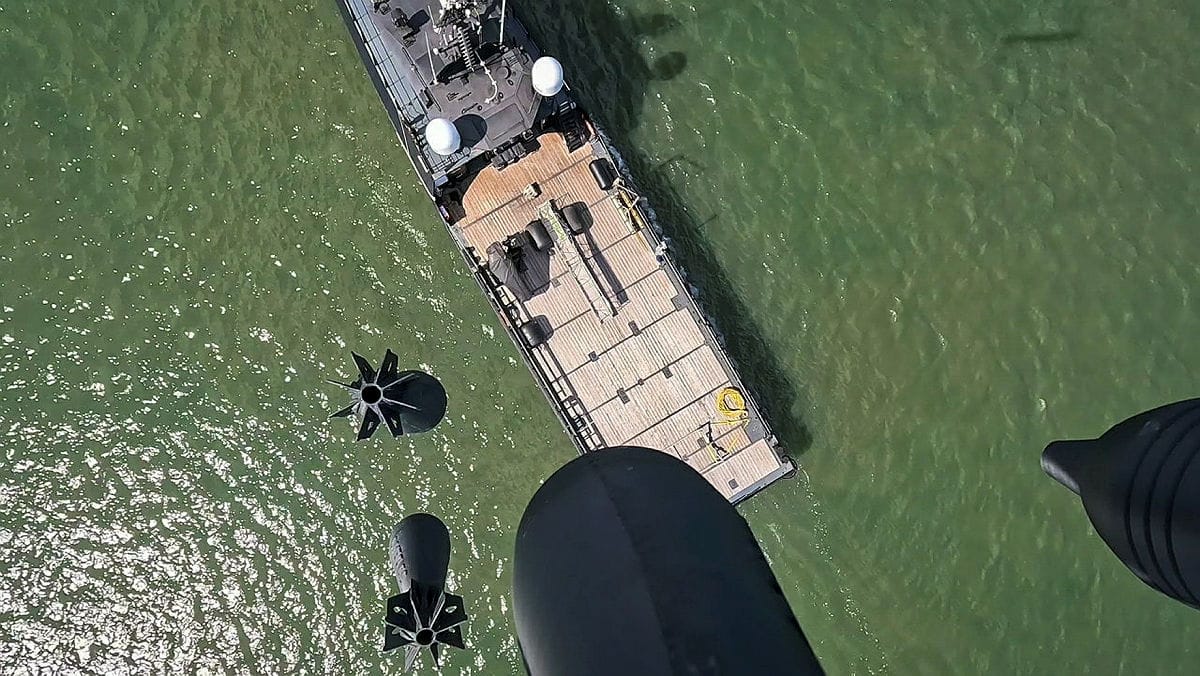
A lesser seen but vitally important additional part of XV Patrick Blackett’s duties is pioneering the use of quantum navigation equipment at sea. These systems use atom interferometry to provide inertial navigation, meaning that it could provide the answer to the problems posed by the vulnerability of GPS. Additionally, quantum navigation would work in places where GPS simply can’t – under the sea, underground, or in some of the few locations in the world where access to reliable global navigation satellite systems (GNSS) cannot be guaranteed.
The first UK test of airborne quantum navigation systems took place from MoD Boscombe Down in 2024, backed by BAE Systems and Qinetiq.