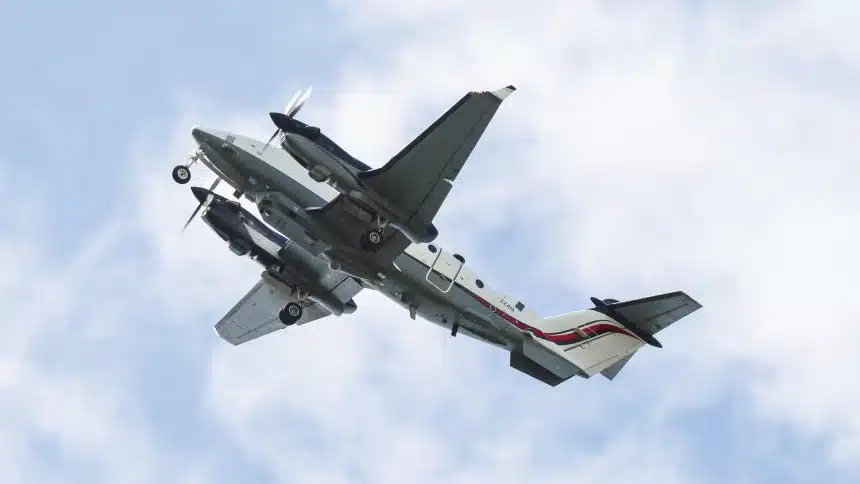
The Royal Air Force’s fleet of Beechcraft B350ER Shadow ISR aircraft will be retired from service in the near future, a move anticipated since the cancellation of the troubled R2 upgrade program.
The Defence Investment Plan (DIP), released on Jun. 30, 2026 after many months of delay, named the Shadow by name as one of the intelligence, surveillance, and reconnaissance capabilities which would be withdrawn from service early to secure funding for new technologies. Previously, the Shadow’s retirement date had been set for 2030 – it is unclear whether this has been changed by the DIP, as it does not specify a timeframe.
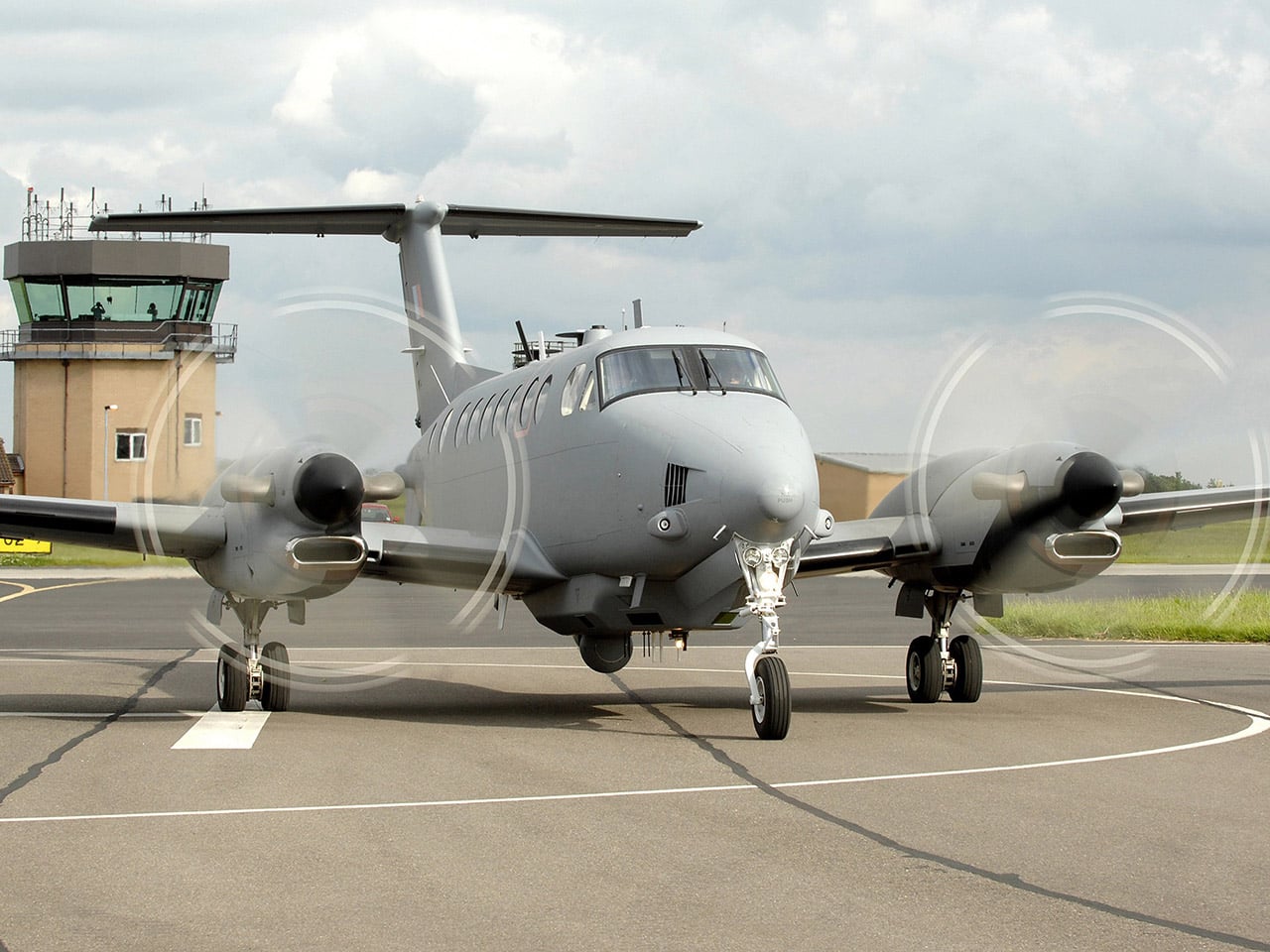
True to their name, the activities of the Shadow fleet are rarely acknowledged and official details about the aircraft are scarce. The Royal Air Force’s information page for the type confirms the presence of electro-optical and electronic sensors, but little else. It is likely that the aircraft features some form of communications and electronic intelligence (COMINT/ELINT) capability. They also carry a defensive aids suite, allowing operations over potentially dangerous airspace.
The Shadow fleet has garnered particular interest in recent years due to their visible operations over Gaza. These missions, which could often be tracked on websites like Flightradar24, drew criticism alleging that the UK Government was providing intelligence to the Israeli armed forces. Official comments assured that any data sharing was related solely to the location of hostages. It is almost certain that any other data gathered by the aircraft was relayed back to Westminster to inform the UK’s responses to the conflict.
RAF:
Shadow R1 (ISR)
ZZ419
RFR7140
Enroute to RAF Akrotiri-Cyprus, from Home Base at RAF Waddington-UK
Noted at 17:40 utc
Note: RAF Shadow R1’s (ZZ418 & ZZ504) are currently also deployed to RAF Akrotiri pic.twitter.com/PDmgEMKpZj
— BlueSky (@AirSpecInt) February 27, 2026
It is likely that the Shadow fleet will be replaced by uncrewed aircraft. Notably, the ability for the new Protector RG1 to operate in non-segregated airspace – including over the UK – will mean that it could take on many of the taskings formerly given to Shadow. As well as their overseas operations, Shadow aircraft are frequently seen supporting exercises (and, potentially, undisclosed operations) in UK airspace. In some of these instances, they are thought to be providing a capability that would – in theatre – be provided by a drone, due to the airspace restrictions.
@Andy007_SR_A @Su39frogfoot @lukewebster91 @planesonthenet @uk_spotter @PaulDArcy1 @BunkerAlpha @TilbrookSteven
SNAKE48 ZZ418 Shadow R1 ISTAR ops over Sculthorpe airfield, Norfolk in support of exercise involving ground troops – as per this commonly raised Notam. pic.twitter.com/o05oSIvVCr
— nde (@5472_nde) July 24, 2018
Envisioning a longer service life, the Shadow fleet, formerly all designated as R1, were due to undergo a major upgrade program to become Shadow R2s. This upgrade, however, hit several stumbling blocks and was ultimately scrapped without producing a single operational airframe. Incremental upgrades to the fleet did see some aircraft receive the designation Shadow R1+, and a number of aircraft were active in a mock-civilian scheme that undoubtedly was intended to aid with discreet operations.
More surprises keep coming, latest being the cancellation of the SHADOW upgrade to R2 standard.
The exact nature of several of the many project terminations listed in the MoD Accounts 2024 – 2025 is unknown.
More cancellations will no doubt be in the 2025 – 2026 accounts (5) pic.twitter.com/jcBIldPFWH
— Gabriele Molinelli (@Gabriel64869839) November 8, 2025
The withdrawn Shadow aircraft could be eyed up by overseas operators, or alternatively they may join the secretive ranks of contracted ISR aircraft active in the UK.
Shadow entered service with the Royal Air Force in July 2009, and 14 Squadron was eventually stood up as a dedicated Shadow unit in 2011. By 2012 the fleet had mustered over 10,000 flight hours on operations over Afghanistan.
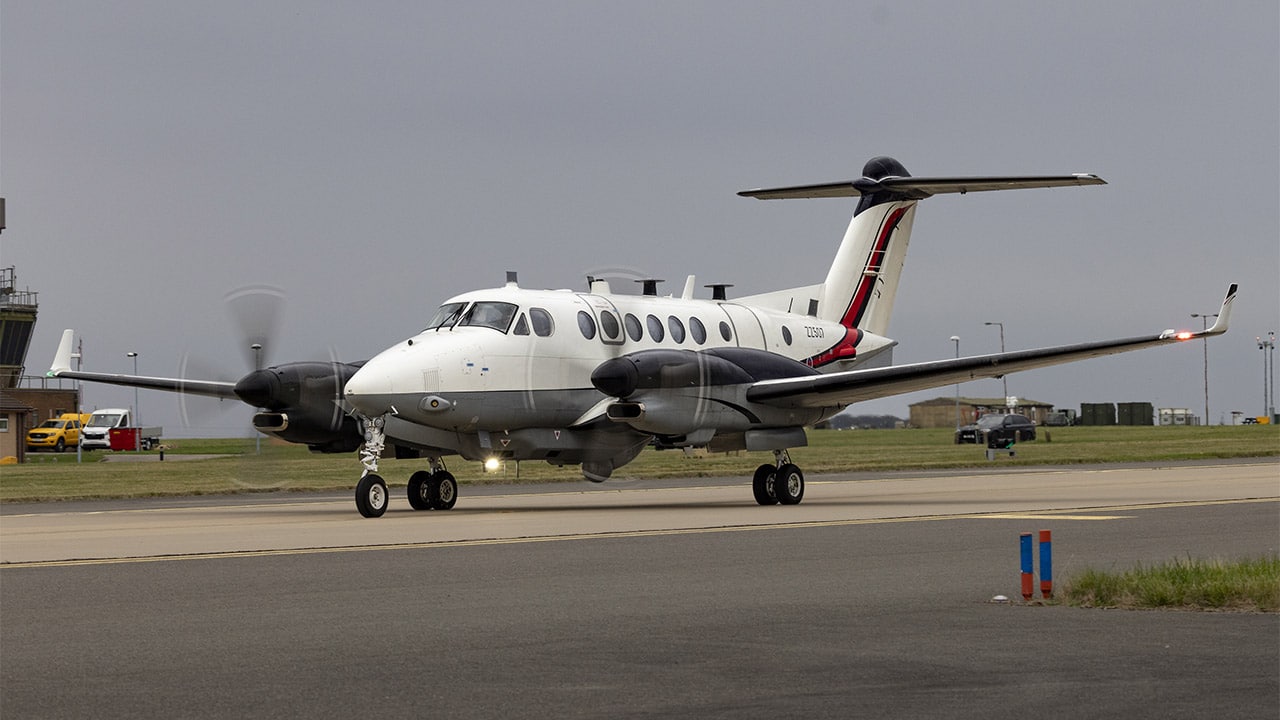
At the time, RAF Waddington (home of the Shadow as well as the Sentinel R1 prior to its retirement) Station Commander Group Captain Al Gillespie said: “The search capabilities of Sentinel and Shadow have provided UK and coalition partners with an unprecedented insight into the unique operating environment of Afghanistan. The ability to search vast areas and provide real-time information to others has led to more efficient and effective application of other military capabilities such as remotely-piloted air vehicles, coalition helicopter-borne forces, light-armed reconnaissance vehicles and combat aircraft.”
Keep an eye on The Aviationist for more coverage of the Defence Investment Plan