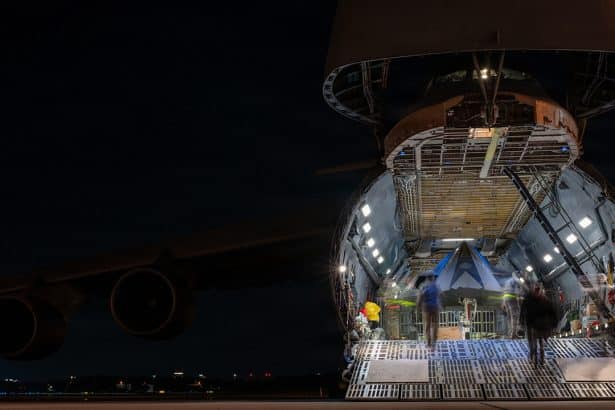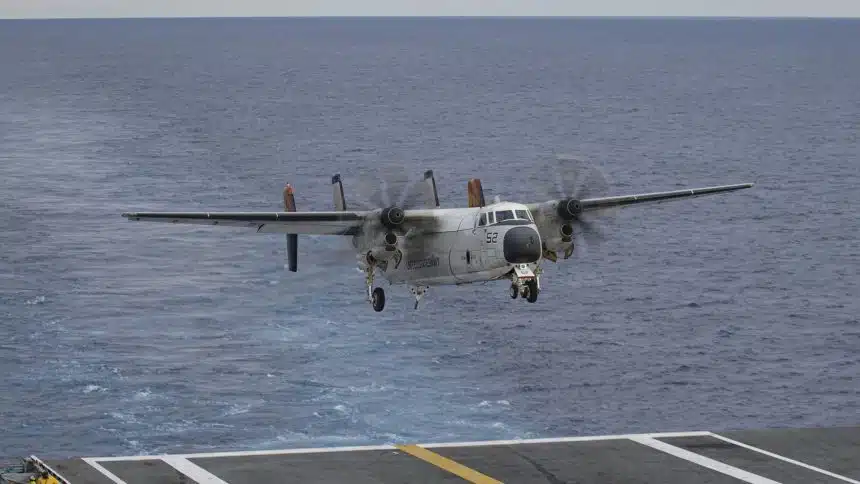
The C-2A Greyhound conducted its last ever catapult launch from a U.S. Navy aircraft carrier, ending its 60-year Carrier On-board Delivery mission.
The U.S. Navy’s C-2A Greyhound has flown off an aircraft carrier for its last time, ending its 60-year Carrier On-board Delivery (COD) mission which will now be passed to the new CMV-22B Osprey. The last arrested landings and catapult launches were conducted on June 25, 2026, during the Fleet Exercise (FLEETEX) 250.
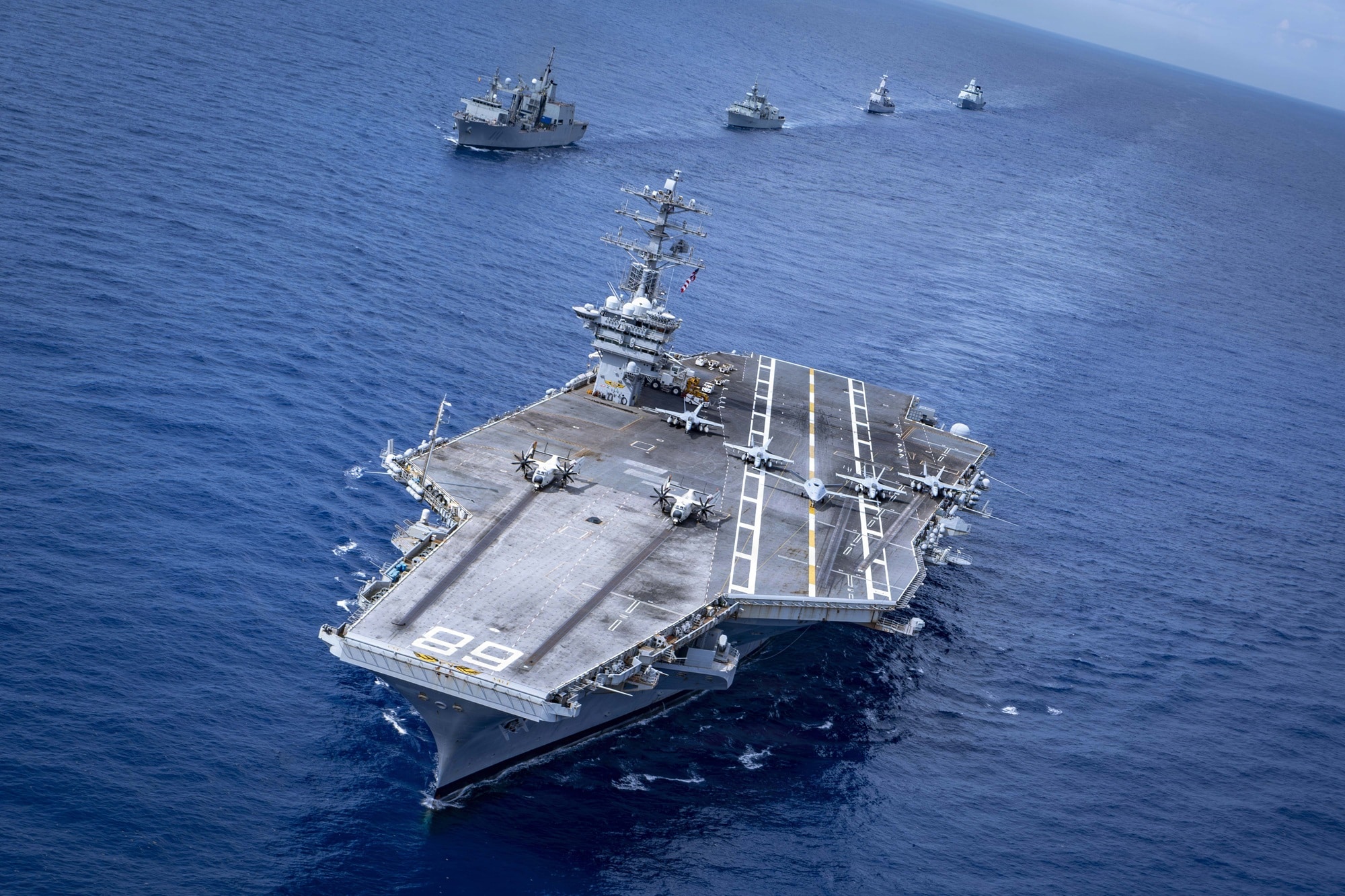
The aircraft involved in this last mission at sea were two C-2A Greyhounds attached to the “Rawhides” of Fleet Logistics Support Squadron 40, which operated from the USS Nimitz (CVN 68) aircraft carrier. The C-2s flew to the carrier and back to transport Vice Adm. Doug Perry, commander of U.S. 2nd Fleet, and other passengers for a distinguished visitor tour aboard the ship.
The two Greyhounds were also visible on deck in the photos with the MQ-25’s T1 test asset and four F/A-18E Super Hornets. Following this last catapult launch, the C-2 will continue to fly until later this year, when the retirement will be completed.
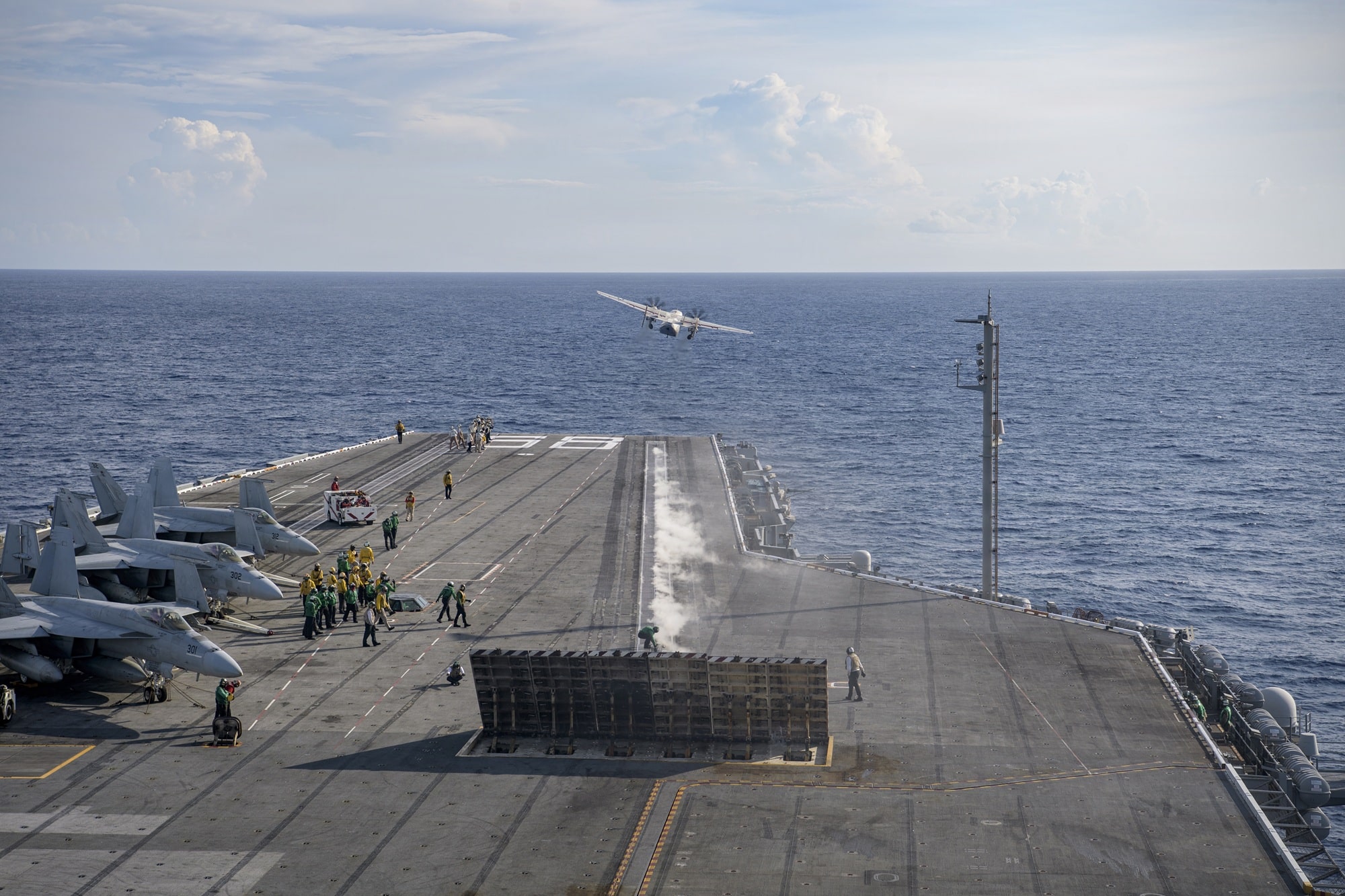
It should be noted that these were also the last arrested landing and catapult launch ever for the COD mission, not only for the C-2. In fact, as the CMV-22B is a tiltrotor aircraft, it will not need to use arresting wires and catapults while operating from the flight deck of an aircraft carrier.
The C-2A Greyhound
The Grumman C-2A Greyhound served for six decades as the U.S. Navy’s dedicated Carrier Onboard Delivery (COD) aircraft. Throughout the years, it provided a critical logistical link between shore bases and carrier strike groups at sea.
The C-2 shares its DNA with the E-2 Hawkeye, from which it was derived in the 1960s. The two aircraft share the same wings, engines and distinctive tail configuration. Apart for the missing radar dome, the main difference on the C-2 is the widened fuselage with a rear loading ramp.
This allowed the aircraft to carry passengers, mail, high-priority cargo and critical spare parts. The C-2A flew for the first time in 1964 and entered operational service in 1966, replacing the piston-powered C-1 Trader.
Because of its ability to transport urgently needed equipment, the C-2 quickly became an indispensable component of carrier operations. The Greyhound fleet was first overhauled in 1973, and in 1984 more C-2As were ordered under designation Reprocured C-2A or C-2A(R).
In the early 2000s, these underwent a Service Life Extension Program (SLEP), which increased their life from 10,000 hours, or 15,000 carrier landings to 15,000 hours or 36,000 landings. Additionally, the SLEP included structural improvements to the center wing, an eight-bladed NP2000 propeller and avionic upgrades.
The upgrades were meant to allow the Greyhound to fly until 2027. The last flight off an aircraft carrier on June 25, 2026, now marks the end of fixed-wing carrier onboard delivery as the mission now transitions to rotary wing.
The CMV-22B Osprey
The V-22B Osprey was selected to replace the C-2A Greyhound as the U.S. Navy’s Carrier Onboard Delivery (COD) aircraft in 2015, and received the CMV-22B designation a year later. The decision brought a fundamentally different approach to fleet logistics, moving from fixed wing to rotary wing.
In fact, rather than relying on catapult launches and arrested recoveries, the tiltrotor can take off and land vertically. This introduces more flexibility to the COD mission, as the CMV-22B would be able to move personnel and cargo throughout a carrier strike group without being limited to the carrier itself.
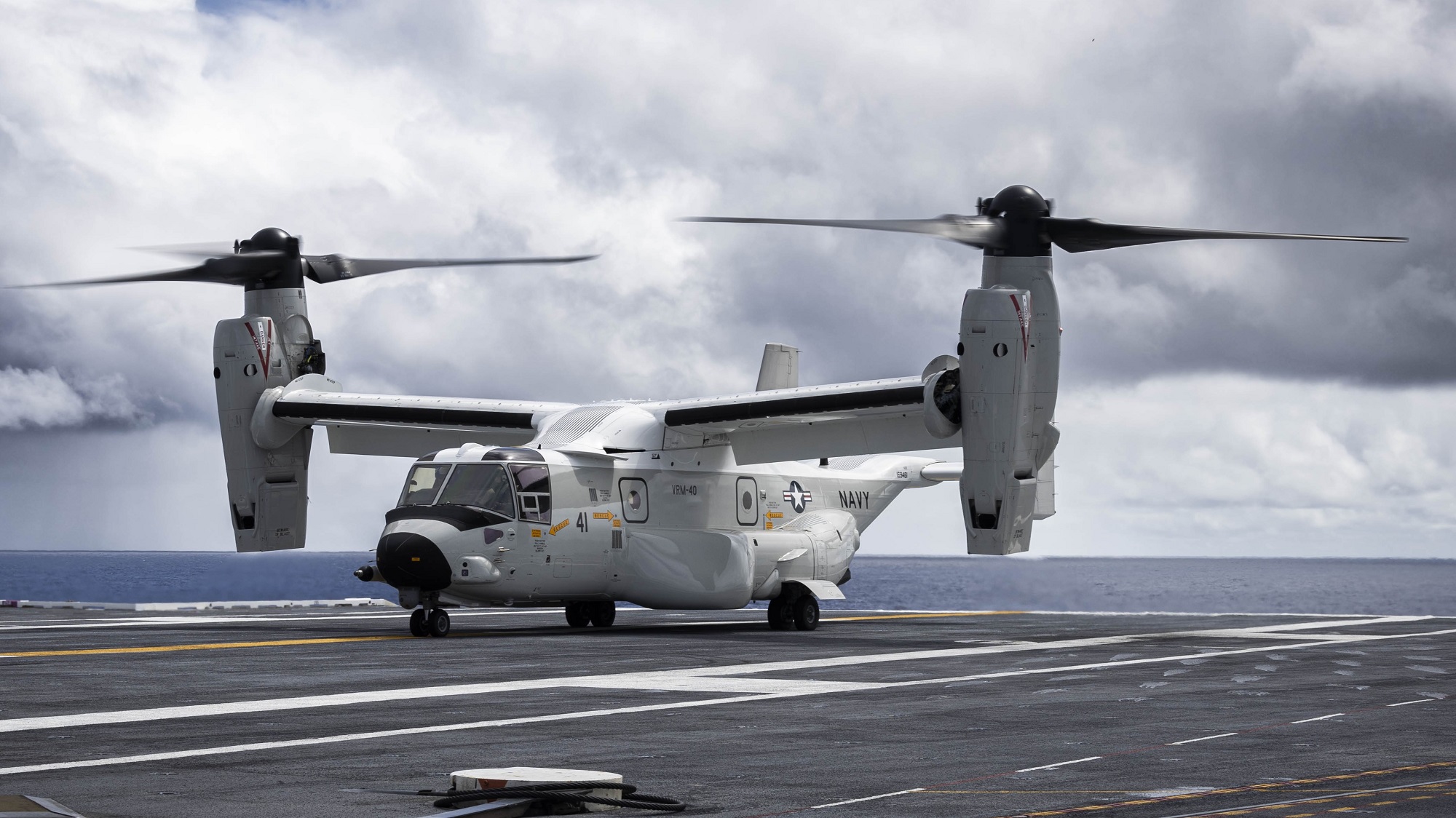
The CMV-22B is derived from the Marine Corps’ MV-22B, but it incorporates several modifications tailored to the COD mission. The most visible are enlarged fuel tanks integrated into both the wings and the forward sponsons, extending the aircraft’s unrefueled range to approximately 1,150 nautical miles.
Other changes include beyond-line-of-sight communications, improved cargo handling equipment and a public address system in the cabin. Crucially, the aircraft is meant to carry the F-35C Lightning II‘s Pratt & Whitney F135 engine internally, a capability that was not available to the C-2 as it was too large to fit inside its cargo bay.
The CMV-22B flew for the first time in December 2019 and, a year later, in November 2020, conducted the type’s first landings and take-offs aboard the aircraft carrier USS Carl Vinson (CVN 70). The aircraft achieved the initial operational capability (IOC) in December 2021.
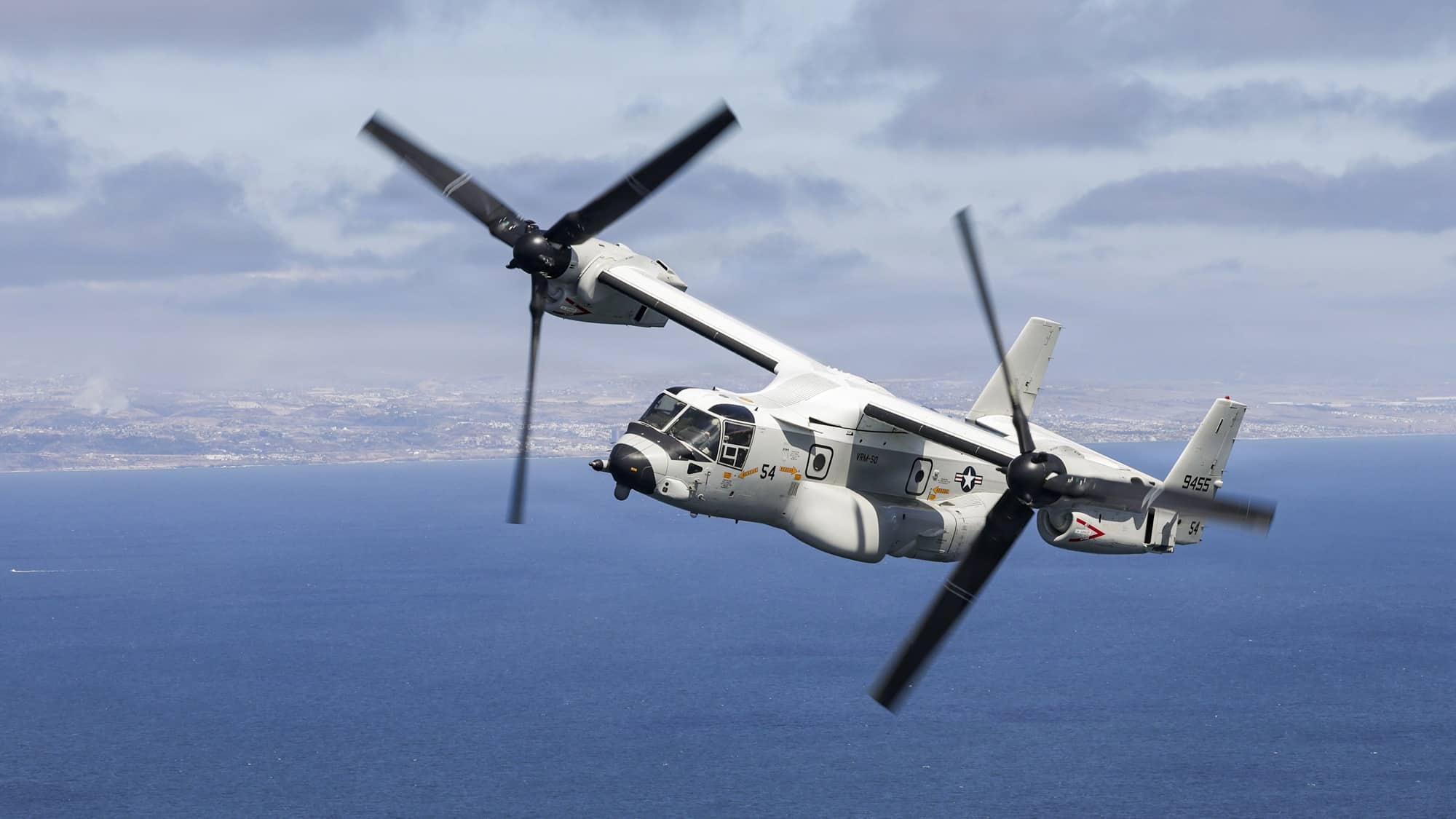
The Navy subsequently established dedicated Fleet Logistics Multi-Mission Squadrons (VRM) on both the U.S. West and East Coasts as the Osprey progressively assumed the COD mission from the Greyhound. The transition, however, has not been without challenges.
In fact, following the fleet-wide grounding of the V-22 after the fatal U.S. Air Force CV-22 crash off Japan in late 2023, the Navy had to surge the last C-2A squadron to meet the COD needs. At the same time, operational testing highlighted reliability and maintainability issues that the service has continued to address as the platform matures.